

For years, the bioplastics industry has perfected the art of the almost—spectacular laboratory results, sweeping environmental promises, then silence when it comes to actual manufacturing at scale. That pattern, familiar to anyone who has tracked the sector's fits and starts, may finally be shifting. The evidence arrives not from a splashy corporate announcement or billion-dollar funding round, but from a cohort of five startups and a recent peer-reviewed study that quietly produced 19 kilograms of purified biopolymer in a single batch.
That's still a long way from the thousands of metric tons churned out by petrochemical plants. But in the peculiar economics of biomanufacturing, 19 kilograms represents something more significant: enough material to run real-world application tests, to send samples to skeptical customers, to prove that lab-scale chemistry can survive the messy realities of pilot production.
The five companies—Tastee Tape, Supercarb, Fermeate, Krokos Bio, and Ruby Bio—are part of BEAM Circular's 2026 accelerator cohort, announced in March. BEAM, powered by gener8tor, focuses exclusively on biomanufacturing startups, offering 12 weeks of mentorship, access to over 100 industry advisors, and up to $100,000 in resources. The program's backers include the Almond Board of California and CA Jobs First, a pairing that hints at the agricultural waste streams these ventures hope to transform into marketable products.
On May 21, the cohort pitched their technologies at BioCatalyst, an industry gathering in Lodi, California. The event featured the requisite "Shark Tank-style" presentation format, but what felt different this time was the context—a growing body of evidence that pilot-scale bioplastic production is becoming less of a moonshot and more of an engineering challenge.
The Purification Problem
Published earlier this year, a pilot-scale fermentation study detailed how researchers coaxed 48 kilograms of PHA-rich dried cells from a 750-liter batch using engineered Cupriavidus necator, a bacterium that has become something of a workhorse in biopolymer research. The breakthrough, though, wasn't just the fermentation yield. It was what came next.
Using biological downstream processing—specifically, Tenebrio molitor, better known as mealworms—the team extracted 19 kilograms of high-purity P(HB-co-HHx) PHA powder. Purity tested above 99 percent. Multi-kilogram quantities. Performance-grade copolymer. A reproducible process detailed in a materials sustainability journal.
It's the kind of result that might have seemed incremental a decade ago. Today, with the bioplastics sector still struggling to escape the valley between benchtop success and commercial viability, it carries more weight. Elsewhere, a May science talk hosted by GO!PHA explored colored PHAs and next-generation performance additives. In June, Shellworks, a UK-based materials company, announced a €13 million raise to scale its Vivomer PHA line.
The technology, in other words, is starting to catch up to the rhetoric. Whether the economics can follow remains the open question.
From Burrito Tape to Packaging Play
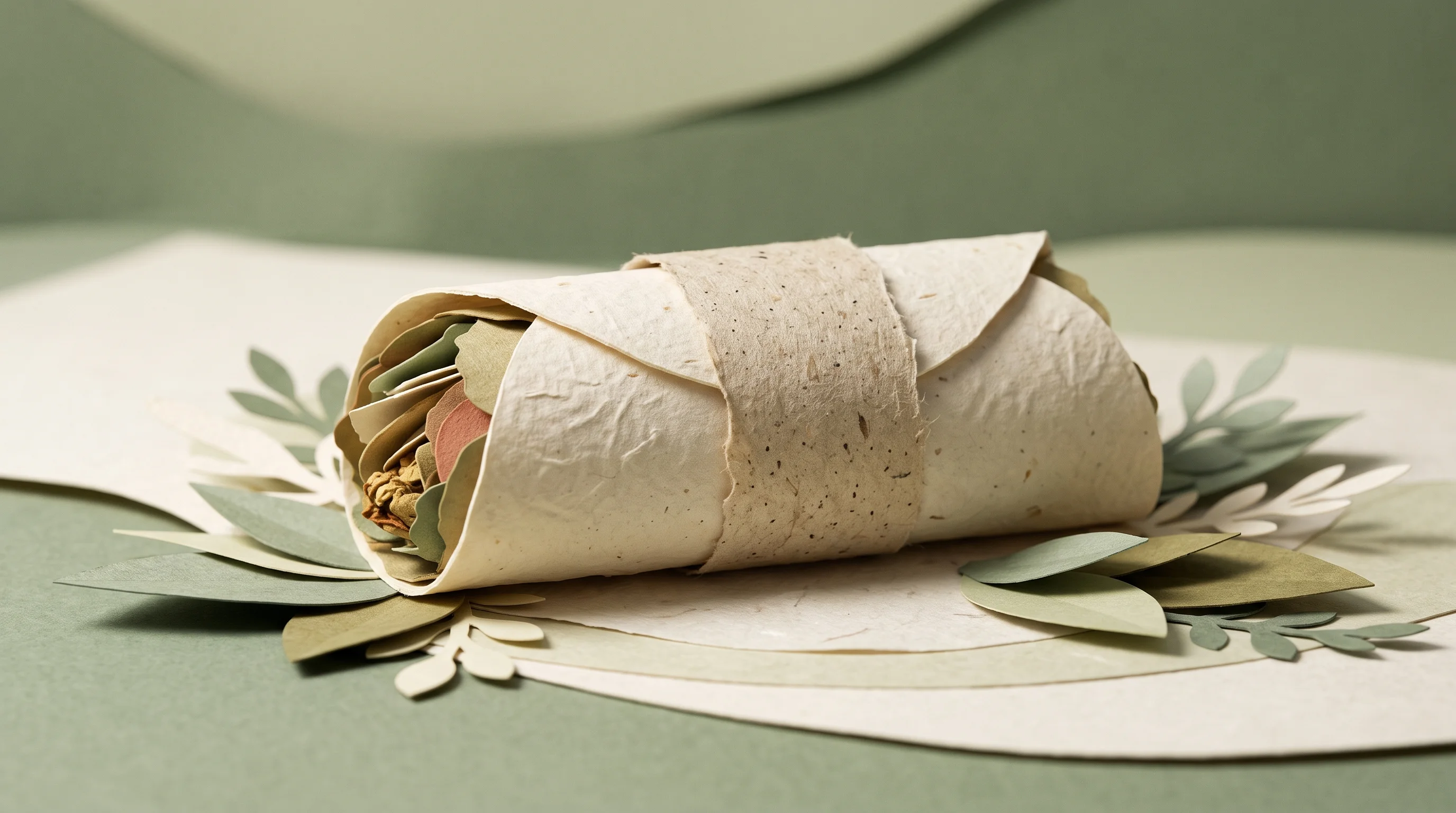
Marie Eric's path into bioplastics began with a viral moment. In 2022, while studying chemical and biomolecular engineering at Johns Hopkins, she developed an edible tape designed to hold burritos together. The internet loved it. Eric saw something else—proof that plant-based, biodegradable films could replace PFAS-laden plastics in food packaging.
Tastee Tape evolved from student novelty into a venture-backed company, picking up support from IndieBio NY (now rebranded as SOSV NY) before joining BEAM's cohort. A February profile from Johns Hopkins Technology Ventures described the pivot: the company is now developing lower-cost flexible films for commercial packaging, aiming to solve for both performance and price.
It's a familiar arc in deep-tech startups—begin with something compelling enough to attract attention, then quietly shift toward the harder, less amusing work of making the technology commercially viable.
Hitesh Manglani, founder of Supercarb, is chasing a different slice of the microplastics problem. His company develops plastic-free performance fibers from upcycled biomass—seaweed, fruit waste, plant cell walls—engineered to be inherently flame-retardant and anti-odor. The target market is apparel and textiles, where synthetic fiber shedding has become an unavoidable liability. Supercarb previously participated in Cyclotron Road's 2024 cohort before landing in BEAM.
Ruby Bio, led by Charlie Silver (formerly of Zymergen, a synthetic biology company that famously imploded in 2021), uses non-GMO yeast to convert low-cost feedstocks into biodegradable biosurfactants and specialty ingredients. The pitch: palm-free molecules for personal care and industrial applications, with the regulatory simplicity of avoiding GMO classification. It's a metabolic engineering bet that sidesteps one political thicket while chasing commodity-scale economics—ambitious, perhaps more so than the company's public materials suggest.
Krokos Bio occupies a tangential lane. Co-founders Jacob Lang and Dr. Emma Skoog, who previously worked at California Cultured, are using plant cell culture to produce food-grade saffron powder. The company secured a $305,000 NSF SBIR Phase I grant in August 2025. It's botanical manufacturing rather than biopolymers, but the underlying fermentation and bioprocess design challenges overlap considerably. Whether that makes Krokos a natural fit for a bioplastics accelerator or a reach depends on how broadly one defines the sector.
Fermeate, the fifth company in the cohort, is developing light-controlled gene circuits to boost fermentation productivity. Details remain sparse, but the positioning suggests a platform play—tools to make other companies' biomanufacturing runs more efficient. It's the kind of infrastructure bet that sounds sensible until you consider how difficult it is to sell picks-and-shovels technology to an industry still figuring out what it's mining for.
The Accelerator Boom

BEAM Circular isn't working in a vacuum. The bioplastics and biomaterials accelerator landscape has thickened considerably. IndieBio, historically the largest life-sciences-focused accelerator, rebranded at the start of 2026 to SOSV NY and SOSV SF, reflecting a broader mandate that extends beyond biology into deep tech more generally. Between 2015 and 2025, IndieBio graduated 310 companies that collectively raised roughly $3.6 billion—an impressive figure, though one that obscures how many of those ventures quietly folded or pivoted into unrelated markets.
Greentown Labs ran its Go Make 2026 cohort focused on advanced carbon materials and processing, announcing participants in March. The Carbon to Value Initiative—co-led by Urban Future Lab, Greentown Labs, and Fraunhofer USA—opened Year 6 applications on May 21, targeting carbontech startups that include polymer and bioplastic-adjacent ventures. The Ray of Hope Accelerator held its demo day in January, spotlighting bio-inspired materials and microplastics solutions.
These programs share a common thesis: the lab-to-market gap for sustainable materials is closing, and the bottleneck is no longer fundamental science but scale-up engineering, supply-chain integration, and customer validation. Whether that thesis is correct or simply a convenient framing for investment pitches remains to be seen.
The Middle Layer

A 19-kilogram PHA batch sounds trivial next to the production volumes of incumbent petrochemical manufacturers. But scale, in this context, isn't just about tonnage. It's about proving that bioplastics can hit performance specs, that they can be produced reliably, and that they degrade in conditions that match real-world waste streams rather than idealized industrial composters.
The University of California, Riverside opened a multi-kilogram-scale biomass processing pilot facility in January, focused on fibers and textiles but with lignin fractions diverted toward bio-polyurethane foam panels. Fraunhofer IAP has been piloting PBS bioplastic lines. Stanford's Sustainability Accelerator is working on PLA copolymer performance improvements. The infrastructure is being assembled incrementally, often in university and national lab settings before spinning out into commercial ventures.
BEAM's cohort sits at that inflection point—companies that have moved beyond benchtop prototypes but aren't yet ready for continuous production. The 12-week program and $100,000 in support won't fund a full pilot line, but it can fund partnerships, customer pilots, and the relationship-building that turns early adopters into design partners.
For consumer packaged goods brands under regulatory and public pressure to eliminate single-use plastics, that matters. The question isn't whether bioplastics work in theory—that's been settled for years. It's whether they work at a price point and production scale that fits into existing supply chains. And whether the degradation timelines match the marketing claims.
The 2026 BEAM cohort doesn't answer all those questions. It probably doesn't answer most of them. But it represents something the sector has long lacked: a middle layer between breakthrough research and industrial rollout. The accelerators are no longer just funding science experiments. They're funding the unglamorous work of turning those experiments into manufacturing reality.
Whether that's enough to break bioplastics out of their decades-long limbo remains the story worth watching.


