

A reported AI-powered browser with integrated 1Password support doesn't appear to exist. What it reveals about the current state of autonomous browsing—and the very real security challenges emerging in the space.
The trail should have been easy to follow.
A browser launch in 2026, particularly one claiming native integration with 1Password—one of the most recognized names in password management—ought to leave digital footprints. Press releases. App store listings. A blog post, at minimum. Perhaps a smattering of coverage in the tech press, or at least a few upvotes on Product Hunt.
Instead: nothing.
No company called "Bits" appears to have launched an autonomous browser. No product announcement exists. 1Password's own newsroom, typically meticulous about publicizing partnership integrations, makes no mention of it. The Chrome Web Store returns empty-handed. Product Hunt, where even the most experimental software finds its cheerleaders, has no record.
The absence itself tells a story—one that matters more than it might seem. Because while this particular browser may not exist, the anxieties it represents are very real. AI agents are beginning to browse the web on our behalf, and the question of how they'll handle our most sensitive data remains unsettlingly open.
What Actually Exists
Strip away the phantom product, and you're left with something more substantive: a rapidly evolving frontier where artificial intelligence meets browser security.
1Password did launch something significant last October—just not with a company called Bits. On October 8, 2025, the password manager unveiled its Agentic Autofill framework, built in partnership with Browserbase, a cloud browser infrastructure company. The framework allows AI agents to securely retrieve credentials without exposing passwords directly to the agent's memory or training data.
It's an elegant solution to an increasingly urgent problem. As autonomous agents gain the ability to navigate websites, shop online, or manage accounts on our behalf, they'll inevitably need access to login credentials. The traditional approach—handing over your passwords to an AI system—feels a bit like giving your house keys to a stranger and hoping for the best.
1Password's approach instead relies on credential brokering. The AI agent requests authentication; 1Password validates the request and injects the credentials directly into the browser session without the agent ever "seeing" them. Think of it as a secure handoff rather than an outright transfer of trust.
The Security Alarm Bells
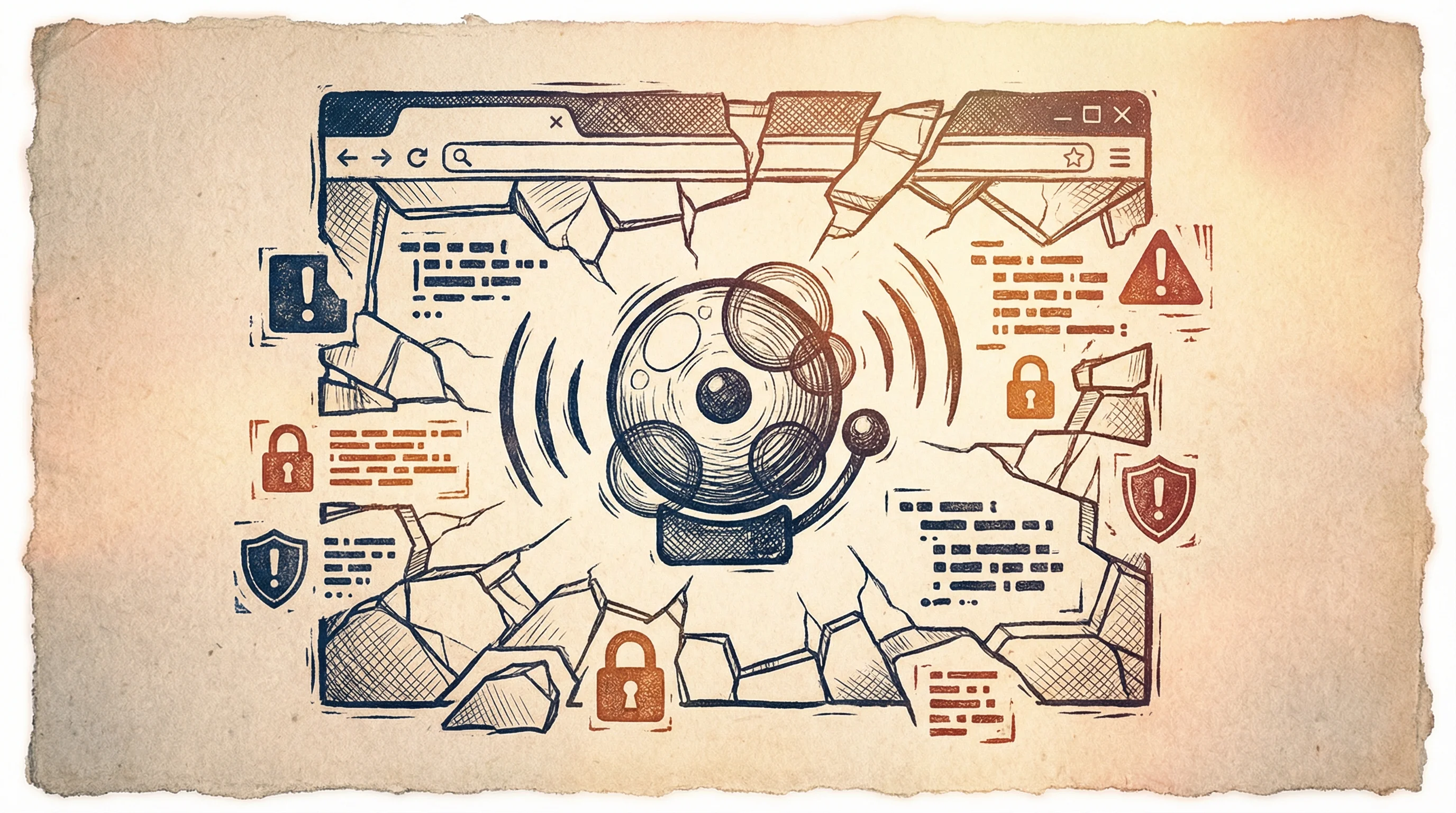
That same caution is echoed elsewhere in the industry, sometimes with an edge of alarm.
On January 13, 2026, Trail of Bits—a cybersecurity research firm known for finding vulnerabilities others miss—published findings on the security risks inherent in agentic browsers. Their research highlighted prompt injection attacks, where malicious actors could manipulate AI agents into revealing credentials or executing unauthorized actions.
The timing was notable. Just over two weeks later, on January 30, 1Password issued its own security advisory specifically addressing AI-assisted browsing. The company warned users to enable multi-factor authentication and carefully review which agents receive credential access. The implication was clear: this technology is moving faster than the guardrails.
It's a familiar pattern in Silicon Valley's history. The innovation arrives first, breathless and promising. The security infrastructure catches up later, usually after something goes wrong.
The Real AI Browsers

Other companies are charging ahead regardless. Perplexity, the AI search startup, has been teasing a browser product code-named Comet. OpenAI has reportedly explored a browser project internally dubbed Atlas, though details remain sparse and the company has declined to confirm its development timeline.
These aren't vaporware. They represent a genuine shift in how we might interact with the web—less active browsing, more delegated tasks. Tell your AI to book a flight, compare insurance policies, or research a purchase, and let it handle the clicking and scrolling.
The promise is convenience. The risk, as Trail of Bits and 1Password have both highlighted, is that we're potentially handing autonomous systems the keys to our digital lives before we've fully figured out the locks.
Why Phantom Products Matter
Which brings us back to the browser that doesn't exist.
In an industry that moves as quickly as enterprise tech, phantom products and premature announcements aren't uncommon. Sometimes they're honest miscommunications—a beta test mistaken for a launch, a partnership discussion reported as a done deal. Other times they reflect wishful thinking, or the tendency of rumors to calcify into assumed fact.
But they also reveal what the market expects, or fears, might be coming. The idea of a browser with native 1Password integration feels plausible because the underlying technology already exists. The components are there; someone will eventually assemble them.
For now, though, what exists is more fragmented: a framework here, a security advisory there, and a growing sense that the next generation of browsers will require a fundamentally different approach to trust and authentication.
1Password's Browserbase partnership offers one model. How many others will emerge—and how many users will adopt them before understanding the trade-offs—remains an open question.
The phantom browser, in other words, may not be real. But the future it supposedly represented is coming regardless. Just perhaps not quite yet.


