

Most software companies agonize over pricing for weeks, running spreadsheets and competitor analyses until someone finally signs off on a number. The founder behind boringBar—operating under the Hacker News handle "a-ve"—took a different approach. Launch the thing, see what happens, pivot before dinner.
On April 12, boringBar went live on Hacker News as a macOS Dock replacement with subscription pricing. Hours later, after watching feedback pile up in a thread that would eventually hit 334 points and 186 comments, a-ve did something that would make most product managers nervous: switched personal licenses to a perpetual model. In real time. While users were still commenting.
It's either impressively agile or worryingly reactive, depending on your tolerance for making critical business decisions in public.
The Problem boringBar Claims to Solve
Apple's Dock operates on app-first logic, which works fine if you're the kind of person who opens Safari once and calls it a day. But for users juggling multiple windows across different Spaces and external displays—say, three browser windows with different projects, two terminal sessions, a half-dozen Slack workspaces—the Dock becomes less helpful, fast. It groups everything by application, not by context, leaving you to hunt through Exposé or Command-Tab to find the right window.
boringBar replaces that with a Windows-style taskbar that organizes windows by desktop, showing only what's active on each display's current Space. The feature set skews toward power users: window thumbnail previews on hover, a searchable app launcher, a desktop switcher that displays per-desktop window counts. You can scroll on the bar to switch desktops, pin frequently-used apps, toggle between showing app names and window titles. It mirrors across multiple monitors and can hide the native Dock entirely, if you're ready to commit.
The app requires macOS 14 (Sonoma) or later. It also needs Accessibility permissions to interact with windows and desktops, plus Screen Recording access—though according to the FAQ, that's solely for generating thumbnail previews. The purple screen-recording indicator only appears during thumbnail capture, not continuously. Small comfort, perhaps, for the privacy-conscious.
A Pricing Model Rewrites Itself Mid-Launch

The Show HN post went live with what appears to have been subscription-only personal pricing. Then the feedback started rolling in. By the end of the day, a-ve posted an update in the thread: "based on the feedback, I've switched boringBar to a perpetual license for personal use … $40 for 2 devices and includes 2 years of updates … businesses keep annual pricing."
No A/B testing. No week-long deliberation. Just: here's what you said, here's what we're doing now.
The current pricing structure reflects that pivot. Personal users can choose between a $40 perpetual license—covering two devices with two years of support and updates, after which the app continues working but stops receiving new features—or yearly subscriptions starting at $7.99 for one device. Businesses stay on annual volume pricing: 6 seats run $20.99/year, 20 seats cost $69.99/year, 50 seats go for $144.99/year. Everyone gets a 14-day free trial, and payment processing runs through Stripe.
The terms of service, dated March 29, 2026, offer a seven-day refund window. The legal pages and privacy policy predate the launch by two weeks, which suggests this wasn't some weekend hack project thrown together on a whim. Someone planned this, even if the pricing model ultimately proved negotiable.
The Crowded, Confusing Dock Replacement Market
boringBar isn't exactly breaking into virgin territory. The market for Dock alternatives has existed for years, populated by apps with wildly inconsistent pricing and development trajectories.
uBar charges $30 for personal use, $50 commercial, and supports macOS versions going back to 10.13. Mac Taskbar released version 2.0 just three days before boringBar's launch, priced at $9.90 for lifetime updates. Sidebar offers €19.99 lifetime or €1.25 monthly. Tasky runs $12/year for updates with perpetual usage. DockFix sits at €15 lifetime, actively updated through version 4.2.1.
Pricing spans nearly an order of magnitude—from under $10 to $50—with no clear consensus on subscription versus perpetual models. Reddit threads describe past concerns about uBar's development pace, though the product still ships updates. It's a category defined by fragmented demand and inconsistent developer commitment, which creates an opening. Or a warning, depending on your read of the landscape.
Windows Logic Comes to macOS
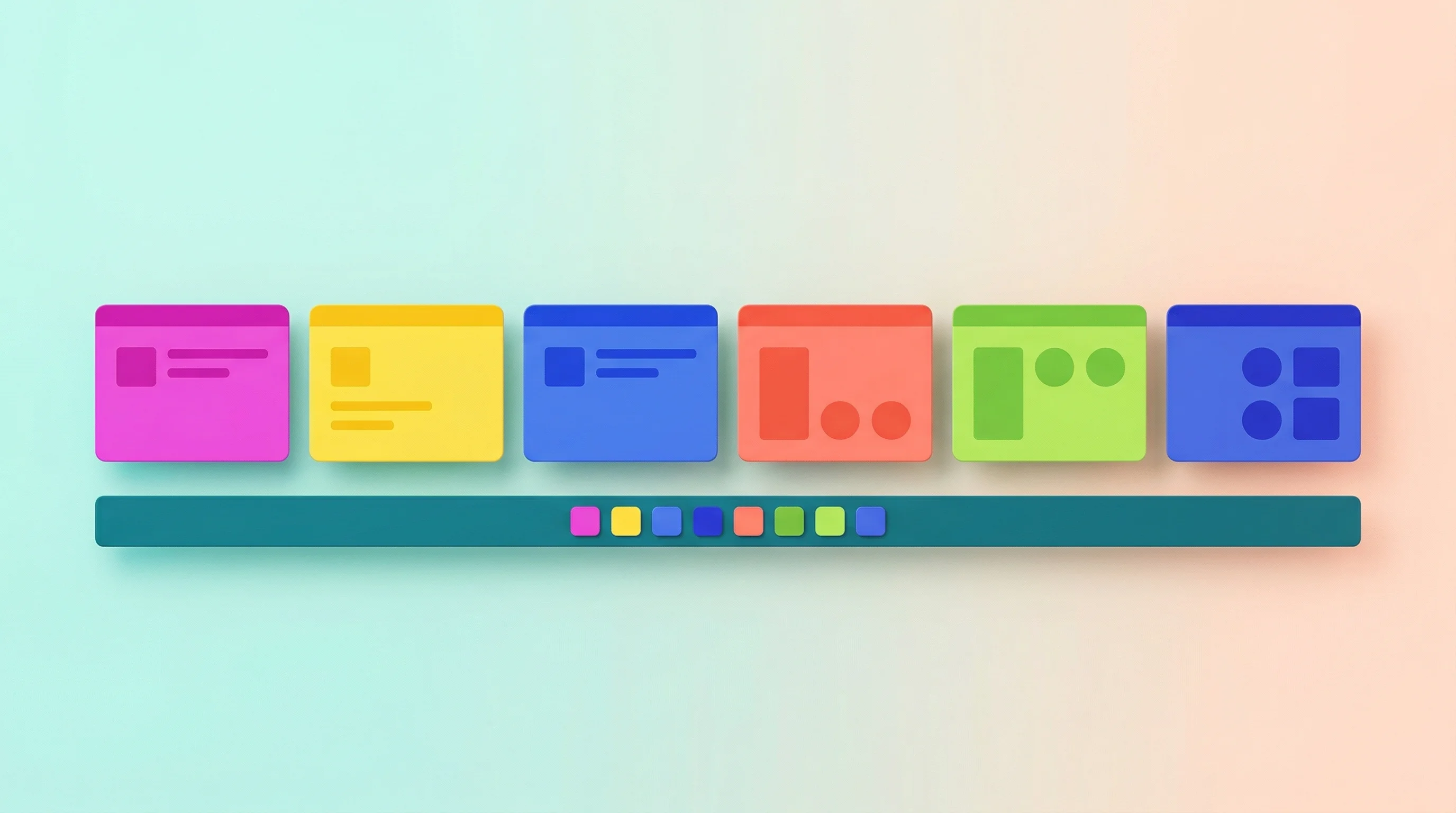
The core pitch is philosophical as much as functional. The native Dock privileges apps; boringBar centers windows. It's attempting to replicate the taskbar behavior familiar to anyone who's spent time on Windows or wrestles with complex multi-window workflows on macOS. Each desktop shows its own window set per display, theoretically reducing the context-switching confusion that comes with the Dock's all-or-nothing app grouping across Spaces.
Whether that resonates beyond power users managing dozens of windows across multiple monitors remains an open question. But the product addresses a genuine pain point—one documented in years of forum discussions about macOS window management—and the launch traction suggests at least some segment finds the native Dock inadequate. Whether that segment is large enough to sustain a business is the part nobody knows yet.
The Semi-Anonymous Indie Developer Playbook
The founder remains semi-anonymous. BORINGBAR LLC appears in the site footer, and the HN handle "a-ve" shows up in the launch thread, but no full name or background emerges from public pages. That's not particularly unusual for indie Mac utilities, though it contrasts with the personal-brand approach many indie SaaS founders embrace for credibility and distribution leverage.
Maybe anonymity is strategy; maybe it's just preference.
By April 13, the product had surfaced on aggregators from Japan to DevURLs, suggesting the Hacker News velocity carried it beyond the immediate tech community. What happens next is less clear. Whether $40 perpetual finds product-market fit better than the original subscription approach will play out over the coming months, as trial users hit the 14-day decision point and competitors continue shipping their own updates.
The pricing reversal offers a compressed case study in market feedback loops: launch with one model, read the room, pivot within hours. You could call it responsive. You could also call it a sign that the pre-launch research didn't quite land. Either way, it worked—at least in terms of generating attention and goodwill from a community that tends to reward founders who listen.
For now, boringBar stands as evidence that launch day doesn't have to be set in stone. And that a founder willing to adjust pricing mid-flight might turn community feedback into competitive advantage—assuming the product underneath the pricing experiment actually delivers. That part, as always, takes longer to prove.


