

The portable hard drives lugging around ten simultaneous 8K video feeds on movie sets turned out to have another calling: processing sensor data where fighter jets can't phone home.
Tsecond.ai, a San Jose company that started in 2020 building ruggedized computing systems for high-end film production, announced in early April 2026 that it had closed more than $21.5 million in financing—capital raised across several rounds over the past two years. The lead investor was MSN Holdings, the family office of Manish Nuwal, who runs Solar Industries India, one of the country's largest ammunition and explosives manufacturers.
It's the kind of pairing that makes sense only in the sprawling world of defense technology, where the line between commercial innovation and military application blurs fast. And it points to a larger shift: The next generation of battlefield AI won't live in distant cloud servers. It'll run in rugged boxes bolted to ships, tucked into forward bases, or strapped into reconnaissance drones—anywhere connectivity is terrible and decisions can't wait.
The DDIL Problem
Military planners have an acronym for the places where Tsecond's hardware matters most: DDIL environments. Denied, disrupted, intermittent, or limited connectivity. Think a submarine running silent. A special operations team behind enemy lines. A Navy destroyer navigating contested waters where satellites might not be reliable.
Traditional cloud computing assumes bandwidth is cheap and latency doesn't kill. In combat zones, neither is true.
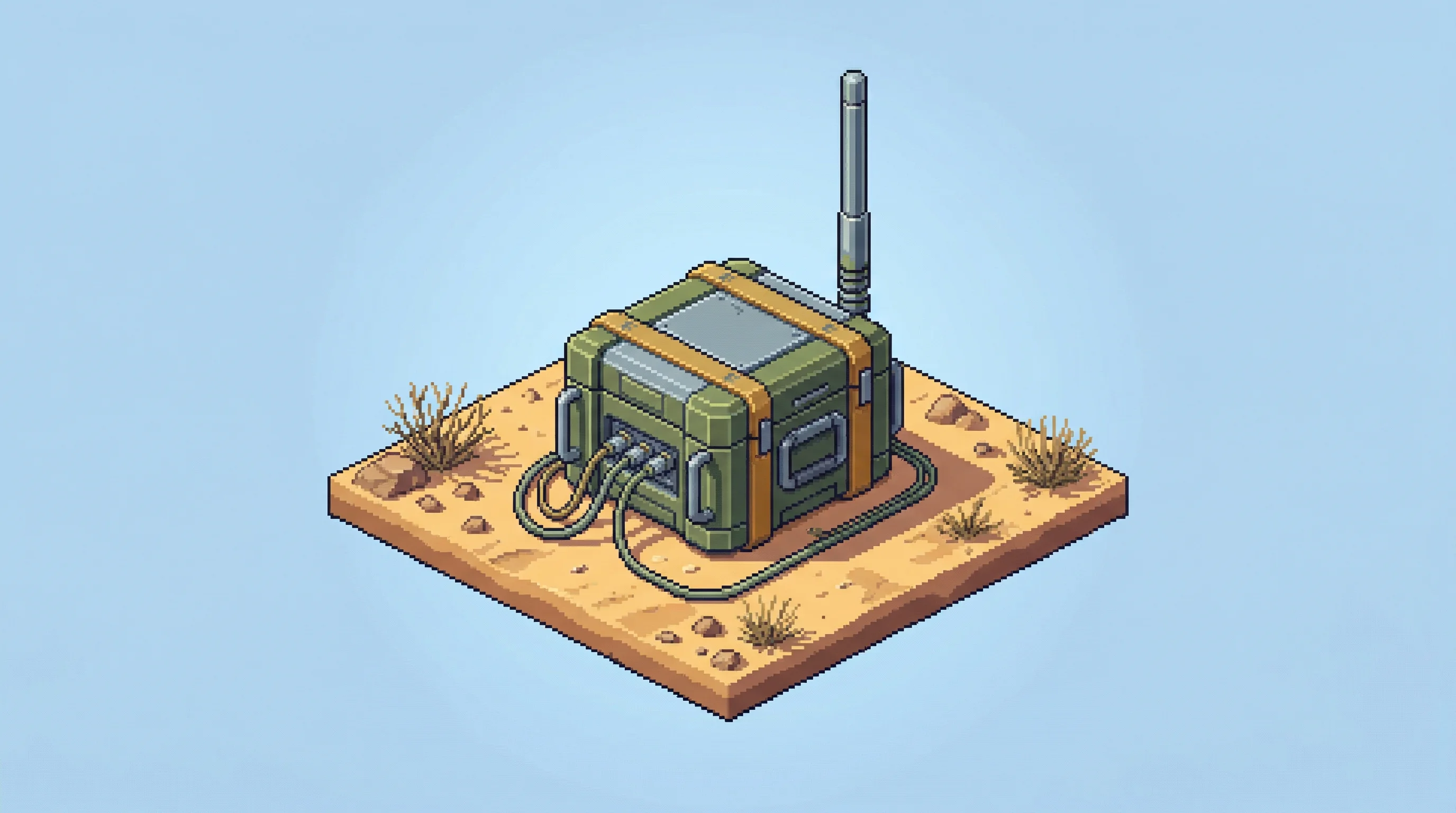
Tsecond's answer is the BRYCK platform—petabyte-scale portable storage and computing packaged to survive conditions that would destroy a data center. The BRYCK AI Mini, detailed in specs the company released earlier this year, weighs eleven pounds and packs 832 TOPS of AI inference capability, 128 terabytes of storage, and dual 100-gigabit Ethernet ports. It meets MIL-STD-810G environmental standards and 461E electromagnetic interference requirements, along with FCC Class A, CE, UL/cUL, and BIS/JSS 55555 standards. Translation: It can handle dust storms, ship decks, and the electromagnetic chaos of a battlefield.
The same unit that once ingested footage from ten RED cameras shooting at 8K resolution and 120 frames per second now fuses sensor data from ISR platforms and feeds autonomous systems that need to make decisions locally, not after a round trip to Virginia.
From Picture Shop to the Pentagon
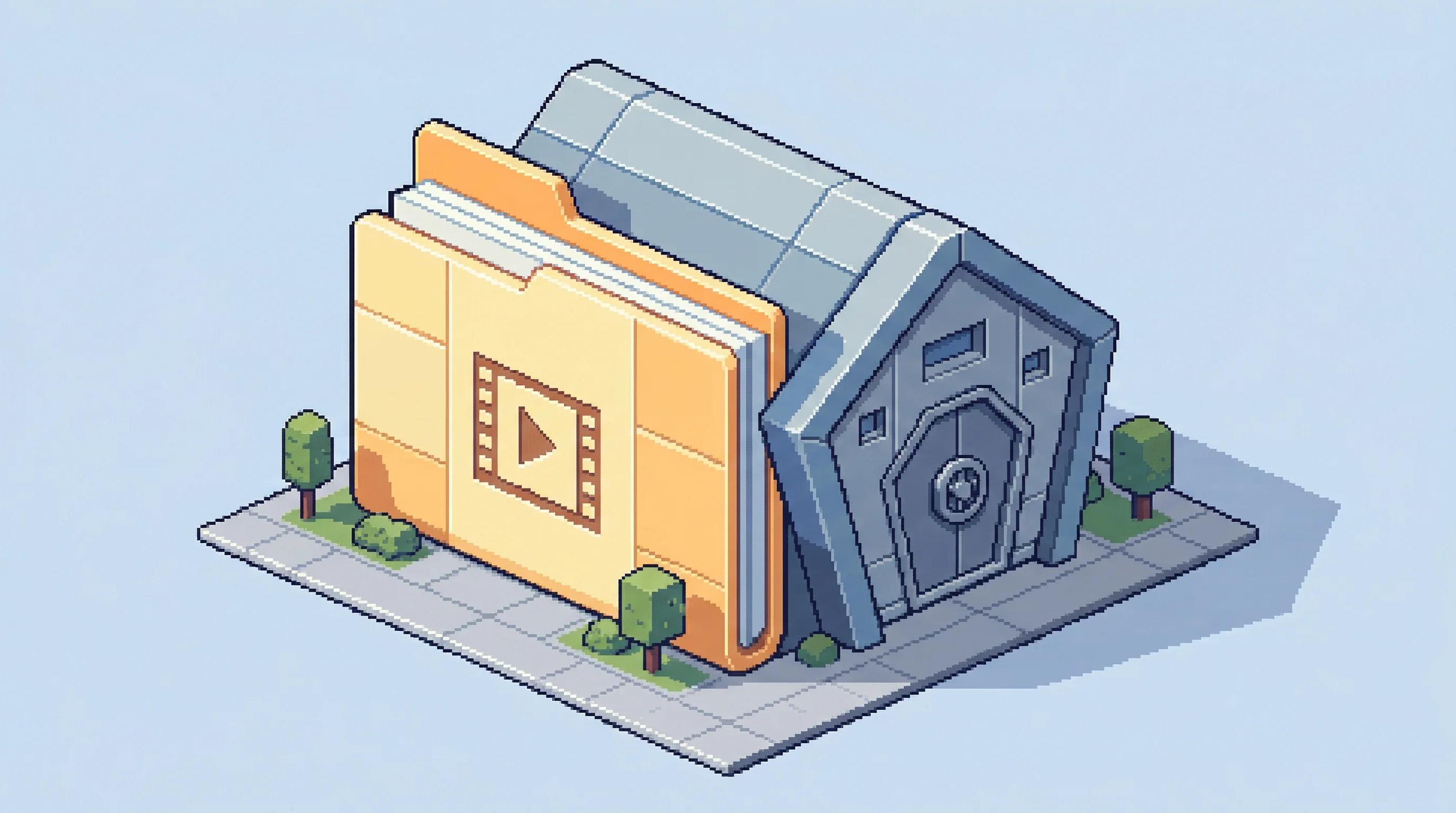
Tsecond's early customers included Picture Shop and Madison Square Garden Entertainment—outfits wrestling with massive video files and unforgiving production schedules. But defense applications proved more scalable, perhaps more than the founders initially expected.
The strategic logic isn't hard to follow. Hollywood needs portable powerhouses because film sets move constantly and bandwidth on location is often mediocre. The military needs the same portability for different reasons: Adversaries can jam communications, and relying on cloud infrastructure creates vulnerabilities.
MSN Holdings brings more than capital. Solar Industries supplies ammunition and explosives to India's armed forces. Nuwal, commenting to local press, highlighted Tsecond's growing footprint across defense programs in the United States, the UK, India, and parts of Europe. The investment appears designed to crack open India's rapidly expanding defense technology market, where local partnerships increasingly matter.
The funding announcement mentioned additional angel investors beyond MSN, though their identities were not disclosed. Tsecond has previously disclosed backing from AEI HorizonX, the growth-stage investment arm affiliated with Boeing and managed by AE Industrial Partners—a credential that carries weight in aerospace circles.
Building the Government Machine
Closing defense deals requires more than good engineering. It demands navigating procurement bureaucracies that move slowly and punish mistakes.
Last July, Tsecond hired Dr. Raj Iyer as President of Public Sector Markets. From 2020 to 2023, Iyer served as the U.S. Army's Chief Information Officer, overseeing IT modernization for more than a million users. Now he's steering Tsecond through the labyrinth of government contracts and compliance requirements.
The company has been methodical about distribution. On June 25, 2024, it partnered with Carahsoft, the dominant IT reseller to U.S. federal agencies, making BRYCK systems available through existing contracts. In the UK, it signed an exclusive deal with XMA. Last October came an integration with BigBear.ai's ConductorOS orchestration platform for what both companies called "tactical edge" deployments aimed at national security customers.
Validation in the Field
LinkedIn posts from Iyer reference exercises like Talisman Sabre—the massive biennial U.S.-Australia military drill—and T-REX, suggesting the hardware has been tested in realistic conditions. The company announced participation in The Open Group's SOSA Consortium in September 2025, aligning with Sensor Open Systems Architecture standards that U.S. defense programs increasingly mandate.
Product releases have come faster. In August 2025, Tsecond launched the BRYCK Block, a 128-terabyte modular NVMe drive unit. More recently, marketing materials promoted the BRYCK-FXR "fly-away kit," claiming TSA carry-on dimensions with up to a petabyte of storage, 2 terabytes of RAM, and NVIDIA GPU acceleration. The pitch: Deploy a tactical data center anywhere in the world with nothing more than checked luggage.
Whether that claim holds up in practice remains to be seen. Defense procurement moves slower than marketing cycles.
The Bigger Bet

Tsecond incorporated an India subsidiary in August 2023. LinkedIn data suggests the company employs somewhere between 30 and 50 people—small enough to move quickly, large enough to suggest it's moved past the earliest validation stages.
The funding will support what the company describes as "global expansion" and "strategic growth initiatives," language vague enough to cover almost anything. News reports have estimated a post-money valuation between ₹2,600 and ₹3,000 crore, roughly $310 million to $360 million, though Tsecond hasn't confirmed those figures.
The timing makes sense in context. Defense AI is drawing extraordinary capital. Shield AI announced in March it was raising $1.5 billion at a $12.7 billion valuation for its autonomous aircraft systems. Broader market projections suggest military AI spending could grow from around $16 billion in recent years to more than $35 billion by 2030, driven largely by demand for systems that can operate when communications are unreliable or severed entirely.
That's the environment Tsecond is betting on: contested battlefields where decisions happen at the edge, not in distant server farms. Where latency isn't measured in milliseconds but in whether soldiers come home.
It's a market where hardware that once hauled Hollywood footage might end up processing targeting data. Where family offices built on explosives invest in edge computing. Where the distance between a film set and a forward operating base turns out to be shorter than anyone expected.


