

Human brain cells are learning to play Doom.
Not as some biotech stunt, but as the foundation for what a small cohort of researchers and startup founders believe could be the next computing paradigm—one that might, eventually, challenge the silicon orthodoxy powering today's AI boom. While tech giants pour hundreds of billions into sprawling data centers that gulp electricity at an alarming rate, a handful of labs and companies are betting on something altogether stranger: wetware. Living neurons. Interfaced with electrodes. Learning.
The timing feels pointed. Data centers are projected to consume 565 terawatt-hours of electricity in 2026 according to recent Gartner forecasts—a 26% jump from 2025. The International Energy Agency has reported double-digit growth in data center electricity demand, with AI-focused facilities expanding even faster. Already, by some estimates, these facilities account for around 1.5% of global electricity use. The question hanging over the industry isn't subtle: How long can this go on?
What They're Calling It Now
The field has acquired a name: organoid intelligence, or OI. Johns Hopkins researchers coined the term in 2023, and it's stuck. The basic idea is straightforward, if unnerving. You culture human or animal neurons—either as flat layers or as three-dimensional "organoids" that approximate brain structure—and connect them to multi-electrode arrays. Electrical pulses stimulate the neurons. Sensors record their responses. Close the loop with feedback, and you've got a system that can, in theory, learn.
The early results are modest. Also striking.
October 2022: Cortical Labs, based in Melbourne, publishes a paper in Neuron demonstrating that cultured neurons can learn to play Pong. The team called their setup DishBrain—cultured cells on a chip, playing a video game through electrical feedback.
August 2025: A University of Bristol team, working remotely via FinalSpark's cloud-based platform in Switzerland, achieves 61% accuracy on Braille character recognition with a single organoid. With three organoids working in ensemble, they hit 83%.
February 2026: Researchers at UC Santa Cruz show goal-directed learning in cortical organoids using a cart-pole balancing task—the kind of problem typically thrown at reinforcement learning algorithms.
April 2026: A Princeton team unveils a 3D device that trained living neurons to recognize patterns over a six-month period.
These aren't party tricks, exactly. They represent something more fundamental: computation that exploits the brain's native plasticity rather than attempting to simulate it with transistors and billions of lines of code.
The Convergence

Two forces are colliding.
First, AI's energy problem is becoming acute. Corporate capital expenditures on AI infrastructure topped $400 billion in 2025, with significant increases projected to continue. Most of that goes to power-hungry GPUs and the industrial cooling systems required to prevent them from melting into exotic metals. FinalSpark's platform, by contrast, has been running continuously for four years, testing more than 1,000 organoids and logging over 20 billion neural spikes. The company hasn't released detailed energy comparisons in peer-reviewed journals, but the system's footprint is—by all informal accounts—dramatically lower than equivalent silicon.
Johns Hopkins researchers have suggested the possibility that biocomputing could slash AI energy use by a factor of one million to ten billion—a figure cited in National Geographic coverage from mid-2025. This remains speculative, not consensus science, and represents an aspirational goal rather than a validated benchmark. But even capturing a fraction of that efficiency would reshape the economics of machine learning.
The second force: mounting evidence that biological systems offer computational shortcuts silicon can't easily replicate. Neurons adapt with far fewer training examples than deep reinforcement learning models require. A 2024 arXiv comparison of DishBrain's Pong performance to conventional deep RL noted the biological system's sample efficiency—though the paper also flagged stability and reproducibility challenges. The recurrent dynamics and plasticity baked into neural tissue, refined over millions of years of evolution, seem genuinely useful for certain tasks. Whether that utility scales remains an open question.
Money is starting to follow. The National Science Foundation launched its EFRI Biocomputing through EnGINeering Organoid Intelligence (BEGIN OI) program in 2024, explicitly embedding ethics alongside technical goals. The NIH's BRAIN Initiative has expanded neuroethics funding. DARPA is investing in the space, according to reporting from STAT News. And private capital is arriving: The Biological Computing Company raised $25 million in seed funding in February 2026—a noteworthy round for a field still very much in its infancy.
Who's Building This
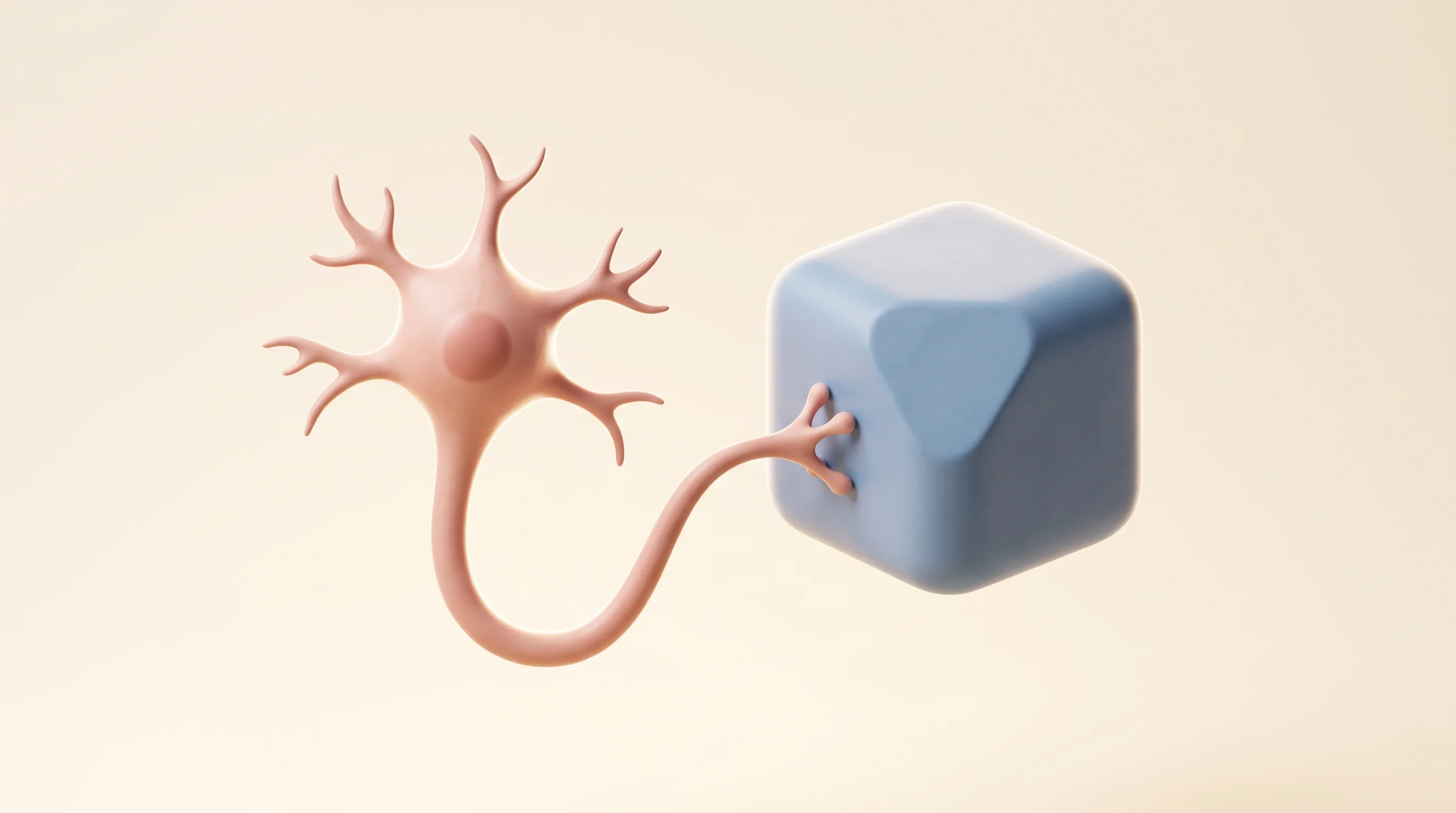
Parasma might be the most audacious entry yet.
The San Francisco startup emerged from Y Combinator's Summer 2026 batch with a pitch that sounds like science fiction: "algorithms and infrastructure that turn living neurons into programmable compute." Founder Sean Cole's initial demonstration involved training roughly 200,000 cultured neurons to play Doom, the seminal first-person shooter that has somehow become a benchmark for improbable computing substrates. More recently, Parasma has shown token prediction from neural activity—encoding text or video frames into stimulation patterns, then decoding the neurons' spike responses into usable outputs.
In June, Parasma published a detailed ethics note addressing the consciousness question head-on. The document argues that 200,000-neuron cultures lack the complexity for sentience, citing frameworks like Integrated Information Theory and Global Workspace Theory. The stimulation parameters—low-amplitude, charge-balanced pulses in the microampere range—are designed to avoid tissue damage. The note acknowledges, with some candor, that the ethical calculus will grow murkier as systems scale.
Cortical Labs is further along the commercialization path. The Melbourne company has been operating racks of internet-connected CL1 devices—branded biocomputer hardware—since September 2025. In February, Cortical Labs released a preprint describing the CL API, software enabling sub-millisecond closed-loop interactions with biological neural networks. That same month, the company announced a collaboration with Reply and the University of Milan. A month later came undisclosed venture funding from Horizon Ventures, 3C, and Gobi Partners, followed by a partnership with DayOne to develop what they're calling Singapore's first "biological data center." The facility is expected to begin taking shape around September, with a target of roughly 1,000 CL1 units—assuming the technology holds up at that scale.
FinalSpark, operating out of Vevey, Switzerland, has taken a different tack: wetware-as-a-service. The company's Neuroplatform offers cloud access to organoids interfaced with multi-electrode arrays. Academic users can reportedly access the system for around $500 per month, though that pricing hasn't been officially confirmed for current periods. The platform has supported peer-reviewed research, including the Bristol Braille work. By the time FinalSpark published its platform paper in Frontiers in Artificial Intelligence in 2024, some organoids had survived roughly 100 days—a longevity milestone in a field where cells often degrade after weeks.
The Hard Parts
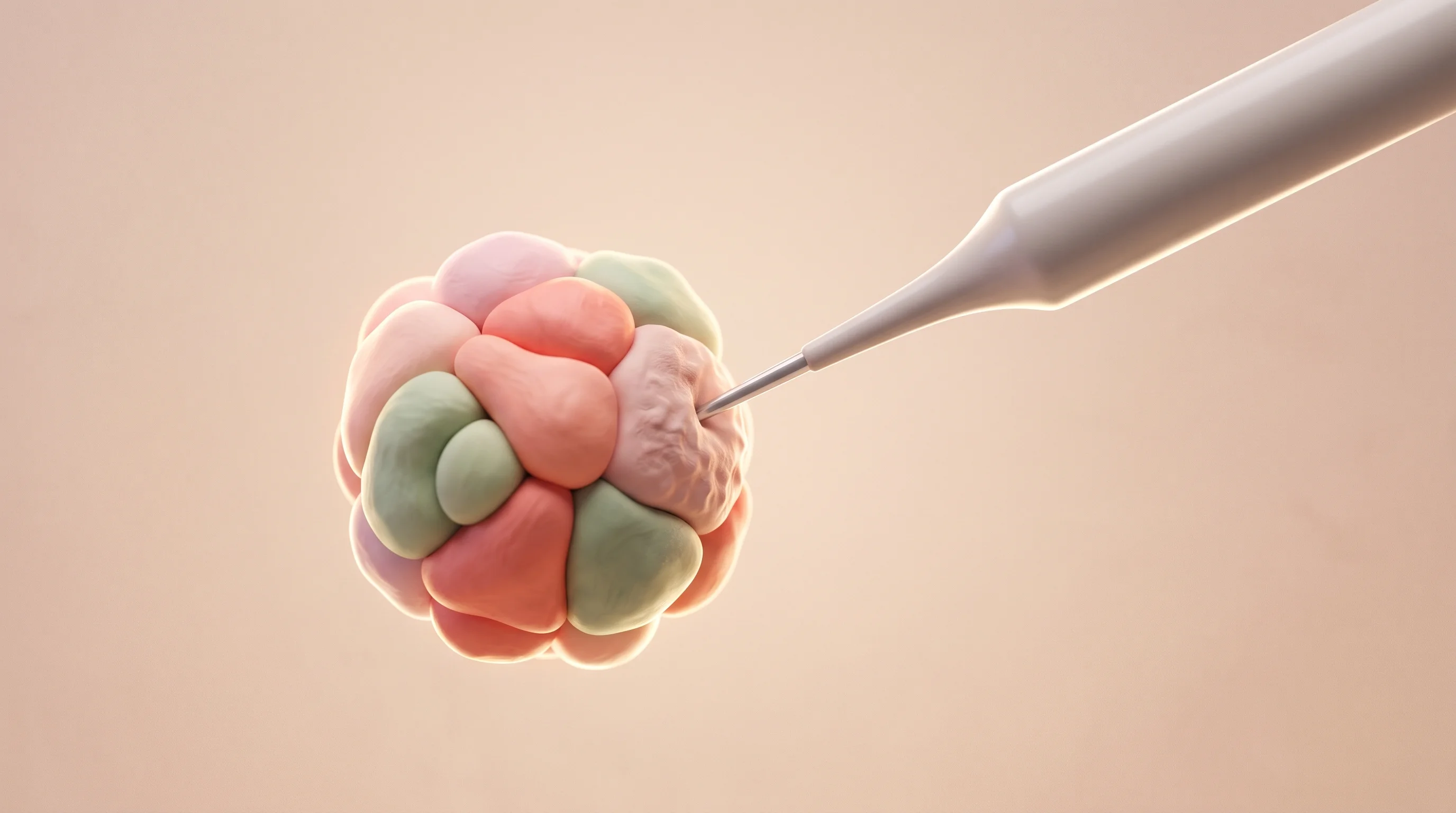
The technical obstacles are considerable, perhaps insurmountable.
Organoids are temperamental. They degrade under sustained electrical stimulation. Electrode impedance drifts over time. Biological variability between cultures makes reproducibility maddeningly difficult—a problem silicon engineers solved decades ago. The interface bandwidth is limited: even advanced multi-electrode arrays capture a tiny fraction of the synaptic connections present in a small patch of brain tissue. Scaling from thousands of neurons to millions, let alone the billions required for anything resembling general intelligence, will demand breakthroughs in perfusion, vascularization, and manufacturing consistency that don't yet exist.
Then there's the ethics question, which is intensifying.
A Nature commentary published in late July 2026 warned that biocomputing currently relies on altruistic cell donations governed by frameworks designed for biomedical research, not commercial computing infrastructure. The authors called for independent review committees tailored specifically to wetware applications. The International Society for Stem Cell Research's 2021 guidelines remain the baseline, but they were written before anyone seriously contemplated neurons-as-a-service business models.
Tony Zador, a neuroscientist at Cold Spring Harbor Laboratory, told STAT News in late 2025 that chasing parity between organoid intelligence and silicon might be "a dead end." He may be right. But the researchers and founders pushing this frontier aren't necessarily gunning for parity. They're exploring whether biological computation offers unique advantages for narrow problem sets—adaptive learning with minimal examples, low-power inference, tasks requiring rapid generalization from sparse data.
What Comes Next
The next couple of years will likely bring an expansion of biocompute-as-a-service platforms, more sophisticated closed-loop APIs, and the first attempts at "bio data centers" that move beyond benchtop experiments. Federal funders are already requiring ethics plans as a funding condition, signaling tighter oversight ahead. Whether this becomes a billion-dollar industry or an obscure footnote in computing history hinges on solving the hard problems: stability, standardization, consent, scale.
For now, the race is underway. And the chips—if that word still applies—are alive.


