

Seattle's BRINC Drones has secured $125 million in fresh capital, with public safety technology giant Motorola Solutions leading the round—a vote of confidence that underscores the accelerating race to put autonomous aircraft above America's crime scenes and fire emergencies.
The financing, announced July 14, 2026, marks Motorola's second major investment in BRINC within 15 months. Index Ventures and Dylan Field, the Figma co-founder, also participated, bringing the startup's total capital raised to more than $250 million since founder Blake Resnick launched the venture in 2019. BRINC declined to disclose its valuation.
For Motorola, the commitment goes beyond a simple check. The Illinois-based company, which equips police departments and emergency services across the globe, first backed BRINC in April 2025 with a $75 million round designed to weave the startup's drones into Motorola's CommandCentral Aware platform and radio infrastructure. By October 2025, officers could summon a BRINC drone with a button press on their APX NEXT radios—no laptop, no dispatch delay.
That integration is already yielding real-world deployments. On July 6, the Evansville Police Department in Indiana went live with a drone-as-first-responder program, using BRINC's Responder model and automated docking stations routed through Motorola's network. It's the kind of operational proof point investors notice, particularly when the investor also happens to be your largest distribution partner.
Motorola's drone ambitions extend well beyond BRINC. The company announced plans on June 1 to acquire D-Fend Solutions, a counter-drone specialist, for $1.5 billion—a deal that would give Motorola both offensive and defensive drone capabilities as unmanned aircraft become fixtures in urban airspace.
Scaling Up
BRINC intends to pour the new capital into domestic manufacturing expansion, product development, and what the company describes as "scaling go-to-market operations"—startup parlance for hiring more salespeople. By year's end, BRINC expects to occupy a factory three times larger than its current Seattle production facility.
The company says it more than tripled revenue in 2025 and quintupled monthly production capacity during that stretch, though it hasn't released hard figures. In March, BRINC unveiled Guardian, a 911 response drone capable of 62-minute flights at speeds up to 60 mph, equipped with satellite connectivity for coverage beyond cellular range.
Perhaps the most revealing detail: a June job posting from Index Ventures noted that BRINC serves over 600 public safety agencies. The company officially reported serving more than 500 agencies as of May 2024, though the actual number has likely grown since then.
The Founder's Origin Story
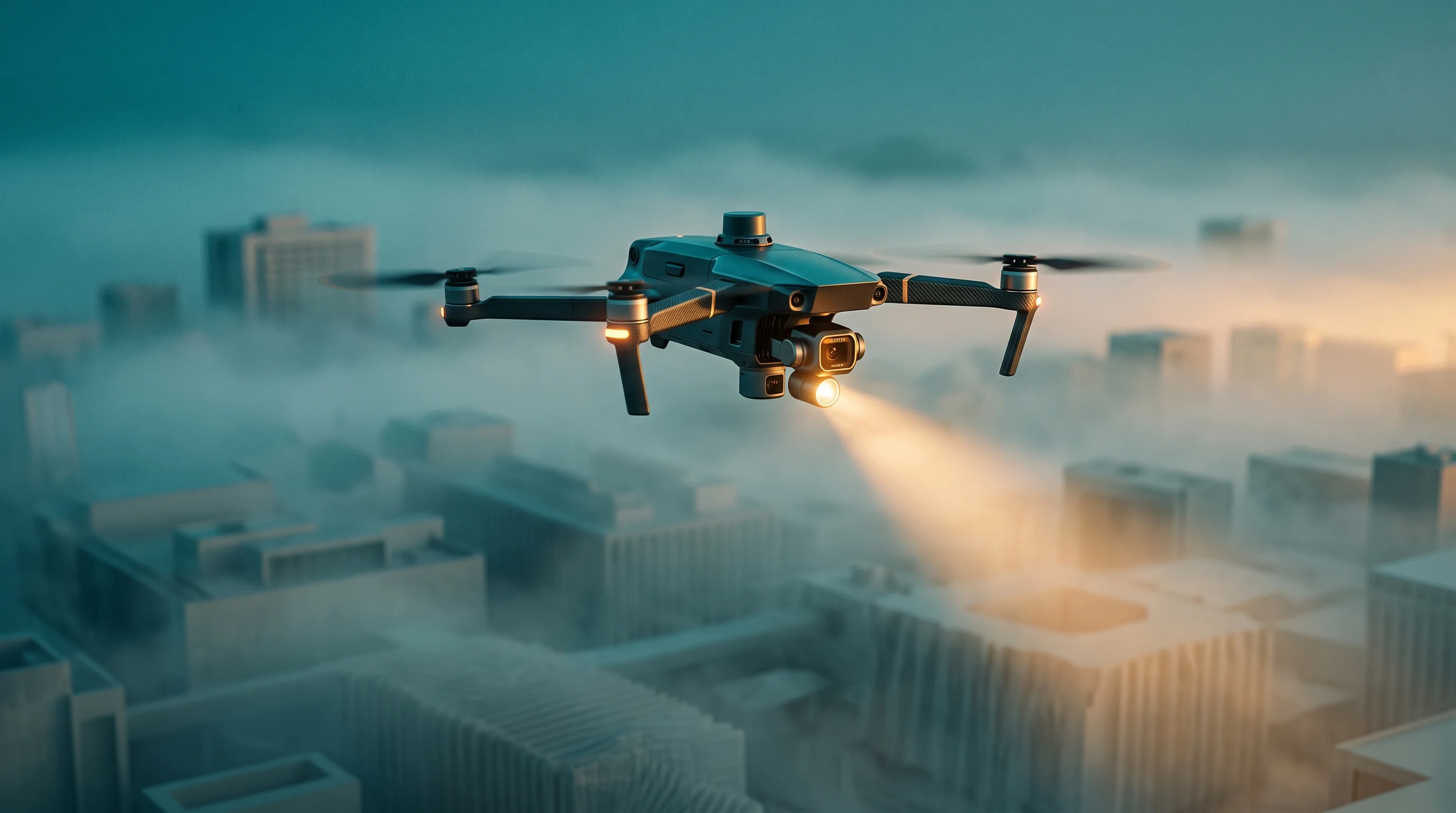
Resnick, a Thiel Fellow who left Northwestern University to build BRINC, has repeatedly cited the 2017 Las Vegas shooting as his founding motivation. The idea: automated drones could provide situational awareness in active emergencies before officers arrive on scene, potentially saving lives in those critical first minutes.
Early believers included Sam Altman, now CEO of OpenAI, who led BRINC's $2.25 million seed round. Index Ventures led the company's $25 million Series A in October 2021, back when autonomous emergency response was still a speculative category.
Now BRINC is chasing an audacious goal—placing a 911 response drone at roughly 80,000 police and fire stations nationwide. The company's automated docking stations are central to that vision, enabling around-the-clock deployment without requiring an officer to manually prep and launch each flight. Whether the economics pencil out at that scale remains an open question. But with Motorola's distribution muscle and deepening investment, BRINC has arguably the strongest partner it could hope for to find out.


