

George Favvas knows telehealth. Over a decade, he built Circle Medical into a telehealth operation pulling in $100 million annually, navigating the regulatory thickets and reimbursement headaches that come with virtual care at scale. So when he decided to start over, he didn't pick something safe.
His new venture, Clara Health, launched in mid-May with a proposition that feels both inevitable and unsettling: an AI system that reads your medical history, drafts your prescriptions and lab orders, then hands everything to a licensed physician for final approval. It's primary care, but the first responder isn't human. The question is whether patients—and the doctors themselves—will buy in.
Clara arrived with $12 million in pre-seed funding, with participation from Y Combinator and A.Capital, a notable haul for a company at such an early stage. The San Francisco startup markets itself as an "AI-powered primary care doctor" available around the clock through secure messaging, though the fine print is careful: the AI itself isn't a physician. Every clinical decision still flows through board-certified clinicians licensed in the patient's state. That distinction isn't just legal boilerplate. It's the business model.
The Pitch: AI as Triage, Humans as Gatekeepers
Here's how it works, according to the company. Clara claims to ingest medical records from a network spanning more than 150,000 hospitals, labs, and pharmacies, though independent verification of that scope isn't publicly available. The AI reads through the histories, drafts prescription refills and care plans, then routes everything to a human doctor for review and sign-off. Patients interact mostly through asynchronous chat, with video visits available on pricier plans.
The service doesn't accept insurance for membership fees, a deliberate choice that sidesteps reimbursement complexity but narrows the addressable market to those willing to pay out of pocket. Patients can still use insurance for the labs and prescriptions Clara orders, but the monthly access fee is cash-pay.
Three tiers define the offering. Basic runs $25 a month: unlimited AI chats, doctor-reviewed prescriptions and lab orders, medical records sync. Standard costs $50 monthly and adds wearable device integration, one video visit per quarter, and comprehensive biomarker testing—71 markers, twice a year. Concierge, at $150 monthly, ups the cadence to one video appointment per month and expands the lab panel to 88 biomarkers twice yearly. All memberships qualify for HSA and FSA reimbursement, a nod to the tax-advantaged health spending many consumers now navigate.
The conditions Clara treats read like a standard primary care roster: acid reflux, allergies, cold and sinus infections, fatigue, hypothyroidism, menopause, type 2 diabetes, UTIs, weight loss. Controlled substances are off-limits, a boundary that reflects both regulatory caution and the limits of asynchronous care.
Circle Medical Alumni, Round Two
Favvas didn't build Clara alone. He brought in Caitlin Swift and Zeeshan "Zee" Ahmed, both Circle Medical veterans. Swift ran clinical operations there as GM and VP, overseeing roughly a million telehealth encounters annually across a network of 425 providers. Ahmed led product design at Circle Medical after stints at Meta, Instagram, and Careem, where he honed a feel for consumer-facing health interfaces.
The founding team brought in outside clinical and regulatory firepower, perhaps recognizing that AI-first healthcare draws scrutiny. Brendan Levy, who founded HeyDoctor (YC S17) and held senior positions at GoodRx, joined as CMO. Claudia Tucker, previously SVP of Government Affairs at Teladoc, came aboard as VP of Government and Regulatory Affairs. Tucker's hire signals awareness of the compliance maze ahead.
Early on, the team was lean—nine people as of mid-2026, though that number has likely evolved. Job postings for founding engineers appeared on Y Combinator's board with salaries ranging from $140,000 to $215,000 and equity grants between 0.10% and 0.40%, standard for early-stage startup roles in San Francisco.
Longevity Ambitions, National Scale
The investor roster for the pre-seed round includes Liquid 2 Ventures (the fund run by Joe Montana and Matthew Mulvey), SV Angel, and a cluster of well-known angels including Tim Abbott, Immad Akhund, Vinny Lingham, Jude Gomilla, Kevin Hartz, Brian Pokorny, and Dan Burleigh. Y Combinator accepted Clara into its Spring 2026 batch, lending the credibility that comes with that brand.
The company's stated mission borders on grandiose: "Adding 1 billion years of healthy lifespan to humanity." That longevity framing isn't just rhetoric. It surfaces in the product itself. Standard and Concierge members get extensive biomarker panels, and the service integrates with wearables—Oura Ring, Fitbit, Peloton—to track evolving health data over time. The implicit promise: catch problems early, optimize continuously, extend healthspan.
According to its Y Combinator profile, Clara operates as "a fully licensed primary care practice in all 50 states," a claim that suggests significant regulatory legwork. The company's own website is vaguer, stating only that medical recommendations are confirmed by a licensed clinician in the patient's state. No detailed state-by-state breakdown appears publicly, which may reflect the complexity of maintaining licensure and malpractice coverage across jurisdictions.
The Human-in-the-Loop Problem

Clara's positioning sits in uncomfortable territory. The company markets itself as an "AI-powered doctor" while simultaneously making clear the AI is not itself a physician. The homepage footer reads: "Clara is an AI-powered doctor, not a licensed physician. AI-generated outputs are informational only… All clinical decisions are made by Clara's licensed physicians, who review every prescription and lab order."
That distinction isn't semantic. It's existential. Physicians have expressed skepticism—sometimes vocal—about fully autonomous AI chatbots handling medical care. A January 2026 TechCrunch piece documented clinician concerns about chatbot-first models. Clara's approach acknowledges those worries by emphasizing the human physician layer, but it also raises a question: if every decision requires physician review anyway, how much efficiency does the AI really add?
Draft orders generated in Clara's chat interface expire each calendar day if not sent for clinician review, a safeguard to ensure no clinically relevant information has changed in the interim. Telehealth services flow through affiliated professional entities listed in the terms of use, and clinicians are described as exercising independent professional judgment—language designed to meet regulatory standards and protect against malpractice exposure.
The company holds LegitScript certification, a credential that signals safe, legitimate prescribing practices to payment processors and regulators. It's also a member of the American Telemedicine Association. Clara states it operates as a HIPAA-compliant medical practice with a dedicated trust center, table stakes in an industry where data breaches can be catastrophic.
A Crowded, Contested Market
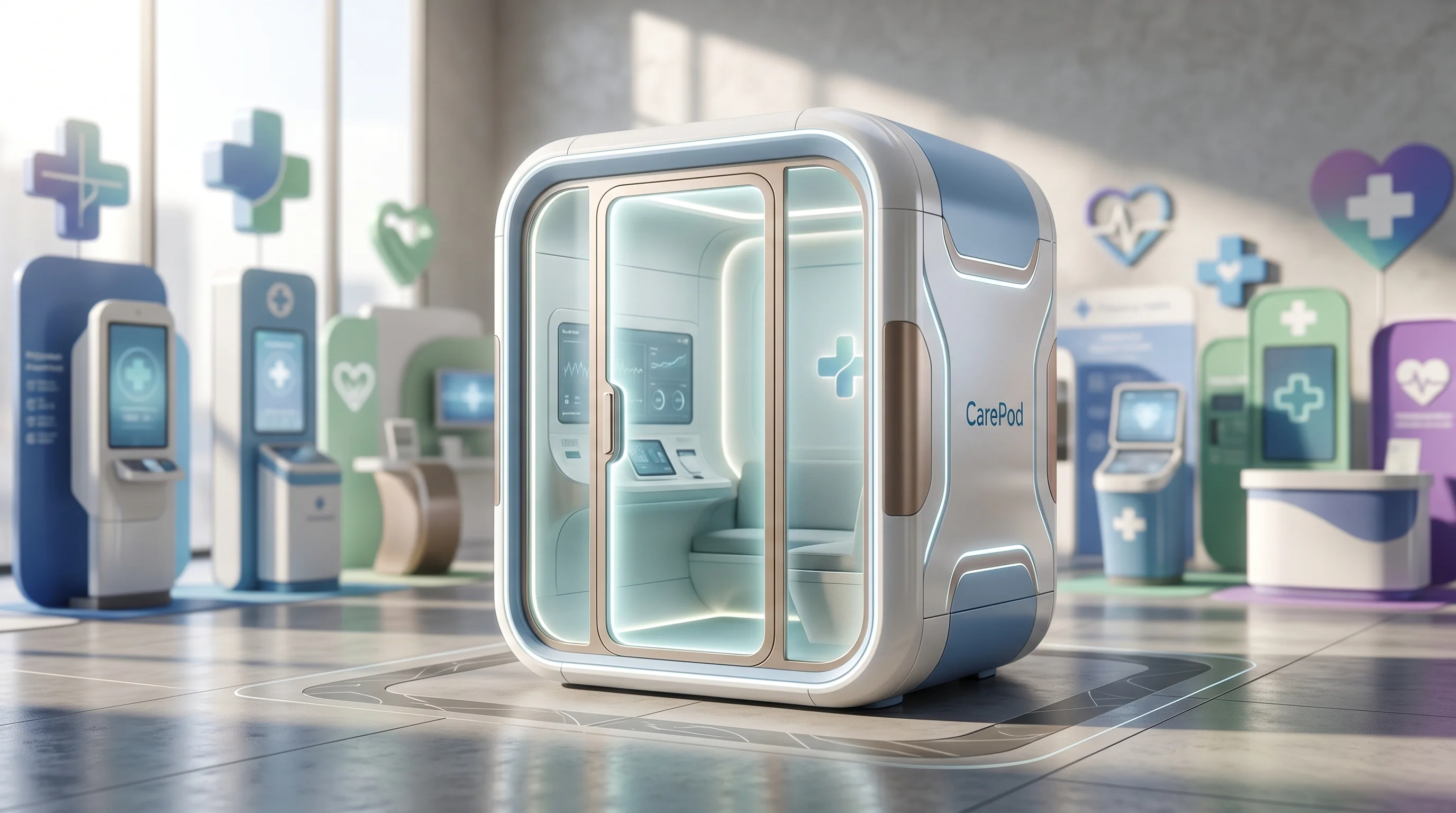
Clara enters a market already thick with competitors, each taking their own angle on virtual primary care. K Health, Curai, and Firefly Health all offer AI-assisted or virtual-first models. Forward launched AI-enabled CarePods in 2023, though the company's current status is uncertain. Certuma, the latest venture from serial entrepreneur Martin Varsavsky, is pursuing FDA approval for what it calls an AI doctor, according to a March 2026 Forbes profile.
Teladoc operates Primary360 at vastly larger scale, and it's worth noting that Clara's VP of Government Affairs came from Teladoc's senior leadership—a hire that suggests both deep regulatory knowledge and perhaps some strategic insight into where the incumbent stumbled.
What sets Clara apart, at least in theory, is the full stack: AI that drafts orders based on imported medical histories, physician review of every decision, tiered pricing with longevity-focused lab panels, and the explicit framing as an always-available AI doctor (with disclaimers attached). Whether that combination resonates with consumers hunting for primary care alternatives—or with physicians weighing the model—remains an open question.
Credibility Versus Uncertainty

The team brings operational credibility. Circle Medical's scale demonstrates their ability to build virtual care infrastructure that actually works. The regulatory and clinical hires suggest they understand the compliance thicket. And $12 million in early capital gives them runway to test whether patients will pay cash for AI-assisted, physician-supervised primary care delivered asynchronously.
Still, it's early. Clara is a small startup with outsize ambitions and a product that straddles the line between AI tooling and traditional medical practice. Whether the model delivers on its healthspan promises—or whether consumers and clinicians trust the physician-in-the-loop approach enough to adopt it at scale—will take time to answer.
For now, Favvas and his team are betting that the future of primary care looks less like a doctor's office and more like a chat interface with algorithms underneath and licensed physicians standing watch. That future may be arriving faster than the healthcare establishment is ready for. Or it may be another well-funded experiment that learns, the hard way, why medicine resists automation.


