

The pitch from AI coding tools has become almost frictionless: install the extension, connect your editor, watch as pull requests write themselves. GitHub Copilot will scaffold your tests. Claude Code will debug that memory leak, install the dependencies, maybe even push the fix upstream. All you have to do is say yes.
Which is precisely what makes security engineers nervous.
Because here's what else those assistants might do: leak your AWS credentials to a logging service you've never heard of, phone home to a compromised package registry, or quietly upload proprietary source code through a network call you didn't approve. The attack surface grows with every permission granted, every shell command executed without scrutiny.
Clawk—released as open-source software in mid-July—approaches the problem with the bluntness of a Unix sysadmin: if you don't trust the agent, don't run it on bare metal. Run it inside a disposable Linux virtual machine instead. Lock down the network. Mount only what you need. Treat the coding assistant like you would any other untrusted process with sharp edges and a tendency to surprise you.
The project landed on Hacker News with the kind of immediate traction that suggests it hit a nerve—189 points and 142 comments within 24 hours. Developers debated whether this was overkill or overdue. Some wondered if a separate physical machine might be simpler than managing local VMs. Others pointed to competing tools, hypervisor vulnerabilities, the philosophical question of where productivity ends and paranoia begins.
But the interest was real. And that probably says more about the current state of agent security than any white paper could.
Isolation, Twice Over
Most existing sandboxes for coding assistants rely on OS-level containment—macOS sandboxing profiles, Linux namespaces, the occasional permission prompt. Clawk takes a different tack. It adds a second boundary layer, and the architecture is more aggressive than what most developers run today.
The first line of defense is the VM itself: a separate Linux kernel, an isolated filesystem, no visibility into your host directories unless you explicitly grant it. The second is a DNS-aware network filter enforced below the guest operating system, in a userspace TCP/IP stack controlled by the host-side daemon. Even if an attacker gains root access inside the VM, they can't reconfigure the firewall rules. The guest doesn't see them.
That setup allows Clawk to do something counterintuitive. It can launch agents with their native permission checks disabled entirely. Claude Code, for instance, ordinarily prompts users before executing shell commands. Clawk boots it with a flag called --dangerously-skip-permissions, reasoning that the VM and network filter are already doing the containment work. An optional --safe mode restores the prompts if you prefer redundancy, though the project's posture is clear: trust the architecture, not the agent.
The README is refreshingly blunt about residual risks. Whatever you mount or allow-list can still be exfiltrated to permitted endpoints. Forward your SSH agent, and the guest can push code to any allowed Git host. Hypervisor escapes remain theoretically possible, though Clawk leans on battle-tested foundations—Apple's Virtualization.framework on macOS, Firecracker on Linux. These aren't experimental technologies.
Still, it's worth noting: this is pre-1.0 software, and the project's GitHub documentation notes that breaking changes are expected.
Minimalist by Design
The workflow is deliberate in its simplicity. Navigate to a repository, type clawk, and a per-project disposable VM boots from an OCI container image. By default, that image bundles Go, Node, Python, Rust, Bun, Zig, and common CLI utilities—a Swiss Army knife for modern development. You can substitute any OCI image or override the guest kernel to enable nested virtualization, useful if the agent needs to spin up Docker containers or Kubernetes clusters inside the sandbox.
Attach a runner—clawk claude, clawk codex, or clawk shell—and you're working inside the guest. Agent conversations and memory persist on the host under a hidden directory. The VM's root disk is ephemeral; stop and restart freely without worrying about state accumulation. Snapshot commands let you hibernate the guest to disk and resume later, though on macOS, idle VMs automatically shut down after 30 minutes to conserve resources.
Network policy is declarative and deny-by-default. Common package registries and language tooling endpoints come pre-allowed—npm, PyPI, crates.io—but everything else requires explicit approval. You can add domains at runtime, inspect denied connection attempts with a single command, or pull in external blocklists that refresh on a schedule. The enforcement happens in gvproxy, a userspace gateway forked into the host daemon, invisible to the guest.
Port forwarding works as you'd expect: map a localhost port on your machine to a service running in the VM. Files and secrets can be copied in at boot through a configuration file that also controls CPU allocation, memory limits, environment variables, and live filesystem mounts for host directories that should sync in real time.
The Multi-Repo Problem
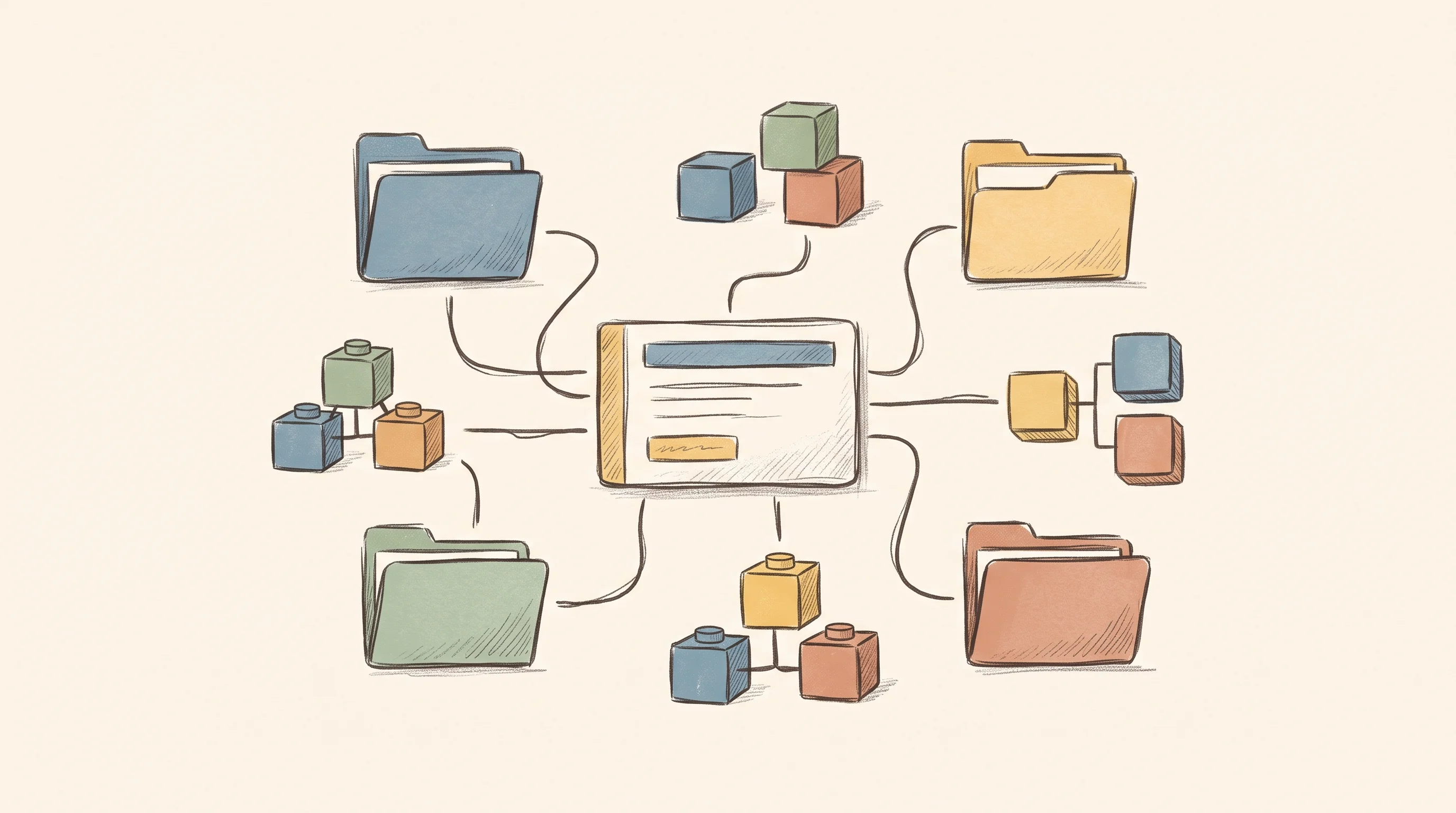
One feature—called "ticket mode"—addresses a specific pain point for teams where agent-driven refactors touch shared libraries or microservices spread across repositories. Run clawk work with a ticket reference, and the tool spins up a multi-repo workspace, creates branches, and opens linked pull requests via the GitHub CLI.
It's a small ergonomic win. Whether it's essential or just convenient depends on your workflow, but the fact that it exists suggests the maintainers have spent time watching how agents actually behave in production environments.
Platform Realities
Here's where things get messy. Clawk requires macOS 14 or later on Apple Silicon for its primary provider, which uses Apple's native virtualization framework. Linux support via Firecracker is available but flagged as experimental in the project's documentation. Windows isn't supported at all.
The Linux provider has notable gaps. Your working tree gets baked into the VM disk at creation rather than live-propagated from the host, so changes don't sync in real time. SSH agent forwarding isn't implemented yet. Neither is host-file push. The roadmap lists these as parity items, but for now, macOS is the first-class citizen.
The project shipped version 0.2.0 roughly a week after 0.1.0, a pace that suggests active development but also instability. No founder names or commercial entity are prominently identified in the primary materials. The GitHub organization is "clawkwork," the license is Apache 2.0, and the Hacker News submitter goes by "celrenheit." There's no corporate site, no pricing page, no venture backing announced.
It's a classic open-source launch: here's the code, here's the problem it solves, try it and file issues.
Why Now?
Clawk arrives amid a broader industry reckoning with agent security, though whether that reckoning is real or just fashionable remains to be seen.
Anthropic's Claude Code documentation now details its OS-level sandboxing on macOS and Linux but cautions about possible bypasses like domain fronting—a technique where traffic to allowed domains can be tunneled to blocked ones. VS Code's agent trust-and-safety features, documented around the same timeframe, include domain allow-lists and organization-managed policies. A Fedora Magazine article explored microVM sandboxing for agents earlier in the summer, noting that containers share the host kernel while microVMs offer a stronger boundary. The argument isn't new, but it's gaining traction.
Research published in June highlighted the risk of AI-enabled adaptive worms—malware that could leverage agent capabilities to propagate across systems. The architectural need for VM-enforced boundaries and controlled egress isn't theoretical. It's just that most developers, until recently, haven't felt the urgency.
Cloud-based alternatives exist. Services like Modal, E2B, and sandboxd.co offer remote execution environments for agent workloads, but Clawk's pitch is local-first. Code doesn't leave your machine. There's no hourly billing. Your editor sees the working tree directly on macOS. For developers allergic to uploading proprietary code to third-party infrastructure—or those working in air-gapped environments where cloud services aren't an option—that's a material difference.
The Hacker News thread surfaced comparisons to other microVM wrappers, discussions about QEMU versus Firecracker, questions about how the firewall handles DNS resolution and protocol inspection. Some commenters wondered if a separate physical machine or a VLAN-isolated box would be simpler than managing local VMs. Others pointed to alternative projects: quickemu, flar, agentjail.
The debate, ultimately, is about where you draw the line between developer velocity and paranoia. And perhaps that line is moving.
Trust, Delegated

Clawk doesn't eliminate risk. It moves it. Mount your entire home directory and allow-list every domain, and you've gained little beyond the illusion of safety. But for teams willing to audit their network policies and selectively expose filesystem paths, the tool offers a containment layer that containers and process sandboxes simply can't match.
Whether that's overkill or overdue depends on how much you trust the next shell command your coding agent wants to run. Most developers, if they're honest, probably haven't thought much about it. They've been too busy saying yes.


