

The easiest pitch in venture capital these days might be this one: find a way to get small businesses the money they can't get from banks. In the Gulf, where that gap yawns particularly wide, it's becoming a sovereign priority.
CredibleX, an Abu Dhabi fintech that embeds lending products into partner platforms rather than dealing with borrowers directly, closed a $15 million Series A round on May 6, 2026, led by Mubadala Investment Company. The deal, which brought back existing investor Further Ventures, arrives barely 18 months after CredibleX secured its regulatory licenses and just five months after a $55 million seed round announced in December 2024 that blended equity and debt.
For Mubadala—the emirate's $302 billion sovereign wealth vehicle—the investment signals more than opportunism. Deployed through its MENA Venture Capital Fund, the backing positions CredibleX as part of a broader bet that alternative finance infrastructure can chip away at a structural problem: across the UAE, small and medium enterprises account for roughly 98% of businesses and generate more than two-fifths of non-oil GDP, yet they captured less than 10% of total bank credit as of mid-2024, per Central Bank figures.
That mismatch has opened room for a cohort of well-capitalized startups. Flow48 pulled in $69 million in February 2025 to push into Saudi Arabia. Comfi closed a $65 million pre-Series A two months ago. Saudi Arabia's erad lined up a $125 million credit facility from Jefferies last November. CredibleX is running a similar playbook, though with a twist: it doesn't lend to businesses itself.
The Infrastructure Play
CredibleX operates as white-label plumbing. Its API-driven platform lets partners—payment processors, trade hubs, insurers, even fuel distributors—offer financing products without building (or licensing) the infrastructure themselves. The suite spans revenue-based loans, invoice finance, payables financing, point-of-sale credit, and SME insurance products, all integrated into partner workflows and underwritten by CredibleX's balance sheet.
The distribution strategy appears to be working, at least in terms of partnership velocity. When the company announced its seed round in December 2024, it counted 35 partners; by the Series A close, that figure had doubled to more than 70. Named collaborators include payments giant Network International, Dubai's DMCC free zone, National General Insurance, food conglomerate Agthia, and a consumer brand called Watermelon.
More telling, perhaps, are the integrations with payment rails. A November tie-up with Mastercard enabled card-linked financing for UAE merchants. In February, CredibleX partnered with NEO PAY—the merchant services arm of state oil giant ADNOC Distribution—to embed working capital into point-of-sale and e-commerce checkout flows. Thread financing through the moment of transaction, the thesis goes, and you capture demand that never makes it to a loan application.
As of December 2024, CredibleX had disbursed roughly AED 100 million (about $27 million) in loans—a modest figure, but one accumulated in the platform's first year of commercial operation. The company holds licenses from the Abu Dhabi Global Market's financial regulator to provide credit, operate money services, and run a private financing platform, though it cannot serve retail clients directly.
Who's Building It
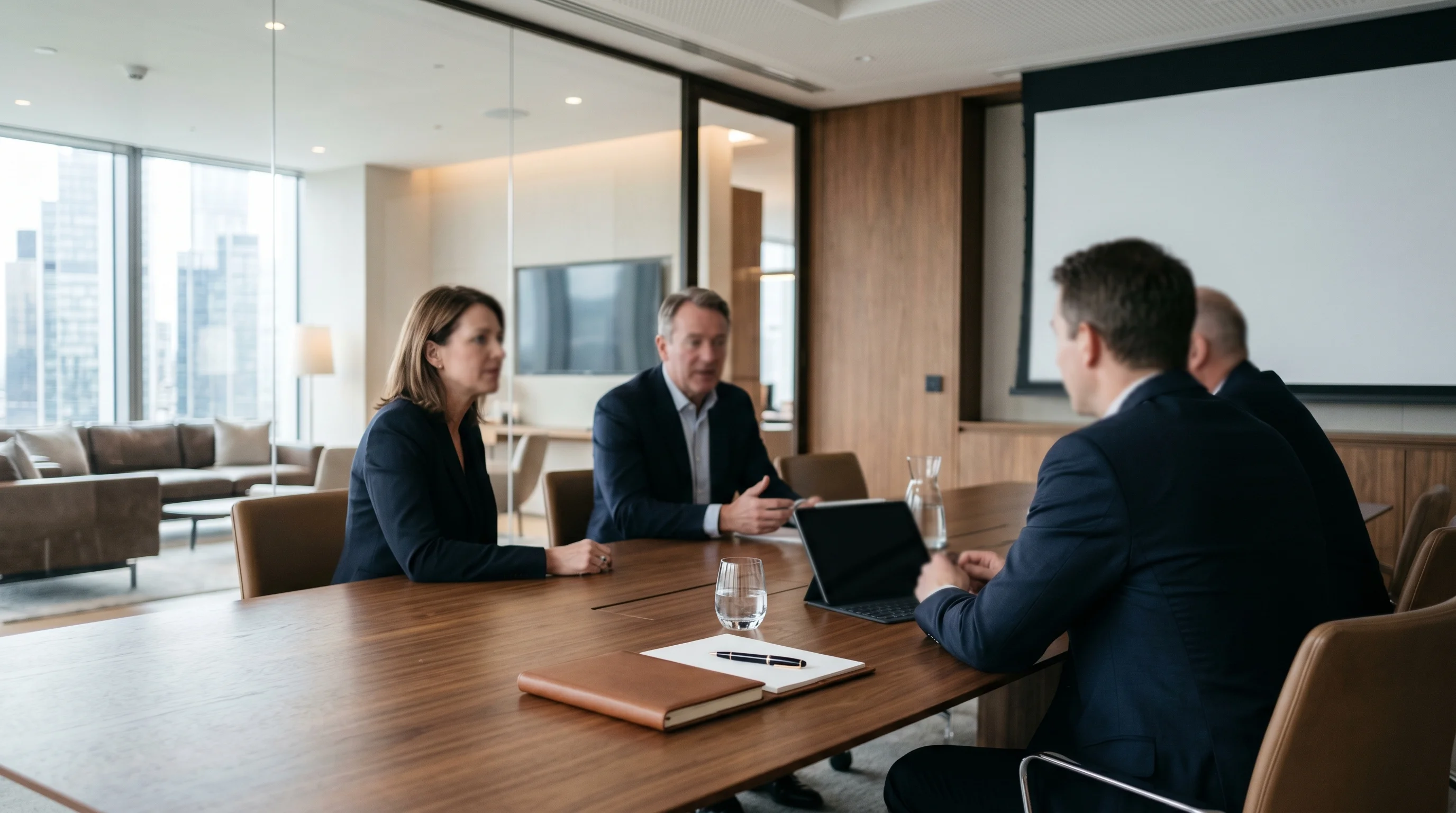
The founding team brings institutional pedigree and an exit. CEO Anand Nagaraj previously founded Invoice Bazaar, a supply chain finance platform he sold to Triterras in 2021 for a reported $8 million. Co-founder Hassan Reda led product at Standard Chartered's SC Ventures innovation arm and its Mox digital bank before decamping to Abu Dhabi. Ahmad Malik, the third co-founder, rounds out the trio with risk and operations chops.
They're also sitting on significant dry powder. Beyond the equity raised to date, CredibleX secured a $100 million senior secured credit facility from London-based Pollen Street Capital in September 2024, giving the company balance-sheet capacity to scale loan volumes without immediately returning to equity markets.
The new Series A capital will fund expansion of both lending and non-lending products (the company is branching into adjacent SME services), build out technology and data infrastructure, and deepen integrations across its partner network. CredibleX declined to disclose valuation or post-money figures.
The Broader Picture

CredibleX is a launch partner in Numou, a government-backed SME financing marketplace that ADGM stood up in November 2023 and has since expanded into procurement finance. The platform connects businesses with multiple lenders; for CredibleX, it's both a distribution channel and a signal of official support.
The company's pitch hinges on speed and flexibility: financing decisions and disbursals targeted within 24 to 48 hours, with repayment structures pegged to revenue cycles rather than rigid monthly schedules. Whether that resonates at scale remains an open question. Traditional banks still command the vast majority of SME relationships in the region, and while the credit gap is real, closing it requires not just better technology but changing how businesses think about capital.
Still, the momentum is undeniable. Across MENA, SME lending typically captures somewhere between 2% and 10% of total credit, depending on the market—a figure that looks less like equilibrium and more like underserved demand. Sovereigns are noticing, and they're writing checks.
With Mubadala's backing now secured and its partner count climbing, CredibleX will test whether a B2B2B model—lending through someone else's front door—can carve out meaningful share in a market where the incumbents have spent decades building moats. The fintech has the capital and the licenses. What it needs now is proof that embedded finance, in this corner of the world, can move from infrastructure promise to measurable penetration.


