

Desert Ant Labs released a catalog of on-device AI models on September 8, 2026, offering developers tools for speech recognition, language detection, and content moderation that run entirely on smartphones and browsers without cloud connectivity. The free tier supports up to 100,000 monthly active devices per SDK.
The Amsterdam-based company's software development kits work across Swift, Kotlin, and JavaScript, enabling applications that process transcription, speech enhancement, and structured data extraction locally, according to CEO Paul Veugen's launch announcement. Twelve models shipped at launch, with six additional capabilities in closed beta.
The pitch hinges on a familiar promise in the AI ecosystem: privacy and speed without the recurring cost of cloud API calls. Whether that trade-off pencils out for developers depends largely on how these lightweight models perform against their server-side counterparts.
Speed over accuracy, sometimes
Desert Ant's flagship speech recognition model, Voz, processes ten minutes of audio in two seconds on an iPhone, roughly 4.7 times faster than whisper.cpp large-v3-turbo, based on benchmarks the company published. The model achieves a 7.40% word error rate across six Open ASR datasets, which Desert Ant Labs reports as slightly behind their benchmark of Whisper's 7.00%, while consuming 467 MB of storage. Desert Ant adapted NVIDIA's Parakeet TDT 0.6B v3, converting the weights to run on Apple's Neural Engine.
That marginal accuracy gap may matter less than the latency gains for certain use cases. A 9 MB speech-enhancement model called Clear processes a five-minute audio clip in roughly one second on recent iPhone hardware, about 302 times faster than real-time playback, the company said. It includes loudness presets tuned for Apple Podcasts, Spotify, and YouTube.
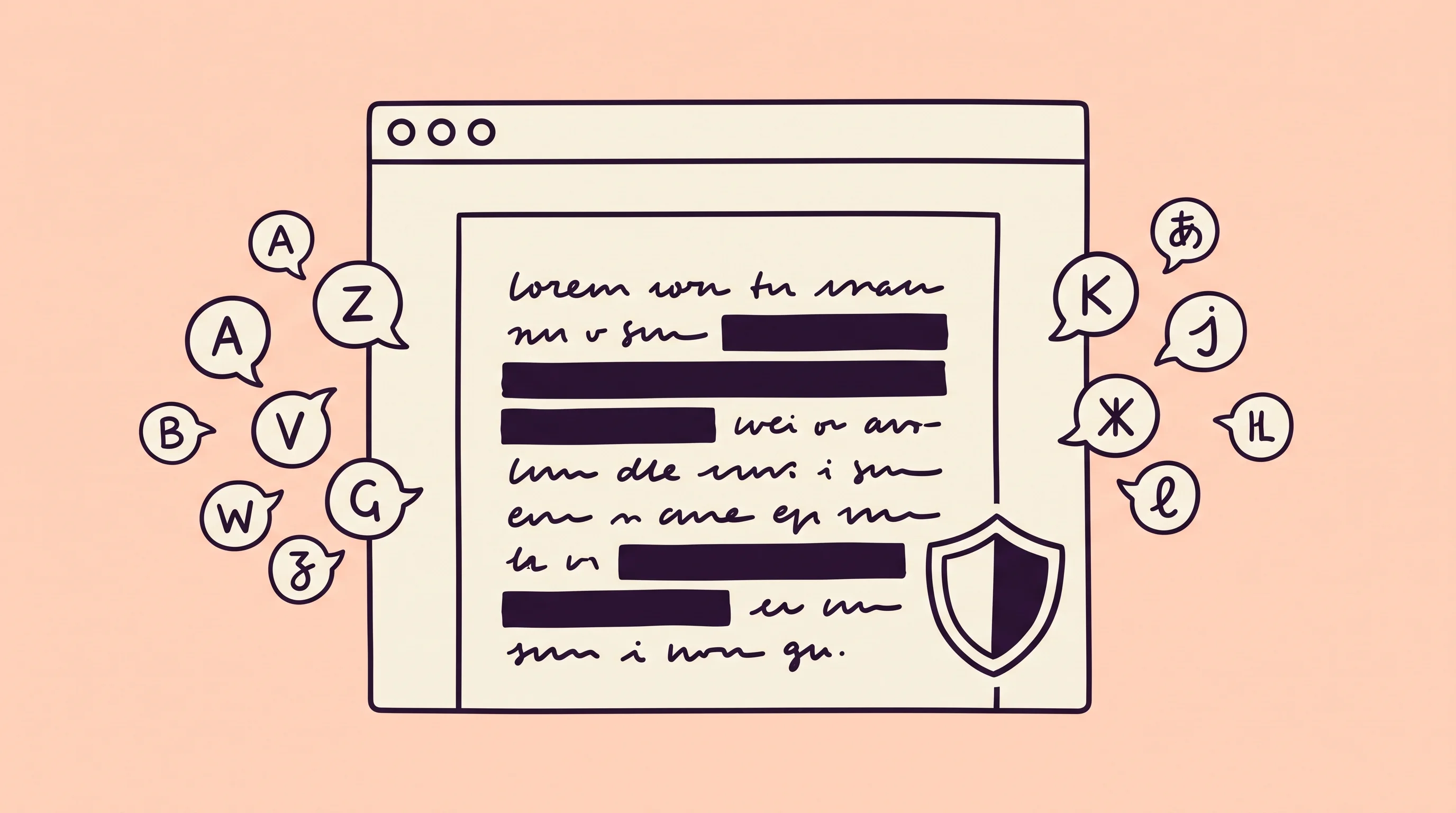
The catalog extends beyond audio. Redact, a 12 MB model for personally identifiable information detection, achieves 88.8% recall across 27 languages and runs in web browsers via WebAssembly. Tongue identifies 84 languages from three-word samples in a 2 MB package, scoring a macro-F1 of 0.933 on FLORES-200 test data compared to 0.887 for a substantially larger baseline model.
One model, Clips, analyzes transcripts to surface highlights. Processing a 25-minute transcript takes just over nine seconds on newer iPhone hardware, according to the company's documentation. The six beta models tackle image understanding, face matching, content moderation, structured JSON extraction, hate-speech filtering, and speaker identification.
From app success to infrastructure play
Veugen, CTO Laurier Rochon, and engineering lead Fredrik Wallin previously built Detail, a note-taking app that earned recognition in Apple's App Store Awards. The team also operates Subwave, a video platform relying on automatic transcription. Before Detail, Veugen and Rochon co-founded Human, a passive fitness tracker Mapbox acquired in 2016. Rochon later worked as a staff engineer at Mapbox through 2021, his personal site indicates.
Desert Ant Labs incorporated in the Netherlands, and the models already run in production within Detail and Subwave. The company plans to replace all cloud APIs with on-device processing in an upcoming Detail release, a move that could preview a broader shift if performance holds up under real-world conditions.

Business model: free, then opaque
Every model is free below 100,000 monthly active devices per platform. Beyond that threshold, developers need a commercial license. Desert Ant declined to publish pricing for the paid tier, a common but occasionally frustrating practice among infrastructure startups testing willingness to pay. Non-commercial research and educational use sidesteps device limits entirely.
Model weights live on Hugging Face and download automatically on first SDK use. The company distributes SwiftPM packages starting at version 3.1.0, Maven coordinates for Android, and npm packages for browser deployment via LiteRT.js. A command-line tool outputs JSON for chaining models in agent workflows, according to the company's GitHub repository.
The launch post accumulated 484 points and 102 comments on Hacker News within days. Developers pressed Veugen on Android and web availability; he acknowledged that porting certain models "takes a bit longer" but confirmed both platforms are in development. Desert Ant's Hugging Face organization currently hosts 17 public model cards.
The open question is whether on-device inference can scale beyond niche privacy-conscious applications. If the accuracy penalty remains small and device capabilities keep advancing, Desert Ant's catalog could signal a quiet retreat from the cloud-first architecture that has dominated the past decade of AI development. Or it might carve out a durable but narrow lane for latency-sensitive, privacy-critical workloads. The answer likely depends on how many developers hit that 100,000-device ceiling and decide the pricing makes sense.


