

The pitch lands somewhere between audacious and absurd: a single molecule, programmable on demand, capable of hunting down and destroying any diseased cell in the human body. All you need to do is swap in new genetic code.
That's what FinalDose—a startup with five employees and a spring 2026 acceptance into Y Combinator—claims it has built. Founder Jeff Liu, an Oxford-trained oncologist, calls it the world's first programmable drug. If it works, he says, it could unlock what the company aspires to be "80% of undruggable targets today." Starting, naturally, with all cancers.
The ambition seems outsized for a company that didn't exist two years ago. And yet FinalDose isn't operating in isolation. Its emergence tracks with a broader inflection point in biotech—a moment when DNA-recognition as a therapeutic strategy is moving from theoretical to tantalizingly close. Whether the company can close the gap between concept and clinic is another matter entirely.
What "Undruggable" Actually Means
Roughly 85% of the proteins in the human body resist conventional drug design, according to a review published in Nature Reviews Drug Discovery late in 2024. The problem is structural: traditional small molecules and antibodies need well-defined pockets or surfaces to latch onto. Transcription factors don't offer that. Neither do scaffolding proteins or many of the oncogenic drivers that fuel cancer.
The pharmaceutical industry has been chipping away at the problem for years. Targeted protein degradation, molecular glues, CRISPR-based genome editing—each approach has carved out a niche. By 2026, more than 300 gene-editing clinical trials were underway worldwide, per tracking data from CRISPR Medicine News. Intellia Therapeutics reported positive Phase 3 results that May for an in vivo CRISPR–Cas9 therapy aimed at hereditary angioedema, then began filing for U.S. approval. A potential first for programmable genome medicine delivered systemically.
But those tools still work at the protein or gene-editing level. FinalDose's thesis diverges. Instead of editing genes or degrading proteins, the company proposes reading DNA sequences directly inside living cells—and triggering immediate cell death when a disease signature is detected.
It's a conceptual leap. Whether it's a credible one depends on biology that remains, for now, largely founder-described.
The Academic Precedent
Two papers published in the spring of 2026 lend fragments of credibility to the vision, even if the technical hurdles remain formidable.
On May 6, a collaboration between UC Berkeley, University of Utah, and UCSF published work in Nature demonstrating that a CRISPR enzyme called Cas12a2 could selectively eliminate eukaryotic cells in mice when it recognized a specific RNA sequence. Cells carrying mutant TP53 transcripts were killed after a single dose, reportedly shrinking tumor burden. The mechanism is brutal: RNA-triggered activation that unleashes indiscriminate nucleic acid shredding. A kill switch, essentially, borrowed from prokaryotic antiviral defense.
Weeks earlier, researchers at the University of Geneva published a different approach in Nature Biotechnology. Their system used DNA–drug conjugates equipped with molecular logic gates—requiring simultaneous recognition of two surface markers (say, EGFR and PD-L1) to assemble and release a cytotoxic payload. Media coverage called it "two-factor authentication" for cancer drugs, which isn't far off.
FinalDose claims its platform operates via DNA sensing rather than RNA, employs two safety "locks" to prevent off-target killing, and uses what Liu calls an "orthogonal pathway" to minimize resistance. Specifics remain scarce—and founder-described rather than peer-reviewed. As of mid-2026, no peer-reviewed publications were traceable to the FinalDose name. The company's YC page, updated in May, describes "a DNA-sensing protein that undergoes a sharp conformational change upon finding a hardcoded target sequence," then triggers cell elimination. Same chassis, new guide, new drug—programmable like CRISPR but operating at the DNA level.
Liu holds an Oxford PhD in oncology and previously founded Vivid Dx, an Oxford spinout developing rapid sepsis diagnostics using Raman spectroscopy and AI. Co-founders Li-Yao Huang (Oxford DPhil in biochemistry, CRISPR screening background) and Steven Lin (Oxford PhD in computational biology, viral resistance modeling) round out the technical core. The trio graduated from YC that spring; LinkedIn posts from June showed active recruiting.
The Precedent for DNA-Targeted Cell Death
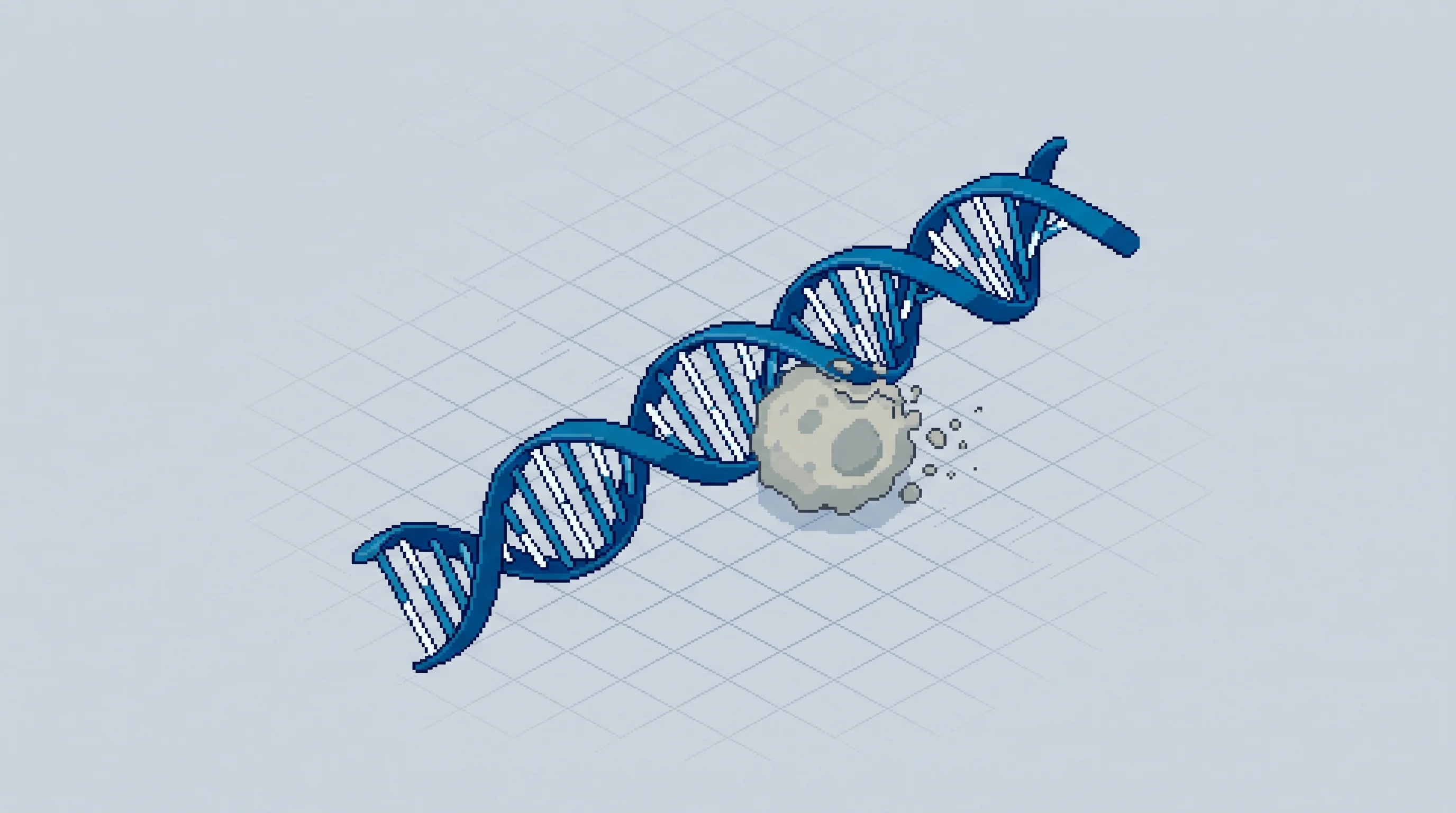
The concept of DNA-triggered therapeutics exists on a spectrum. At one end: precision bacterial killing, already tested in humans. At the other: hypothetical in vivo drugs that read cancer mutations and execute diseased human cells with single-molecule fidelity.
SNIPR Biome published final positive Phase 1 data in The Lancet Microbe in March 2026 for SNIPR001, a CRISPR-armed bacteriophage that selectively reduces E. coli in the human gut. The study demonstrated programmable DNA-targeted cell death in a living person—albeit targeting bacteria, not human cells. Eligo Bioscience pursues a similar phage-CRISPR strategy, with platform updates continuing through 2026.
Scaling that precision to mammalian cells introduces complexity at an entirely different order of magnitude. Delivery remains the bottleneck. A Nature Biotechnology review published in 2026 on in vivo delivery noted that tissue-specific targeting, immune evasion, and durable expression without genomic integration remain unsolved at scale for most organs beyond liver and hematopoietic stem cells.
Existing gene editors navigate these constraints using lipid nanoparticles or adeno-associated viruses. Beam Therapeutics published Phase 1/2 data for a base-edited autologous hematopoietic stem cell therapy in NEJM on April 1, 2026, and indicated plans to submit a biologics license application by year-end. Scribe Therapeutics received regulatory clearance in May to begin first-in-human testing of an epigenetic editor targeting PCSK9—non-cutting CRISPR that silences expression without DNA cleavage.
None yet deploy DNA recognition as the therapeutic trigger inside non-microbial cells. FinalDose, if its mechanism functions as claimed, would represent something genuinely novel.
The Regulatory Gauntlet
The regulatory environment is tightening around genomic precision. In April 2026, the FDA issued draft guidance requiring next-generation sequencing-based off-target and structural variant assessment for genome-editing products. A DNA-sensing kill switch faces a particularly high evidentiary bar: any molecule designed to lyse host cells upon recognizing a sequence must prove exquisite specificity.
Consider the risks. Mosaicism, clonal hematopoiesis with acquired mutations, even normal tissue-specific DNA methylation patterns could theoretically trigger unintended cell death if recognition logic is imperfect. FinalDose's claim of two safety "locks" suggests awareness of this risk—potentially requiring simultaneous recognition of multiple independent sequences before activation. The Geneva DNA logic-gate system demonstrated this AND-gate principle in preclinical models, though it operated extracellularly. Whether a single protein can achieve comparable gating intracellularly, deliver cytotoxic potency, and remain producible at scale is unproven.
Then there's the economics. Market forecasts suggest the gene-editing sector may grow from $6.7 billion in 2026 to $18.6 billion by 2033, according to data published by Grand View Research in May 2026. Cell and gene therapies are expected to drive pharmaceutical revenue growth through the decade. Yet the two approved CRISPR therapies for sickle cell disease—Casgevy and Lyfgenia—carry list prices around $2.2 million and $3.1 million respectively. Both required outcomes-based agreements through CMS's Cell and Gene Therapy Access Model, which launched across 33 states and territories in 2025.
If DNA-triggered drugs prove viable, they'll inherit this reimbursement landscape. A programmable platform targeting "all cancers," as FinalDose positions itself, would likely require demonstration of durable responses, manageable safety, and economic value compared to existing oncology standards—including recent breakthroughs like Revolution Medicines' RAS(ON) inhibitor, which doubled median overall survival in metastatic pancreatic cancer in a Phase 3 trial reported at ASCO in May 2026.
The Question That Remains
The race to cure undruggable diseases is no longer hypothetical. It's unfolding in hundreds of clinical trials, half a dozen regulatory submissions, and a growing cohort of startups betting on programmable biology. FinalDose represents the frontier's newest edge: DNA as both diagnostic and execution signal, compressed into a single molecule.
Whether that molecule can clear the technical, regulatory, and commercial hurdles between a YC demo day and approved therapy is the question that matters. The precedent from Intellia, Beam, and others suggests the 2027–2028 window may deliver initial answers for in vivo programmable medicines more broadly. FinalDose's specific claim—reading DNA to eliminate diseased cells across cancer types—will require data that doesn't yet exist in the public domain.
The field, for now, is watching. And perhaps waiting to see if ambition and biology can, for once, align.


