

On a wet Tuesday in early February, Echodyne did something defense technology startups don't typically do until they're much further along: it committed to building things at scale.
The Kirkland, Washington-based radar company announced plans for an 86,350-square-foot manufacturing facility capable of churning out more than 30,000 radar units annually—ten times what it produces today. The $40 million investment, substantial for a venture-backed outfit, suggests that CEO Eben Frankenberg believes the market for compact, electronically scanned radar systems has finally turned a corner. Whether that optimism proves warranted will depend on factors largely outside Echodyne's control: the pace of government procurement, geopolitical tensions, and the stubborn unpredictability of defense contracting cycles.
Still, there are reasons to think Frankenberg isn't simply betting on hope. Since Bill Gates first backed the company in late 2014, Echodyne has accumulated roughly $199 million in venture funding and assembled a roster of contracts that read like a who's-who of national security priorities.
Momentum From Unlikely Places
The company's EchoGuard radars—compact units that fit on a tripod—won selection for the U.S. Army's Security Surveillance System program in 2022, with an initial 46 units deployed. That same year, the Department of Homeland Security committed $20 million in an indefinite-delivery contract for border security work, resulting in 30 systems delivered through Customs and Border Protection's Innovation Team.
Then came the bigger signal: a $35.3 million State Department contract in July 2025 for counter-drone radars, training, and technical support. That award underscored growing demand for systems that can detect and track small unmanned aircraft—a threat category that has migrated from hypothetical to urgent faster than most Pentagon planners anticipated.
"Counter-UAS is no longer niche," said one defense industry analyst who requested anonymity to speak candidly about competitors. "It's become table stakes for perimeter security, and the commercial market is waking up to that reality."
The numbers bear that out, at least on paper. Navistrat Analytics projects the counter-unmanned aerial systems market will swell from $1.88 billion in 2024 to $11.52 billion by 2032—a compound annual growth rate that would make venture capitalists salivate if they weren't already nursing bruises from other defense tech darlings that promised scale and delivered delays.
The Metamaterials Edge, Explained
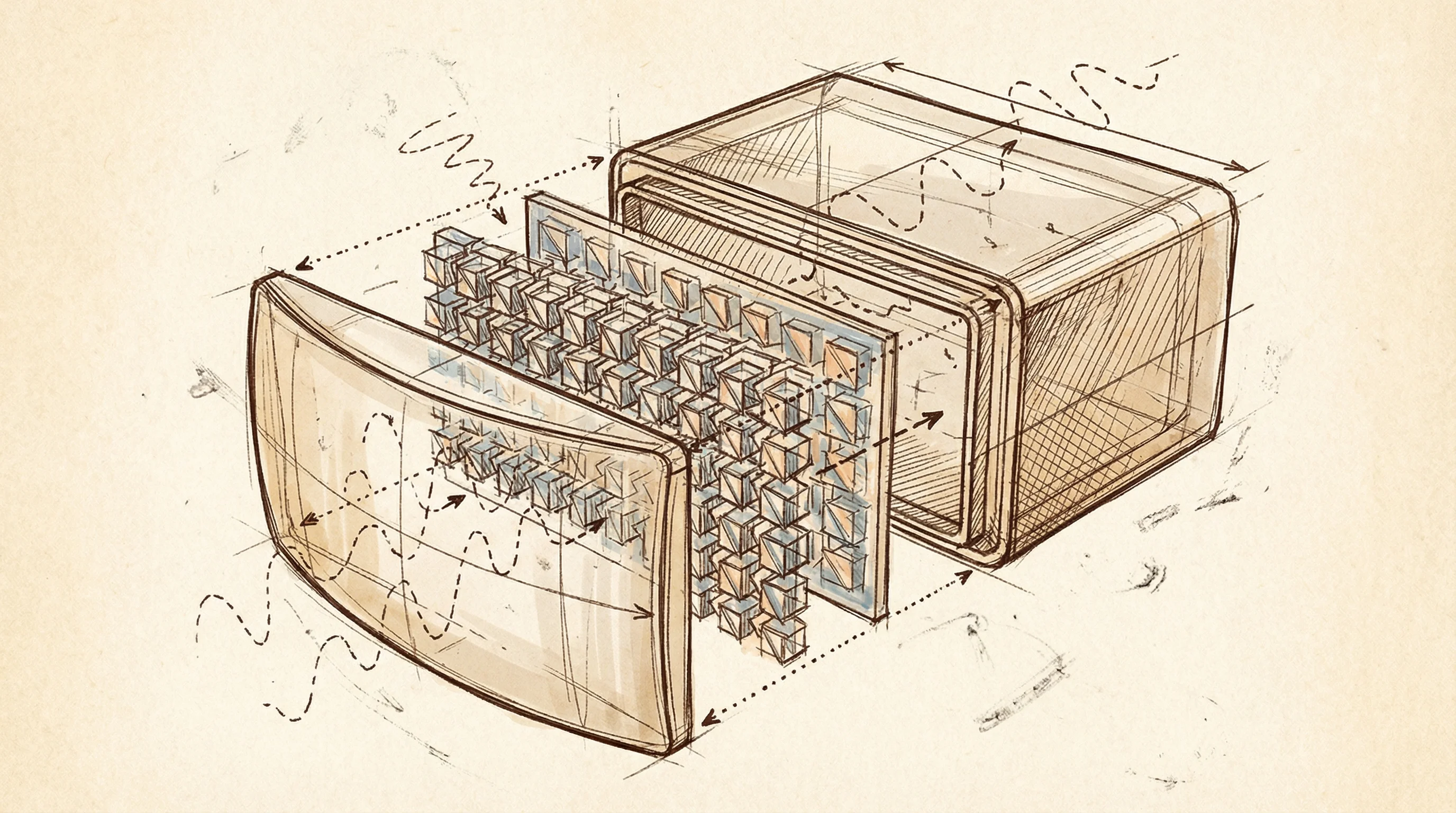
What Echodyne offers—and what its investors are betting on—is a technical architecture called MESA, short for Metamaterials Electronically Scanned Array. The name is clunky, but the underlying innovation is elegant: active electronically scanned array performance delivered in a package that weighs less, draws less power, and costs significantly less than legacy military radar systems.
The company spun out of Intellectual Ventures in 2014, building on metamaterials research conducted with Duke University and UC San Diego. Frankenberg, who served as COO at Intellectual Ventures before taking Echodyne's helm, and CTO Tom Driscoll have since commercialized the technology across three product lines: EchoGuard for short-range perimeter work, EchoShield for medium-range applications (FCC-authorized in September 2023), and EchoDrive, aimed at autonomous vehicle sensing.
That last category matters more than it might seem. Echodyne's dual-use positioning—defense applications alongside automotive and urban air mobility—provides revenue diversification that pure-play defense contractors lack. Supernal, Hyundai Motor Group's advanced air mobility unit, invested in May 2023 specifically to develop onboard and ground-based radar for air taxi operations. It's the kind of strategic partnership that suggests Echodyne's technology has applications well beyond military bases and border crossings.
A Crowded Field Gets More Crowded
Of course, Echodyne isn't alone in pursuing compact radar riches. Arbe Robotics has already taken 4D imaging radar public, targeting the automotive sector. Uhnder raised $50 million in February 2024 for its digital radar platform. Zendar secured backing from Hyundai Mobis in 2022. On the pure defense side, DRS RADA Technologies and others compete for the same short-range air defense dollars.
The broader electronically scanned array radar market is projected to expand from $10.29 billion in 2025 to $15.48 billion by 2031, according to Mordor Intelligence. That's robust growth, certainly—but it also means competition for contracts will intensify just as Echodyne ramps production capacity.
Why Manufacturing Matters Now

Which brings us back to that 86,350-square-foot facility set to open this summer in Washington State, with more than 200 jobs expected at full capacity.
Manufacturing commitments of this scale are risky for startups. They tie up capital, introduce operational complexity, and assume demand will materialize on schedule. But they also signal something Washington increasingly values: domestic production capacity and supply chain resilience. As geopolitical tensions with China persist and defense budgets prioritize reshoring, companies that can demonstrate scaled U.S. manufacturing gain a procurement advantage.
"The Pentagon is done with vaporware," said a former Defense Department official now working in the venture world. "They want to see production lines, not PowerPoints."
Whether Echodyne can fill 30,000 annual radar slots remains an open question. Government contracts have a way of stretching out; procurement offices move slowly; budgets shift. But the company's June 2022 equity round—$135 million co-led by Baillie Gifford and Bill Gates, with participation from Northrop Grumman, NEA, Madrona Venture Group, Vulcan Capital, and Vanedge Capital—suggests sophisticated investors believe the pipeline is more than theoretical.
Northrop Grumman, in particular, took a minority stake in February 2022 alongside a strategic integration agreement focused on counter-UAS systems. That's the kind of partnership that often precedes larger procurement plays—or acquisition conversations down the line.
For now, Frankenberg is betting that the market has finally caught up to the technology his team has been refining for over a decade. The $40 million facility says he's willing to put real capital behind that conviction.
Whether he's early, late, or precisely on time will become evident soon enough.


