

A Melbourne-based brain-computer interface startup has secured A$2 million in funding to develop what it describes as a middle path in the race to decode human speech: an implant that sits beneath the scalp but never touches the brain.
Fluent announced Tuesday that its pre-seed round was led by University of Melbourne Genesis Pre-Seed Fund and Pacific Channel, with backing from Galileo Ventures, Jumpspace Ventures, Founders Factory, MSWA, and individual investors including Professor David Grayden and, according to investor social media posts, Synchron CEO Dr. Thomas Oxley. The company plans to begin first-in-human trials by late 2026, focusing on people with severe communication impairments caused by conditions like ALS or stroke.
The capital will fund engineering work, regulatory preparation, and clinical studies for what Fluent calls its InScribe system. Unlike the fully invasive cortical implants that thread electrodes directly into brain tissue or the stent-like devices navigated through blood vessels, InScribe positions an electrode array in what CEO Tim Mahoney characterizes as a "Goldilocks zone." The device unfurls beneath the scalp but above the skull, capturing neural signals through a small incision without requiring brain penetration or catheter-based insertion.
"Our device will be positioned above an area of the brain called the motor cortex, which controls speech muscles," Mahoney told University of Melbourne's newsroom in June. "If you think of electrical signals as QR codes, our device can capture these codes in a sequence."
It's a strategy that reflects both technological ambition and surgical pragmatism. The brain-computer interface field has recently attracted significant capital, though most of it has flowed to approaches that accept greater invasiveness in exchange for signal fidelity. The question Fluent poses is whether a less risky procedure can still deliver clinical-grade results.
An engineering bet on placement
Fluent's InScribe works by positioning electrodes over the motor cortex through what the company describes as a minimally invasive scalp incision. The array unrolls into position and captures electrical activity as the brain attempts to control speech muscles, transmitting data wirelessly to an external processing unit. That external hardware runs phoneme-level decoding algorithms and applies large-language-model post-processing to convert neural patterns into text or synthesized speech.
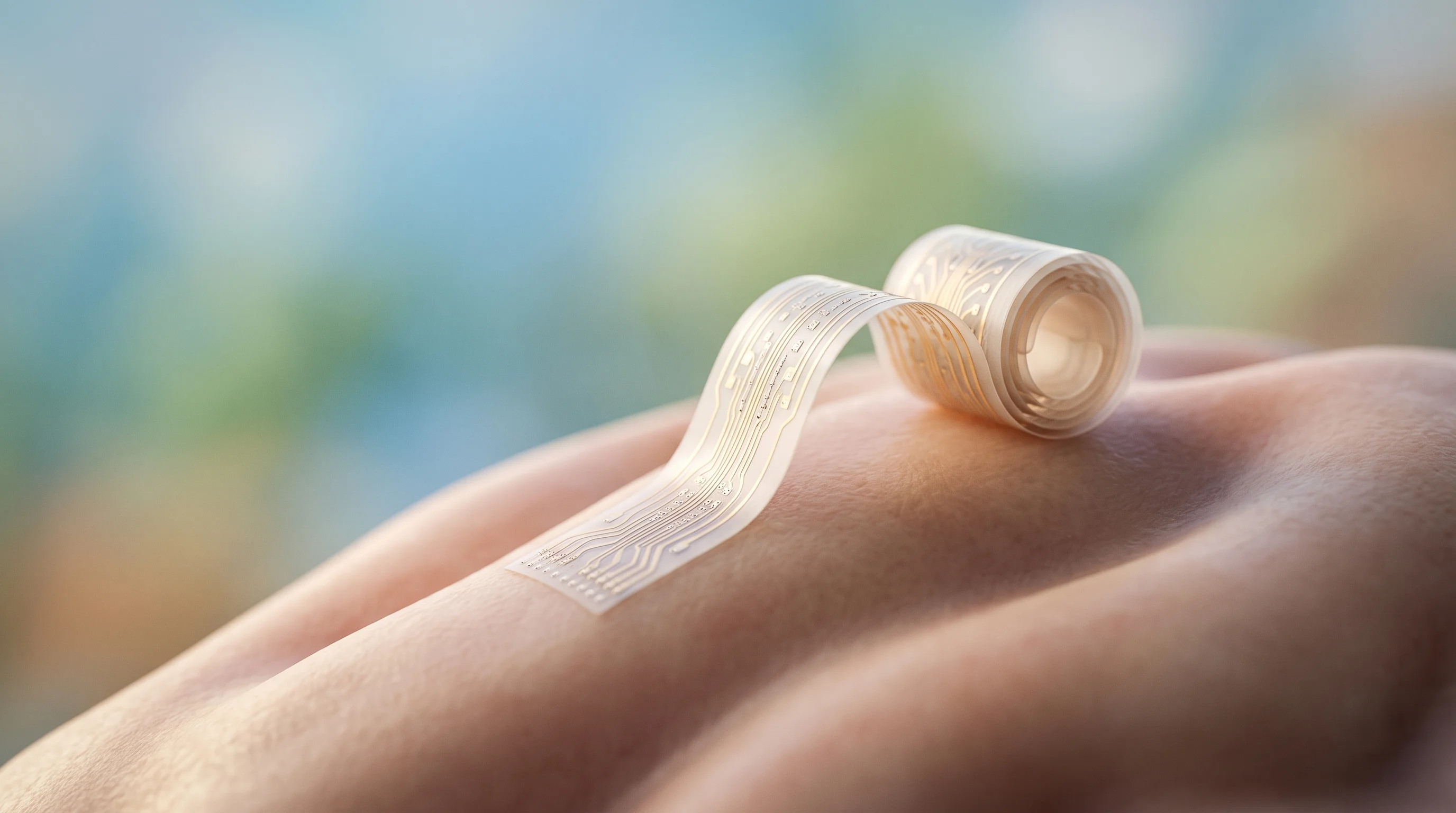
The subscalp approach sits between two extremes. Devices that rest on the scalp surface struggle with signal quality, their readings diluted by intervening tissue. Implants placed directly on or in the cortex capture richer data but carry surgical risks and require more complex procedures. Fluent's wager is that the signal loss from staying above the skull can be offset by advances in decoding algorithms.
Mahoney, who holds a PhD from University of Melbourne, based much of the company's technical foundation on his doctoral research into subscalp EEG for speech-relevant signals. Dean Freestone, Fluent's CTO, previously co-founded Seer Medical and led AI development for Epiminder, a subscalp device for seizure monitoring that received FDA De Novo authorization in April 2025.
That regulatory clearance matters for Fluent. The startup has pointed to Epiminder's approval as a potential pathway, noting the FDA's willingness to accept Australian clinical data for subscalp EEG devices. Fluent operates from the Aikenhead Centre for Medical Discovery, co-located with St Vincent's Hospital Melbourne, where earlier subscalp trials for epilepsy monitoring were conducted.
A crowded field with varied approaches
The funding round arrives as brain-computer interface companies pursue divergent strategies. Synchron's endovascular device requires no open brain surgery, instead threading a stent-like implant through blood vessels to reach the motor cortex. Precision Neuroscience announced a strategic partnership with Medtronic in January for its ECoG Layer 7 cortical sheet, which does require craniotomy. Neuralink threads electrodes directly into cortical tissue through a robotic surgical system.
Each approach accepts different trade-offs. Synchron avoids skull openings but must navigate the vascular system. Precision and Neuralink gain signal quality through direct cortical contact but require more invasive surgery. Whether Fluent's subscalp positioning can thread the needle between surgical simplicity and signal fidelity remains an open question, one the company hopes to begin answering in clinical trials next year.
Galileo Ventures, which disclosed a $350,000 investment in an August blog post, said the funds would support the first-in-human speech-decoding studies planned for Melbourne in 2026. Fluent has set a target of FDA clearance by 2030 for anarthria and dysarthria indications, though that timeline will depend on trial results and regulatory discussions that have yet to begin.

"Fluent was born out of the University's innovation ecosystem and is now securing investment to develop human clinical trials," Professor Mark Cassidy, University of Melbourne's Deputy Vice-Chancellor for Research, told Startup Daily. Adam Caplan of Jumpspace Ventures wrote on LinkedIn that his firm was "proud to support a team taking a thoughtful, lower-risk approach."
The company currently employs fewer than ten people. Whether its subscalp strategy can deliver on its promise will become clearer once the device moves from engineering benchtops to human trials, a transition the startup expects to make within eighteen months.


