

The kitchen occupies maybe 200 square feet, tucked inside a converted warehouse on the edge of Los Angeles. No dining room. No signage. Just industrial refrigeration, a bank of fryers, and a rotating cast of operators chasing what once looked like the future of food.
Most of them won't make it a year.
CloudKitchens, the largest ghost kitchen operator in the United States, watches roughly 65% of its tenants disappear annually, according to an analysis by Restaurant Business Online. That churn rate—verified across multiple facilities and markets—lays bare a uncomfortable truth about an industry that market researchers insist will nearly double to $141 billion by 2030. The low-overhead promise that birthed thousands of delivery-only concepts during the pandemic? It collided with a margin structure so punishing that profitability remains elusive for all but the most sophisticated operators.
The disconnect isn't subtle. While Grand View Research projects an 11.9% compound annual growth rate through 2030, the operators themselves are cycling through capital and shuttering concepts at a pace that makes traditional restaurant failure rates look almost quaint.
A Model Built on Attrition
CloudKitchens operates about 60 locations nationwide. Yet the company has quietly shed real estate and laid off staff, Financial Times reported, because filling those facilities with stable, paying tenants proved harder than the pitch deck suggested. The 65% annual turnover figure, calculated from operator interviews and facility-level data, means most concepts don't survive their first twelve months.
Ghost Financial, a vendor embedded in the sector, estimates the failure rate runs at least seven times higher than traditional restaurant benchmarks—roughly 35% versus around 5%. Yes, these are vendor estimates rather than audited census data. But they track with what's visible: REEF closing unprofitable ghost kitchen trailers and pivoting toward licensing deals. Kitchen United shuttering its Kroger food halls by late 2023. Nextbite sold to Sam Nazarian's C3 after rounds of layoffs and strategic resets.
Wendy's provided rare public disclosure on underperformance. The company's CFO acknowledged U.S. REEF locations were generating "less than $500,000" in average unit volumes—well below expectations. Wendy's subsequently cut its planned REEF rollout from 700 units to 100–150, most now targeted at international markets.
The numbers kept disappointing.
When the Math Stops Working
DoorDash's commission structure offers a window into why. The platform's Basic tier extracts 15% on delivery orders. Plus takes 25%. Premier demands 30%. Pickup orders carry a 6% fee regardless of tier. And those are baseline rates—before marketing products like sponsored listings add another layer of cost.
For a ghost kitchen operator running entirely through third-party delivery, that 25–30% commission hits before nearly any other variable expense. Food costs for limited-service restaurants ran at a median 32.4% of sales in 2024, according to National Restaurant Association data. Labor, though lower in ghost models than full-service operations, still trends between 20–30% for efficient setups. Delivery-grade packaging adds another 5–10% of revenue, industry benchmarks suggest.
Stack the line items: 30% platform commission, 32% food cost, 25% labor, 7% packaging. You've hit 94% of revenue before accounting for rent, utilities, payment processing (roughly 2.9% plus $0.30 on direct orders), insurance, or any marketing beyond what the platform provides. The margin left is razor-thin at best, negative at worst—unless an operator can drive significant volume, command premium pricing, or shift meaningful order volume to lower-commission pickup.
Ghost kitchen rent, often marketed as the model's key advantage, runs $2,500 to $10,000-plus monthly depending on city and facility type. Many major markets cluster around $4,000–$7,000. Shared commissary kitchens offer hourly rates of $20–$40 or monthly minimums starting around $675, though these arrangements typically constrain throughput and equipment access.
What looked like arbitrage—cutting rent and labor by going delivery-only—morphed into a margin trap once third-party marketplace fees, packaging costs, and marketing spend hit the P&L.
The Virtual Brand Reckoning
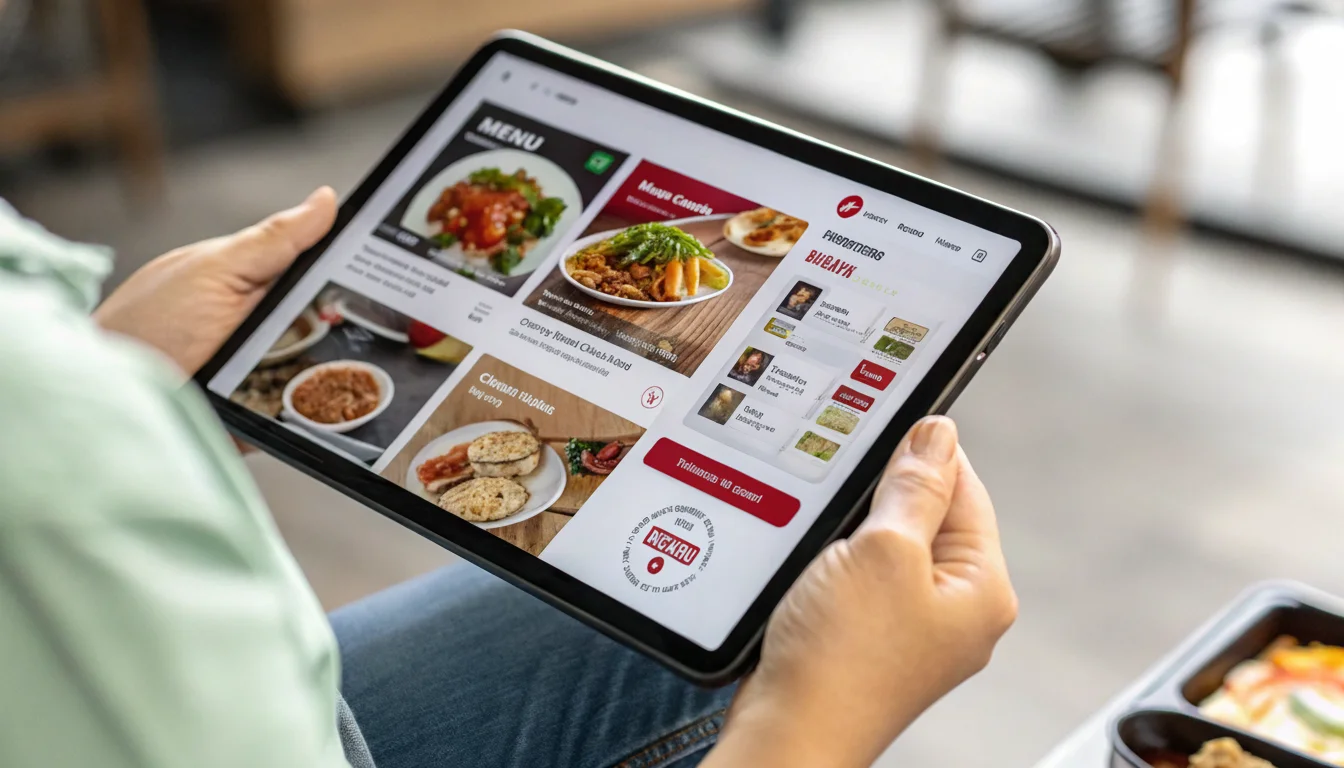
Last March, Uber Eats removed approximately 5,000 virtual storefronts from its platform. The crackdown tightened guidelines: concepts now need at least 60% unique menu items and a minimum 4.3 rating. The move targeted brand proliferation that had transformed some addresses into digital strip malls.
Business Insider verified 76 DoorDash storefronts operating from a single San Francisco pizzeria address in January 2024. Wings concepts. Burger joints. Pasta brands. All sharing one kitchen, one grill, one set of walk-in coolers.
That proliferation was a discovery hack—create dozens of lightly differentiated menus to capture more search real estate and algorithmic visibility. Platforms tolerated it until customer complaints about duplicate orders and confusing storefronts forced enforcement. The cleanup raised the bar, requiring actual brand differentiation and operational quality rather than menu reskinning.
DoorDash generated $80.1 billion in gross order value and $10.72 billion in revenue in 2024, posting its first annual profit. The platforms are monetizing. Their ghost kitchen tenants? Less so.
Survivor Strategies
Operators who've sustained ghost kitchen concepts tend to share common traits. Strong pre-existing demand helps—often extensions of brick-and-mortar brands with customer recognition already baked in. Menus optimized for delivery travel and speed matter. High average order values that dilute fixed costs are nearly essential. And some mix of direct ordering or pickup to reduce commission drag can mean the difference between red and black ink.
Brands trying to build awareness from zero while paying 30% commissions on every order face a customer acquisition cost equation that borders on impossible.
The CloudKitchens marketing pitch promises low capital expenditure: roughly 200 square feet, four staff members, eight weeks to launch, startup costs as low as $30,000. But Restaurant Business reporting and operator interviews tell a different story. The economics proved "not as simple or lucrative" as marketed, with delivery fees and customer acquisition needs undermining what appeared to be savings on rent.
Virtual brands launched as incremental revenue streams inside existing restaurant kitchens have fared better than pure-play ghost concepts paying third-party rent. If the kitchen's already operating and labor is largely fixed, an additional virtual brand—assuming it doesn't degrade core operations—can add margin at lower risk. Platform enforcement of menu uniqueness and rating floors, however, has made lazy duplication less viable.
The Fee Cap Stalemate
Fee cap regulations add jurisdictional complexity. New York City's recent settlement with DoorDash, Grubhub, and Uber Eats maintains some form of capped commission structure while allowing platforms to offer "enhanced services" at higher fees. The result: a patchwork of caps in some cities, unregulated rates in others, and ongoing litigation about what constitutes a legitimate fee versus circumvention.
DoorDash and its competitors argue caps hurt merchants by reducing service quality or limiting delivery radius. Merchants counter that 30% commissions make profitability impossible without pricing that drives customers away. The standoff continues, satisfying neither platform unit economics nor merchant viability.
Meanwhile, consumer willingness to pay for delivery is showing friction. Multiple studies indicate delivery orders cost 80–100% more than pickup when factoring in markups, fees, and tips—pressure that affects frequency and reorder rates for all but the highest-income or highest-convenience segments.
What Consolidation Looks Like
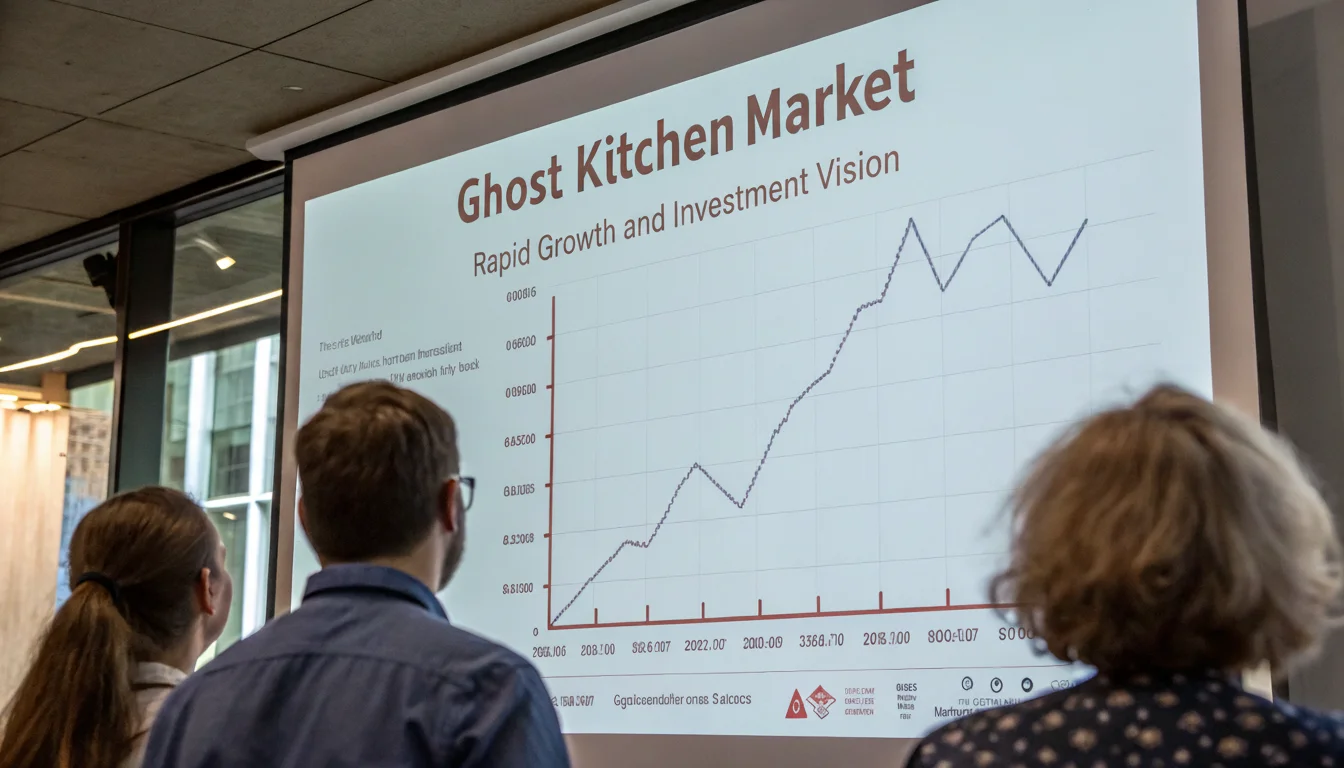
The ghost kitchen market is still projected to grow. But growth in gross order value doesn't translate to operator profitability or tenant stability. That 65% churn rate suggests the market is cycling through concepts, burning capital, and consolidating around the minority who've solved the unit economics puzzle.
What that likely means going forward: fewer pure-play ghost kitchens. More hybrid models where delivery is one channel among several. Continued platform dominance with merchant margins under pressure. And a significantly higher bar for new entrants.
The operators who make it will be those with pricing power, operational excellence, and enough direct customer relationships to avoid total dependency on third-party marketplaces taking 30 points off the top.
The Hard Truth
For food entrepreneurs eyeing the model, the lesson is stark, perhaps brutally so. Ghost kitchens aren't inherently broken. But the easy version—rent a space, launch on DoorDash, let the platform handle discovery—carries a two-in-three failure rate.
The survivors understood something the casualties didn't: avoiding a dining room doesn't mean avoiding the hard work of building a brand, controlling costs, and managing to positive unit economics in a channel designed to extract maximum platform rent. The ghost kitchen graveyard is filled with operators who learned that distinction too late, after the capital was gone and the lease was up.
The warehouse kitchens are still there, of course. Waiting for the next round of hopefuls who think they've cracked the code.


