

At a composting facility, a bag of supposedly organic kitchen scraps lands on the conveyor line and splits open. Out tumbles coffee grounds, banana peels, and a crumpled plastic produce bag that shouldn't be there. Then another. Then a tangle of film wrap clinging to wet lettuce. Manual sorters in protective gear reach into the mess dozens of times per hour, pulling out contaminants before the batch gets ruined. The work is filthy, repetitive, and expensive—contamination accounts for roughly 21 percent of a composter's operating costs, according to a February 2024 Composting Consortium report from Closed Loop Partners.
Grip Robotics, a four-person startup from Zürich that was part of Y Combinator's Summer 2026 batch, is betting that robots with learning-based manipulation can handle what human sorters cannot sustain at scale. The company's founders, Jonas Gruetter and Stanislaw Piasecki, both veterans of robotics work at Ursa Mining and ETH Zürich, are building machines with custom three-way grippers meant to extract plastics from the chaotic slurry of compost feedstock. Gruetter wrote in a LinkedIn post last year that the startup is targeting waste, composting, recycling, and biogas facilities, with an initial focus on plastic removal from organics.
The timing reflects mounting pressure. Contamination standards are tightening across Europe and North America just as organics diversion mandates force more material into the system. The collision has created what industry operators describe as a cost crisis: facilities must process higher volumes to cleaner specifications with the same labor constraints and fire hazards they've always faced.
Tightening Rules, Growing Volumes
The European Union lowered the macroscopic impurities limit for CE-marked compost and digestate to 0.25 percent by dry mass effective July 16, 2026, down from earlier thresholds. That reassessment date in 2029 looms over operators who know the trend line points toward stricter requirements. Germany's BioAbfV already sets tougher national rules: 0.1 percent for deformable plastics like films, 0.4 percent for other foreign matter.
Scale matters here. The European Compost Network's 2022 data report estimated roughly 5,800 biowaste treatment facilities across EU27, Switzerland, Norway, and the UK. That includes 3,800 composting plants and 2,000 anaerobic digestion sites, each grappling with contamination economics. In the United States, the EPA counted 313 anaerobic digestion facilities processing food waste in 2024, up from 154 in 2017. California's SB 1383 and similar state mandates are driving that growth.
Yet only about 4 percent of U.S. post-consumer food waste reaches composters, the Composting Consortium found. The addressable market is large if contamination economics improve. Manual sorting remains both labor-intensive and dangerous. Refuse and recyclable material collectors ranked fifth-highest in occupational fatality rates in 2024 Bureau of Labor Statistics data, with a rate of 37.4 deaths per 100,000 full-time equivalent workers.
The EU's Waste Framework Directive required separate biowaste collection by the end of 2023, expanding inbound volumes that must meet those tightening quality standards. California's SB 1383 enforcement began January 1, 2024, with a statewide 75 percent organics disposal reduction target for 2025.
Harder Problems Than Dry Recyclables
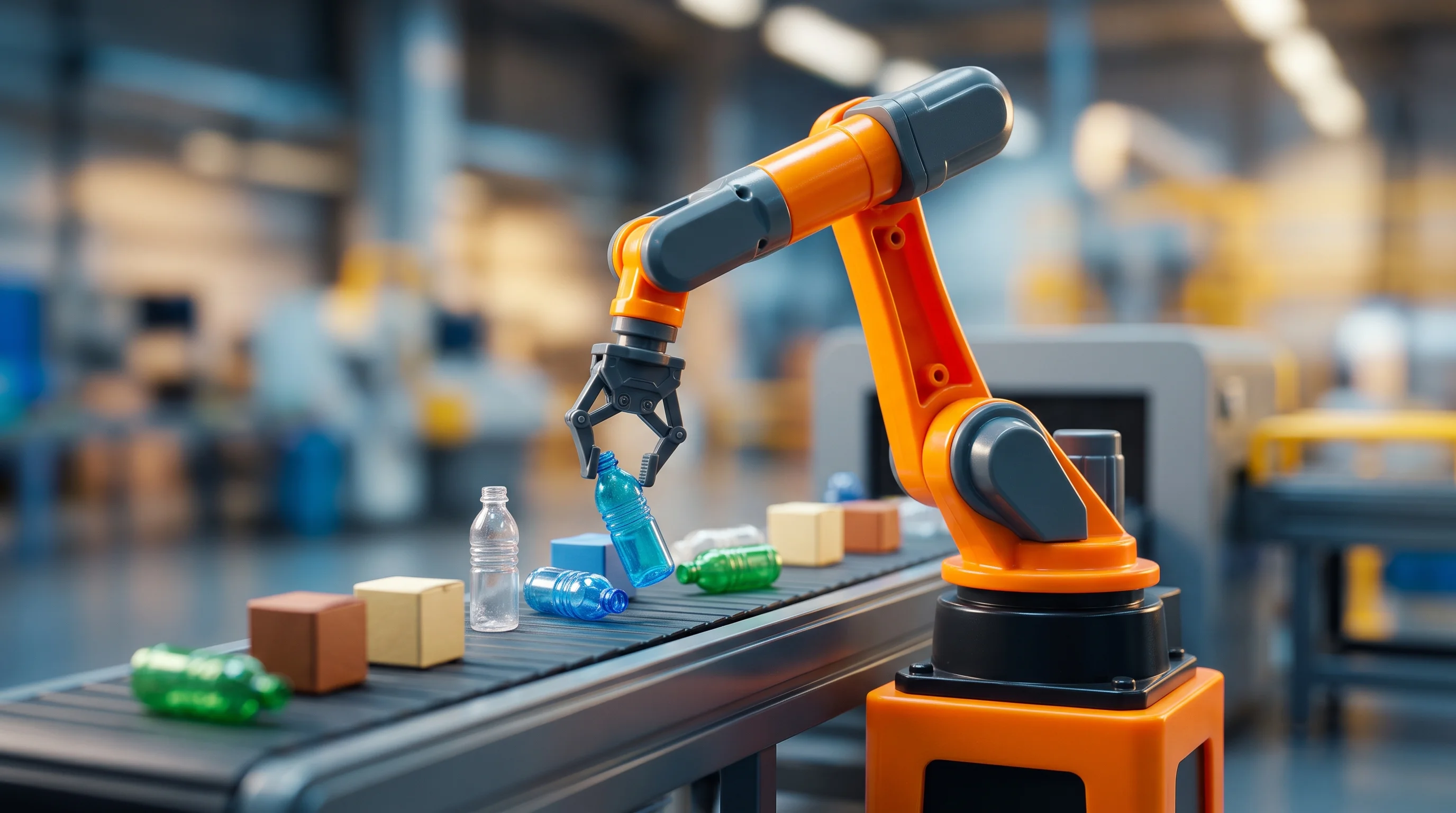
Automation has swept through recycling materials recovery facilities in recent years, and operators have shown willingness to deploy robots when ROI is clear. Waste Management disclosed $1.4 billion in recycling automation spending for 2022 through 2027, completing 27 of 39 planned projects by late 2024. AMP Robotics raised a $91 million Series D on December 5, 2024. Greyparrot closed a $27 million Series B in July 2026. EverestLabs deployed systems with Republic Services and Veolia ANZ.
But organics contamination removal presents harder technical problems than dry recyclables sorting. A March 2025 BioCycle article documented how Atlas Organics removed AI robots from its San Antonio compost line in May 2024 after a 2023 study found the machines underperformed human sorters on wet, deformable, and tangled contaminants. A February 2026 arXiv paper introduced a grasping benchmark for robotic food waste sorting, highlighting the difficulty of handling deformables and the variability of pre-grasp conditions.
Established recycling robotics vendors have focused on dry recyclables at material recovery facilities, where pick rates of 60 to 120 attempts per minute and success rates above 80 percent have become routine. Organics lines demand different gripper designs and vision models to handle wet, sticky, and partially occluded plastics mixed with food waste and yard trimmings.
Some companies are making inroads. Waste Robotics in Canada has deployed color-bag identification systems for organics. The company demonstrated single-stream organics material robotics at facilities including Polk County, Minnesota, which ran factory acceptance testing in August 2025 for robots capable of retrieving bagged organics up to 25 kilograms. AMP Robotics' AMP ONE system at RDS of Virginia, profiled in June 2024, extracts mixed recyclables and organics from municipal solid waste at transfer station co-locations, targeting what the industry calls dirty-stream resilience.
TOMRA Recycling launched its GAINnext deep learning platform and new AI applications at IFAT 2026, expanding sensor-based sorting for wood and other difficult materials. The company's X-TRACT system, introduced in 2025, claims 30 tons per hour wood chip processing with contaminant removal via X-ray transmission.
Fire, Economics, and Field Trials
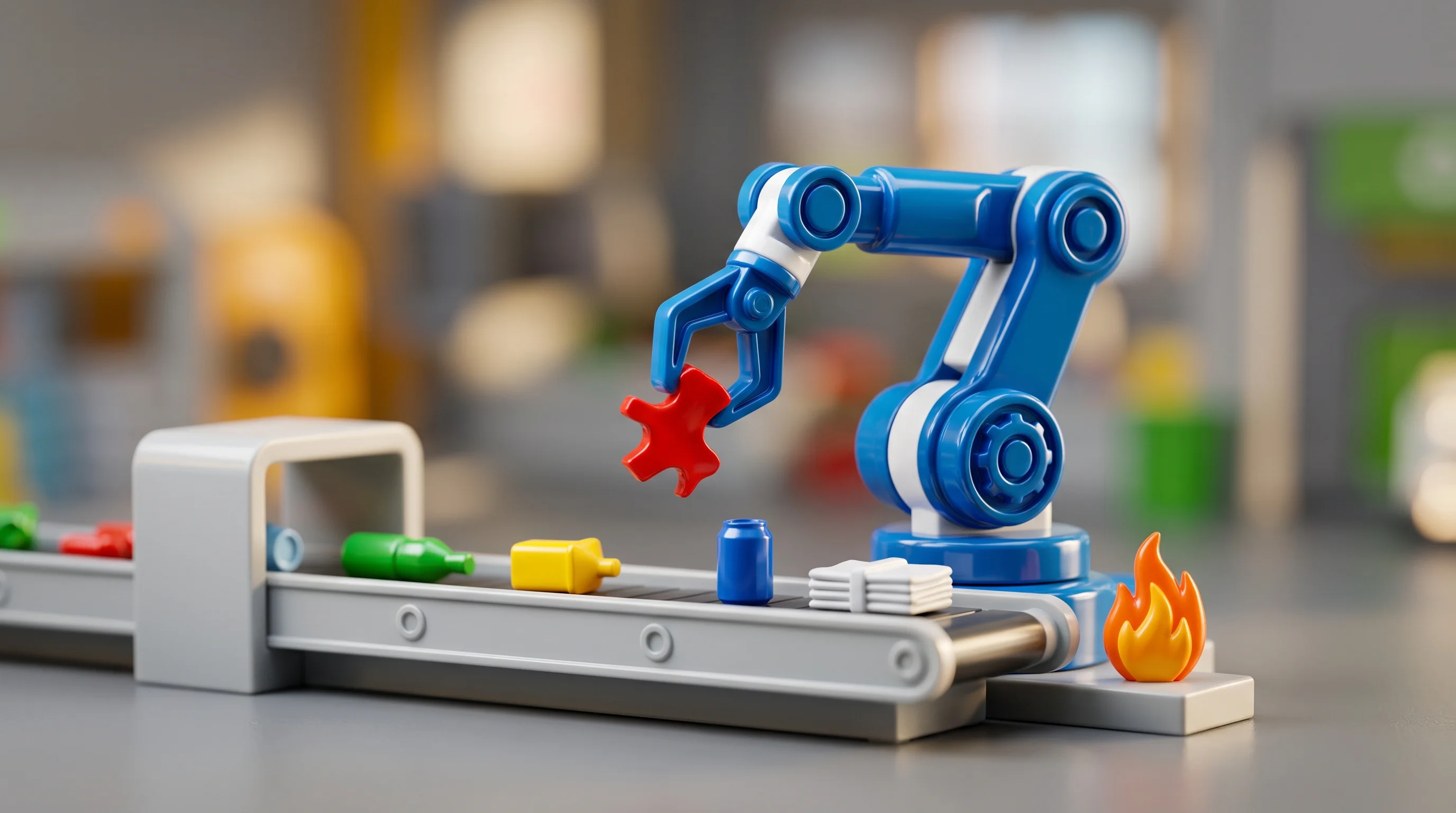
The gap between regulatory limits and facility economics creates demand for contamination-reduction technology that can operate continuously in harsh conditions. A 2026 NIST review of robotic sorting at MRFs identified three persistent challenges: economic viability, AI performance constraints, and grasping limitations. All three get magnified in organics applications.
Fire risk adds urgency to the contamination problem. There were 448 publicly reported waste and recycling facility fires in the U.S. and Canada in 2025, causing roughly $2.5 billion in damages, according to Fire Rover tracking data. Lithium-ion battery contamination has become a recurring cause.
Grip Robotics' launch materials emphasized a "brain that learns the stream—sharper with every grasp," positioning learning-based manipulation as the unlock for variable, degrading feedstock. The company declined to disclose pilot customers or funding details beyond its Y Combinator participation.
Waste Connections and AMP Robotics broke ground on what they called a next-generation AI-powered recycling facility in Commerce City, Colorado, with operations expected in 2026. The project demonstrates investor appetite for autonomous sorting at scale.
If robots can handle organics contamination reliably, the addressable market spans thousands of facilities in North America and Europe facing simultaneous volume growth, tighter standards, and labor shortages. Facilities that master contamination removal first will capture expanded throughput under tightening regulations.
Whether Grip's learning-based approach scales beyond lab conditions depends on field trials that are, presumably, now underway. The company has been quiet about specifics. For composters watching contamination costs eat into margins, that proof may not come fast enough.


