

Salesforce spent most of 2025 methodically rebuilding Heroku from the ground up, a long-delayed reckoning with technical debt that had accumulated since the platform's early days. The new version, a Kubernetes-powered infrastructure called Fir, shipped to general availability last April with .NET support, native observability tools, and a suite of AI capabilities designed to prove Heroku still mattered in an era of hyperscalers and serverless platforms.
Then came February. Ten months after launch, the company announced it was shifting to what it called a "sustaining engineering model"—corporate speak for prioritizing reliability and security over new features. For anyone tracking Heroku's trajectory, the timing was peculiar, if not outright confusing.
Engineering leaders still betting on the platform, or weighing it against the thicket of modern PaaS alternatives, now face a strategic puzzle. Fir represents a genuine technical refresh: Kubernetes under the hood, OpenTelemetry baked in, IPv6 by default, integrations with AWS services like Bedrock and Graviton processors. But a blog post published February 6, 2026, quietly reframed expectations. Heroku, it turns out, is no longer racing to ship the next big thing.
Kubernetes Arrives, Finally
Fir is Heroku's answer to the architectural debt of Cedar, the previous generation that powered the platform for over a decade. The new stack runs on Kubernetes, builds applications using Cloud Native Buildpacks, and packages them as OCI images—the standard format for modern container infrastructure. Announced in pilot form in early December 2024, Fir went generally available for Private Spaces on April 14, 2025.
The technical improvements are concrete, if somewhat overdue. OpenTelemetry support is native, with traces, metrics, and logs flowing into Heroku's Metrics UI or external backends through Telemetry Drains. In-space builds mean your code compiles in the same private region where it runs, addressing data residency concerns that enterprise customers have raised for years. IPv6 is enabled by default.
Router 2.0, which shipped last November, brought HTTP/2 support and laid groundwork for future networking features—HTTP/3, enhanced firewalls, blue-green deployments—that the roadmap mentions but doesn't commit to. That hedging feels more prescient now.
Heroku also added .NET to the platform on April 2, 2025, with official buildpack support for C#, F#, and Visual Basic. The move acknowledged what enterprise developers already knew: production environments are polyglot. According to the company's announcement, Heroku auto-detects .NET projects and handles the build process without ceremony. It's a practical feature, if not exactly groundbreaking.
The AI Gambit
Heroku positioned Fir as an "AI PaaS" throughout 2025, culminating in the May 15 launch of Managed Inference and Agents—a general availability add-on giving developers access to models from Anthropic, Cohere, and others. The offering includes tool-calling via the Model Context Protocol, CLI commands for managing inference jobs, and integration points designed to simplify deploying AI applications alongside traditional web services.
The company rolled out supporting tools: a Remote MCP Server for agent development, AppLink for connecting Heroku apps to Salesforce's Agentforce platform, and an Eventing pilot for event-driven architectures. On October 14, 2025, Heroku previewed a "next generation" Postgres offering, Postgres Advanced, targeting general availability in early 2026.
That timeline now sits awkwardly against the sustaining-engineering announcement just nine weeks ago.
DevOps.com framed the updates as extending "PaaS reach to AI application development," noting the VS Code extension, Jupyter integrations, and AWS Bedrock references. The pitch was straightforward: Heroku wanted to be the simplest path from idea to deployed AI app. Whether that vision survives the shift to maintenance mode remains unclear. Perhaps more than Heroku itself expected.
Migration, the Hard Way
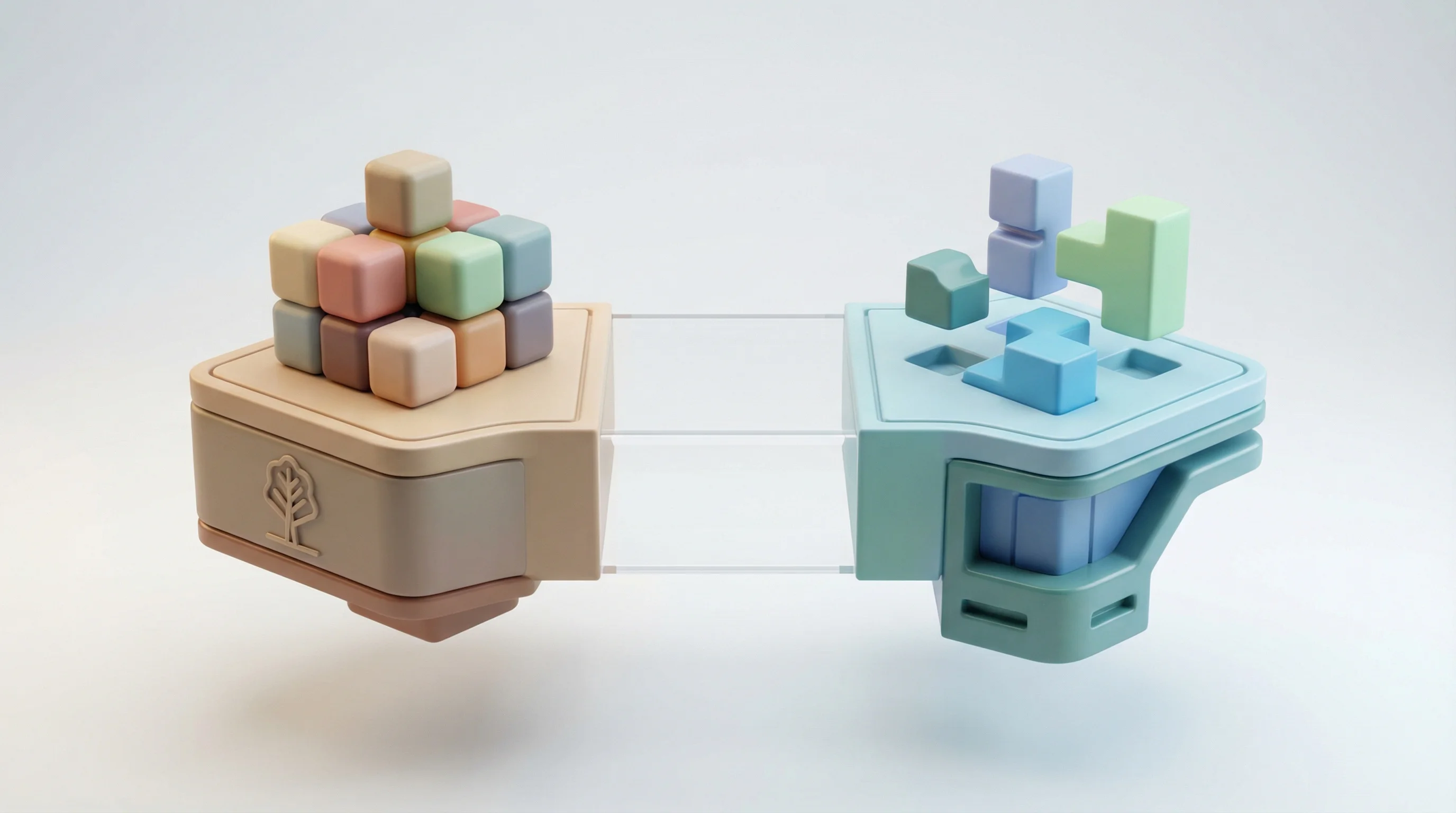
Moving to Fir requires manual work. There is no automated migration path from Cedar Private Spaces or the Common Runtime—a constraint Heroku's documentation states plainly, almost matter-of-factly. Architectural differences mean you can't simply transfer apps between generations. Cloud Native Buildpacks work differently than traditional slugs. IPv6 is mandatory. ARM and Graviton support changes the performance profile.
The migration guide walks through provisioning new Fir Private Spaces, updating buildpack configurations, and testing compatibility. Some features remain gaps: as of the January 27, 2026 documentation update, third-party add-on logs weren't available on Fir. Dockerfile-based apps weren't supported. Monorepo setups? Not yet. Shield, Heroku's compliance tier for regulated industries, appears on the roadmap without a ship date.
Per-space limits did improve. Fir Private Spaces support up to 200 apps and 500 dynos, compared to Cedar's lower defaults. Per-app scaling caps at 255 dynos per process type, with one-off dyno concurrency reaching the same. But the lack of automated migration means teams need to budget engineering time—sometimes weeks of it. And the feature parity gaps mean some workloads simply aren't portable yet.
The Economics Have Changed
Fir introduces new dyno families—Classic, General Purpose, Compute, Memory—with configurations ranging from 0.5 GB and 1 vCPU up to 128 GB and 16 vCPU. Published pricing runs from modest to decidedly enterprise-grade: a 32 GB, 8 vCPU General Purpose dyno costs $640 per month, while a 64 GB, 32 vCPU Compute dyno hits $2,400 monthly. Private Spaces themselves carry add-on fees around $1,000 per month for Standard and $3,000 for Shield.
Compare that to Cedar's low-cost options—Eco dynos at $5 per 1,000 hours, Basic plans at $7 per month—and Fir's economics clearly target a different buyer. This is infrastructure for teams running production workloads in isolated environments. Not side projects. Not prototypes.
Reddit threads from April 2025 surfaced confusion on exactly this point, with users comparing Fir's pricing to raw AWS or Hetzner VPS costs. The value proposition, Heroku would argue, is the managed layer: no Kubernetes to configure, no observability stack to assemble, no buildpack pipelines to maintain. Whether that's worth the premium depends on how much you value your engineers' time.
What Sustaining Engineering Actually Signals
On February 6, 2026, Heroku published "An Update on Heroku," announcing the shift to sustaining engineering. The language emphasized reliability, security, and support while explicitly—and somewhat unusually—de-emphasizing new feature development. For a platform that had just shipped a Kubernetes rebuild, AI tooling, and .NET support, the timing felt abrupt. Confusing, even.
The announcement didn't kill the roadmap outright. A product manager commented on Reddit in November 2025 that work on multi-tenant Fir and enterprise features was ongoing. The company has continued publishing runtime and toolchain updates through its Dev Center changelog. But "sustaining engineering" signals constrained resources—whether budget, headcount, or strategic priority.
Features like GPU dynos, HTTP/3, and software bill of materials (SBOMs)—all listed in the October 2025 Generations explainer—now carry implicit question marks. Will they ship? When? The February update doesn't say.
The Bet Has Shifted
For CTOs evaluating Heroku today, the calculus has fundamentally changed. Fir is a real modernization—Kubernetes, observability, and AI integrations are production-ready and functioning as advertised. But betting on Heroku now means betting on a platform optimized for stability over evolution. That might be exactly what some teams need: a boring, reliable foundation that doesn't require constant re-platforming.
For others, particularly those building on emerging technologies or expecting aggressive feature development, it's a reason to look elsewhere. The market has plenty of alternatives: Render, Fly.io, Railway. The hyperscalers themselves have simplified their offerings. Kubernetes-as-a-service exists in multiple flavors.
The platform that popularized "git push heroku main" spent 2025 proving it could modernize its core infrastructure. It succeeded, technically speaking. Whether it can thrive—or even remain competitive—in maintenance mode is a different question entirely. One Salesforce doesn't seem eager to answer publicly.
For now, Fir exists: a capable, Kubernetes-powered PaaS with AI tooling and enterprise features. What it becomes next depends less on engineering and more on whether Salesforce sees a future in platform services at all.


