

The price seemed almost deliberately provocative: $1,288 for a programmable humanoid robot. Not a toy, not a kit requiring assembly and prayer—but a wheeled, dual-armed platform capable of loading dishwashers, pouring drinks, and folding laundry. At least, that's what Nori Robotics claimed when the San Francisco startup emerged from Y Combinator's latest batch with a pitch that made even hardened robotics veterans do a double-take.
To understand why that number matters, consider the context. The humanoid robotics industry has spent the better part of a decade lurching between breathless hype and brutal economic reality. Most credible platforms—the kind you'd actually trust near your possessions—still carry price tags between $30,000 and $150,000, according to an April 2026 analysis by McKinsey. That's university research budget territory, not something a small manufacturer can impulse-buy to test a workflow theory.
Nori's wager is elegantly simple, if unproven: drop the price low enough, and the market will invent uses you never imagined.
When $4,900 Was "Affordable"
Until recently, one of the cheapest functional humanoids on the market was Unitree's R1, introduced in April at $4,900. That represented genuine progress—the company's higher-end G1 model runs between $13,500 and $16,000 depending on configuration—but $4,900 still prices out most individual developers and smaller educational institutions. The R1 found its audience mainly in university labs and corporate research centers. Mass market? Not remotely.
Nori undercuts that by nearly 75% with two models: the L2 at $1,288 and the L2 Grande at $1,322. Both are wheeled platforms (not bipedal walkers) with dual manipulator arms and Z-lift systems that extend 650mm and 950mm, respectively. The company's promotional materials show the robots performing recognizable household tasks—coffee-making, dishwasher loading, beer pouring, floor sweeping. A planned "skills marketplace" would let users share trained behaviors. Remote teleoperation support comes standard. Manufacturing happens in San Francisco, the company says, with deliveries expected this summer.
What Nori hasn't publicly detailed: production scale, safety certifications, or how many units have actually shipped to paying customers. As of early July 2026, shipment verification remained pending. Antonio Sitong Li, the founder—a Columbia graduate with previous startup experience at Founders Inc—has been selective about revealing operational specifics.
That opacity isn't unusual for a hardware startup this early. But at this price point, with these claims, the questions multiply fast.
Two Very Different Paths
Industry observers note that the humanoid sector in 2026 looks less like a unified industry and more like two parallel universes that occasionally make eye contact.
In the industrial corner, companies like Agility Robotics and Figure AI are embedding robots in real commercial operations. Agility announced a $2.5 billion SPAC merger with Churchill Capital in late June, backed by deployment agreements with Toyota, GXO Logistics, and Mercado Libre. Figure's third-generation robot started work at BMW's Spartanburg, South Carolina plant on June 30, handling parts sequencing after a 10-month pilot with the previous model.
These aren't price-per-unit transactions. Industrial humanoids operate on Robotics-as-a-Service contracts with no publicly listed sticker prices. The economics pencil out when a robot can cover multiple shifts of human labor in controlled, predictable environments. Tote handling, material transport, part sequencing—these are bounded problems with measurable ROI. True general-purpose manipulation across unpredictable tasks? Still aspirational.
The consumer side tells a different story. 1X Technologies opened pre-orders for its NEO home robot last October at $20,000 upfront or $499 monthly on subscription. The company set up a California factory in April to support U.S. deliveries later this year. But there's a substantial catch: NEO leans heavily on human-in-the-loop teleoperation and remote assistance. Privacy and safety trade-offs become considerably more fraught when a remotely piloted robot operates inside your home, watching and listening.
Boston Dynamics announced plans for an all-electric Atlas aimed at factory deployments by 2028. Amazon quietly killed its Blue Jay warehouse robotics project in February, though the company continues testing Agility's Digit robot and pursuing other automation efforts.
The Cost Compression Puzzle

McKinsey's spring analysis identified supply chain optimization as the most significant scaling challenge facing the industry, noting that costs need to drop by 50% or more to transition from the $30,000–$150,000 range into something approaching mass-market viability. Venture capital poured in between 2023 and 2025—more than $40 billion across the broader embodied AI and robotics stack, depending on how you count.
China is manufacturing humanoids at volumes the U.S. can't currently match. TrendForce reported in April that Chinese output was on track to surge 94% year-over-year, with Unitree and AgiBot controlling roughly 80% of the domestic market. In 2024, China installed 295,000 industrial robots—nearly five times U.S. annual installations—and maintained an operational stock exceeding 2 million units, compared to the U.S.'s 393,700, according to the International Federation of Robotics' World Robotics 2025 report.
That manufacturing infrastructure advantage becomes crucial when you're chasing a $1,288 price point. Open-source robotics software has accelerated development timelines, with IEEE Spectrum highlighting progress in AI models that improve autonomy. Cheaper sensors, commodity compute, modular design—all are contributing factors.
But there's still a canyon-wide gap between "affordable hardware" and "useful robot."
What Actually Works Today
For all the enthusiasm around falling prices, 2026 deployment data suggests measured optimism at best. The International Federation of Robotics reported 542,000 industrial robots installed globally in 2024—the second-highest year on record—but U.S. installations dropped 10% year-over-year to 50,100 units. Service and logistics robots performed better, with 102,900 transport and logistics robots sold in 2024, up 14% annually.
The use cases that function reliably today are narrow. BMW's Figure robots sequence parts. Agility's Digit moves totes in warehouses. These are valuable, economically justified tasks. They're also nowhere near the general-purpose vision that consumer-facing humanoid companies are marketing. Industry sentiment across the first half of the year frames logistics and manufacturing as the near-term value proposition, with consumer and home adoption still years out and heavily dependent on teleoperation infrastructure.
Market forecasts vary so wildly they're almost comical. ABI Research projected $6.5 billion in revenue by 2030, implying a compound annual growth rate of 138% from 2024 and roughly 195,000 units shipped by decade's end. Goldman Sachs revised its 2035 estimate upward to $38 billion in June, a sixfold increase from an earlier $6 billion projection. Morgan Stanley's February 2025 scenario modeling envisioned a $5 trillion market by 2050 with over a billion deployed units.
File those long-horizon numbers under "plausible boundary conditions" rather than "predictions."
The Experimentation Thesis
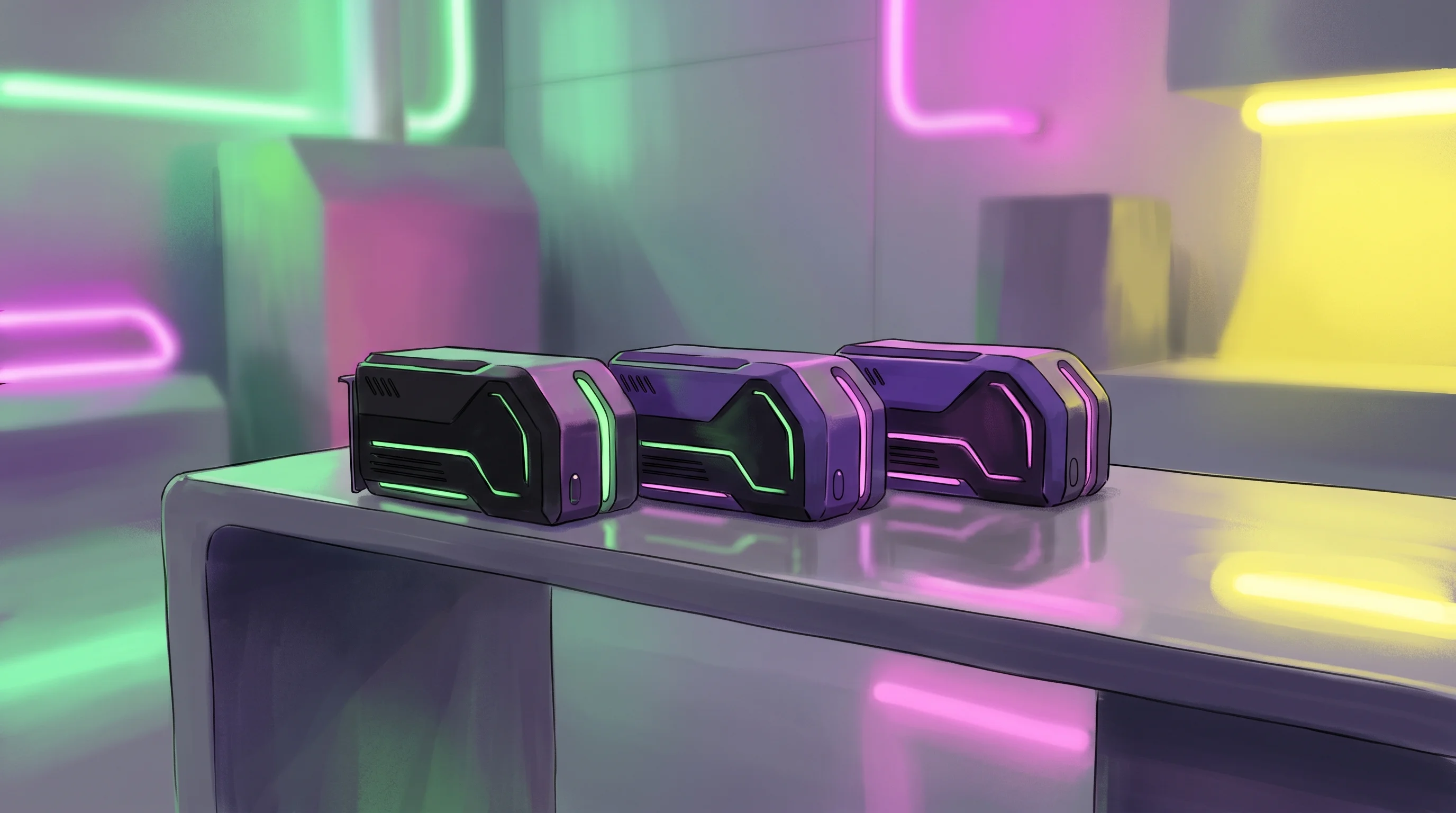
Nori's approach poses a different question entirely: What becomes possible when hardware gets cheap enough that trying something becomes trivial?
At $1,288, a small manufacturer can afford to buy three units and test whether any prove useful without executive approval. A computer science department can equip a lab without budget committee battles. A founder can prototype an application without begging for hardware grants or partnerships.
That's the theory. Whether it holds depends on factors beyond the Bill of Materials.
The regulatory environment is tightening, which matters more as volumes scale. The U.S. updated its industrial robot safety standard (ANSI/A3 R15.06-2025) in September 2025, aligning with ISO 10218. For service and consumer robots, UL 3300 now governs safety certification in the U.S. California strengthened data privacy rules effective January 1, with new obligations around automated decision-making—relevant for any home robot equipped with cameras and microphones. Europe's AI Act, with phased requirements that began rolling out in early 2025, imposes documentation, transparency, and safety obligations on high-risk AI systems.
Certification paths gatekeep market access. Nori's website doesn't yet display UL marks or FCC IDs, typical for pre-shipment hardware but worth watching as deliveries theoretically ramp.
The Platform Question

The next year and a half will clarify whether ultra-low-cost humanoids can find product-market fit outside education and research. Industrial deployments are progressing from pilots to production, but the tasks remain bounded. Consumer robots are shipping, but they're expensive and teleop-dependent.
Nori's gamble is that price alone creates a category—one where the robot doesn't need to be perfect, just cheap enough to justify the experiment.
Whether that pays off depends less on the hardware specs and more on what early adopters actually build. The skills marketplace, the teleoperation layer, the community of developers willing to train behaviors and share code—those are the elements that determine whether a $1,288 robot becomes a platform or simply a clever piece of hardware without a purpose.
Getting the robot built and priced aggressively? That might be the straightforward part. Figuring out what it's actually for, and who will build that future, remains unsolved. Perhaps more unsolved than Nori's pitch deck would suggest.


