

Spanish grid engineers used to know the drill all too well. When voltage anomalies cropped up at a distant substation, somebody had to drive there—sometimes hours through rural terrain—haul oscilloscopes past security gates, capture waveforms, then reverse the journey to analyze what went wrong. The equipment stayed put. The expertise traveled.
Not anymore. In 2025, Redeia, Spain's transmission system operator, flipped that equation. The company virtualized the entire diagnostic process, processing more than 4,000 voltage and current samples every second right at the substation edge. Intelligent triggers watch for GOOSE protocol events—the grid's digital nervous system—and pipe insights to remote teams. The physical infrastructure never budges. The intelligence does.
That inversion, subtle but profound, is now rippling through refineries, power grids, and factories worldwide. Edge AI—running machine learning models on-site rather than in distant data centers—has crossed over from pilot curiosity to operational necessity. The reasons are varied: latency demands in millisecond-sensitive processes, data sovereignty regulations tightening across borders, and the stubborn physics of moving terabytes across constrained industrial networks.
Perhaps most tellingly, the shift reflects something simpler: in critical infrastructure, waiting for the cloud isn't always an option.
Money Follows Function
The numbers suggest momentum building fast, though definitions remain slippery. Global edge computing revenue hit $18.6 billion in 2024 and is projected to reach $22.5 billion this year, then accelerate sharply to $215.8 billion by 2033—a 31.1% compound annual growth rate, according to market research firms tracking the space. North America currently accounts for roughly 39% of industrial edge computing revenue, with software and platforms growing at nearly 14% annually through 2031.
Dig into the applications and patterns emerge. Predictive maintenance claims 29.2% of the edge AI workload in 2025. Manufacturing leads end-user adoption at 42%. Yet here's the catch: enterprise IoT connections with true edge AI capabilities—meaning dedicated neural processing accelerators, not just connectivity—still represent less than 1% of the 21.1 billion connected devices expected by year's end.
That gap is closing, and fast. S&P Global's 451 Research found 68% of organizations increased edge budgets in 2025, with 47% explicitly citing AI requirements as the driver. Capgemini reported that 80% of organizations boosted generative AI investment since 2023, and 24% have now integrated GenAI into some or most locations, up from a mere 6% two years ago.
The hardware ecosystem is catching up. Industry analysts predict 2026 will mark the first broad wave of AI-accelerated IoT silicon—neural processing units and AI blocks embedded directly in sensors, connectivity modules, and industrial gateways. The Edge AI Foundation (quietly rebranded from TinyML Foundation last November) signals how far the category has traveled: what began as microcontroller inference for tiny sensors now encompasses multimodal vision-language models running on ruggedized edge servers in hostile environments.
The Interoperability Puzzle
Infrastructure operators face a tangled inheritance: Modbus, Profibus, IEC 61850 for substations, proprietary distributed control system interfaces in refineries. Getting these systems to talk to each other—and to edge AI platforms—remains somewhere between art and black magic.
Interoperability initiatives are gaining traction, though. The OPC Foundation launched its OPC UA Field eXchange (FX) certification program in December 2024, enabling controller-to-controller communication with deterministic timing guarantees; controller-to-device certification is underway. UniversalAutomation.org, which promotes IEC 61499 runtime portability, crossed 100 members in March. The Linux Foundation introduced "Margo" in April 2024 to unlock application interoperability across fragmented industrial edge stacks.
On the platform side, offerings are maturing quickly. AWS IoT Greengrass V2 now includes a lightweight "nucleus lite" runtime under 5 MB with TPM 2.0 hardware security support, targeting resource-constrained gateways. (Greengrass V1, meanwhile, reaches end-of-support on June 1, 2026—a deadline concentrating minds among enterprises still running legacy deployments.) Microsoft Azure IoT Operations earned a 2025 Gartner Magic Quadrant leader designation, with customers like Chevron and Husqvarna scaling multi-site rollouts.
Siemens integrated its Industrial Edge platform with Azure IoT Operations in March, claiming centralized OT/IT convergence control planes—industry jargon for bridging the long-standing divide between operational technology (the machinery) and information technology (the data systems). Separately, Siemens partnered with NVIDIA to embed accelerated computing in industrial PCs, reporting execution speedups up to 25x for AI workloads. Rockwell Automation is deploying edge-based generative AI using NVIDIA's Nemotron Nano model in FactoryTalk workflows. Schneider Electric's Distributed Control Node framework with Intel and Red Hat pushes open, software-defined automation to the field layer.
McKinsey's 2024 tech trends survey found 48% of enterprises report "scaled or scaling" adoption of combined cloud and edge computing—outpacing even applied AI at 35%. The data suggests something real is happening, even if vendor marketing sometimes runs ahead of actual deployments.
When Regulation Becomes Architecture

Data sovereignty and compliance requirements are no longer afterthoughts. They're increasingly driving architecture decisions from the start.
The EU's AI Act applies most of its high-risk rules starting August 2, 2026, demanding transparency, explainability, and logging that often favor local processing over opaque cloud black boxes. The EU Data Act, in application since September 2025, mandates access to connected device data and restricts third-country access to non-personal industrial data—creating incentives to keep inference on-premises or at the edge to avoid cross-border legal entanglements.
For North American utilities, NERC's Critical Infrastructure Protection (CIP) standards enforce strict cyber segmentation, access controls, and supply chain vetting. Edge platforms must sit behind electronic security perimeters or boundary firewalls with rigorous patch management. The IEC 62443 series has become the de facto OT cybersecurity standard globally, guiding risk assessments around zones and conduits. CISA's Cross-Sector Cybersecurity Performance Goals, updated in January, provide baseline expectations for asset inventory, multi-factor authentication, and network segmentation that extend to distributed edge nodes.
Environmental regulations add another layer. The EPA's final methane rule, issued in December 2023, emphasizes continuous monitoring and advanced leak detection in oil and gas operations. Edge computer vision—processing video streams on-site to detect flare anomalies or black smoke—lets operators comply without streaming terabytes of footage to distant clouds or dispatching technicians into hazardous zones. One refinery case study using Emerson and VisionAery's edge CV solution automated flare monitoring, cutting manual inspections and improving EPA compliance response times measurably.
Compliance, in other words, is becoming a technical forcing function.
Real Work in Real Places
Redeia's substation oscilloscope virtualization exemplifies the utility use case. Using Barbara's Edge Platform, Redeia deployed nodes that ingest IEC 61850-9-2 sampled values and GOOSE messages, process waveforms locally, and surface fault diagnostics remotely. Engineers troubleshoot grid events without truck rolls—saving hours or days on response times. Iberdrola, through its PERSEO innovation program, partnered with Barbara and Inetum in September 2024 to automate substation control room ergonomics via edge sensorization, targeting operator safety and efficiency gains.
The momentum extends well beyond utilities. Saudi Aramco deployed FogHorn's edge computer vision in 2021 for safety monitoring, equipment inspection, and process automation across remote sites where connectivity is sparse or non-existent. Refineries have reported maintenance cost reductions ranging from 9% to 72% over multi-year horizons by running predictive models at the edge, according to case studies compiled by Automation.com. Cosmo Oil cut engineer data-collection time from 70–80% of their day to mere minutes by centralizing and processing sensor data locally, enabling AI-driven maintenance workflows.
Manufacturing deployments span the spectrum from anomaly detection to real-time optimization. Siemens and rhobot.ai integrated edge-native AI for live optimization at CarbonAMS, available on the Siemens Xcelerator marketplace as of October 2025. NVIDIA's Metropolis for Factories provides end-to-end vision AI pipelines—synthetic data generation via Omniverse Replicator, model training with TAO, deployment from edge to cloud—targeting defect detection, PPE compliance, and safety applications.
These aren't breathless pilot announcements. They're production systems processing real data, in real time, under real operational constraints.
Where Progress Stalls

Despite the momentum, integration with legacy SCADA, programmable logic controllers, and manufacturing execution systems remains difficult. Market research indicates 48% of manufacturers report integration challenges, with average delays of five to nine months in large-scale rollouts. Vendor lock-in persists—a problem as old as industrial automation itself, now transplanted to the edge layer.
Security across distributed nodes compounds the challenge. Sixty-two percent of enterprises cited difficulty securing distributed edge environments, according to 2024 survey data. Inconsistent patching, underutilized hardware roots of trust, and uneven standards adoption create vulnerabilities that sophisticated adversaries already know how to exploit. When you're distributing intelligence across hundreds or thousands of field sites, the attack surface expands accordingly.
Scaling from pilots to production demands edge MLOps—model versioning, fleet orchestration, remote updates—across intermittent or even air-gapped sites. EdgeX Foundry's 4.0 "Odesa" long-term support release, launched in 2025, addresses some needs with PostgreSQL defaults and performance improvements. AWS Greengrass and Azure IoT Operations offer centralized management dashboards. Yet operators still wrestle with IT/OT cultural divides and skill gaps that don't disappear just because the technology improved.
Virtual PLCs offer intriguing possibilities—running control logic in software, decoupled from proprietary hardware. Siemens introduced the S7-1500V vPLC, Phoenix Contact launched Virtual PLCnext Control, and industry analysts suggest gradual adoption through 2030, driven by renewables, data centers, and energy management use cases. Yet deterministic timing and failover complexity mean physical PLCs aren't disappearing anytime soon.
Perhaps vPLCs represent a hybrid future: legacy hardware for mission-critical loops where millisecond jitter means disaster, virtualized logic for flexible, data-heavy tasks that don't require hard real-time guarantees. The control systems world tends to move slowly, and for good reason.
Where This Goes Next
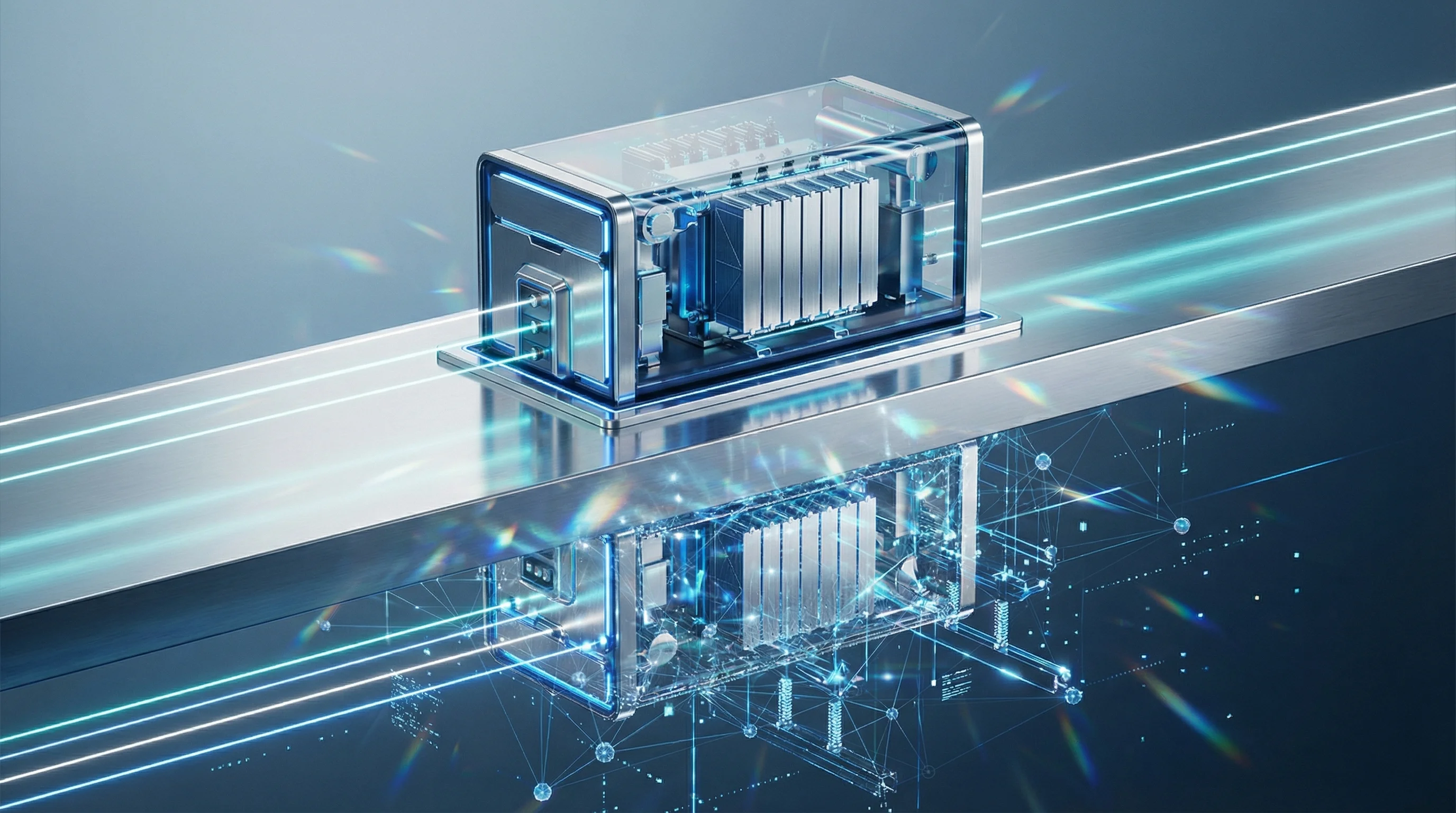
Utilities are pursuing substation virtualization with increasing confidence, fusing digital twins, OPC UA FX determinism, and AI-based anomaly detection. Research papers now demonstrate acceptable response times for virtualized intelligent electronic devices (vIEDs) in real-time protection scenarios, complete with explainable autoencoder models for GOOSE anomaly detection. If substations can run mission-critical protection logic in software—and early evidence suggests they can—the implications for grid flexibility and autonomous operations are profound.
Refineries and process plants face tighter environmental scrutiny. Continuous methane monitoring, automated flare compliance, and predictive equipment health all demand inference at the source—where sensors sit, where failures happen, where bandwidth is expensive or absent. Edge platforms that interoperate with legacy DCS and SCADA systems via standard protocols will win. Those requiring rip-and-replace strategies will stall.
Manufacturing's trajectory hinges on how agentic AI and physical automation converge. China installed roughly 295,000 industrial robots in 2024, nearly ten times U.S. installations according to International Federation of Robotics data—a reminder that automation momentum is global and accelerating unevenly. Domain-specific, explainable edge models paired with private 5G networks (CBRS in the U.S., network slices globally) may eventually enable mobile robots and AGVs to operate with sub-millisecond latency and deterministic handoffs. That future isn't quite here yet, but the pieces are assembling.
The edge isn't replacing the cloud—that framing misses the point. It's reshaping where intelligence lives. Cloud trains models on aggregated data sets, applying computational brute force. Edge runs inference where milliseconds matter and data sovereignty rules forbid transmission. As one Barbara executive put it: "Smart Grid cannot be solely managed from centralized platforms… we need highly distributed, independent IT infrastructure for AI at the edge." That principle applies equally to refineries virtualizing oscilloscopes, factories detecting defects in real time, and substations protecting grid stability.
The infrastructure operators who figure out orchestration, security, and interoperability first will compound advantages—faster response times, lower operational costs, regulatory compliance built into the architecture rather than bolted on afterward. Those waiting for simplicity may discover the window has already closed. In critical infrastructure, the cost of being late isn't just competitive disadvantage. It's grid failures, safety incidents, and environmental violations that make headlines for all the wrong reasons.
The intelligence has moved. The question now is whether organizations can manage what they've distributed.


