

A Y Combinator startup wants to automate the last human bottleneck in autonomous fleets—and Uber's $100 million charging bet shows why it matters
The robotaxis glide through San Francisco without drivers, sensor arrays spinning atop their roofs. But back at the depot, there's still a decidedly human element to the operation: someone has to plug the damn things in.
One worker for every 12 to 14 vehicles, according to industry estimates—a ratio that starts to look expensive when you're running hundreds or thousands of autonomous cars. Uber made that economics problem visible this week, announcing plans to spend north of $100 million building charging hubs across U.S. cities. It's infrastructure that barely existed three years ago, now suddenly mission-critical.
Enter RoboDock, a San Francisco startup fresh out of Y Combinator's Winter 2026 batch, which believes it can eliminate what co-founder Zinny Weli describes as "the last manual gap" in otherwise autonomous operations. The pitch: robots that handle depot charging and vehicle inspections automatically, no human intervention required.
Whether that pitch finds traction depends on details the company hasn't yet disclosed publicly—its website currently displays an "under construction" notice—but the market pressure is undeniable. Fleet operators are discovering that charging, not driving, has become the operational bottleneck.
The Intelligence Layer Problem
RoboDock's approach involves more than just a robotic arm that can grip a charging cable. The company's LinkedIn profile describes "the automation layer for modern vehicle depots," suggesting software orchestration sits at the core of what they're building.
That distinction matters. Depot operations involve deciding when to charge (electricity prices fluctuate hourly), how fast to charge (battery longevity versus fleet availability trade-offs), and which vehicles need inspection before heading back out. A robot arm solves one piece of that puzzle. The intelligence layer—integrated with existing fleet management systems—potentially solves several at once.
Weli brings relevant experience to that challenge. Before RoboDock, he led autonomous drone charging at Zipline, the medical delivery company that's dropped hundreds of thousands of packages across multiple continents. He also developed charging systems for Amazon's home robot at Lab126. Stanford robotics degree, mechanical engineering from Michigan. His co-founder, Celine Wang, comes from Plus, where she worked as a senior mechatronics engineer on autonomous semi-trucks—also a Stanford mechanical engineering alum.
CB Insights reports the company raised $500,000 via convertible note in February 2026, with Y Combinator participating. Current headcount sits somewhere between two and ten people, which is another way of saying: very early days.
A Market That Exists But Hasn't Consolidated
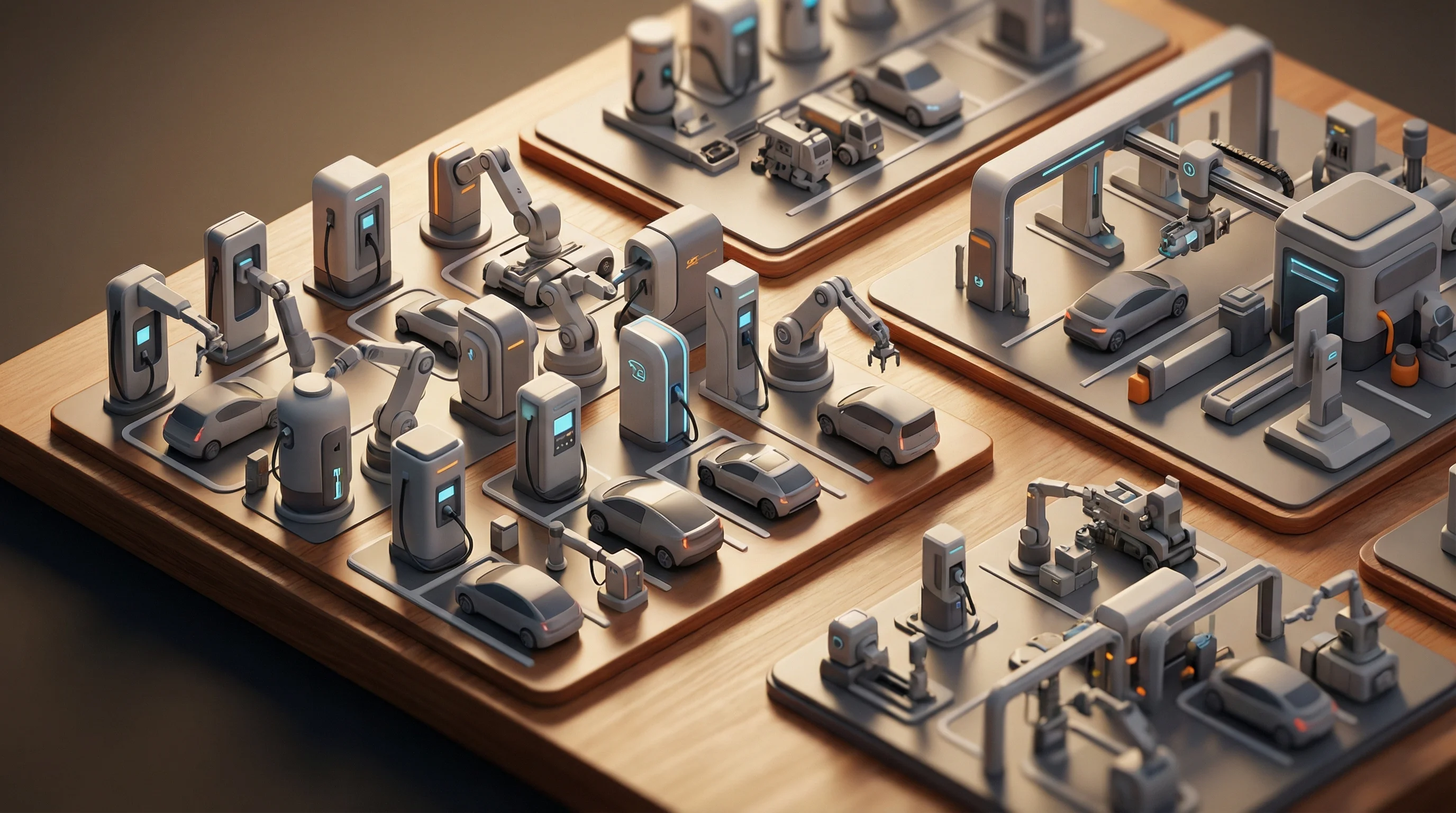
RoboDock isn't inventing this category from scratch. The market for robotic charging has attracted OEMs, industrial automation firms, and venture-backed startups—though no one's achieved the kind of broad deployment that signals a winner-take-all moment.
Rocsys, arguably the most visible name in the space, has focused on ports and logistics yards. They've partnered with companies like ICT Group and Einride to integrate hands-free charging into automated operations, though mostly outside the robotaxi context. Stäubli delivered mechanized connectors for a large-scale port program in Long Beach. Hyundai showed an Automatic Charging Robot prototype in 2023 that generated headlines but little evidence of commercial traction. EV Safe Charge demonstrated its mobile robot "ZiGGY" at DFW Airport, targeting a different use case entirely.
China's seen activity from NaaS and CalmCar, both developing robotic arm systems specifically for L4 autonomous fleets—a market segment where labor costs and utilization economics matter differently than in Western markets.
Meanwhile, HEVO and STEER Tech announced a partnership last August pursuing wireless autonomous charging, which eliminates the plug problem entirely but introduces new infrastructure costs and efficiency trade-offs.
Most solutions remain tied to niche applications: ports, transit depots, specific OEM ecosystems. The broader robotaxi and delivery vehicle markets, where uptime directly determines revenue, remain largely manual. That's the gap RoboDock is aiming for.
The Uber Signal

Uber's charging hub announcement this week wasn't just a capital expenditure press release. It was a signal about where the autonomous ride-hail business is heading—toward dedicated infrastructure that looks more like a transit operation than a gig economy platform.
Fast-charging depots require grid coordination, permitting approvals, and capital investment that only pencils out at scale. Research published in The Electricity Journal last September noted that per-vehicle costs decline meaningfully only when utilization climbs above certain thresholds. Automation becomes attractive not just to reduce labor costs, but to increase throughput—more charges per day, tighter turnaround times, higher fleet availability.
The catch, fleet operators have learned, is reliability. Real-world "first-time charge success" rates often lag advertised hardware uptime, sometimes significantly. A robotic charging system that fails 5% of the time still requires human oversight, which defeats much of the economic purpose.
That's perhaps why RoboDock emphasizes the software orchestration angle—handling edge cases, managing exceptions, coordinating with dispatch systems. The robot arm is table stakes. The intelligence that keeps the depot running without human babysitting? That's harder to replicate.
Still Under Construction
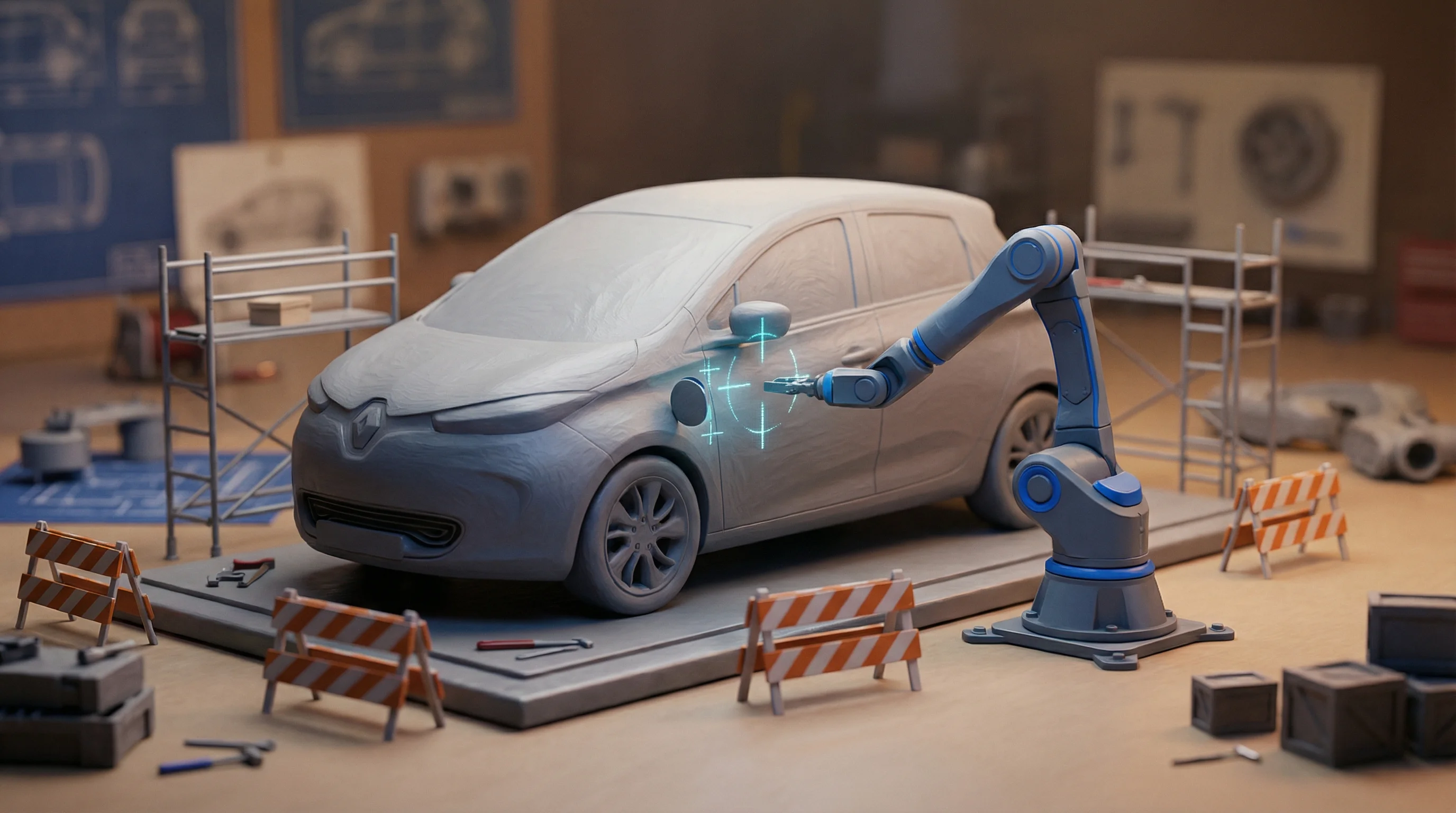
For now, RoboDock's actual product remains largely a LinkedIn tagline: "Powering autonomy." Weli posted an announcement in early February inviting EV and AV fleet operators to connect, but specifics about the technology—computer vision for inlet targeting, force-controlled arms, ISO 15118 compliance for vehicle-to-charger communication—haven't been disclosed.
Which might be appropriate for a company that's raised half a million dollars and likely consists of a handful of engineers in a WeWork somewhere in San Francisco. The technical challenges are well understood: align a connector with millimeter precision on vehicles that park with centimeter-level variance, apply the right insertion force without damaging hardware, communicate with battery management systems that weren't designed for robotic interaction, and do all of it reliably enough that human intervention becomes truly optional.
Whether RoboDock can deliver on that—and whether fleet operators find the value proposition compelling enough to adopt—remains an open question. But the market they're chasing is real, growing, and still remarkably manual for an industry obsessed with removing humans from the loop.
Uber's $100 million bet suggests the infrastructure moment has arrived. Now comes the harder part: making it work without anyone having to stand there and plug it in.


