

When Manu Sharma and Wesley William Lummis set out to build FemtoVox in 2022, ultrafast lasers were familiar territory. The two engineers had spent the better part of two decades perfecting the physics behind three breakthrough eye surgery systems—IntraLase for LASIK, LenSx for cataracts, and ViaLase's glaucoma treatment. Together, those technologies have touched more than 10 million procedures worldwide. Now they're pointing that same laser science at something far messier: the larynx.
It's an audacious leap. Femtosecond lasers revolutionized ophthalmology for a simple reason—the cornea is transparent, accessible, practically made for precision optics. The throat? Not so much. Tight, vascular, perpetually coated in mucus, it's a space where surgeons still rely on CO2 and KTP lasers that date back decades. These workhorses vaporize tissue through heat, which works, but they also char, risk airway fires when oxygen levels spike, and leave behind collateral damage that can scar delicate vocal cords. The Orange County startup is betting that ultra-short laser pulses—the kind that fire in quadrillionths of a second—can bring the same surgical elegance to a field starved for innovation.
Whether they're right might determine if FemtoVox becomes another medtech footnote or the company that finally drags throat surgery into the 21st century.
The Ophthalmology Pedigree
Sharma, FemtoVox's CEO, and Lummis—widely believed to be CTO, though the company keeps its organizational chart close—both came of age during the 2000s femtosecond laser boom in eye surgery. Their names appear on patents alongside pioneers like Tibor Juhasz, the physicist often credited with proving ultrafast lasers could cut living tissue without thermal damage. By 2017, LenSx alone had logged a million cataract procedures. ZEISS SMILE, another femtosecond platform, crossed 10 million refractive surgeries by 2024.
That track record matters, particularly in medtech circles where past exits and clinical adoption carry weight. Femtosecond lasers work through plasma-induced photodisruption—pulses so short they ionize tissue at a focal point without heating anything around it. In eyes, that meant LASIK flaps cut to micron-level precision and cataract lenses fragmented with minimal ultrasound energy, which meant faster healing and fewer complications.
The throat presents entirely different physics. Tissue scatters light. Surgeons can't see beneath the surface without imaging guidance. And unlike a cornea under a microscope, the larynx moves with every breath. FemtoVox's answer, detailed in two granted U.S. patents and backed by a $277,810 NIH grant awarded this past August, pairs the ultrafast laser with optical coherence tomography—OCT, the same cross-sectional imaging technology that's become standard in ophthalmology. Think surgical GPS.
Why Throat Surgery Still Burns
Laryngeal procedures represent a $1.8 billion annual market in the United States, according to FemtoVox's NIH application. Some 120,000 surgeries happen each year. Another 400,000 Americans get diagnosed with benign vocal fold lesions—polyps, nodules, cysts—but many skip surgery entirely, worried about voice outcomes and recovery time.
Current laser options include Lumenis' UltraPulse CO2 system and various KTP lasers, both of which use continuous or pulsed thermal energy to vaporize tissue. Effective? Sure. Elegant? Not particularly. They burn tissue to remove it. Airway fire risk is documented extensively in medical literature, especially when oxygen concentrations exceed 30 percent or lasers run in continuous mode near endotracheal tubes. More than a few operating rooms have learned that lesson the hard way.
More fundamentally, these lasers can't touch subsurface lesions without slicing through the epithelium—the mucosal layer that protects vocal folds and determines voice quality. That's the surgical Catch-22: you can't fix what's underneath without damaging what's on top.
Academic labs have been circling this problem for over a decade. A 2022 Stanford study in Scientific Reports demonstrated subsurface void creation in porcine vocal folds using a custom femtosecond probe. A 2023 paper in Laryngoscope showed similar feasibility in canine models. The concept sounds almost too good: focus the beam below the surface, ablate the lesion, leave the top layer intact. It's cold cutting with no collateral damage.
Theory, of course, is cheap. Making it work in human throats is the entire challenge.
OCT-Guided Precision (In Theory)
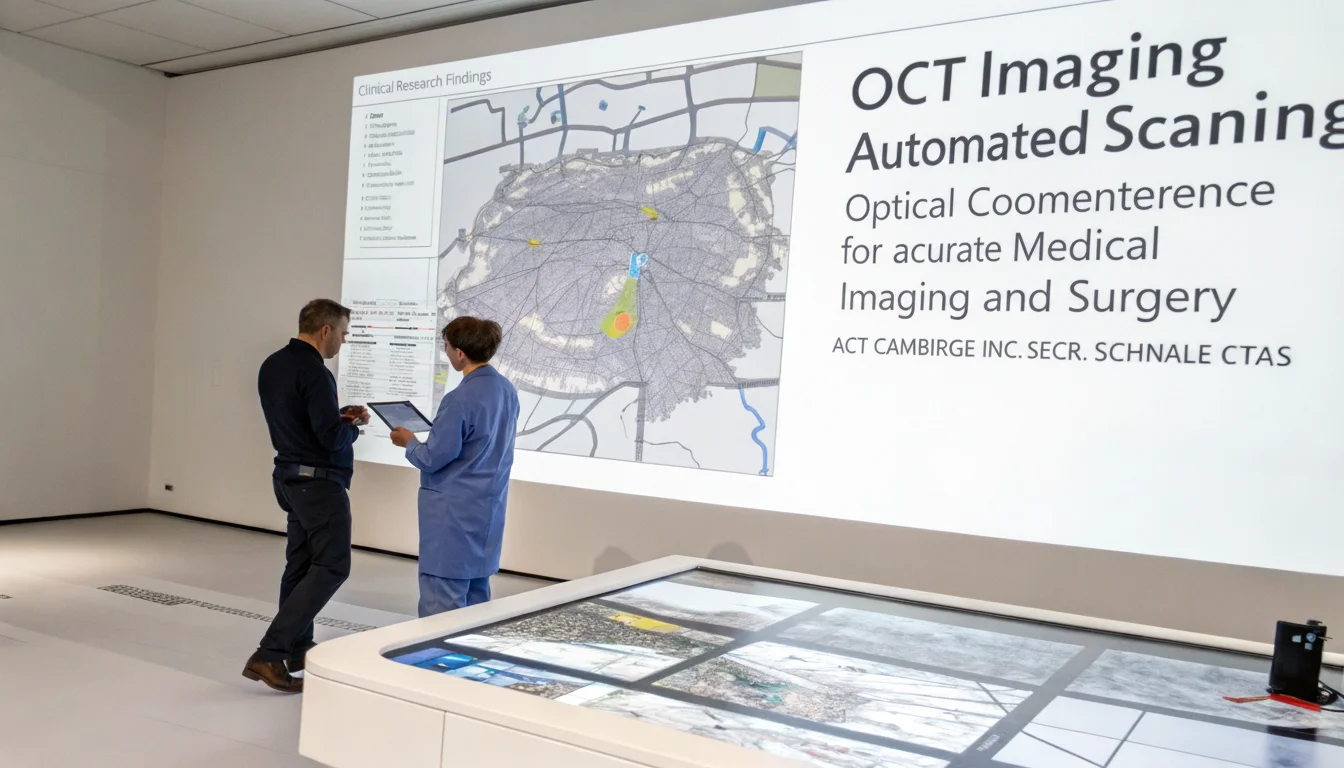
FemtoVox's patents describe a delivery system integrating femtosecond or picosecond pulse generation with OCT imaging and automated scanning. The surgeon selects an excision depth. The OCT maps tissue architecture in real time. The laser follows a programmed pattern to remove diseased tissue or create subsurface voids for biomaterial injection—useful for treating vocal fold scarring, which can be career-ending for professional voice users.
The company claims the system causes "10 times less damage than a scalpel," a figure echoed across third-party startup directories but not yet validated in peer-reviewed ENT trials. Broader femtosecond literature supports the premise—ophthalmology studies routinely cite minimal collateral damage at high numerical aperture—but translating that to vocal fold tissue under clinical conditions is another matter entirely. Tissue density varies. Patients cough. Blood obscures the field.
The NIH grant, which runs through February 2025, focuses on demonstrating minimal collateral damage in laryngeal tissue and characterizing coagulation effects. It's preclinical work. No FDA submissions or clinical trial registrations have surfaced yet.
Mayo Clinic Enters the Picture
On December 10, 2024, FemtoVox announced a know-how agreement with Mayo Clinic to co-develop the platform, with initial focus on voice box applications. Mayo disclosed a financial interest in the technology—standard language for deals involving institutional IP or equity stakes—but the partnership lends considerable credibility. Mayo's ENT department is a powerhouse in laryngology research. That kind of institutional backing suggests FemtoVox's science has cleared internal scientific review, which is worth more than most press releases.
Third-party databases claim the startup has also raised a $3 million seed round led by First Spark Ventures and Mayo Clinic Ventures. Neither firm lists FemtoVox on public portfolio pages. No press release or SEC filing confirms the round. The company appears to be running lean—SBIR records list two employees, though other directories cite seven or eight. Perhaps they're keeping heads down until they have clinical data worth shouting about.
The Hard Part
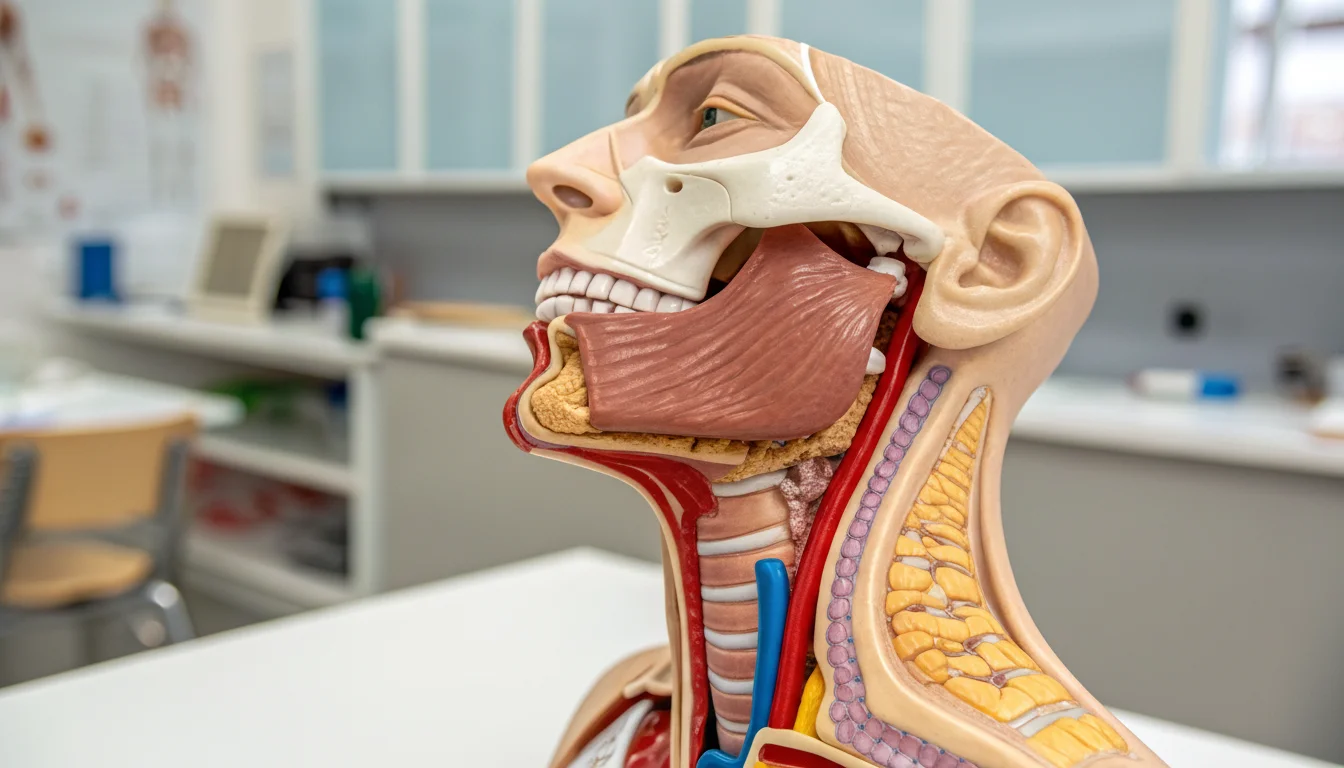
FemtoVox is attempting something genuinely difficult. Ophthalmology was a natural fit for femtosecond lasers because eye tissue is transparent and surgeons already operated under microscopes with high-precision optics. The throat is narrow. It moves. It bleeds. Navigating curved anatomy with flexible endoscopes while firing ultrafast laser pulses at subsurface targets is not a trivial engineering problem, even with OCT guidance.
Questions remain about how the system handles variability in tissue density, real-time motion compensation, and integration into existing OR workflows. Surgeons are creatures of habit, particularly when lives are on the line. A new device needs to be not just better but obviously, demonstrably, career-changingly better.
Then there's the regulatory gauntlet. Any new surgical laser faces Class II or Class III device scrutiny from the FDA, requiring bench testing, animal studies, and phased human trials. CO2 and KTP lasers are entrenched, affordable, and—crucially—surgeons know their limits. Displacing them will require not just superior precision but measurably better outcomes: fewer revision surgeries, faster healing, preserved voice quality. Data, in other words.
The Veterans' Playbook
Still, these founders have done this before. IntraLase launched when excimer LASIK was the gold standard, and within a decade femtosecond flaps became routine. LenSx entered a skeptical cataract market and helped establish femtosecond laser-assisted surgery as a premium option. ViaLase raised $40 million in 2024 to advance its non-invasive glaucoma procedure. The pattern holds: ultrafast lasers start as novelties, find clinical proof points, then scale. Sometimes it takes years. Sometimes it takes a decade.
FemtoVox is early—early enough that calling it a sure bet would be premature. But if Sharma and Lummis can translate their ophthalmology playbook to the larynx, they'll have cracked open a surgical space that hasn't seen this kind of physics upgrade since the Reagan administration. Mayo Clinic is watching. The NIH is funding. And somewhere in Orange County, two laser veterans are aiming femtosecond pulses at a problem no one else has solved.
Whether the throat proves as forgiving as the eye remains to be seen. But the physics, at least, are familiar.


