

On paper, at least, Pranos Fusion has a reactor.
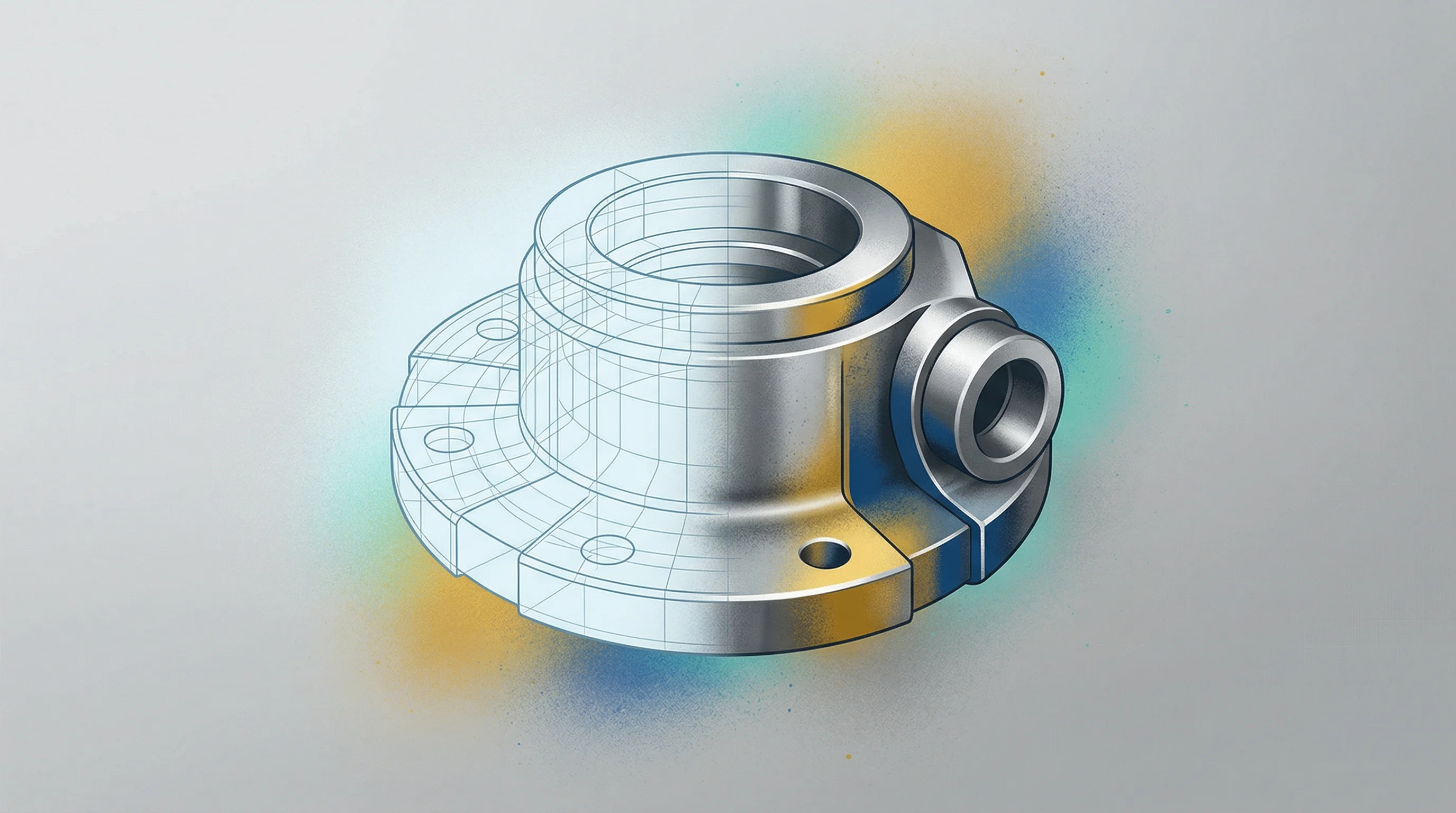
The Bengaluru-based startup released detailed engineering specifications for its PRAGYA tokamak on March 12, posting them to arXiv with the confidence of a company further along than its balance sheet might suggest. The preprint describes India's first privately developed low-aspect-ratio tokamak—major radius around 0.4 meters, minor radius exceeding 0.18 meters, plasma current up to 25 kA, toroidal field of 0.1 T. For a venture founded in May 2024, it's no small feat.
What Pranos doesn't have—or at least, what it hasn't disclosed—is a clear picture of its war chest.
The most recent capital infusion anyone can verify? A $417,082 seed round from angel investor Rahul Seth, closed on May 14, 2025. That was nearly a year ago. Since then, hints and references have surfaced in industry reports—"secured private venture capital funding," mention of support from the Startup India Seed Fund Scheme, an "undisclosed seed" from Industrial47 cited in a January NEDO study—but no amounts, no dates, no confirmations from the company itself.
The ambiguity is particularly striking given the capital intensity of fusion. Pranos is operating in a sector where Western peers routinely announce nine-figure rounds. Commonwealth Fusion Systems pulled in $863 million last August. Proxima Fusion added €200 million in September. Tokamak Energy secured $125 million the previous November. Against that backdrop, a verified half-million-dollar seed—roughly 0.05% of Commonwealth's latest haul—looks less like a starting line and more like a question mark.
Technical Progress, Financial Opacity
The PRAGYA design itself is credible enough. Co-authored by Pranos staff and academic collaborators including Dr. Santosh Ansumali from the Jawaharlal Nehru Centre for Advanced Scientific Research and the Indian Institute of Science, the paper situates the device within a broader roadmap: digital twin simulations first, then a lab-scale prototype, eventually a compact commercial system aimed at industrial grids, remote installations, data centers, desalination plants.
It's the sort of phased approach you'd expect from founders who've thought through the engineering. Shaurya Kaushal, a computational physicist, and Roshan George, who comes from computer science, incorporated Pranos Fusion Private Limited and set up shop in WeWork Latitude. They've stayed visible—Kaushal spoke at India Energy Week in Goa in early 2026, the company appeared on the IAEA's FUSE platform, and abstracts were accepted at the IAEA Fusion Energy Conference.
All signs of momentum. Just not necessarily cash.
The Emerging-Market Discount

Part of the puzzle is structural. India's fusion ecosystem is nascent in ways that make Silicon Valley's plasma startups look positively mature. Pranos shares the landscape with Gurugram-based Anubal Fusion, which announced a pre-seed from Speciale Invest last December, and HYLENR, pursuing low-energy nuclear reactions. Government support exists but hasn't scaled—the Startup India Seed Fund Scheme, mentioned in some reports as a Pranos backer, has faced uncertain continuation. If the company received funds from it, the timing and availability remain unclear.
Company registry filings offer little clarity. Paid-up capital sits at INR 1.2 lakh (approximately $1,440), authorized capital at INR 10 lakh—standard boilerplate for early-stage Indian private companies, revealing nothing about operating reserves or investor commitments.
Meanwhile, the FIA Global Fusion Industry Report from July 2025 references Pranos securing "private venture capital funding," and NEDO's January study mentions Industrial47 as an undisclosed seed investor. Neither source provides deal size or structure. Pranos hasn't responded to inquiries sent March 24 about fundraising timelines, investor composition, or whether additional capital has closed since Seth's May round.
Hardware Needs Money
Perhaps the company is simply being prudent, keeping terms under wraps while negotiations continue. Or perhaps—more troubling for a hardware venture—capital is proving harder to attract than reactor schematics are to design.
Moving from simulation to steel requires procurement, facility build-out, expanded headcount. The Department of Science & Technology collaboration offers credibility, as do the academic partnerships with JNCASR and IISc. But institutional backing and actual liquidity aren't the same thing, particularly when you're trying to assemble a tokamak in a market where fusion remains unfamiliar to most investors.
The global fusion funding boom has largely bypassed emerging markets. China's state-backed programs operate on a different model entirely; India's private sector is still finding its footing. Pranos could be the vanguard of something meaningful—a homegrown fusion industry anchored in Bengaluru, leveraging India's deep technical talent and lower cost base.
Or it could become a cautionary tale about the distance between a well-specified reactor and the capital required to build one.
For now, the company sits in an uncomfortable middle ground: far enough along to publish serious engineering work, not transparent enough to clarify how it plans to pay for what comes next. The PRAGYA tokamak exists, at least on arXiv. Whether it will ever exist in a lab—and on what timeline—remains an open question.


