

When Alex released Kinesis on GitHub on September 14, the open-source macOS app did something Meta's wristband wasn't supposed to do: work without Ray-Ban Display glasses attached. The Swift-based menu bar utility connects directly to Meta's electromyography wristband over Bluetooth, sidestepping the company's tightly controlled ecosystem entirely.
"Finding a way to use the meta neural band independently from the glasses," Alex wrote on Hacker News. "That's how kinesis was born." The September 15 post had accumulated 119 points and 45 comments by the following day, most from developers curious whether Meta would patch the workaround or if the hardware had finally escaped its walled garden.
The project solves what amounts to an artificial constraint. Meta's sEMG wristband reads electrical signals from muscle movements, translating subtle gestures into digital commands. But until now, those signals flowed only to Meta's proprietary glasses. Kinesis intercepts them before they reach Meta's servers.
Reverse-Engineering the Band
According to Kinesis's GitHub repository, the app works by convincing the Neural Band to unpair from Meta's companion software, then establishing its own Bluetooth Low Energy connection. Users need macOS 14 or later on either Apple Silicon or Intel, plus the usual permissions for Accessibility and Bluetooth. Alex shipped a DMG installer and Swift 6 build script with the initial release.
Notebookcheck characterizes the approach as reverse-engineering the band's BLE stream, though this interpretation goes beyond what Alex's documentation explicitly describes. Meta's proprietary daemons and cloud infrastructure never enter the picture, though Alex's documentation emphasizes the pairing process more than the protocol mechanics underneath.
What emerges is a surprisingly capable gesture controller. Users can swipe between virtual desktops, summon Mission Control with an upward flick, or adjust volume and brightness through "pinch and turn" movements. The app also handles music playback and includes a practice mode for calibrating gestures. Those controls exceed what Meta officially documents for third-party developers, who typically get access to basic swipes and two pinch variants through the company's Web Apps framework.
Early Adoption and Narrow Testing
Alex tagged version 0.1.1 on September 14 at 14:07, fixing bugs related to left-hand configuration and pinch direction. By September 16, the repository had accumulated 71 stars, three forks, and nine commits. A companion Python proof-of-concept lets users view live eight-channel sEMG readings in a browser at localhost:8765, pulling data from either wrist. That secondary repo gathered 13 stars.
The developer acknowledged the narrow testing window. "I really hope this works on other bands because the sample size has just been me so far," Alex told Hacker News commenters. Hardware compatibility remains an open question, as does Meta's tolerance for the project. Several forum participants flagged the risk that a firmware update could quietly disable the workaround, or that accidental triggers might plague users who aren't wearing the glasses to provide visual feedback.
Hacker News threads surfaced competing EMG wearables in various price tiers: Mudra Link at $299, Mudra Band for Apple Watch at $349, MindRove Armband at $679, plus higher-end options from SiFi Labs and OYMotion. The discussion turned quickly to the "Midas effect," where every unintended muscle twitch becomes a command. Without the glasses' heads-up display to confirm gestures, users might struggle to tell whether they've just activated something by accident.
The Broader Ecosystem
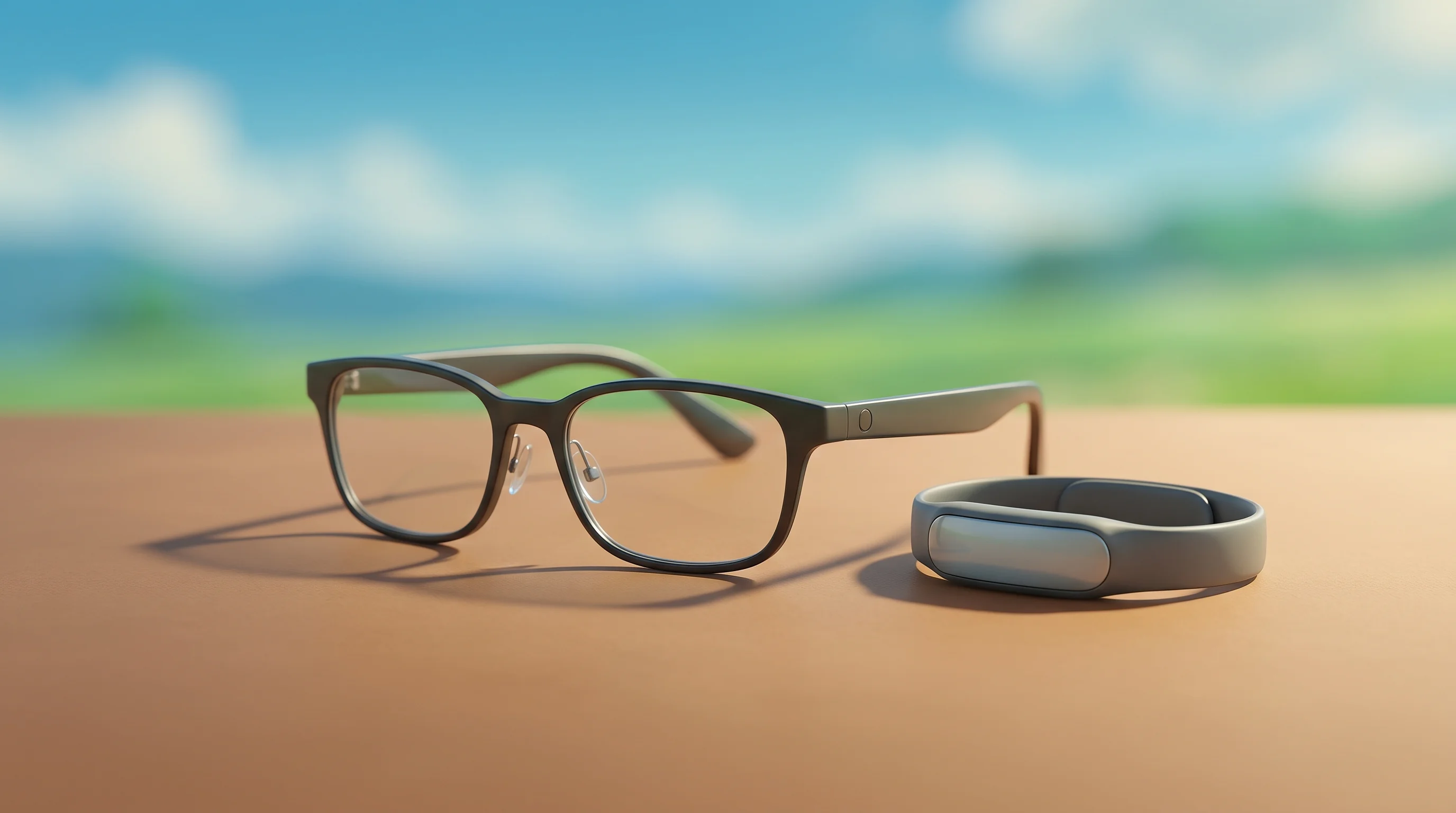
Meta introduced the Neural Band as a core accessory for its Ray-Ban Display glasses, hardware the company positions as an early step toward ambient computing interfaces. The band ships bundled with Display units sold through select U.S. retailers and Meta flagship stores. Developer documentation indicates the platform remains in a gated preview, with publishing restrictions still in place for third-party apps.
Kinesis arrived at a moment when the hardware is available but not yet widely distributed, making it difficult to gauge how many users might benefit from Mac integration. Coverage rippled quickly through tech press: Notebookcheck, GIGAZINE, and ZOL all published stories within a day of Alex's announcement, tracking the launch between September 14 and 16.
Whether Meta moves to block the app or tacitly accepts community experimentation will likely shape how developers approach the Neural Band going forward. For now, Kinesis offers a glimpse of what the hardware can do when it's untethered from Meta's original vision—and whether that freedom proves useful or simply introduces new problems neither Meta nor independent developers anticipated.


