

Late February 2026 saw something that should have been impossible. In a Melbourne laboratory, roughly 200,000 human neurons—living cells cultured atop a microchip—began fumbling their way through the first level of DOOM. They weren't good at it. Hallways confused them. Corners proved tricky. But the 33-year-old first-person shooter, rendered through a Python API and fed directly into brain tissue, wasn't really the point.
The point was this: biocomputing had arrived as something more than a curiosity.
Cortical Labs, the company orchestrating the demo, had spent three years transforming peer-reviewed neuroscience into what it calls the CL1—a shoebox-sized bioprocessor housing human cortical neurons arranged atop a 59-electrode array. Life support included. A biological operating system bundled in. As of mid-2025, the company listed units at roughly $35,000 apiece, with volume discounts pulling the price down to around $20,000 per unit for 30-unit racks. Remote access through "Cortical Cloud" ran about $300 weekly per unit. The first 115 units, according to company materials, were scheduled to ship in summer 2025.
Whether all 115 actually made it out the door is unclear. But GitHub repositories began populating with code. Jupyter notebooks appeared. A developer ecosystem—small, experimental, occasionally bewildered—started taking shape.
This isn't performance art dressed up as neuroscience. It's a bet, early-stage and audacious, that living neurons might carve out niches where silicon falters: adaptive, energy-sipping, startlingly efficient at pattern recognition. Whether that bet pays off is another matter entirely.
The Landscape Takes Shape
Biocomputing sits at the messy crossroads of synthetic biology, neuroscience, and frontier AI. The logic sounds almost too elegant: biological neurons spent hundreds of millions of years evolving to process information on minimal energy. Culture them. Keep them alive. Interface electrically. Then—maybe—you can exploit that efficiency for tasks traditional hardware struggles with.
Cortical Labs surfaced from this line of thinking in 2019. Hon Weng Chong, an emergency room physician with serial-founder instincts, co-founded the venture alongside Brett J. Kagan, a neuroscientist who would take the chief scientific officer role. Horizons Ventures—billionaire Li Ka-shing's investment arm—led a $10 million Series A in April 2023. Blackbird Ventures, LifeX Ventures, In-Q-Tel, and Radar Ventures joined. Total disclosed funding hovered around $11 million by mid-2025, per CB Insights and IEEE Spectrum tallies.
The company's 2022 breakthrough landed in the journal Neuron. Kagan and collaborators at Monash University and University College London showed that neurons—human induced pluripotent stem cell-derived and rodent—could learn Pong. Not metaphorically. Actually learn it. Within minutes. The setup relied on closed-loop feedback: predictable electrical stimulation for correct paddle movements, unpredictable noise for errors. The neurons adapted.
By March 2025, that closed-loop architecture had been commercialized as the CL1. Perfusion systems, precise gas mixtures, temperature control—all automated to sustain cultures for up to six months. Power draw for a 30-unit rack reportedly sits between 850 and 1,000 watts. The company contrasts that figure sharply with GPU clusters, though standardized, peer-reviewed benchmarks remain conspicuously absent.
Cortical Labs isn't working in isolation. FinalSpark, a Swiss biotech, launched its "Neuroplatform" with 24/7 remote access to human brain organoid bioprocessors. Pricing ranges from $500 to $1,000 per user per month depending on subscription tier. The company claims organoid lifetimes around 100 days and floats aspirational goals of 100,000-fold energy reductions versus conventional AI—targets framed as long-term ambitions rather than validated metrics. Several universities have used the platform. A public demo lets website visitors control a digital butterfly's flight via organoid activity, equal parts science communication and sales pitch.
Academia is pushing forward too. Researchers at Indiana University published work in Nature Electronics in December 2023 demonstrating "Brainoware"—brain organoid reservoir computing applied to speech recognition and nonlinear equation prediction. Johns Hopkins University's "Organoid Intelligence" initiative, steered by toxicologist Thomas Hartung, published roadmaps for closed-loop training of organoids connected to sensors and actuators. In July 2025, JHU announced a multi-region "whole brain" organoid capable of mimicking more complex neural architectures.
Market estimates—methodology often opaque—peg the "wetware computers" sector at $256 million in 2024, projecting compound annual growth north of 37 percent through 2032. Broader organoid markets, encompassing drug discovery and disease modeling, show similar bullishness. Mordor Intelligence estimates growth from roughly $1.2 billion in 2025 to $3.3 billion by 2031.
Numbers like these should be taken with skepticism. The market barely exists yet.
Why Now
Two forces collide to crack open biocomputing's opportunity window: AI's energy appetite and biology's unmatched efficiency at certain cognitive tasks.
Data centers consumed approximately 415 terawatt-hours of electricity in 2024—roughly 1.5 percent of global electricity use, according to the International Energy Agency. The IEA's base-case scenario projects that figure will more than double to around 945 TWh by 2030, driven largely by AI-accelerated servers. In the U.S. alone, data centers drew about 180 TWh in 2024, with robust growth anticipated through the decade. If AI training runs and inference workloads continue scaling at recent rates, the energy bottleneck becomes existential.
Biology operates on different physics entirely. A single neuron fires using milliwatts. A brain with 86 billion neurons runs on roughly 20 watts—about what an LED bulb draws. GPUs excel at parallelized matrix math. Neurons handle probabilistic, context-sensitive pattern recognition on minimal power. The mismatch is profound.
Active Inference frameworks—championed by Karl Friston at UCL—suggest neurons aren't merely efficient; they're adaptive in ways current architectures can't replicate. A 2025 Neural Computation paper co-authored by Friston and Kagan framed cultured neurons as systems exhibiting "intentional behavior" under structured feedback loops. Whether that's overstatement or insight remains debated.
Regulatory shifts are lowering barriers, at least tangentially. The FDA Modernization Act 2.0, signed in December 2022, removed the automatic mandate for animal testing in preclinical drug packages, explicitly opening pathways for "New Approach Methodologies" including organoids and microphysiological systems. In Europe, multi-stakeholder workshops throughout 2023-2025 developed a roadmap phasing out animal testing for chemical safety assessments, with publication targeted for early 2026. These policy changes primarily target drug discovery and toxicology—but they legitimize organoid platforms and accelerate supply-chain maturation. Biocomputing applications benefit as collateral.
Academic momentum matters. The International Society for Stem Cell Research's 2021 guidelines concluded that current CNS organoids show no evidence of consciousness or pain warranting special oversight, but called for vigilance as models grow more complex. A 2021 National Academies report recommended graded oversight, with most in-vitro neural organoid work fitting existing frameworks. Nature Reviews Bioengineering ran editorials throughout 2024 urging proactive ethical guardrails, framing concerns about sentience as speculative but emphasizing "mindful innovation."
The technical scaffolding is maturing too. Python APIs, cloud infrastructure, developer documentation—exemplified by Cortical Labs' GitHub repositories and FinalSpark's Jupyter notebooks—are democratizing access. You no longer need a wet lab and a PhD in electrophysiology to experiment on living neurons. Whether that's progress or a recipe for chaos is an open question.
From Pong to DOOM: A Case Study
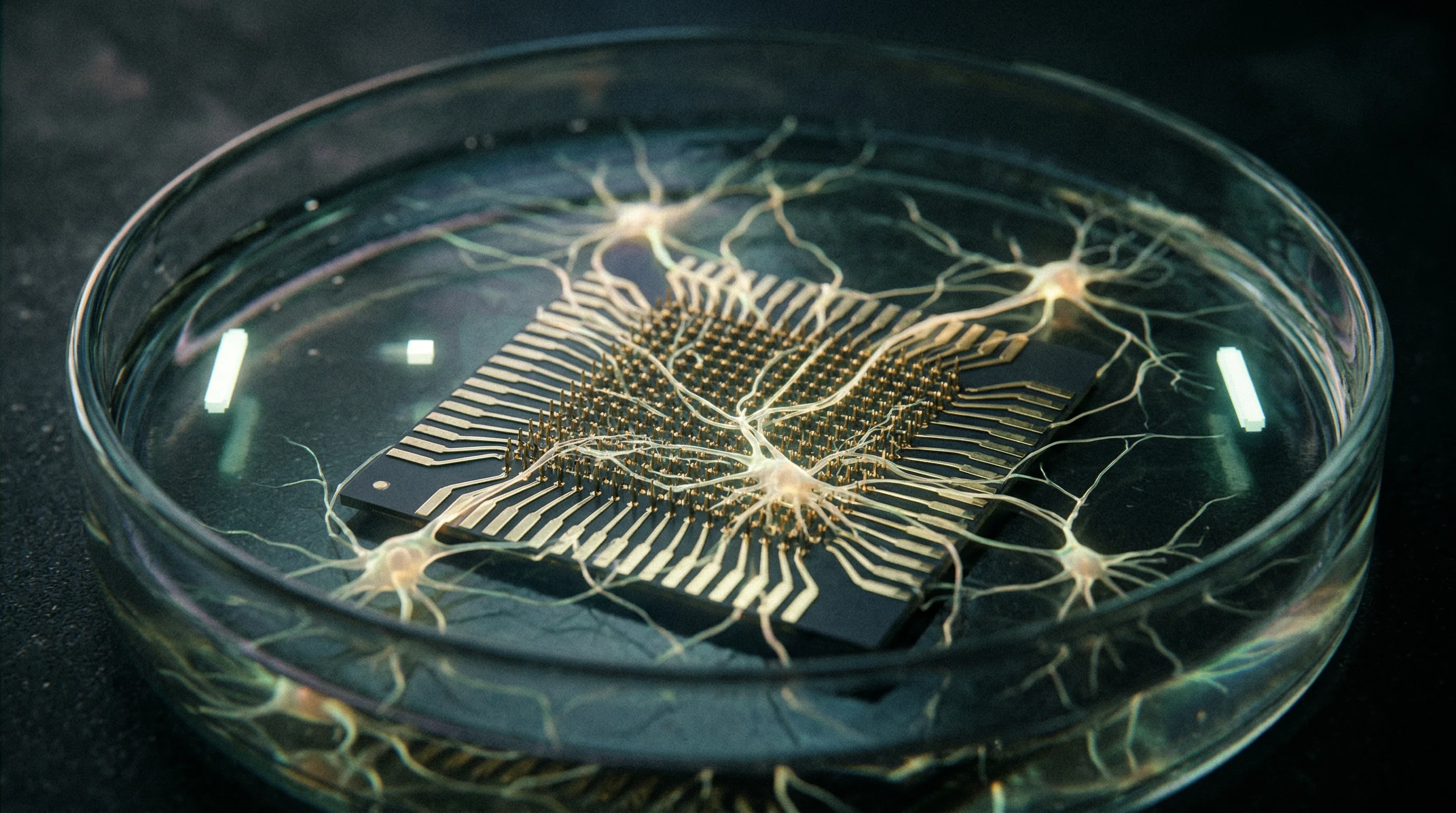
Cortical Labs' trajectory illustrates both promise and constraints.
The 2022 Pong experiment used high-density microelectrode arrays with hundreds of electrodes; neurons learned paddle control in minutes, outperforming random-action baselines. The "DishBrain" moniker stuck. But commercialization required miniaturization, automation, and software abstraction—turning a research prototype into something you could ship in a box.
The CL1 ships with 59 electrodes: a planar array interfacing with human cortical neurons derived from induced pluripotent stem cells. Life-support systems manage perfusion, gas composition, and temperature autonomously. A proprietary "biOS" handles low-level stimulation-recording loops at sub-millisecond latency. Developers interact via REST APIs and Python libraries, mostly oblivious to the biology underneath.
The DOOM demo in late February 2026 showcased this stack. Using Cortical Cloud, developers scripted a simplified DOOM environment where neurons received real-time visual input as electrical patterns and output movement commands. The neurons navigated hallways. They exhibited goal-directed behavior—turning toward targets, avoiding walls. Performance lagged far behind human or even rudimentary AI baselines, which is perhaps beside the point.
The significance wasn't gameplay prowess. It was programmability. A non-neuroscientist could deploy code to living neurons and observe learning within hours. That's the product thesis in microcosm.
Brett Kagan, the company's chief scientific officer, told IEEE Spectrum in June 2025 that the team had also modeled epilepsy in culture, showing that antiepileptic drugs restored learning capacity in impaired neurons—a nod to the platform's potential in drug screening and disease modeling. Karl Friston, a collaborator and leading theorist in Active Inference, described the CL1 as a "little brain in a vat" enabling experiments on learning under feedback that would be impossible in silico.
As of mid-2025, Cortical Labs reported 22 employees—a lean team for the ambition. The company planned to bring four 30-unit racks online for cloud access by year's end. Neuron cultures remain viable for up to six months, after which they must be replaced. It's a consumables model, not unlike reagent-based businesses in molecular biology. Recurring revenue built in.
The Swiss Approach
FinalSpark diverges slightly in methodology. Rather than planar neuron cultures, the Swiss startup works with three-dimensional brain organoids—self-organizing clusters of neurons derived from stem cells that better mimic brain architecture. Organoid lifetimes hover around 100 days, per the company's August 2024 Scientific American interview.
The Neuroplatform offers remote access via subscription. Researchers log in, design experiments, deploy stimulation protocols. FinalSpark claims to host over 2,000 organoids on-site and has partnered with multiple universities. The company's public-facing "butterfly" demo lets website visitors influence a digital insect's flight path through organoid activity. It's equal parts science communication and product showcase.
FinalSpark's rhetoric leans heavily on energy efficiency, with co-founders stating goals of achieving "100,000 times less energy" consumption than conventional AI systems. These are aspirational targets, not validated benchmarks. No peer-reviewed studies have yet compared organoid bioprocessors to GPUs or TPUs on standardized tasks with transparent methodology.
The field is racing to establish those baselines. Until it does, the claims float in a vacuum.
Academic Frontiers
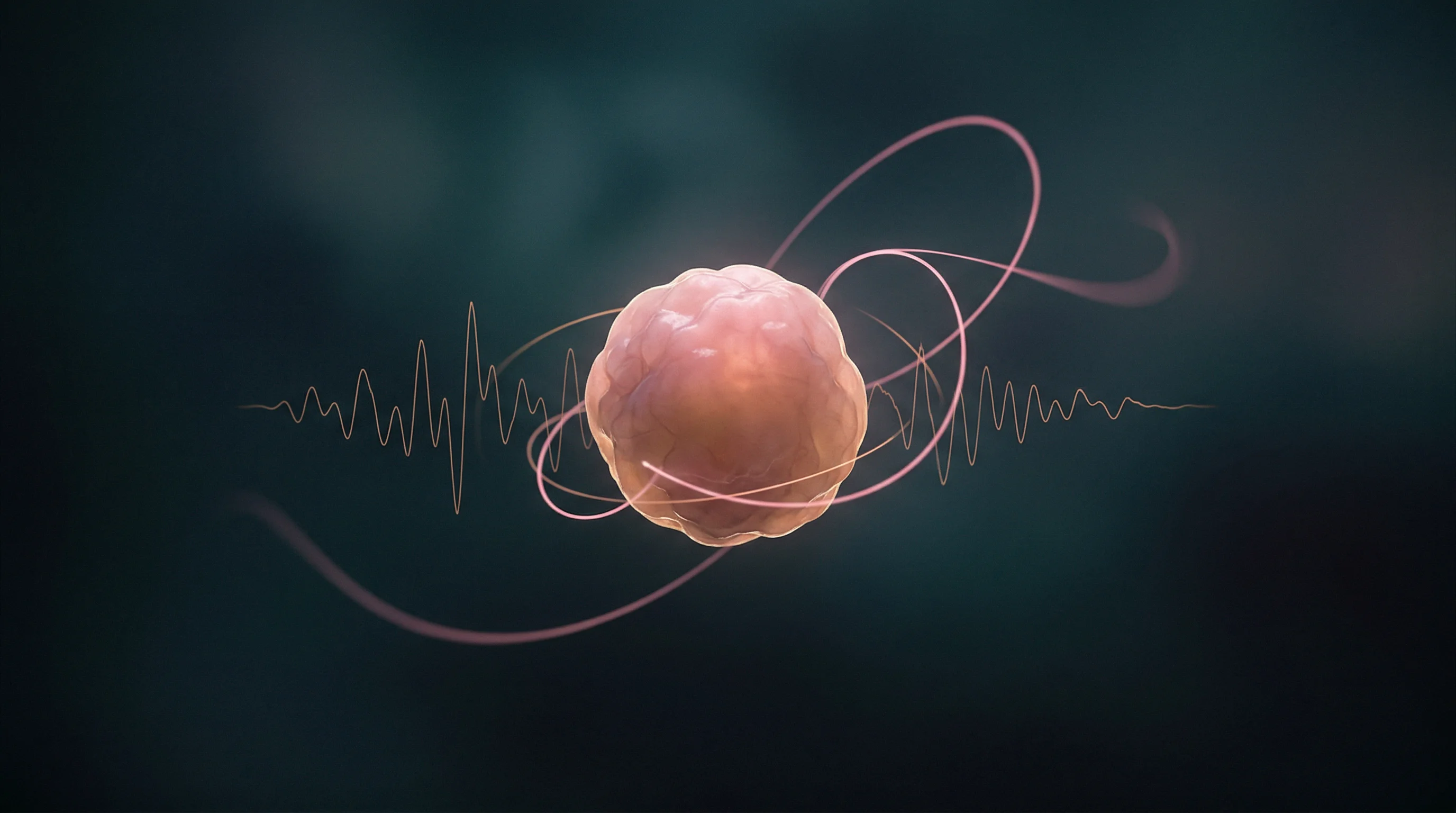
Indiana University's "Brainoware" work in December 2023 applied reservoir computing principles to brain organoids. The team demonstrated speech recognition—classifying audio samples—and solved nonlinear differential equations using organoid dynamics as a computational substrate. Proof-of-concept, not production-ready tech, but it validated that organoids could tackle structured machine-learning tasks.
Johns Hopkins' July 2025 "whole brain" organoid integrated multiple neural regions—forebrain, midbrain, hindbrain analogs—into a single construct. Thomas Hartung's group frames this as a step toward more sophisticated Organoid Intelligence platforms capable of richer sensory integration and memory formation. Papers in 2025 explored "learning and memory building blocks" within organoids, suggesting that rudimentary associative learning might already be observable.
Elsewhere, researchers explore fungal computing and bacterial networks—niche areas but indicative of the field's breadth. Analog neuromorphic chips, which mimic neuron dynamics in silicon, represent a parallel pathway. A 2024 paper showed real-time, high-speed motor control using neuromorphic hardware with impressive energy profiles, though without biology's adaptive plasticity.
It's a sprawling, fragmented landscape. No one's quite sure which approach will scale.
What Comes Next

Biocomputing remains pre-commercial in the strictest sense. No Fortune 500 company has announced bioprocessor deployments. The installed base of CL1 units, as of early 2026, is unknown beyond the "115 units shipping summer 2025" media line. FinalSpark's customer count isn't public.
Challenges are formidable.
Reproducibility across donors and cell lines is inconsistent; biological variability frustrates standardization. Neuron cultures require sterile environments, trained personnel, careful handling—barriers for mass deployment. Limited lifetimes (six months for Cortical Labs, roughly 100 days for organoids) create ongoing operational costs. Scaling economics are unproven. Does a 1,000-unit biocomputer farm achieve cost-per-FLOP parity with a data center? No one knows, because the comparison itself is flawed. Bioprocessors aren't optimized for floating-point operations.
The lack of benchmarks is glaring. Energy-efficiency claims sound compelling but lack standardized testing. How does a CL1 unit compare to a GPU on image classification, time-series prediction, reinforcement learning? Without peer-reviewed benchmarks, the industry risks hype outpacing reality—a story as old as venture capital itself.
Ethics loom larger as complexity increases. Current organoids and neuron cultures show no plausible markers of consciousness or suffering, per ISSCR guidelines and National Academies assessments. But as multi-region organoids approach whole-brain architectures and exhibit richer dynamics, oversight frameworks will need updating. Nature Reviews Bioengineering editorials in 2024 called for embedded ethics from the outset—proactive rather than reactive governance. It's the kind of foresight the AI industry wishes it had practiced a decade ago.
Regulatory momentum could accelerate adoption, albeit indirectly. The EU's roadmap phasing out animal testing, expected in early 2026, will push pharmaceutical and chemical companies toward organoid-based assays. That demand funds infrastructure—media, matrices, electrode arrays—that biocomputing platforms also need. The FDA's embrace of New Approach Methodologies similarly lubricates the supply chain.
Commercial pathways are beginning to crystallize. Drug discovery and toxicology screenings offer near-term revenue. Cortical Labs' epilepsy model and FinalSpark's university partnerships hint at this direction. Niche AI tasks—anomaly detection, real-time adaptive control, low-power edge inference—might follow. A bioprocessor won't train GPT-7, but it might excel at specific pattern-recognition tasks in resource-constrained environments.
Partnerships signal broader ambitions. Cortical Labs announced a collaboration with VERSES AI in November 2023, exploring paths to general intelligence by coupling bioprocessors with Active Inference software frameworks. Monash University secured roughly $600,000 in funding in July 2023 to merge human brain cells with AI systems. These are bets on convergence—silicon handling computation, biology handling adaptation.
The DOOM demo, for all its novelty, underscores a strategic shift. Biocomputing is moving from closed academic labs to open developer ecosystems. As Python APIs proliferate and cloud access drops barriers, a broader community will probe what living neurons can and cannot do. Some experiments will fizzle. Others might uncover niches where wetware outcompetes silicon.
Maybe.
Data-center electricity demand is on track to double by 2030. The AI industry's energy appetite is real, urgent, and accelerating. Whether biocomputing scales to address it remains an open question—but the first commercial units are shipping, the first demos are running, and the first developers are logging in.
The category exists now. What it becomes next depends on whether adaptive efficiency, measured in milliwatts per neuron, can translate into deployable advantage measured in dollars per inference. That's a long road with uncertain terrain.
For investors, the calculus is familiar: massive potential upside against deep technical risk. For founders, it's a chance to build at the intersection of three exponential curves—synthetic biology, AI, and energy transition. And for researchers, it's an invitation to ask whether the most powerful computer we know—the brain—can be reverse-engineered not in silicon, but in substrate that's already alive.
The neurons fumbling through DOOM's corridors don't have an answer yet. But they're learning.


