

When a Y Combinator cohort starts featuring companies that build fusion reactors meant to operate in the vacuum of space, you know something's changed. And not subtly.
The accelerator's Fall 2025 batch, which held its Demo Day in the first week of December, might represent the sharpest turn in YC's two-decade run—a pivot away from the SaaS formulas that minted Silicon Valley fortunes and toward ventures that read like a mashup of Pentagon wish lists and speculative fiction. Fusion power. Space-based missile interceptors. Mosquito-hunting micro-drones.
It's a shift that's been building for a while, perhaps inevitably. Defense tech startups pulled in a record $17.9 billion in venture funding during 2025, more than doubling the prior year's $7.3 billion, per data published by PitchBook and CB Insights in January 2026. Still, seeing that trend reflected in YC's selection process—the program that essentially mass-produced the modern startup playbook with its standardized $500,000 deals—feels like watching an earthquake in slow motion.
When PhDs Meet the Final Frontier
Even among outliers, Zephyr Fusion stands apart. The two-person operation, both PhDs out of the University of Wisconsin-Madison with a combined 35-plus years in experimental fusion, brings résumés that include stints at Lawrence Livermore National Laboratory and Oak Ridge. Their pitch? Magnetic-confinement fusion reactors using high-temperature superconducting magnets, engineered specifically for space deployment where vacuum comes free.
It's the kind of company that, five years ago, would've raised eyebrows in a YC batch. Now it has company.
Wardstone, for instance, is building what it describes as "satellites for missile defense"—space-based kinetic interceptors designed to take out hypersonic and ballistic threats. The founding team: brothers Sebastian Fischer (MIT credentials; tour of duty at NASA, Lockheed, Amazon Prime Air, and Cruise) and Tobias Fischer (ex-Astranis; Cornell). They reference ongoing engagement with Air Force Research Laboratory, AFWERX, and Space Systems Command, alongside letters backing roughly $3 million in SBIR funding. Whether those letters convert to contracts remains to be seen.
Then there's Tornyol—because not every moonshot operates at orbital altitude. The three-person team has engineered 40-gram micro-drones outfitted with array microphones and proximity sensors to detect mosquitoes mid-flight and, well, ram them. The claim: mosquito control at one-hundredth the prevailing cost. They're accepting $100 refundable deposits for pre-orders, a consumer play nested inside a cohort otherwise dominated by enterprise and defense.
The Hardware Resurgence
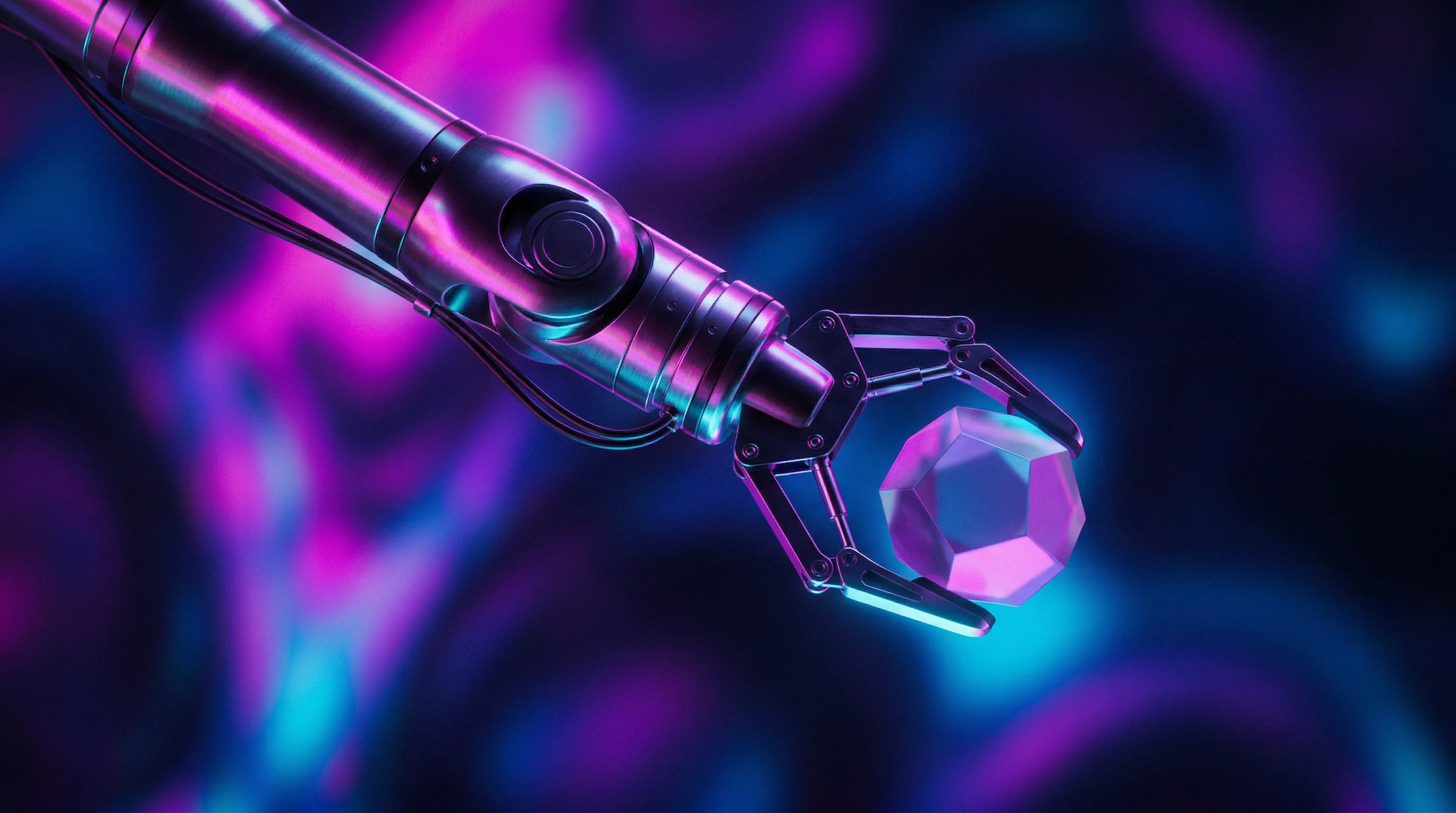
If this batch has a through-line beyond the ubiquitous "AI agents for B2B workflows" (still heavily represented, naturally), it's robotics. The kind that manipulates physical matter.
Third-party tallies from LinkedIn observers suggest roughly 11 companies in the 150-plus-strong cohort fall into a "hardware, drones, robotics" bucket—a meaningful cluster for an accelerator historically tilted toward software margins. YC itself hasn't published official cohort breakdowns, so these numbers carry the usual caveats.
Take Piggy Robotics, which is pursuing low-cost humanoids built on pneumatic braided actuators the team calls "artificial muscles." They claim to have assembled a full-size humanoid prototype for under $1,000. The 15-person crew includes an Oxford PhD candidate focused on AI motion planning and a founder who pivoted from Oxford medicine into robotics applications for personalized cancer vaccines—an unusual trajectory, even by startup standards.
Tensr, a Berkeley-heavy trio with DARPA backgrounds, bills itself as building "fully autonomous robotic factories"—modular, robot-first manufacturing setups. Forge Robotics targets metal fabrication with vision systems and AI for autonomous welding. Parametric starts with commercial laundry, deploying what it calls "adaptive intelligence" on wheeled bi-manual platforms for frontline physical labor. Lightberry positions itself as a "social brain for robots," developing people-facing behaviors now running across Unitree, Fourier, and Booster robots.
It's a peculiar taxonomy. Some of these companies are chasing billion-dollar infrastructure plays; others are iterating on hardware that might ship to customers within months. The common thread: they're all wrestling with atoms, not just bits.
The Mechanics of Modern YC
Exact batch size? Still murky. GPAgent, an aggregator scraping YC public data, lists 154 companies in F25. A LinkedIn analyst's recap claims "150+ startups pitched," with approximately 52% of taglines mentioning AI. Neither figure is YC-official, as the organization stopped publishing precise cohort counts some time ago.
What YC did formalize recently: four batches annually—Winter, Spring, Summer, Fall—up from the traditional two. The inaugural Spring cohort launched as X25 in early 2025. Demo Days returned to in-person formats by December 2024, ending the pandemic-era virtual experiments. Now they're invite-only affairs for roughly 1,500 investors and press, held in person. The standard deal structure remains intact: $500,000 total, split as $125,000 on a post-money SAFE for 7% equity, plus $375,000 on an uncapped MFN SAFE, with pro-rata rights baked in.
That structure was built for software companies that could bootstrap revenue within months, iterate on feedback loops, and scale with minimal capital intensity. Whether it translates to companies that need clean rooms, Department of Defense clearances, or orbital insertion—well, that's the experiment.
Hard Tech Isn't Entirely New Territory

YC has dabbled in deep tech before, though rarely at this density. Helion Energy, from the Summer 2014 batch, reportedly raised $425 million in January 2025 at a valuation hovering around $5.4 billion and inked a power purchase agreement with Microsoft. Astranis, out of Winter 2016, now operates five geostationary satellites with what the company describes as over $1 billion in backlog. Cruise, a Winter 2014 alum, sold to GM in 2016 for a sum widely reported to exceed $500 million—though the autonomous vehicle venture has since undergone significant restructuring, a reminder that exits don't always age gracefully.
The difference now feels like one of proportion and intent. Earlier batches might include one or two hard tech anomalies. F25 features enough defense satellites, fusion reactors, and robotics outfits to suggest deliberate portfolio weighting, not just founder self-selection drifting toward trendy sectors.
The broader cultural shift is undeniable. The Defense Innovation Unit launched a 12-week university accelerator in 2025, sometimes described in shorthand as a "military-grade YC." Defense tech has migrated from campus taboo to campus aspiration—or at least to grudging acceptance that it's where the capital's flowing.
Reading the Tea Leaves

Maybe YC is simply tracking capital flows. Defense tech hit record funding. AI agents are table stakes. Humanoid robotics, a punchline for decades, suddenly attracts serious money after Tesla and Figure raised eye-popping rounds. Following the money is a time-tested strategy.
Or maybe the four-batch cadence creates bandwidth for thematic risk-taking, testing whether hard tech founders can navigate the same three-month sprint that works for B2B SaaS. The verdict on that won't arrive for years—fusion reactors and orbital manufacturing don't map neatly to traditional startup milestones.
What's undeniable: the "build fast, iterate, talk to users" gospel is being stress-tested against physics, regulatory frameworks, and hardware unit economics that don't scale like cloud software. When your minimum viable product requires a defense partnership letter, a clean room facility, or literal launch capacity, Demo Day becomes less about showing traction and more about convincing investors you've assembled the rare team that can endure a decade-long slog.
The 1,500 investors who filled those Demo Day seats will ultimately decide whether YC's atoms-over-bits gamble pays off. Early-stage capital is one thing; Series B and beyond for companies burning cash on R&D and prototype tooling is another entirely.
But the signal, for now, is clear enough. The accelerator that standardized the software playbook is making room—lots of room—for founders who want to put fusion reactors in orbit.
Whether that's prescient or nostalgic for an era of grand ambition remains to be seen. Either way, it's a long way from another productivity SaaS tool.


