

Mehul Trivedi spent years helping build the Bose Frames audio sunglasses and later worked on Meta's Ray-Ban smart glasses at EssilorLuxottica. Now he's betting that the same eyewear that holds prescription lenses can also solve a problem that has stumped the hearing aid industry for decades: getting people to actually wear the devices.
His startup, Legato Audio, announced in late August 2026 it raised $12 million in seed funding led by Neotribe Ventures, with participation from Listen and Village Global. The Boston-based company, which launched its first products in October 2026, sells AI-powered glasses that embed hearing assistance technology directly into eyewear frames. Three models start at $999.
The pitch hinges on a stubborn reality in hearing health. More than 50 million Americans have some degree of hearing loss, yet fewer than one in five who could benefit from hearing aids actually use them, according to the Hearing Loss Association of America. Cost is part of the problem. So is discomfort. But stigma may be the biggest barrier, something Trivedi watched firsthand during his time in the industry.
"Traditional hearing aids have existed for 70 years, but the cost, discomfort, and stigma turn away so many people who could really benefit from them," Trivedi said when the company announced its product lineup. "We wanted to turn a hard-to-swallow medical device into a product people are actually excited to wear."
Whether excitement translates to adoption remains an open question. The over-the-counter hearing aid market has grown more crowded since the FDA cleared the way for direct-to-consumer sales in October 2022. EssilorLuxottica, Trivedi's former employer, launched its own Nuance Audio hearing glasses after receiving FDA clearance earlier this year. Apple secured authorization for a software-based hearing aid feature in AirPods Pro. Samsung followed with a similar feature for its Galaxy Buds line.
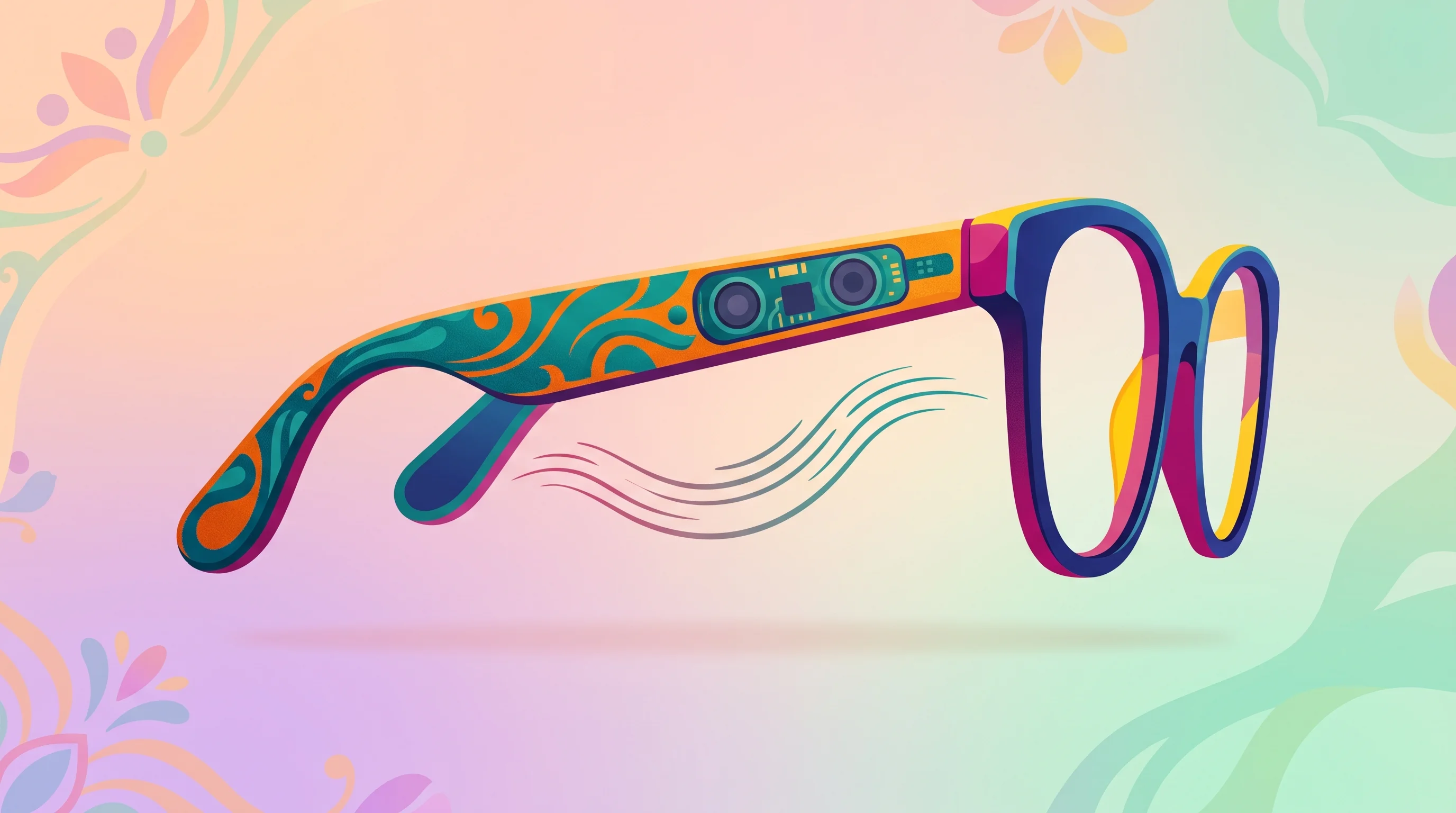
Legato's approach relies on hardware embedded in the temple arms of standard eyewear frames. Dual speakers direct sound toward the wearer's ears while minimizing audio leakage to nearby listeners—the company claims 99% reduction at just a few inches away. An AI system the company calls "SpeechSense" isolates voices from background noise through real-time, on-device processing.
"Nothing is recorded or transmitted," Trivedi told Vision Monday. "It is just in real time classifying: is this voice or is this not voice?"
The glasses weigh 34 grams with lenses and run for 10 to 12 hours on a charge. They connect via Bluetooth 5.3 for music and calls, functioning as both hearing assistance and everyday audio devices. Legato offers three frame styles—Aria at $1,099, along with Harmony and Symphony at $999 each—all compatible with prescription lenses. Customers can buy directly from the company or through select eye-care providers, where purchases may be eligible for vision insurance coverage.
Trivedi's co-founder, Steve Romine, ran Bose's hearing aid division and later served as COO at Audicus, an online hearing aid retailer. He helped launch Bose SoundControl, an over-the-counter hearing aid. Between them, the founders have navigated both the consumer electronics and medical device sides of the industry. The company had about ten employees as of September 2026 and holds four granted patents with more than 20 pending.
Kittu Kolluri, founder and managing director of Neotribe Ventures, framed the investment around a shift in market strategy. "The hearing aid industry has spent decades optimizing for invisibility, making devices smaller so people won't notice them," Kolluri said. "Legato flips that logic. The path to adoption isn't to make hearing assistance disappear—it's to make it a style choice."
That theory has some early validation. HearAdvisor gave Legato's frames a SoundScore of 4.6 out of 5 in testing conducted earlier this year, ranking them among the top ten devices evaluated, including both OTC and prescription hearing aids, according to HearingTracker. But performance scores don't always predict market success, particularly in a category where consumer behavior has proven difficult to shift.
The stakes extend beyond market share. The 2024 Lancet Commission on dementia prevention identified untreated hearing loss as the largest potentially modifiable risk factor for dementia, adding medical urgency to what has largely been treated as a quality-of-life issue.

Trivedi's background suggests he understands the intersection of technology and wearability. Before Bose, he worked on the first iPhone and iPad at Apple. The question now is whether making hearing assistance stylish can overcome the inertia that has kept adoption rates low for generations.
The company plans to use the funding primarily for product development and marketing. Legato declined to disclose its valuation.
"Our goal is to make hearing as ubiquitous as vision," Trivedi said. "I think that's what we want to do with hearing: just make it something that people address and almost forget about."


