

The announcement landed quietly, but its implications rippled fast. When Texas regulators said in February that data centers would need to start reporting their water consumption, the industry—already navigating a buildout of almost absurd scale—suddenly had a new problem to solve. Or rather, an old problem it could no longer ignore.
The numbers told the story. Texas data centers were on track to consume roughly 49 billion gallons in 2025, according to analysis from the Central Texas Data Center Tracker. Around the same time, the Texas Water Development Board's draft 2027 State Water Plan estimated $174 billion in infrastructure projects to avoid future crises. Aquifers were depleting. Demand kept climbing. And the state's data center boom showed no signs of slowing.
Enter Madrone, a Y Combinator-backed startup with a pitch that sounds almost too convenient: dew-point cooling technology that purportedly cuts both water and power consumption by 30% compared to the chiller-and-tower systems common across Texas facilities. The timing is hardly coincidental. Hyperscalers are publicly scrambling to reduce their environmental footprint. Microsoft announced "zero-water" cooling designs for two buildings in West Des Moines in January. Google revealed plans for an air-cooled facility in Wilbarger County, Texas the following month, limiting water use to "essential campus operations" only.
Which raises the obvious question: Is dew-point cooling a genuine breakthrough, or just another incremental improvement in a sector where efficiency gains have mostly stalled?
Perhaps both. It depends on scale.
When the Grid Pushes Back
Texas has become ground zero for AI infrastructure buildout, and with that scrutiny follows. The Electric Reliability Council of Texas released preliminary load forecasts in April showing large-load interconnections—data centers prominent among them—driving significant demand updates. ERCOT's May 2025 Capacity, Demand & Reserves report noted something telling: forecasts reducing large-load request approvals to 49.8% of original requests. The grid operator, it seemed, was tightening its review process.
The broader picture is daunting. Data centers accounted for approximately 2.6% of global electricity demand in 2024, according to the International Energy Agency. Academic modeling published in March projected that the top six hyperscalers' facilities alone could consume 239 to 295 terawatt-hours annually by 2030, up from roughly 118 TWh in 2024.
In the PJM Interconnection—the largest U.S. grid region—a federal market monitor warned in May that data center load was triggering a 75.5% increase in power costs ahead of the June capacity auction. Operators were beginning to feel the squeeze, not just from regulators but from physics itself.
Water poses an equally thorny challenge, and one perhaps less understood outside industry circles. A University of Texas COMPASS white paper released in May 2026 highlighted uncertainty around Texas data center water consumption, noting that power generation itself already accounts for about 5% of the state's water use. An Axios analysis from the same month found that in 2024, Texas power plants consumed 56 billion gallons (natural gas), 34 billion (coal), and 26 billion (nuclear)—figures that dwarf current data center consumption but illustrate how tightly water and energy are intertwined.
Traditional evaporative cooling systems offer excellent efficiency but gulp water. Air-cooled chillers eliminate onsite water use yet consume significantly more electricity—a tradeoff that becomes less attractive as power costs and grid constraints intensify.
Other states are watching, and acting. California, South Carolina, and elsewhere have introduced or debated bills to restrict evaporative cooling or mandate water reporting. South Carolina's Data Center Responsibility Act drafts went so far as to propose barring evaporative or open-loop systems and municipal water use for cooling entirely. The regulatory vise is tightening, state by state.
The Physics of Dew Point
Madrone's approach centers on dew-point evaporative cooling, a technique that leverages specialized heat and mass exchange geometries—often called the Maisotsenko cycle—to cool air below the wet-bulb temperature, approaching the dew point. In theory, this delivers sub-wet-bulb performance without mechanical refrigeration.
The company's website and Y Combinator profile specify 20°C supply water, zero mechanical chillers, and modular deployment. "Every 1% cooling efficiency = $2.6M more GPU revenue per 100 MW/year," the YC listing notes, framing the technology in the language data center operators understand best: capital efficiency and compute density.
Akshay Trikha, Madrone's CEO, previously worked on machine learning at QuantumScape and materials modeling at Berkeley. Co-founder Erik Meike came from Apple's hardware thermal and power team, with a background at Harvey Mudd. The technical pedigree suggests a team capable of navigating the finicky physics of phase-change cooling and the brutal economics of large-scale infrastructure. Whether that's enough remains to be seen.
Independent field validation of dew-point cooling in data center environments is growing, though still limited. Academic papers published in Applied Energy (2023) and a preprint posted to SSRN in May documented real-life dew-point cooling performance at operational edge facilities in the UK, showing feasibility and efficiency gains. A 2024 study in Applied Thermal Engineering explored optimization pathways for dew-point indirect evaporative cooling in data centers.
These studies offer proof of concept. Large-scale U.S. hyperscale deployments in hot, dry climates, however, remain scarce in the public record as of early June.
A Crowded Field

Madrone is hardly alone. Nortek's StatePoint system, co-developed with Meta, uses membrane-based indirect evaporative liquid cooling and claims 20 to 30% power savings and 35 to 90% water reductions compared to traditional alternatives, depending on climate. Digital Edge's Manila facility specified StatePoint in 2023, which claims potential water savings exceeding 50%. Nortek released a "StatePoint 2025 Hybrid" update that integrates transitional cooling modes, a sign that the industry sees value in multi-mode systems that adapt to ambient conditions.
Munters positions its thermosyphon systems as "waterless" options using refrigerant-based heat rejection. Seeley International markets its Climate Wizard indirect evaporative units for sub-wet-bulb performance in commercial and data center applications. The competitive landscape, in short, is getting crowded.
The broader data center cooling market is surging. IMARC estimated the overall sector at $19.7 billion in 2025, projected to reach $59.8 billion by 2034—a compound annual growth rate of 13.17%. Liquid cooling specifically is expected to grow from $6.65 billion in 2025 to $29.46 billion by 2033, a 20.1% CAGR, according to Grand View Research. An Open Compute Project report from December 2025 noted that cooling technologies are among the fastest-growing categories, with adoption rates exceeding 32% annually.
Still, caution is warranted. Uptime Institute warned in April that direct liquid cooling will likely remain a high-density niche focused on AI-heavy racks, rather than displacing mixed-air systems across mainstream enterprise workloads. Resiliency and cost barriers remain significant for broad retrofits. The industry, as ever, moves slowly when billions in infrastructure are at stake.
The Hyperscale Pivot
Hyperscalers are publicly signaling a shift, though whether rhetoric will match reality remains an open question. At Microsoft's Build conference on June 2, CEO Satya Nadella claimed the company's Fairwater AI campus in Mount Pleasant, Wisconsin would use water annually comparable to "a restaurant," thanks to a closed-loop cooling system. The facility's loop would be filled once and operate at "effectively zero" ongoing consumption. Two buildings in West Des Moines were slated for similar "zero-water" cooling, with designs originating in 2024.
Google, meanwhile, stated in June that it consumed 7.2 billion gallons of freshwater in 2024, and acknowledged—somewhat awkwardly—that two-thirds of its data centers still rely on evaporative cooling. The Wilbarger County facility represents a deliberate pivot toward advanced air-based designs in a state where water politics are intensifying.
Shareholders have taken notice. In April, investors pushed Amazon, Microsoft, and Google to disclose site-level water and power consumption, reflecting growing unease about environmental liabilities and regulatory risk. The days of portfolio-averaged metrics obscuring site-level inefficiencies may be ending.
Texas regulators' February move to require water reporting from large data centers and crypto miners could yield more granular data within six to 12 months, potentially shifting how operators evaluate cooling technologies. Mandatory reporting tends to force more honest conversations about trade-offs between energy and water consumption. And honesty, in this sector, is often in short supply.
Madrone's pitch targets retrofits and new hyperscale builds, claiming cost savings in the "tens of millions" per site by eliminating chillers and reducing utility loads. The company notes it has built 1 kW and 100 kW prototypes and is backed by Y Combinator and NVIDIA's Inception program. External, independent field data at scale has not yet been published as of early June.
The competitive question is whether dew-point cooling can thread the needle—reducing both water and power—or whether operators will gravitate toward simpler, proven solutions like air-cooled chillers (high energy, zero water) or direct liquid cooling (high density, complex retrofit). Nortek's StatePoint Hybrid suggests the industry sees value in multi-mode systems that adapt to ambient conditions, a design philosophy that may become table stakes. Or not. The industry has a habit of surprising even itself.
The Testing Ground
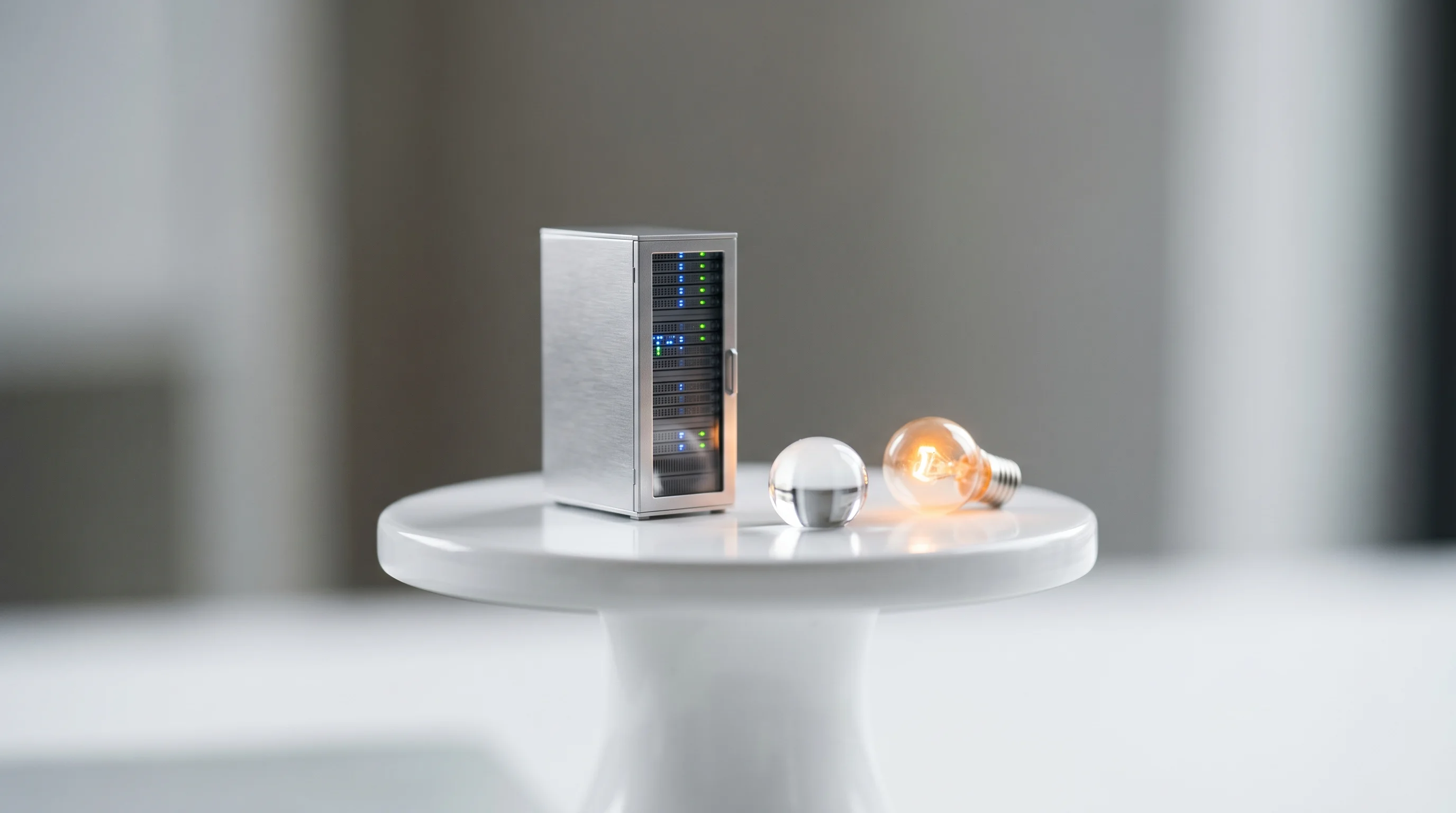
The confluence of regulatory pressure, grid constraints, and hyperscaler sustainability commitments creates a narrow but real opening for technologies that deliver measurable reductions in both water and energy. Data center electricity consumption is projected to continue its climb through 2030, per IEA forecasting. Regional grid operators in Texas, PJM, and elsewhere are already pushing back on interconnection requests, forcing developers to prove they can operate within tighter resource envelopes.
Whether Madrone's technology scales beyond prototypes will depend on field performance in Texas heat, capital costs relative to incumbents, and—perhaps most critically—the willingness of hyperscale buyers to bet on a startup in a sector that prizes reliability above nearly everything else. The company's founders bring relevant technical chops, and the timing—amid a regulatory crackdown and public scrutiny of water use—is not accidental. But timing alone rarely carries the day.
Broader industry trends suggest cooling innovation is no longer optional. Uptime Institute's 2025 survey found that power usage effectiveness improvements have stalled, even as NVIDIA's H100, H200, and B200 GPUs push thermal densities toward 700 to 1,000 watts per chip. Open Compute Project adoption data from December 2025 showed cooling spend growing faster than almost any other infrastructure category. The physics of AI workloads—dense, high-wattage, concentrated—demand new approaches.
Yet the industry remains fragmented, as it always has been. Some operators will pursue closed-loop liquid systems. Others will lean on air-based designs and accept higher energy costs to eliminate water risk. Still others may adopt hybrid approaches that shift between modes as conditions change. Madrone's dew-point pitch fits into this mosaic as a potential middle path—if it can deliver on its claims at scale and price.
The next 18 months will clarify whether dew-point cooling moves from academic curiosity to infrastructure mainstay, or remains a niche solution for specific climates and use cases. Texas, with its water constraints, grid volatility, and breakneck AI buildout, offers an unforgiving but instructive testing ground.
Regulators are watching. Operators are calculating. And the water keeps running out.


