

When Entropik's AI moderator Mira appeared on Product Hunt on July 8, 2026, the pitch was audacious: an interview tool that not only listens to what you say but watches your face, parsing micro-expressions and voice tremors to detect when your words and emotions don't quite match. The product climbed to #5 on the platform—a respectable showing for a B2B research tool competing against consumer apps and browser extensions.
The timing, though, was awkward. Perhaps more awkward than the company anticipated.
Just as Entropik touted Mira's ability to run facial coding and voice tone analysis across hundreds of simultaneous sessions, the EU's sprawling AI Act—years in the making—was beginning its enforcement phase, with provisions phasing in starting August 2026, complete with explicit prohibitions on emotion recognition technology in workplaces. Market research sits in a gray zone, technically outside the ban's scope. But the law's reach is clear: the Act prohibits emotion recognition in workplaces and educational institutions and mandates transparency when such systems are used elsewhere.
The Promise: Qualitative Research, Automated
Mira's proposition centers on scale. The tool, designed to automate the moderator role entirely, lets researchers design studies using templates, recruit participants from what the company describes as a panel of over 100 million people spanning more than 120 countries (though panel size claims have shifted across marketing materials over time), and deploy AI-led interviews in any of 70 languages. It all runs in a browser—no special hardware beyond a standard webcam.
Participants can opt out of video, falling back to voice or text-only modes. But the emotional layer—the algorithmic reading of faces, voices, and eye movements—is the whole point. According to the company's Product Hunt page, Mira employs "facial coding, voice emotion AI, and eye-gaze tracking," technologies the company said in 2023 were protected by 17 patents in multimodal emotion AI.
During an interview, the system doesn't just ask questions and record answers. It watches. If a participant verbally praises a product while their facial expression suggests unease—what Entropik calls a "say/feel mismatch"—Mira adjusts its follow-up questions on the fly, probing for the contradiction. The company claims the system surfaces confidence levels for its emotion reads, discarding low-confidence frames caused by poor lighting or occlusion, and looks for sustained patterns over several seconds rather than reacting to fleeting expressions.
Founder Lava Kumar, fielding questions on Product Hunt, was quick to clarify a distinction: "We do not use facial recognition at all." The system, he emphasized, measures expressions, not identity—a semantic line that may matter legally, even if the underlying invasion of privacy feels similar to some critics.
Within 48 hours of a session wrapping, researchers receive transcripts, thematic summaries, highlight clips, and what Entropik labels "stimulus performance scoring." In essence: a quantified readout of emotional peaks, drops, and contradictions, all timestamped to specific moments in the conversation. The company markets Mira for concept testing, packaging evaluation, UX research, and shopper studies—domains where understanding unspoken reactions has always been the holy grail.
The Regulatory Squeeze
The EU AI Act didn't arrive overnight. Its provisions began phasing in as early as 2024, and by the time Mira launched, the regulation's Article 5(1)(f) had made emotion recognition in workplaces and educational institutions explicitly illegal. Even outside prohibited contexts, deployers of emotion recognition technology face transparency mandates: they must inform people when such systems are in use.
Market research doesn't appear on the banned list. Yet the law's broader philosophy—skepticism toward AI that infers inner states, especially where consent might be murky—looms large. Entropik insists it collects "no PII by default" and holds SOC 2 Type 2 and ISO 27001 certifications. The company says it doesn't train models on client session data, a reassurance that matters in an era of AI model hoovering.
Still, the backdrop is tightening on multiple fronts. Across the Atlantic, the Federal Trade Commission has been cracking down on deceptive AI claims, ordering companies like IntelliVision to substantiate assertions about facial recognition accuracy. The message from regulators, both in Brussels and Washington: if you're going to claim your algorithm can read emotions, you'd better prove it.
A Crowded, Noisy Space

Mira isn't alone. The past year and a half has seen a proliferation of AI moderator offerings—Outset (backed by Y Combinator), Maze, Recollective, TheySaid, Marvin, and at least half a dozen others, each promising to automate the labor-intensive work of qualitative research. Most offer automated interview flows and instant analysis. Few, however, claim Mira's emotion-sensing capabilities, which either makes Entropik a pioneer or a cautionary tale, depending on whom you ask.
The company says Mira is already used by Unilever, Nestlé, and more than 150 global brands. Those client relationships, though, predate this specific product launch—Entropik's broader Decode platform has been operational since at least 2023, and the company raised a $25 million Series B in February 2023 from Bessemer Venture Partners and SIG Venture Capital. That funding round is now several years in the rearview mirror, and no subsequent raises have been announced publicly. Whether that signals patient growth or stalled momentum is unclear.
The Science Problem
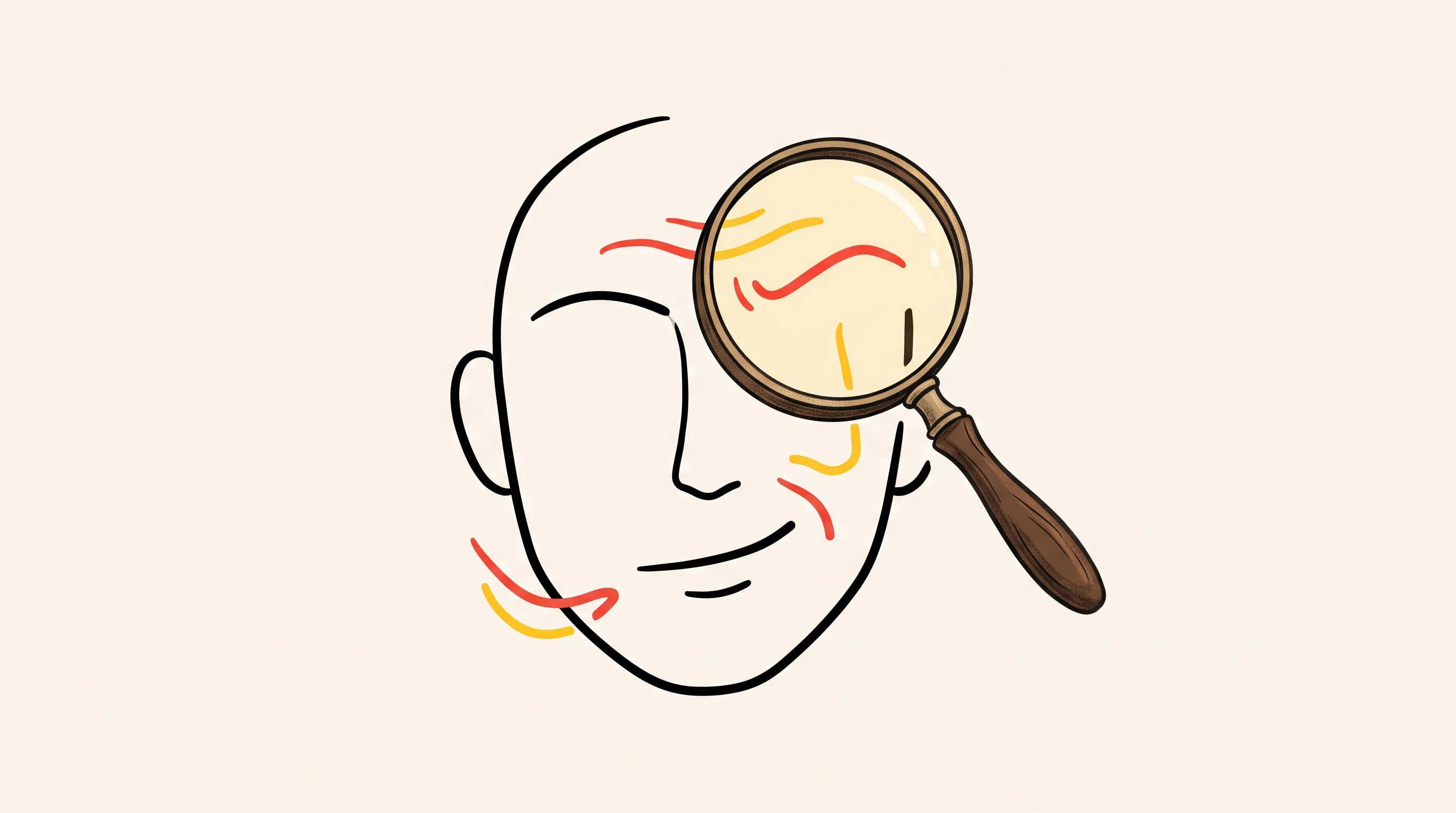
Here's the uncomfortable part: the science behind emotion detection from facial movements remains contested, to put it mildly. A widely cited 2019 review published in Psychological Science in the Public Interest found that inferring discrete emotions from facial expressions is highly context-dependent and far less reliable than commercial vendors typically claim. A furrowed brow might signal concentration, confusion, or annoyance—or none of the above, depending on cultural context and individual variation.
Microsoft, no stranger to AI hype cycles, quietly retired its Azure Face emotion inference feature in 2022, citing similar concerns. The company acknowledged what researchers had been saying for years: facial expressions don't map neatly onto internal emotional states.
Entropik's system may be more sophisticated than earlier tools, leaning on voice tone and gaze patterns in addition to facial coding. But the foundational question lingers—can an algorithm reliably know what someone is feeling based on external cues? And if it can't, what are researchers actually buying?
Mixed Reviews from the Field

Practitioner sentiment on AI-moderated interviews has been, at best, cautiously optimistic. Forum threads from UX research communities in late 2025 noted persistent issues with conversational coherence and lag, even as the promise of scale at lower cost drew interest. A post from research firm InterQ earlier this year highlighted cultural nuance and context as potential blind spots for automated moderators—a concern that seems especially pertinent for a tool operating across 120 countries and 70 languages.
In mid-2026, the Marketing Research Institute International published a piece questioning the reliability of AI qualitative research outright. The critiques weren't limited to emotion detection; they extended to the entire premise of replacing human moderators with algorithms trained on text corpora and expression datasets.
What Comes Next
Mira is currently available at aimoderator.entropik.io, with a first-study promo code and a free self-serve tier. No public pricing is listed—a common tactic for SaaS products still feeling out the market. The company is betting that research teams will embrace emotion AI despite the regulatory crosswinds and scientific skepticism.
Whether that bet pays off remains an open question. Entropik has built something technically impressive, no doubt. But impressive technology and reliable technology aren't always the same thing. And in a regulatory environment increasingly hostile to AI that claims to peer into people's minds, the gap between what Mira promises and what regulators—and the scientific community—will tolerate may prove wider than the company expects.
For now, the tool is live, the patents are filed, and the pitch is out there. Researchers will decide with their budgets. Regulators, one imagines, are already drafting their questions.


