

When Bavarian Parliament President Ilse Aigner toured a small office in Rosenheim last spring, the demonstration she witnessed felt almost unsettlingly routine: artificially generated faces flickering on screens, synthetic voices delivering plausible lies, manipulated footage rendered indistinguishable from reality to the untrained eye. She left calling for mandatory labeling of AI-generated content—a political response to what has become, in the span of roughly two years, an economic threat with teeth.
That office belonged to Neuramancer AI Solutions, a forensic deepfake detection startup that recently closed a $2 million pre-seed round. The funding arrives at a peculiar moment in the young company's life: it's already secured more than €1 million in German government grants, hired eleven people, and pivoted its pitch from pure research artifact to something approaching a commercial product. Now comes the harder part—proving that newsrooms and insurance companies will actually pay for what it's built.
The company's origin story runs through Friedrich-Alexander-Universität Erlangen-Nürnberg, where co-founder Anatol Maier spent years inside the IT Security Infrastructures chair, deep in the thickets of multimedia forensics and Bayesian machine learning. His academic work focused on detecting resampling artifacts using Bayesian neural networks—technical esoterica that has suddenly become commercially relevant as fabricated media floods the internet. His co-founder, Anika Gruner, brings a different toolkit: journalism and marketing chops that help translate Maier's research into something a harried photo editor or claims adjuster might actually use.
What they're selling, stripped of jargon, is pattern-recognition software that hunts for statistical anomalies—"AI fingerprints," in company parlance—lurking in image noise. Feed it a suspicious photo or video. Wait about twenty seconds. Get back a heatmap highlighting trouble spots, plus contextual explanations written in something resembling plain language. Customers can run it on their own servers, subscribe to it as cloud software, or plug it into existing workflows through APIs. There's even a mobile app for field work, though whether insurance adjusters will actually pull out their phones to scan accident photos remains an open question.
Two Markets, Two Pitches
Neuramancer's commercial strategy splits down the middle. For newsrooms, the pitch is defensive: slot the tool into your content intake pipeline and screen incoming photos and videos before they go live. It's a pre-publication firewall, essentially, designed to catch fabricated material before it turns into a correction and a credibility crisis.
The insurance angle is newer and perhaps more urgent. The company added a dedicated solution page for insurers earlier this year, targeting a problem that's metastasizing faster than many carriers anticipated: fabricated claims evidence. Not just touched-up photos of dented fenders anymore—fully synthetic accident scenes, doctored invoices, staged video evidence that never happened at all.
Milliman, the actuarial consultancy, flagged this shift in a December analysis, noting that insurers increasingly face claims built entirely from manufactured proof. The Arup incident in May 2024—engineering firm, $25 million gone, deepfaked CFO on a video call—demonstrated the stakes. By September of that year, Sumsub's detection data showed surges across multiple countries, Germany included, timed suspiciously to election cycles.
Which raises the question: is Neuramancer's technology good enough, and is the market ready to pay for it?
Competitors certainly think there's something here. Reality Defender, a Y Combinator-backed platform, already serves enterprise customers. Cyabra launched its own deepfake detection tool in July 2025. Neuramancer's counter-positioning leans on two advantages: a dual-sector go-to-market strategy that doesn't force it to pick one vertical, and European data residency for customers nervous about regulatory compliance. Everything stays within the EU.
From Research Lab to Cap Table

The company's formal existence is quite recent. It incorporated as a GmbH on September 12 with €25,000 in share capital, having filed an EU trademark application a week earlier. Before that, it operated under the name Neuraforge—a rebrand that suggests either evolving ambition or belated attention to searchability. (The new name is a nod to William Gibson's Neuromancer, presumably, though the startup declined to confirm whether anyone on the team has actually finished the novel.)
Government support arrived early and generous. The Federal Ministry for Digital and Transport, through its SPRIN-D innovation agency, awarded grants totaling roughly €1.1 million across two competition rounds—money that funded initial product development and grew the team from five to eleven. Neuramancer also joined Media Lab Bayern in April of its launch year and landed spots in Microsoft Founders Hub and the Stellwerk 18 startup center. It's a portfolio of backing that suggests the German innovation apparatus sees deepfake detection as strategically important, even if the private market remains cautious.
That $2 million pre-seed round represents the first substantial private capital—a test of whether investors believe commercial traction can follow proof-of-concept. The company has been hiring AI engineers and business development staff, signaling near-term expansion plans, though job postings are also a startup's preferred method of looking busier than it might actually be.
The Uncertainty Principle
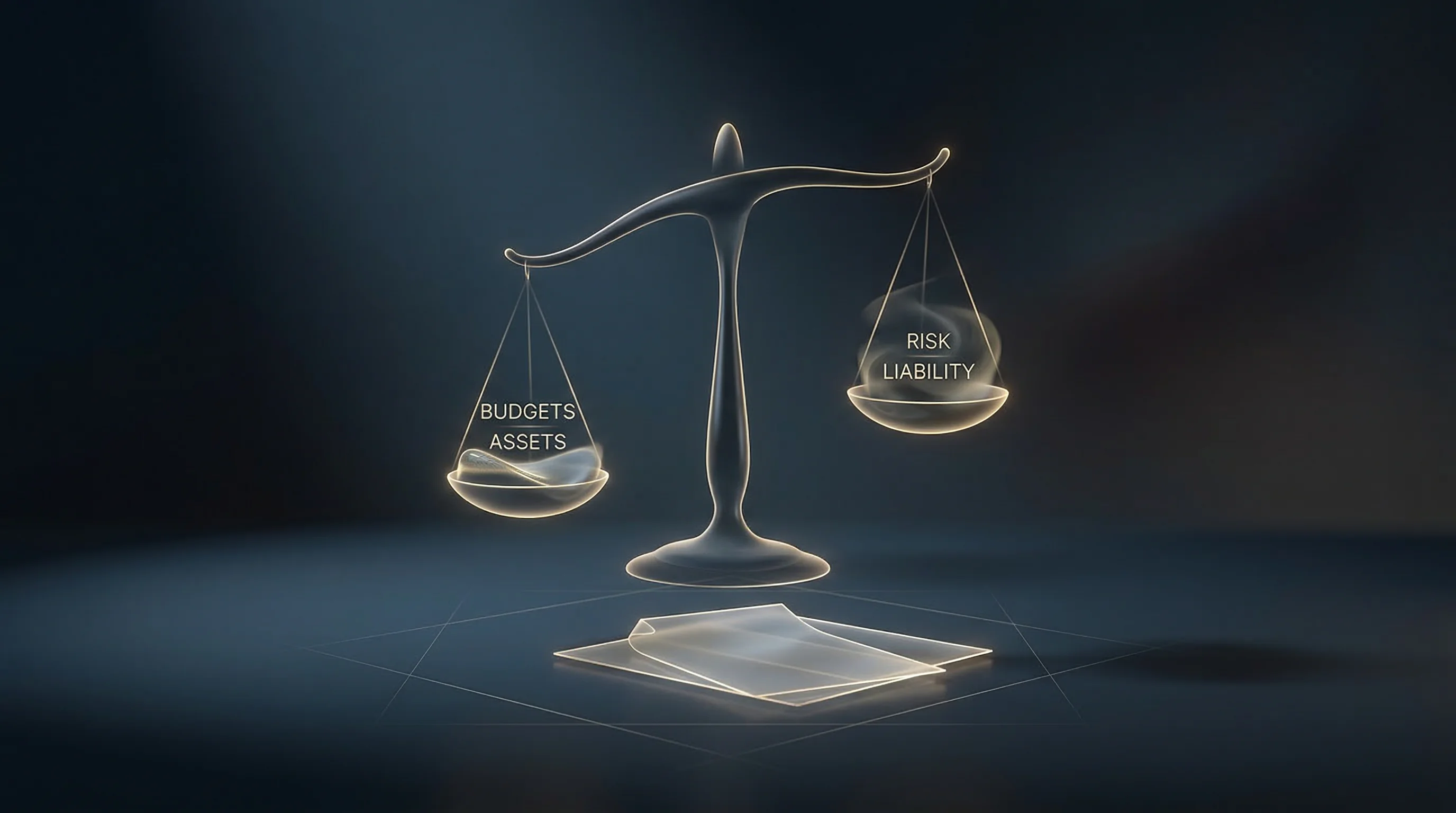
What's less clear is how quickly adoption will materialize. Newsrooms operate on skeletal budgets and move cautiously when adding friction to publishing workflows. Insurance companies, meanwhile, face a classic adverse selection problem: the carriers most vulnerable to deepfake fraud may also be the slowest to invest in prevention.
And then there's the arms race dynamic. Detection technology improves; so does generation technology. Neuramancer's forensic approach hunts for statistical artifacts that current AI models leave behind—but those artifacts may not survive the next model generation. It's a cat-and-mouse game with no obvious endpoint, which makes long-term differentiation tricky.
Still, the company's bet—that two very different industries will pay for the same underlying technology—has a certain pragmatic logic. Diversification hedges against the risk that one vertical adopts slowly. And the timing might actually be right, for once. Deepfakes have crossed from novelty to nuisance to genuine threat in the span of roughly thirty-six months. Regulatory attention is intensifying. The question isn't whether organizations need detection tools.
It's whether they'll pay for them before the next crisis forces their hand.
Neuramancer, eleven people in a Rosenheim office, is wagering they won't wait that long. The $2 million suggests at least a few investors agree. Everything else remains to be proven.


