

The numbers sound almost too good to be true. Which is perhaps why Poolad Imany, standing at a blackboard in NIST's Boulder labs sometime in early 2022, found himself running the calculations again.
Quantum dots—tiny semiconductor crystals that could emit entangled photons on command—had been a theoretical solution for years. But moving them from academic demonstrations to something you could actually deploy in a fiber network? That was another matter entirely. The standard approach, spontaneous parametric down-conversion, worked reliably enough. It just wasted roughly 99% of every attempt.
Imany's calculations suggested something different. Not incremental improvement. A 70-fold leap in efficiency.
Now, nearly four years later, his NIST spinout Icarus Quantum is betting that quantum-dot technology can finally solve what has become quantum networking's most stubborn bottleneck: getting enough photons where they need to go, when they need to be there. If the company's claimed efficiency rates—above 70% for on-demand entangled-photon generation—hold up in deployed networks, it wouldn't just be an engineering achievement. It would fundamentally change the economics of building a quantum internet.
That's a sizable "if."
The Problem Everyone Knows About
Talk to anyone building quantum networks today, and the conversation eventually lands on the same frustration. Current systems rely on probabilistic photon sources—processes like spontaneous parametric down-conversion (SPDC) or four-wave mixing that generate entangled pairs roughly 1% of the time. The other 99%? Noise, multiplexing gymnastics, expensive infrastructure jury-rigging its way around fundamental physics.
Consider Qunnect's GothamQ network threading through New York City's fiber infrastructure. By any measure, it's an impressive deployment: 500,000 entangled pairs per second across 34 kilometers, 99.84% uptime. But that headline throughput conceals the underlying inefficiency. Achieving those rates demands significant multiplexing infrastructure—essentially throwing resources at the problem until the numbers look acceptable.
The inefficiency compounds viciously when you try to build quantum repeaters, the critical infrastructure for extending entanglement beyond fiber-loss limits. Repeaters depend on entanglement swapping, a delicate protocol that multiplies every source's inefficiency. Low success rates force network architects into complex, resource-hungry designs that resist scaling. It's the kind of problem that makes lab demonstrations look promising while commercial deployment keeps receding into the future.
Deterministic sources have always been the theoretical answer. Quantum dots embedded in optical cavities can, in principle, produce entangled photons on command with high probability. Academic labs have already demonstrated 69.9% pair generation efficiency in the telecom C-band—the sweet spot for fiber transmission—with strong entanglement properties (concurrence around 0.91, fidelity around 0.95) using InAs/GaAs quantum dots.
Turning lab prototypes into engineered products? That's where the graveyard starts filling up.
From NIST to Market
Imany had a head start most founders don't get. His PhD work at Purdue and subsequent postdoc at NIST gave him direct access to the federal government's quantum dot research—decades of publicly funded work on InAs/GaAs and InAs/InP quantum dots with all the engineering refinements that make deterministic emission possible. Optical cavities with Purcell enhancement. P-i-n stabilization for electrical control. Strain tuning to eliminate fine-structure splitting. The kind of incremental problem-solving that doesn't make headlines but determines whether technology works outside a lab.
When he founded Icarus Quantum in January 2022, the pitch wasn't about building another quantum computer or yet another quantum key distribution system. The company positions its technology as "interconnect infrastructure for quantum datacenters"—platform-agnostic optical interconnects operating at room temperature over fiber for modular quantum computing.
That framing matters. Competitors like Quandela in France and Sparrow Quantum in Denmark focus primarily on single-photon sources for photonic computing. Icarus is betting on entangled-pair generation for networking and distributed quantum systems. Different physics, different customers, different technical challenges.
The company's advisory board reflects that focus. Shuo Sun from CU Boulder/JILA and Alisa Javadi from the University of Oklahoma both have track records pushing single-photon source performance to record levels. Javadi's prior work at the University of Basel and Niels Bohr Institute contributed to near-unity indistinguishability (0.996) in electrically controlled cavity-quantum-dot devices—the kind of specification that sounds abstract until you're trying to build a quantum network that actually functions.
Government Money, With Strings
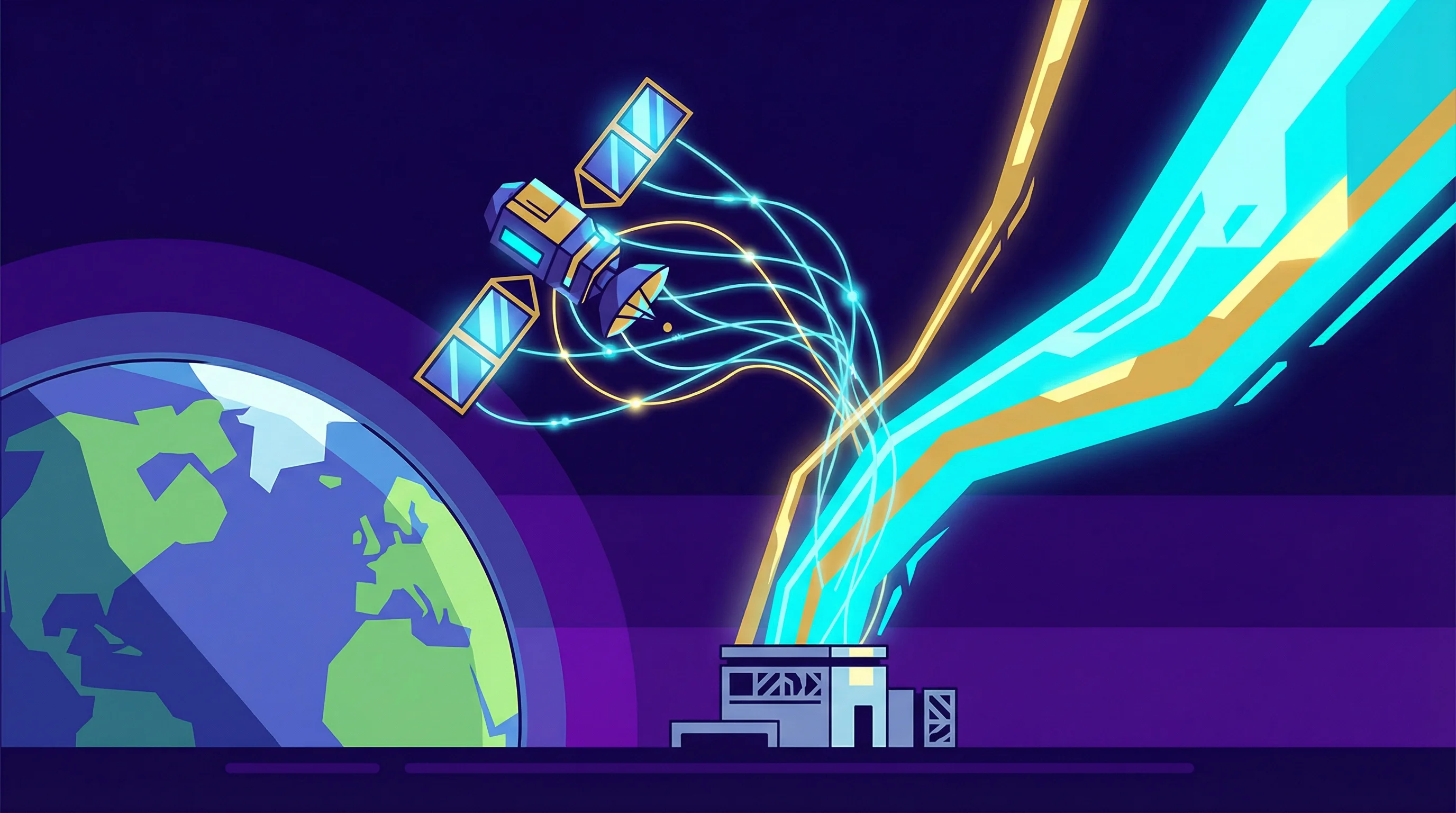
Federal agencies have been placing careful bets. The U.S. Air Force awarded Icarus a $150,000 Phase I STTR in 2023 for space-based quantum networking. When that succeeded, a $1.25 million Phase II award followed, running through 2026. The larger contract comes with specific deliverables to the Air Force Research Laboratory's Starfire Optical Range in New Mexico—and milestones for entanglement swapping and heralded entanglement, both essential capabilities for building quantum repeaters.
NIST itself kicked in $100,000 through a Phase I SBIR in 2024 for noise-free excitation of semiconductor quantum dots. The NSF followed with $305,000 in Phase I funding in 2025, targeting a commercial-grade entangled photon generator by 2028. Most recently, according to Quantum Computing Report and Imany's LinkedIn, NIST awarded a second Phase II SBIR of $400,000 in January 2026 for packaged photon-source modules. (That grant hasn't yet materialized in the SBIR.gov database as of early February—government databases have their own timeline.)
Total non-dilutive funding: over $2 million, all focused on translating NIST lab technology into deployable hardware. The company also went through the Duality Quantum Accelerator cohort in 2023 and secured an Activate Fellowship in 2024.
At a Chicago Quantum Exchange seminar last June, Imany laid out the technical target: deterministic efficiency above 70%, operating in telecom bands, room-temperature fiber compatibility. The goal isn't just better specs. It's eliminating the massive multiplexing architectures that make current quantum networks fragile and expensive.
Which sounds great. Until you remember that quantum dots still require cryogenic cooling—operational complexity that atom-based sources like Qunnect's avoid entirely.
A Crowded Field

Icarus is hardly alone. The quantum networking space has gotten crowded fast, and several competitors have already shipped commercial products.
Quandela sells the Prometheus quantum-dot single-photon source and recently announced cloud photonic processor access through OVHcloud, targeting mid-2026 availability. Sparrow Quantum launched its Sparrow Nest integrated system in November 2025, claiming deterministic single-photon chips with over 50% efficiency, greater than 97% indistinguishability, and over 99% purity. They raised €21.5 million in Series A funding last April.
On the networking side, Qunnect has moved beyond demos. Their Carina rack-level system integrates an atom-based entangled-photon generator with polarization stabilization—and their GothamQ deployment in New York achieved 15 days of continuous operation at city scale. That's proof quantum networks can graduate from lab curiosities to operational infrastructure. Qubitekk runs what it bills as the first commercial quantum network in Chattanooga, Tennessee, and has demonstrated interoperability with Qunnect equipment.
Traditional vendors still hold market share. Quantum Computing Inc. shipped a commercial SPDC-based entangled photon source to South Korea last June. NuCrypt offers the EPS-1000 polarization-entangled source with tomography and detector racks. ID Quantique—now majority-controlled by IonQ as of 2025—supplies quantum key distribution and single-photon detection equipment across European EuroQCI projects.
Then there's the photonic computing angle, which is where serious money has been flowing. Photonic Inc. in Canada is building emitter-based photonic quantum computers using spin-photon interfaces, advancing to Stage B of DARPA's Quantum Benchmarking Initiative. PsiQuantum raised a $1 billion Series E in 2025, chasing million-qubit fault-tolerant photonic systems.
Icarus differentiates by focusing specifically on deterministic entangled-pair sources for quantum interconnects. Not single-photon sources for computing. Not integrated quantum processors. The pitch: deterministic generation at telecom wavelengths with high efficiency changes the economics and feasibility of quantum networks, especially for repeater-based long-haul links and datacenter-scale distributed quantum computing.
Whether the market agrees remains to be seen.
Market Projections and Policy Reality
McKinsey projects the quantum communication market will hit $10.5 billion to $14.9 billion by 2035, with compound annual growth between 22% and 25%. Markets & Markets estimates quantum photonics specifically will grow from $0.4 billion in 2023 to $3.3 billion by 2030. Government and defense currently represent roughly 57% of quantum communication spending, with telcos, finance, and datacenter operators expected to ramp through the 2030s.
Europe is moving aggressively. The EuroQCI program has committed €193 million to build quantum communication infrastructure across EU member states, with 24 proposals funded in last year's call alone. That's creating structural demand for European suppliers—Quandela, Sparrow, and ID Quantique benefit from procurement preferences in public testbeds and national rollouts.
U.S. policy is messier. The NSA's October 2020 guidance on quantum key distribution was blunt: the agency "does not recommend" QKD or quantum cryptography for national security systems unless fundamental limitations are overcome. The concerns? Denial-of-service risks and implementation vulnerabilities. CNSA 2.0, the NSA's post-quantum cryptography roadmap, explicitly favors post-quantum cryptographic algorithms over QKD through 2035.
That creates a strategic split. Federal buyers are less interested in QKD-centric quantum networks but remain invested in quantum interconnects for distributed quantum computing and sensing—precisely where Icarus is positioning. DoD STTR funding for space-based entanglement sources and Air Force deliverables to Starfire Optical Range fit that posture.
The NSA's stance may actually help companies like Icarus by steering federal dollars toward quantum networking infrastructure that isn't primarily about cryptography.
Standards remain immature. The IETF's Quantum Internet Research Group has published foundational RFCs—9340 on architecture principles in 2023 and 9583 on application scenarios in 2024—but link-layer protocols, transport stacks, and control planes are still works in progress. Interoperability pilots like the EPB-Qunnect demonstration in December 2023 show an industry working through integration challenges in real networks, one headache at a time.
The Central Question
For Icarus—and for investors watching the quantum networking space—the question isn't whether the technology works in a lab. It's whether claimed lab performance survives contact with the real world.
A 70-fold efficiency improvement is extraordinary. But it has to survive packaging, field conditions, polarization drift on deployed fiber, cryogenic operation constraints, and integration with existing network infrastructure. Quantum dots still need cryogenic cooling, adding operational complexity that atom-based sources avoid. Progress on integrated frequency conversion or true telecom C-band emission will matter for reducing system overhead.
Independent third-party benchmarks will be critical. The company projects a commercial-grade device by 2028 under its NSF SBIR Phase I award. That timeline suggests prototypes and early customer trials within the next 18 to 24 months. Success will be measured not in photon counts and entanglement fidelity alone, but in mean time between failures, maintenance requirements, and cost per deployed link.
If Icarus delivers, the implications extend beyond quantum communication. Deterministic entangled-photon sources at scale enable fusion-based photonic quantum computing—architectures that rely on generating, interfering, and measuring photons to implement quantum gates. Recent work shows photon-loss thresholds for error correction around 6% to 8% with tailored codes, making source brightness and purity directly relevant to computational feasibility.
The Department of Energy's 2020 Quantum Internet Blueprint and subsequent ASCR funding opportunities emphasize long-distance networking challenges: quantum memories, repeaters, entanglement distribution hardware. Testbeds like Chicago's 52-mile loop and ongoing DOE support for regional quantum networks create proving grounds for next-generation components. Space-based entanglement—demonstrated by China's Micius satellite over 1,200 kilometers in 2017—adds another dimension. Icarus's Air Force deliverables explicitly target space applications.
Eighteen Months
For now, the race is on.
European suppliers are commercializing deterministic single-photon sources and integrating them into national quantum networks. U.S. players are demonstrating field-deployed atom-based systems with high uptime, building commercial networks in actual cities. Photonic quantum computing companies are raising billion-dollar rounds and targeting million-qubit systems.
Somewhere in that landscape, a NIST spinout with $2 million in grants and a claim of 70x efficiency gains is betting that semiconductor quantum dots—technology that has tantalized researchers for two decades—can finally solve one of quantum networking's oldest problems.
The next 18 months will tell us if they're right. Or if deterministic photon sources are about to join the long list of quantum technologies that worked beautifully in the lab but never quite made it to deployment.
Either way, someone's about to learn an expensive lesson about the distance between physics and engineering.


