

Norbert Health, a Brooklyn-based startup building software that turns mobile robots into autonomous nursing assistants, said Tuesday it closed a $14 million Series A round supported by William A. Marino with Cardinal Group. Exor Seeds, CareIT, and angel investors including Datadog cofounders Alexis Le-Quoc and Olivier Pomel joined the round, bringing the company's total capital raised to $19 million.
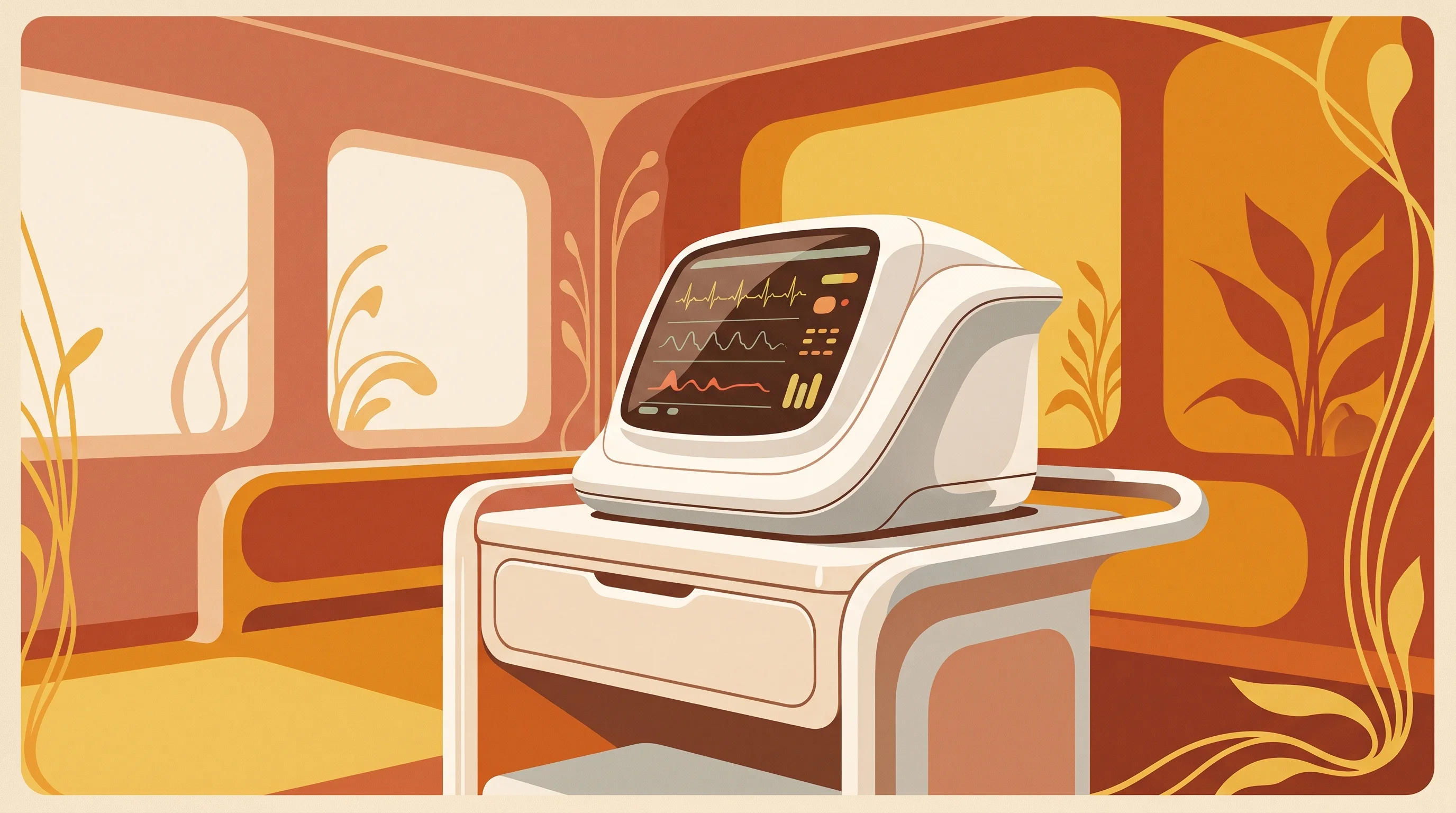
The timing reflects both urgency and opportunity in a health care labor market stretched thin. Norbert doesn't manufacture its own robots. Instead, it layers clinical software and sensing capabilities onto existing mobile robots, the kind originally designed for logistics or telepresence work, transforming them into units that can take contactless vitals, conduct structured patient assessments, respond to requests, and generate electronic health record documentation.
According to the company, those systems have been making rounds on hundreds of patients daily across skilled nursing facilities, achieving 96% patient acceptance and 82% monitoring compliance. That compliance figure, Norbert said, represents nearly double the baseline for traditional remote patient monitoring programs that rely on manual intervention.
But there's a regulatory wrinkle. The company's website currently labels the product an "investigational device, limited by Federal law to investigational use" while it works toward FDA clearance. Norbert plans to use the fresh capital to expand its library of clinical capabilities, advance through the regulatory process, and push into new care settings. Those include post-fall neurological evaluations, pressure injury prevention, cognitive screening, and fall-risk reassessment.
The round also drew checks from Saeju Jeong, cofounder and executive chairman of weight-loss app Noom, and Thomas Clozel, CEO and cofounder of AI drug-discovery firm Owkin.
A software play in a hardware world
Norbert's positioning is deliberate: it sells itself as the clinical intelligence layer, not the metal chassis. The system adds contactless pulse and respiratory monitoring, cognitive and behavioral assessment through vocal biomarkers, mobility and gait analysis, and environmental sensing to partner robots. It handles the downstream work, too, automating EMR notes, task routing, alerts, and language adaptation across patient populations.

"Robots that assist nurses can help reduce the burden, but only if they have clinical skills," Alexandre Winter, Norbert's CEO and cofounder, said in the announcement.
Winter brings a track record. He previously founded Placemeter, a computer vision analytics company that NETGEAR acquired in late 2016 and folded into its Arlo smart-home division. Norbert was incorporated in Delaware as an LLC on July 16, 2019, and converted to a C-corp on September 18, 2019, according to a May 2023 SEC filing. That same filing listed Winter as CEO and Thomas Rosenblatt as CTO, with advisors including Jeong and Alexis Houssou of HCVC.
The startup raised a $5 million Seed II round in June 2021, co-led by Serena and HCVC with participation from LDV Capital and Exor Seeds. Crunchbase News reported the round brought total funding at the time to $8 million.

Labor crisis as tailwind
The current retention issues in nursing provide context, though perhaps not quite the validation the company might hope for. Recent industry surveys have painted a stark picture: significant portions of the nursing workforce have indicated intent to leave in coming years, with job-switching rates climbing sharply even as the registered nurse workforce grew to 3.57 million as of recent data.
Norbert isn't alone in seeing automation as an answer. Diligent Robotics, which built the Moxi hospital assistant robot and operated in over 25 hospital facilities, was acquired by Serve Robotics with the acquisition closure announced on January 27, 2026. But Norbert distinguishes its approach by selling software and clinical capabilities rather than proprietary hardware.
"Norbert is the rare physical AI company already earning its place in live clinical operations," said Filippo Monteleone, president and founder of CareIT, in the announcement. Jeong framed the opportunity in market terms: "Healthcare labor is one of the largest markets in the US economy... Norbert built that route."
As of December 31, 2025, Winter noted three robots deployed and 80 active patients at year-end. He said two more pilots were slated for early this year with customers managing 20,000 and 90,000 beds, respectively. The company did not name specific facility partners in Tuesday's announcement, and those deployment figures remain unverified.
Whether software-driven nursing assistants can thread the needle between regulatory approval, clinical effectiveness, and economic viability remains an open question. For now, Norbert is betting that the route to adoption runs through skills, not hardware.


