

A year and a half ago, a group of Swiss university students landed a homemade rocket hopper back on its launch pad after a 105-meter hop—modest by SpaceX standards, but a technical first for European student teams. Now some of those same engineers say they've raised $40 million to build a space tug capable of hauling multi-ton satellites across orbital highways in less than a day.
The claim, if true, would mark one of the largest seed rounds ever closed by a European space infrastructure company. But as of late March, PAVE Space—the Swiss startup behind the effort—hadn't issued a press release. The purported lead investors, Visionaries Club and Creandum, hadn't updated their portfolio pages. And the Swiss commercial register showed no fresh capital injection for PAVE Space SA, the legal entity incorporated in Vaud canton in late 2023.
Still, the rumors won't die. Posts on space industry forums and LinkedIn have circulated for weeks, citing the $40 million figure with enough specificity to suggest someone's talking. Perhaps more telling: PAVE's jobs page now lists 11 open positions, from CNC machinists to RF engineers, all based in Crissier near Lausanne. That's the hiring tempo of a company that just got a check.
Heavy Metal in Orbit
What PAVE wants to build isn't subtle. The company describes its vehicle as a heavy kickstage—industry jargon for a reusable space tug that picks up satellites dropped off by launch rockets and ferries them to precise final orbits. According to a recent job posting, PAVE's system will handle payloads exceeding four tons, shuttling them from low-Earth orbit or geostationary transfer orbit all the way to geostationary orbit in under 24 hours.
Most existing orbital transfer vehicles work in lighter weight classes. D-Orbit's ION Satellite Carrier and Exotrail's SpaceVan have flown dozens of missions, but they're built for payloads measured in hundreds of kilograms, maybe a ton. PAVE is aiming for something closer to what Impulse Space in California is pursuing with its Helios platform—multi-ton workhorses designed for large geostationary satellites and, eventually, logistics beyond Earth orbit.
The technical challenge is formidable. Moving several tons of satellite across tens of thousands of kilometers in a single day requires serious propulsion, precise navigation, and the kind of operational cadence that has eluded most space startups. Regional press reports have referred to PAVE's vehicle as "Lyoba," though that name doesn't appear on the company's sparse website, which mostly promises "several tons of payload on both rideshare and dedicated missions" without offering much else.
From Student Project to Seed Stage
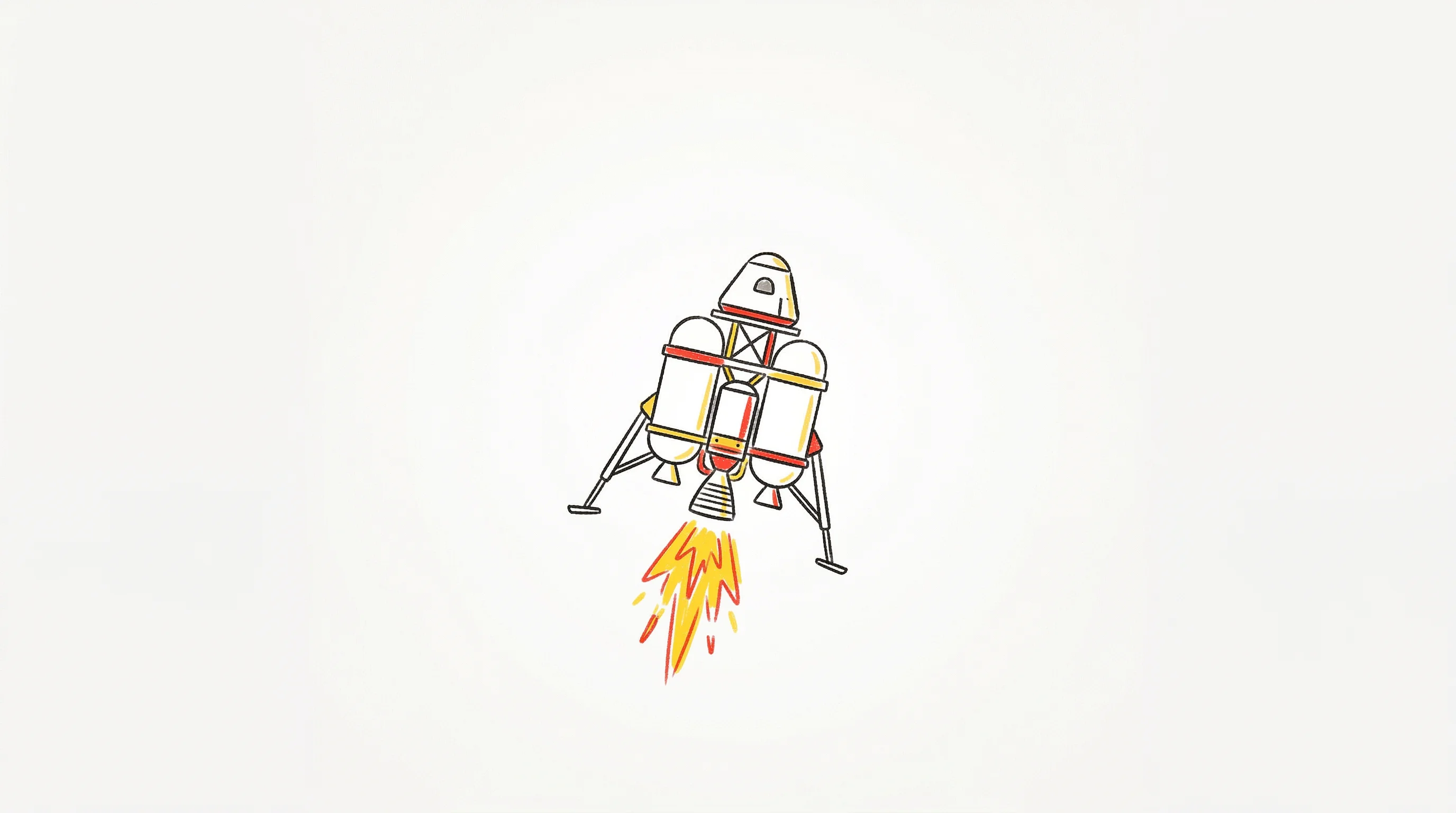
The PAVE team emerged from the Gruyère Space Program, a Swiss university rocketry project that grabbed headlines in October 2024 with Colibri, Europe's first free-flying student-built rocket hopper. The vehicle climbed 105 meters at a test site in Payerne and landed itself—a modest altitude, yes, but enough to demonstrate competence in propulsion and flight control.
Julie Böhning, who co-founded GSP while still a student, now runs PAVE as CEO. Her co-founder and CTO, Jérémy Marciacq, previously worked as a test engineer at Rocket Factory Augsburg, a German launch startup. They formalized PAVE Space SA in November 2023, with statutes dated November 2 and official registration published November 27, with initial share capital of CHF 100,000—roughly $115,000 at current exchange rates—and a registered office in Vaud.
By early 2025, the company had secured a CHF 100,000 Tech Seed loan from Switzerland's Fondation pour l'Innovation Technologique to fund a prototype engine. The FIT announcement noted that PAVE had already raised "several million Swiss francs" and hoped to raise 30 million more that year. A $40 million seed round would blow past that target, though whether it's closed, closing, or aspirational remains unclear.
Crowded Skies
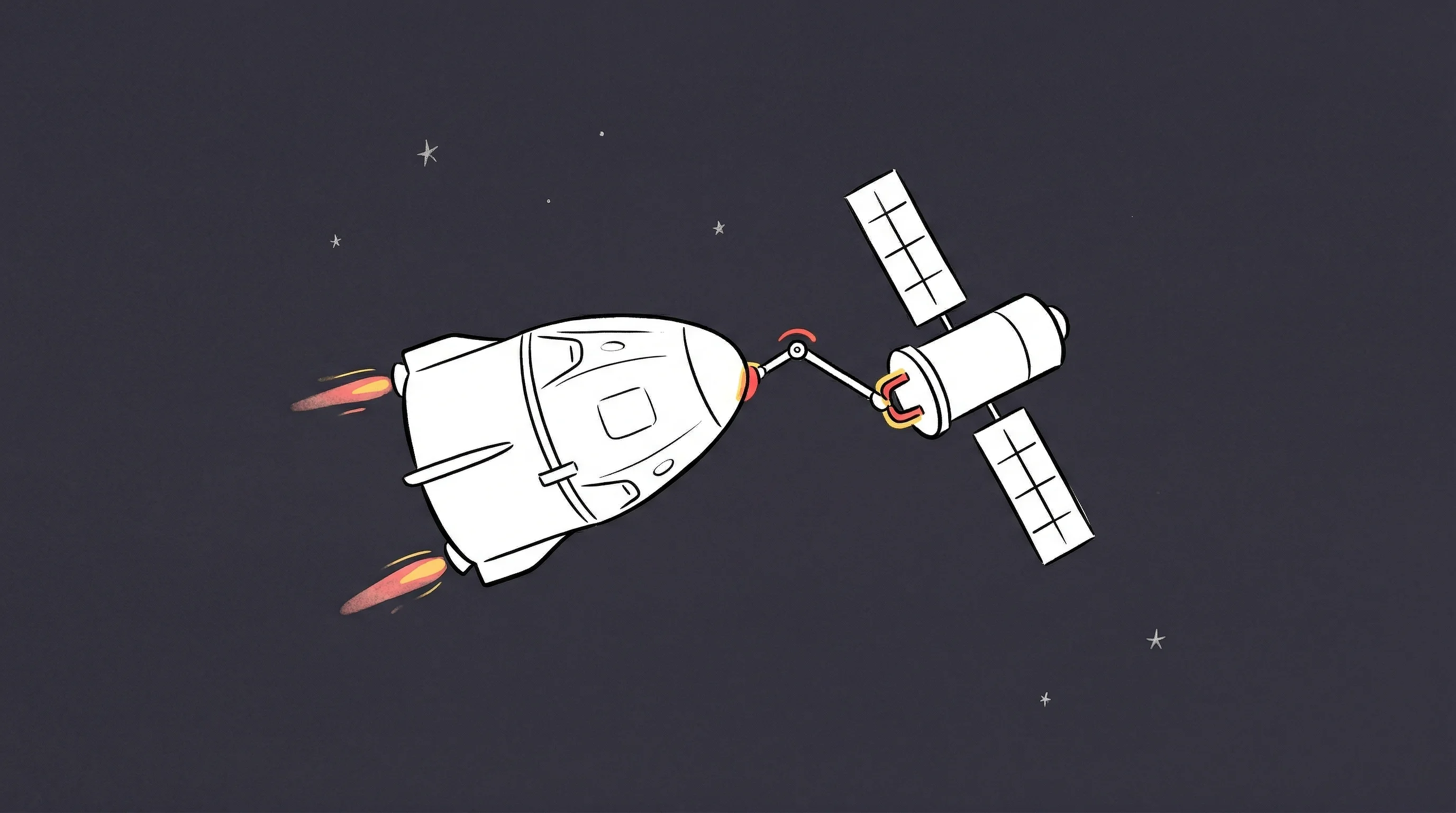
Orbital transfer is having a moment. Starfish Space, a Seattle-area startup, raised $29 million last November to build its Otter servicing vehicle, then won a $52.5 million U.S. Space Force contract for deorbit-as-a-service. Portal Space Systems pulled in $17.5 million in April 2025 for its high-energy thermal propulsion platform—at the time described as one of the largest seed rounds in recent space startup history. PAVE's rumored $40 million would reset that bar.
Europe has players in this market, but none have publicly announced vehicles in PAVE's weight class. D-Orbit, based in Italy, has flown more than 30 ION missions since 2020 but focuses on smaller payloads. Exotrail, the French company that's flown multiple SpaceVan tugs, is similarly scaled for lighter cargo. Meanwhile, the continent's launch industry has spent years trying to match the commercial cadence and cost structure of American competitors. An independent European heavy kickstage could offer satellite operators an alternative for final orbital delivery without depending entirely on U.S. or Chinese platforms.
PAVE has hinted at one customer relationship. A LinkedIn post from the company claims it will deliver SWISSto12's upcoming HummingSat constellation satellites to target orbit in under 24 hours from launch. No formal contract announcement has materialized to back that up, and SWISSto12 declined to comment for this story.
Proof Points Ahead

A 2025 press mention tied to the FIT loan referenced a commercial launch target of 2029 for a 20-ton kickstage, but that timeline is now over a year old. The recent hiring push—especially for a "kickstage mission manager"—suggests milestones may be accelerating, though the company hasn't clarified which ones.
For now, the $40 million remains in limbo. No updated Swiss filings. No press releases from Visionaries Club or Creandum. Just persistent chatter and a team in Crissier expanding fast.
If the round does close as rumored, PAVE will enter a select group of European deep-tech startups pulling down venture checks at American scale. The harder question is whether a team that was flying student hoppers two years ago can scale to a multi-ton orbital workhorse before better-funded U.S. competitors do the same. The propulsion test stands near Lausanne will have to deliver an answer—and soon.


