

Peter Thiel has a knack for the improbable. He backed Facebook when it was still confined to college campuses. Palantir, when intelligence agencies were drowning in paper. SpaceX, back when reusable rockets sounded like fantasy. Now he's betting that the future of artificial intelligence infrastructure doesn't sit on land at all—it drifts on the open ocean, drawing power from the relentless rise and fall of waves.
On May 4, 2026, Thiel led a $140 million Series B round into Panthalassa, a Portland-based startup building autonomous floating data centers powered entirely by wave energy. The deal, which reportedly values the company near $1 billion according to the Financial Times, pulled in an unusual coalition: John Doerr, Marc Benioff's TIME Ventures, Max Levchin's SciFi Ventures, Korea's Hanwha Group, server manufacturer Super Micro Computer, Susquehanna, and Anthony Pratt, among others. It's the kind of investor roster that signals conviction not just in a piece of technology, but in a broader thesis about where the industry is headed.
That thesis is simple, if unsettling: land-based data centers are running into a wall.
When the Grid Can't Keep Up
The numbers tell a story of accelerating demand colliding with physical limits. Global data center electricity consumption hit roughly 415 terawatt-hours in 2024—about 1.5% of all electricity used worldwide, per the International Energy Agency. Forecasts suggest that figure could more than double by 2030, potentially approaching 945 TWh or higher once you factor in AI training workloads and cryptocurrency mining.
The industry's response has been to spend at a scale that would make even infrastructure investors blink. Consensus estimates peg combined capital expenditure by major cloud providers near $770 billion for 2026 alone, according to reporting by Axios in June. Cumulative data center investment could reach $1.6 trillion by decade's end, based on analyses from Omdia and Data Center Dynamics published late last year.
Yet Gartner warned in June that current data center power capacity—approximately 132 gigawatts globally—might only grow to around 290 GW by 2030. That leaves a gap, and perhaps a significant one, unless the industry finds fundamentally new ways to site and power facilities.
The constraint isn't purely about generating more electricity. Grid interconnection queues now stretch for years in some regions. Water-cooled facilities face mounting scrutiny from communities—Google alone consumed 7.2 billion gallons in 2024 while replenishing only 4.5 billion, a disclosure that sparked predictable backlash. According to Data Center Watch, political resistance has killed or delayed projects worth more than $130 billion in the first quarter of 2026 alone. Between May 2024 and March 2025, another $64 billion in U.S. data center projects were either canceled or postponed, per tallies from Data Center Watch.
"Giant data center power plans reach extreme levels," noted the Uptime Institute in its 2025/2026 survey, documenting what it characterized as persistent power constraints, rising costs, and construction delays across the sector.
Skipping the Grid Entirely
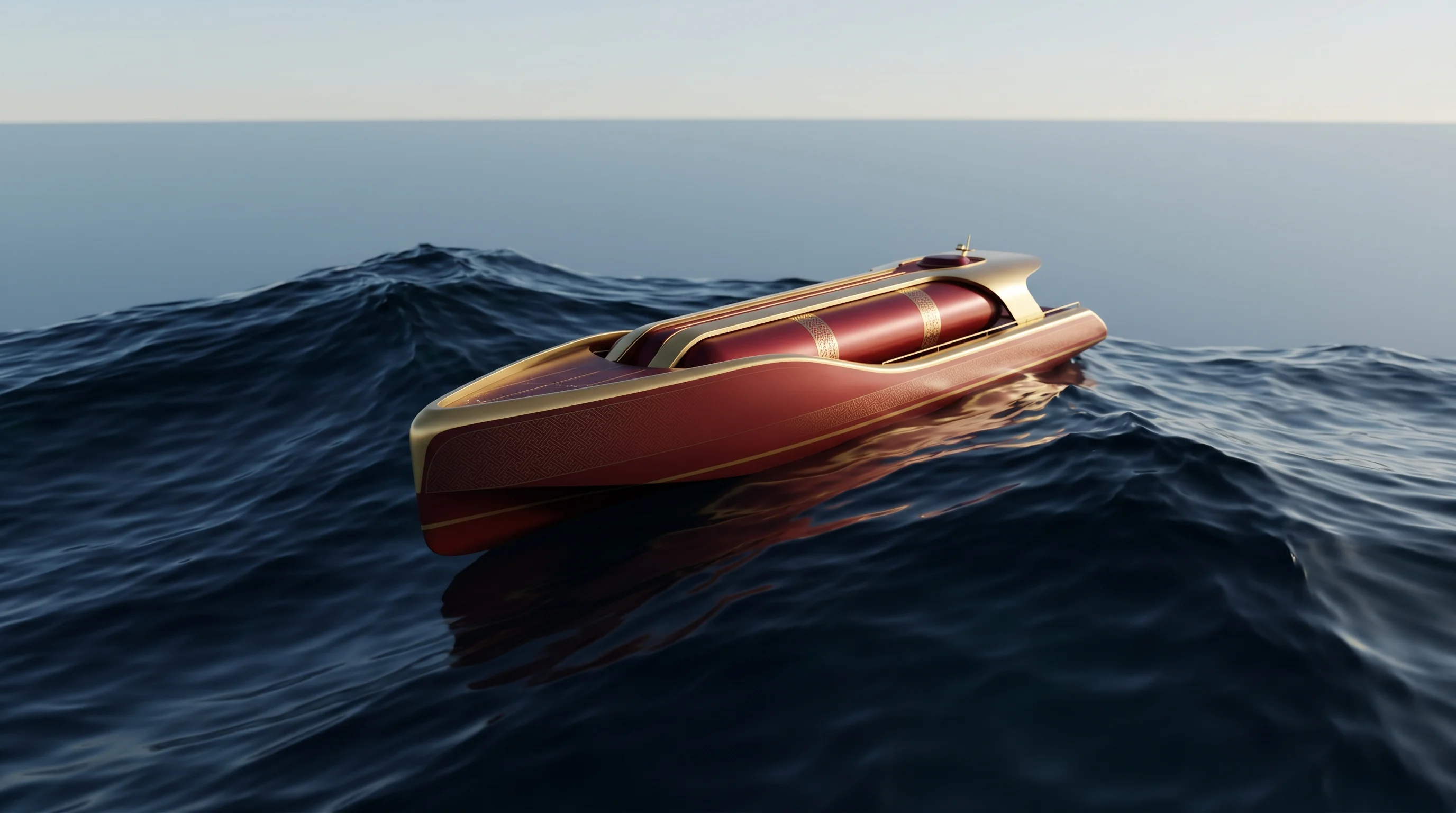
Panthalassa's solution is to avoid the grid altogether. The company's Ocean-3 platform is a self-propelled, untethered vessel designed to drift in high-wave regions of the open ocean. As the platform rises and falls with swells, seawater is forced into a pressurized internal reservoir, then released through a turbine to generate electricity—what the company describes as "floating hydro."
The surrounding ocean provides passive cooling, sidestepping the freshwater consumption issues that have turned land-based facilities into political targets. Compute requests and results move via low-Earth orbit satellite links, primarily Starlink Maritime, which offers throughput north of 400 megabits per second with latencies between 20 and 60 milliseconds. By transmitting only inference tokens rather than bulk power to shore, Panthalassa aims to dodge the bandwidth constraints that would otherwise sink the economics of oceanic computing.
Garth Sheldon-Coulson, who co-founded the company and has led it since 2016, framed the approach in characteristically expansive terms: "There are three sources of energy with tens of terawatts of new capacity potential: solar, nuclear, and the open ocean. We're ready to build factories, deploy fleets."
The company claims it can hit energy costs as low as $0.02 per kilowatt-hour at scale, though that figure remains unverified and should be treated skeptically until pilot data becomes available. It's worth noting that historical wave energy cost estimates from 2020 academic studies ranged from €280 to €520 per megawatt-hour—orders of magnitude higher—though the technology has advanced considerably since then.
Panthalassa's timeline calls for deploying Ocean-3 pilot nodes in the Northern Pacific sometime in 2026, with commercial deployments targeted for 2027. The Series B funds a pilot manufacturing facility near Portland and refinements to the platform design, which has evolved through earlier iterations including Ocean-1 in 2021 and a three-week Ocean-2 sea trial off Washington in February 2024.
The Engineering Reality Check
The technical challenges are considerable, and largely untested at commercial scale. Wave energy remains a sector heavy on pilots and light on deployed capacity. Ocean Energy Europe's statistics show only about 2.82 megawatts of operational capacity across Europe at the end of 2024, split between 1.12 MW of wave installations and 1.63 MW of tidal. Five new devices were deployed that year. The U.S. Energy Information Administration puts theoretical wave potential along American coastlines at up to 2.64 trillion kilowatt-hours annually, but converting that resource into dispatchable power for compute workloads is another matter entirely.
Panthalassa's platforms will need to survive open-ocean conditions—storms, corrosion, biofouling—while maintaining uptime levels sufficient for commercial AI inference workloads. The company hasn't publicly disclosed detailed specifications on energy storage capacity, duty cycles, or how its systems would handle black-swan weather events. Industry coverage in May flagged these durability questions as central to the viability question.
Satellite backhaul introduces its own set of constraints. Starlink Maritime offers high throughput, but operates on a best-effort basis with priority-data caps. Each node will rack up ongoing communications costs, and the unit economics hinge on whether per-token revenue from inference workloads can cover satellite fees, maintenance windows, and remote operations at scale. The company's focus on inference rather than training suggests an understanding of these bandwidth limitations, but the math remains to be demonstrated in practice.
Regulatory pathways are similarly unclear. Whether Ocean-3 nodes get classified as vessels under U.S. Coast Guard jurisdiction or as energy installations subject to Bureau of Ocean Energy Management and Federal Energy Regulatory Commission oversight could determine everything from crewing requirements to collision regulations to environmental review timelines. Coast Guard guidance from May 2024 addresses human-supervised testing of autonomous systems, but there's no precedent for an untethered, wave-powered compute vessel that generates electricity without exporting to the grid. Existing legal frameworks largely assume moored or seabed-connected installations.
A Crowded Horizon
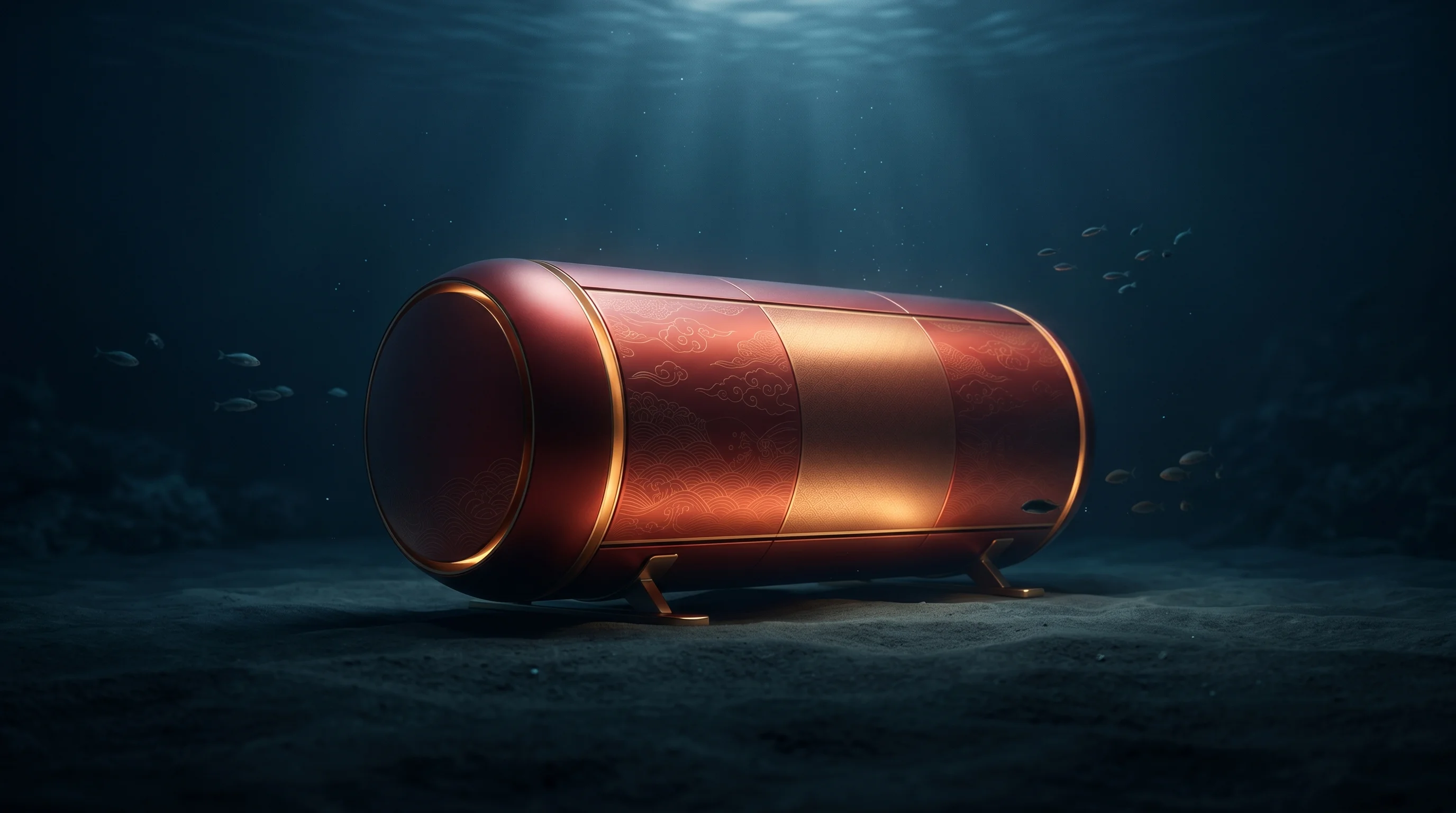
Panthalassa isn't the only player eyeing ocean-based computing. China announced in May 2026 the full operation of what it called the world's first offshore wind-powered underwater data center, located in Shanghai's Lingang district. The facility reportedly houses around 2,000 servers across a 24-megawatt capacity with a power usage effectiveness below 1.15, using seawater for passive cooling and offshore wind for generation.
Aikido Technologies launched in March 2026 with plans for floating offshore wind platforms that integrate modular AI data centers directly into the turbine structure. The company is targeting a 100-kilowatt submerged demonstration off Norway by year's end. IEEE Spectrum analyzed the model in March, positioning it as part of a broader industry shift toward "AI factories" sited near energy generation rather than grid interconnection points.
Even shipping giants are exploring the concept. Samsung Heavy Industries has showcased floating data center ship designs, while Mitsui O.S.K. Lines signed a memorandum with Karpowership subsidiary Kinetics to develop an integrated floating data center by roughly 2027, according to industry coverage spanning mid-2025 through 2026.
Earlier precedents offer lessons, even when they didn't scale. Microsoft's Project Natick deployed a subsea data center in the North Sea from 2018 to 2020, concluding its research phase in 2024 but still referenced for reliability and water usage benchmarks. Nautilus Data Technologies operates a floating barge data center in Stockton, California, using river water for cooling—a model that proved viable but hasn't expanded beyond roughly 6 to 7 megawatt-class projects. Subsea Cloud has announced multiple underwater data center pods since 2022, though at smaller scale than Panthalassa's ambitions.
What Happens Next

The question isn't really whether ocean-based computing is technically feasible anymore. China's Lingang facility and Microsoft's Natick research settled that much. The question is whether wave-powered autonomous platforms can deliver cost and reliability metrics competitive enough to win high-value AI workloads away from established terrestrial providers.
Thiel's statement accompanying the funding offers a tell: "Extra-terrestrial solutions are no longer science fiction. Panthalassa has opened the ocean frontier." It's classic Thiel framing—positioning the investment not as incremental infrastructure improvement but as category creation. Whether that turns out to be prescient or premature depends largely on what happens when Ocean-3 nodes actually deploy in the Northern Pacific later this year.
The timing might be the most revealing element. Terrestrial data center projects now face multi-year permitting battles. Water use backlash is intensifying. Nvidia CEO Jensen Huang has been framing the AI buildout around "tokens-per-watt" economics, and Morgan Stanley coverage from March through June echoed that messaging, emphasizing AI factories optimized for energy efficiency above all else. The case for moving compute to where power is abundant, rather than trying to pipe power to where compute already sits, grows more compelling by the quarter.
Panthalassa's pilot will test not just wave energy conversion and satellite backhaul, but whether the broader market is ready to treat oceanic compute as infrastructure rather than experiment. With $140 million in fresh capital and a manufacturing facility taking shape near Portland, the company has the resources to find out.
The ocean has tens of terawatts of untapped energy potential, as Sheldon-Coulson is fond of noting. Whether that potential can be converted into commercially viable AI inference at $0.02 per kilowatt-hour is the bet Thiel and his co-investors just made at near-unicorn valuation. By sometime next year, we'll know if they're right.


