

The electric vehicle charging station outside a Berlin shopping center has been broken for three weeks. A second one, two kilometers away, accepts payment but delivers no current. A third simply displays an error message. For drivers of battery-powered cars, this isn't unusual—it's Tuesday.
Pionix, a German startup tucked away in the small town of Bad Schönborn, thinks it has an answer. And it just convinced investors to put more than €8 million behind the idea.
The company announced the late-seed round on November 18, with Ascend Capital Partners leading and a roster of returning and new backers including Start-up BW Seed Fonds, Pale Blue Dot, Vireo Ventures, and Axeleo Ventures. What Pionix is selling—open-source firmware for charging infrastructure—may sound niche. But CEO Dr. Marco Möller frames the problem differently: failure rates hovering between 10 and 25 percent across public charging networks. That's not a software glitch. That's an industry crisis.
When Proprietary Systems Don't Talk
The fragmentation is worse than most people realize. Visit enough charging stations and you encounter a Babel of incompatible systems—each manufacturer guarding its own protocols, each operator patching together solutions that barely communicate. The result? J.D. Power's 2024 EVX study recorded that 19 percent of public charging visits ended with no charge delivered. Out-of-service stations. Payment failures. Damaged equipment. By early 2025, that figure had improved to 14 percent, though "improved" feels generous when one in seven trips still results in failure.
Pionix's pitch centers on EVerest, an Apache 2.0-licensed charging stack that the company initiated and then donated to the Linux Foundation Energy in January 2022. The software supports OCPP 1.6 and 2.0.1, ISO 15118-2 and -20, IEC 61851—the alphabet soup of standards that, in theory, should make chargers interoperable. In practice, proprietary implementations have left the ecosystem fractured.
This past August, Pionix went further: it contributed major components of its enterprise-grade BaseCamp implementation back into the open-source project, including pre-certified drivers, simplified APIs, and over-the-air update capabilities. The move signaled something. Maybe a confidence play, maybe a strategic gamble that openness would accelerate adoption faster than holding the cards close.
Hardware, Too
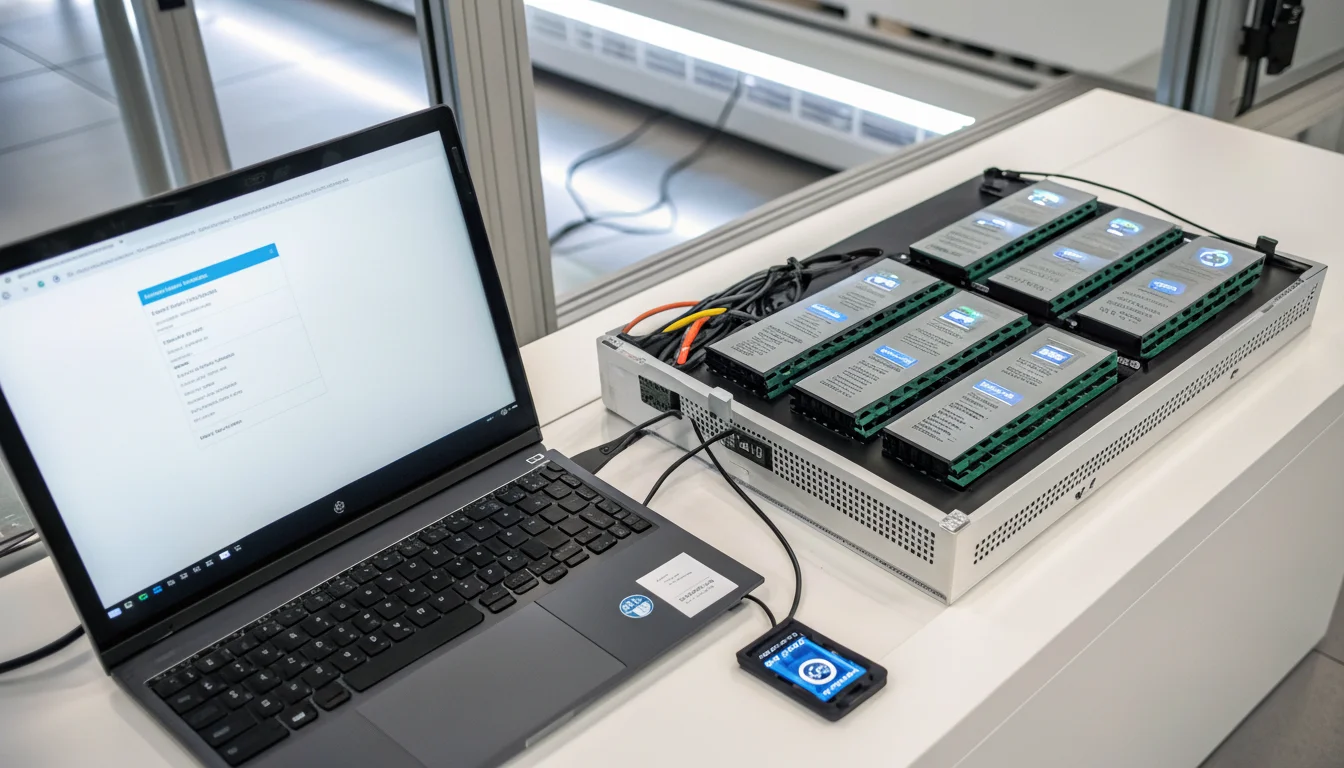
Software alone won't cut it, though. Pionix also builds ChargeBridge—pre-certified safety-critical MCU modules designed for charger manufacturers—and Pionix Cloud, a backend platform for diagnostics and predictive maintenance. The company has inked partnerships with charging operators like Qwello, security firms including Irdeto and Hubject, and component suppliers like PHYTEC and chargebyte.
It's an ecosystem approach, one that requires cooperation from players who historically haven't cooperated much at all.
The latest funding builds on a seed round of more than €5 million raised in 2023, led by yabeo Impact AG and Pale Blue Dot, with participation from Vireo Ventures, MobilityFund, and Axeleo. Japanese investor Global Brain came in later with a strategic injection aimed at opening Asian markets. The team has grown to 40 employees—not massive by tech standards, but substantial for a company working on infrastructure that most consumers never think about until it fails.
The Intel Alumni Behind the Bet

Möller isn't doing this alone. Co-founders Johanna Claussen and Cornelius Claussen previously built MAVinci, a drone startup they sold to Intel back in 2016. The experience taught them something about scaling hardware-software hybrids in industries allergic to risk. Charging infrastructure, with its safety certifications and liability concerns, fits that description neatly.
Their argument now: that open source can solve what proprietary systems haven't. That modularity beats lock-in. That a common foundation might—just might—deliver the reliability that's been missing. Whether charger OEMs, charge point operators, and fleet managers buy in remains an open question. The funding suggests some believe they will.
Pionix plans to use the capital to deliver what it calls "open, modular enterprise products" blending software and hardware. The language is careful, even a bit cautious. Perhaps that's intentional. In an industry where 14 percent of charging attempts still fail, promising too much feels unwise. But the company is betting that a transparent, collaborative approach can chip away at a problem that billions in proprietary investment haven't fully solved.
The broken charger in Berlin, meanwhile, is still broken.


