

The shoebox-sized machine hovers above a cluster of strawberry blooms in a Scottish greenhouse, its four propellers spinning in a calibrated pattern for exactly fifteen seconds. No contact. Just controlled air turbulence shaking pollen loose from anthers onto waiting stigmas. Then it moves on—methodically, autonomously—to the next cluster, and the next, until its battery dips below threshold and it flies itself back to a charging dock.
Welcome to pollination in 2026, where the labor shortage collides with plant pathology, and startups like Polybee are betting that what crops need isn't more bees—it's better robots.
The Singapore-based company just closed a $4.3 million funding round to scale what founder Siddharth Jadhav describes, perhaps optimistically, as "physical AI agents" across commercial greenhouse operations. Polybee claims its autonomous micro-drone fleets can boost yields by up to 15%, though that figure comes from the company's own trial data rather than independent academic validation. In agriculture, such distinctions matter.
Still, growers are signing on. Polybee now counts contracts with what it says are Australia's largest glasshouse producers, unnamed major U.S. fresh produce operations, and the UK's second-largest greenhouse berry grower. The technology has moved beyond proof-of-concept. The question now is whether it can move beyond niche deployment.
A Contactless Approach to an Old Problem
Polybee's core innovation—what the company calls Aerodynamically Controlled Pollination (ACP)—sidesteps physical touch entirely. The drones use propeller downwash to vibrate flower clusters, dislodging pollen in a way that mimics natural pollination dynamics without the disease transmission risk that comes with mechanical pollinators brushing plant after plant.
That matters more than it used to. ToBRFV, or Tomato Brown Rugose Fruit Virus, has swept through commercial tomato operations globally in recent years, often spread via contaminated equipment. One infected pollination wand can compromise an entire bay. Polybee's contactless method eliminates that vector entirely—assuming the drones themselves stay pathogen-free, which the company says they do through UV sterilization protocols between bays.
The drones themselves measure roughly 15 by 15 centimeters and navigate using sub-centimeter positioning systems. Currently, Polybee uses off-the-shelf DJI hardware paired with proprietary Navibee fleet management software, though Jadhav insists the platform is hardware-agnostic. Any drone with wireless docking capability can theoretically plug into the system.
"They just keep flying, recharging, and going back out," Jadhav told AgFunderNews this past February. Once a pollination session starts, operators step away. The drones self-launch, traverse greenhouse bays systematically, hover over flower clusters, then return autonomously when batteries run low. It's designed for labor-constrained environments where consistency trumps flexibility.
The Data Tells a More Complex Story
Peel back the 15% yield claim, though, and trial results reveal a messier picture—which is typical for agricultural technology still working through validation cycles.
Australia's PH19000 study, a $1.3 million research project involving Hort Innovation, Western Sydney University, and Perfection Fresh, offers perhaps the most rigorous look. For Endeavour truss tomatoes, Polybee's drones matched or exceeded manual pollination. But for Tastery snacking tomatoes, results were inconclusive. Strawberry trials using the Lowanna variety showed ACP actually underperformed compared to both blowfly pollination and hand pollination in initial runs.
These mixed signals haven't slowed commercial adoption. By early 2025, Polybee had established an Australian subsidiary co-located at La Trobe University and was running precision pollination trials with Angus Soft Fruits in Scotland—a project jointly funded by Innovate UK and Singapore's EnterpriseSG aimed at improving Class 1 strawberry grading outcomes. Named partnerships now include Perfection Fresh, Flavorite, Sundrop Farms, Spirli Farms, Boratto Farms, and LeaderBrand across Australia, plus the ongoing Angus collaboration in the UK.
Perhaps growers see something in the technology beyond immediate yield gains. Or perhaps the labor math has shifted enough that even marginal improvements justify automation.
A Business Model Built on More Than Pollination
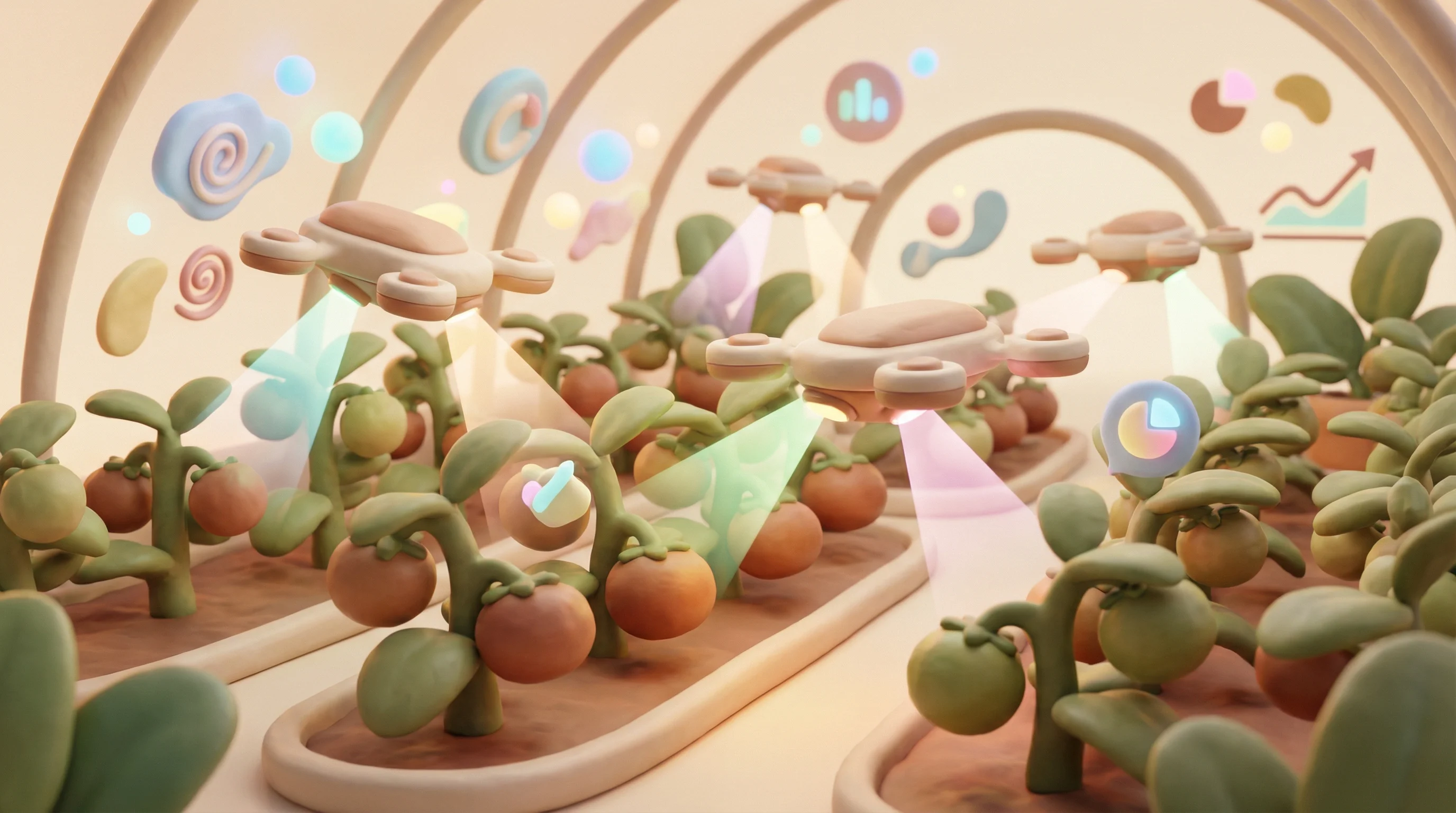
Here's where Polybee's pitch gets more interesting: the drones don't just pollinate. They phenotype crops in flight.
Equipped with 3D imaging sensors, the machines capture data on fruit development, harvest timing, and expected yields as they navigate greenhouse rows. Polybee's Phenobee dashboard claims to deliver over 95% accuracy on certain yield and quality metrics, though those figures emerged from a 2025 Hort Connections conference presentation rather than peer-reviewed publications.
This dual capability reshapes the economics. Growers aren't just paying for pollination services; they're buying operational intelligence that informs harvest scheduling, labor allocation, and sales forecasting. The company now charges a fixed fee per hectare covering hardware, software subscriptions, and field support—a departure from earlier outcomes-linked trial models where clients paid only if yields improved. That pricing shift suggests confidence. Whether it's warranted remains an open question.
The Market Constraints Are Real
Protected cropping faces genuine pollination bottlenecks, particularly in regions with strict biosecurity regimes. Australia bans bumblebee imports entirely, cutting off access to the pollinator most European and North American greenhouse operators rely on. Honeybees perform poorly in covered environments. Manual vibration works but demands consistent labor, which is increasingly scarce and expensive.
The UK strawberry sector faces similar pressures. Even where bumblebees are available, achieving uniform Class 1 grading remains inconsistent. Angus Soft Fruits, working with the UK Agri-Tech Centre, is testing whether autonomous drones can complement existing bee colonies—not replace them—to improve both pollination uniformity and fruit quality.
It's a market where incremental gains compound quickly. A 15% yield increase (if replicable across varieties and growing seasons) translates directly to revenue for operators working on razor-thin margins. Reduced disease transmission cuts crop losses. Lower manual labor exposure addresses workforce shortages and rising wages.
But the space is crowded. Arugga AI Farming's Polly rail robot already operates commercially in tomato greenhouses across Europe, the UK, and Australia, using vision systems and precision air pulses. Dropcopter targets orchard crops with drone-dispensed pollen. BeeHero optimizes natural honeybee performance via hive sensors and analytics. Polyfly is industrializing hoverfly rearing as a biological alternative. Each company tackles pollination from a different technical and commercial angle.
What $4.3 Million Buys
Jadhav says the fresh capital will fund a fivefold expansion in 2026. That likely translates to more hardware deployments, broader geographic reach, and deeper integration with major greenhouse operators—though specifics remain vague.
"The technology works; now we scale," he told AgFunderNews. The company already operates from New Zealand to the UK, according to Singapore government profiles. The fixed-fee model suggests Polybee believes performance is consistent enough to abandon risk-sharing pilots. Whether that confidence holds across diverse growing systems, crop varieties, microclimates, and seasonal variations will determine if autonomous pollination becomes an agricultural category or remains a niche solution for specific crops and controlled environments.
A Bet on Airborne Labor

For now, the drones keep flying. Bay by bay, flower by flower, building a case—one pollination run at a time—that agriculture's next labor force might indeed be airborne.
Whether that future arrives faster than growers can adapt their infrastructure, or faster than biological alternatives can catch up, or faster than labor costs can stabilize, remains uncertain. What's clear is that someone will solve the pollination bottleneck in protected cropping. Polybee is betting it can be first to scale.
The strawberries, oblivious to the technology hovering above them, are simply waiting to set fruit.


