

On a February morning in Yakeshi, Inner Mongolia—the sort of morning where exposed skin freezes in minutes and thermometers bottom out at -40°C—a team from CATL and Changan Automobile drove an electric vehicle equipped with a sodium-ion battery pack through conditions that would cripple most EVs.
The vehicle retained over 90% of its capacity.
For an industry that's spent years trying to convince drivers in cold climates that electric vehicles won't leave them stranded come January, this could be the breakthrough that finally changes the conversation. Or at least that's what CATL is betting on.
The numbers are striking. At -30°C, CATL's Naxtra sodium-ion battery delivers roughly three times the discharge power of a lithium iron phosphate pack of equivalent capacity. It operates stably down to -50°C—temperatures where many lithium chemistries would barely function at all. The 45 kWh pack still promises over 400 kilometers on China's CLTC test cycle, even when the thermometer drops precipitously.
Whether those figures hold up in the real world, outside controlled tests, remains an open question. But if they do, the implications for cold-weather markets are hard to overstate.
The Range Problem No One Has Solved
Electric vehicles have a winter problem. A big one.
Recurrent's analysis of roughly 30,000 vehicles shows the average EV retains only about 78% of its rated range at 32°F. At 20°F, that drops to around 70%. Models with heat pumps do better—adding perhaps 10 percentage points at freezing—but the underlying physics remain stubbornly unforgiving. A 2019 AAA study found losses approaching 41% at 20°F when cabin heating was factored in. Newer models have improved somewhat, but not enough to eliminate the anxiety.
Norway's NAF took testing further in January 2026, pushing EVs to -31°C in real-world conditions. The results varied dramatically model to model. Some Chinese brands showed smaller deviations from their WLTP ratings than expected, but across the board, lithium chemistries—LFP, NMC, all of them—struggled as temperatures fell. Electrolyte viscosity increases. Internal resistance spikes. Lithium ions simply move more slowly through the battery's structure.
This isn't merely an inconvenience for early adopters willing to tolerate quirks. It's a barrier to mass adoption in vast swaths of North America, Northern Europe, and northern China, where winter is a fact of life for months each year. You can't electrify transportation at scale if the technology falters precisely when people need it most.
Enter Sodium
CATL's February 5, 2026 unveiling positioned its collaboration with Changan as the world's first mass-production passenger vehicle program built around sodium-ion technology. The Naxtra battery uses CATL's third-generation Cell-to-Pack integration, packing cells rated at up to 175 Wh/kg—a figure that narrows, though doesn't close, the energy density gap with LFP's typical 180-200 Wh/kg.
But the cold-weather data is what jumps off the page.
At -30°C, discharge power is roughly triple that of comparable LFP packs. At -40°C, capacity retention exceeds 90%. The battery operates stably at -50°C. Charging and operation are rated down to -30°C without requiring extensive preconditioning—the sort of preconditioning that drains battery power before you've even left the driveway.
Changan plans to integrate sodium-ion across multiple sub-brands—Avatr, Deepal, Qiyuan, and UNI—with initial launches targeted for mid-2026. GAC Aion is also slated to deploy CATL sodium-ion packs starting in Q2 2026, according to statements from CATL's CTO Gao Huan. The company separately announced that a 45 kWh sodium-ion pack designed for light commercial vehicles will enter mass production in July 2026.
The timeline is aggressive. Perhaps more aggressive than the technology is ready for, some analysts suggest, but CATL has a track record of delivering on ambitious schedules.
Why Sodium Works When Lithium Doesn't
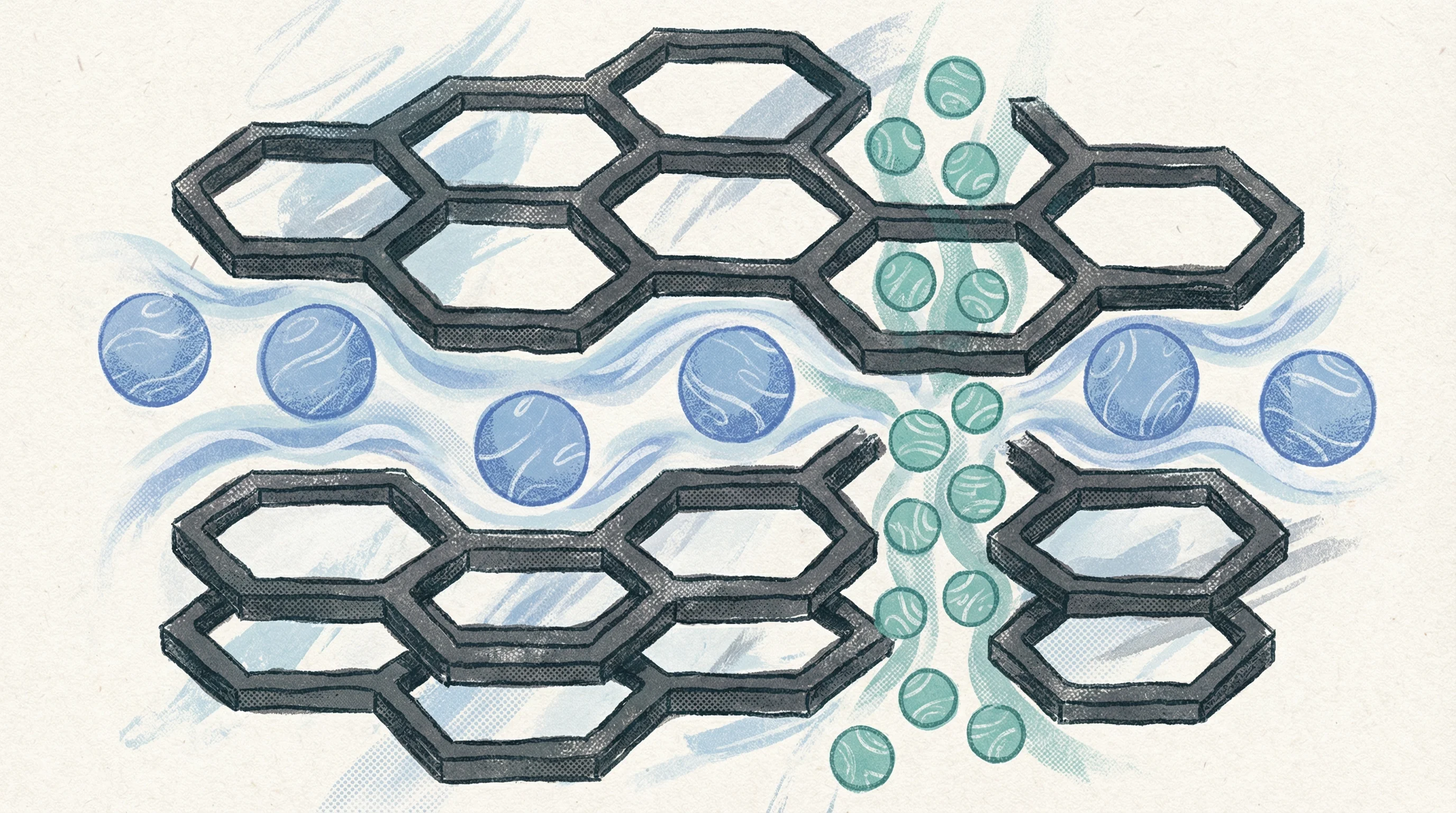
The technical explanation lies in sodium's fundamental chemistry. Sodium ions are larger than lithium ions, but they interact differently with electrolytes and electrode materials at low temperatures. Research published in Nature Communications and ACS journals points to advances in hard-carbon anodes and Prussian white cathodes that improve kinetics even as the thermometer plummets.
CATL also touts safety advantages—lower thermal rise during fast charging (the company claims 5C charge rates are viable), better abuse tolerance in crash scenarios. The Naxtra battery passed China's new GB 38031-2025 safety standard, which takes effect for new vehicle types on July 1, 2026, and includes stringent post-fast-charge external short circuit tests and bottom impact assessments.
The chemistry's versatility is becoming clear beyond passenger vehicles. HiTHIUM launched a 162Ah sodium-ion cell for utility-scale energy storage in 2025, claiming over 20,000 cycles and a wide operating temperature range. Bluetti released a portable sodium-ion power station marketed explicitly for extreme-cold charging. Yadea rolled out sodium-ion electric scooters priced between RMB 3,299 and 4,299 in January 2025, emphasizing rapid-charge capability.
From power stations to scooters to passenger sedans—sodium is finding niches faster than many expected.
The Market Picture: Optimism Meets Reality
CATL framed sodium-ion as part of a "dual-chemistry era" during its April 21, 2025 Super Tech Day, where it formally launched the Naxtra brand. The company expects large-scale deployment across battery swapping, passenger vehicles, commercial fleets, and energy storage by 2026. Its Choco-Swap network surpassed 1,020 stations by December 30, 2025, with plans to exceed 3,000 stations across more than 140 cities by the end of 2026. Sodium-ion packs are slated for integration into that network starting this year.
BYD—never one to let CATL dominate a narrative—signaled its own ambitions in early February 2026, unveiling a third-generation sodium-ion platform reportedly capable of 10,000 cycles. Commercialization timing, BYD noted somewhat cryptically, will be "customer-driven." EVE Energy is constructing a sodium-ion campus in Huizhou with roughly 2 GWh of planned capacity, targeting R&D, pilot lines, and manufacturing. Farasis, which delivered an early sodium-ion EV (the JMEV EV3 with ~251 km CLTC range from a ~21.4 kWh pack) in December 2023, is aiming for 180-200 Wh/kg by 2026.
Outside China, progress is slower. More deliberate, Western firms would say. Slower, their Chinese competitors would counter.
Northvolt and Altris achieved a 160 Wh/kg sodium-ion milestone in 2025, becoming the first outside China to reach that density—though their focus remains energy storage rather than automotive. Clarios and Altris extended their partnership toward serial production of low-voltage sodium-ion batteries before 2030. France's Tiamat is planning a 5 GWh factory with staged commissioning, starting at 0.7 GWh in 2025. Reliance, following its acquisition of Faradion, is targeting a sodium-ion line within its Jamnagar gigafactory as part of India's ACC-PLI push, with operations slated to begin in 2026.
The US picture is, well, complicated.
Natron Energy reached commercial-scale production of Prussian blue sodium-ion batteries in Holland, Michigan in April 2024, targeting industrial and data center applications. By September 2025, the company had ceased operations and canceled North Carolina gigafactory plans amid funding challenges. So much for the great American sodium-ion renaissance.
The Skeptics Have a Point

Not everyone is convinced sodium-ion will reshape the passenger EV market anytime soon.
Benchmark Mineral Intelligence, in an exclusive Financial Times analysis, questioned mass-market viability by 2035 absent major breakthroughs or significantly higher lithium prices. The firm sees sodium-ion's current market share at under 1% and projects a base case of roughly 3% by 2035. Their more aggressive early-adoption scenario reaches perhaps 15.5%—well short of CATL's suggestion that sodium could replace up to half of LFP demand.
The energy density gap remains stubbornly real. Sodium-ion sits at roughly 100-175 Wh/kg today versus 180-200 Wh/kg for LFP and 250-300 Wh/kg for NMC. Volumetric energy density tells a similar story: around 300 Wh/L for sodium-ion compared to 450 Wh/L for LFP and north of 600 Wh/L for high-nickel NMC. Those numbers matter when you're trying to fit enough battery into a vehicle to achieve competitive range.
Wood Mackenzie sees substitution limited primarily to energy storage systems and low-range city EVs, forecasting about 100 GWh of sodium-ion supply by 2030 against roughly 3,000 GWh of total EV battery supply. They peg ESS and two-wheelers as the nearer-term niches. Not 400-kilometer passenger sedans.
IDTechEx is more bullish, projecting sodium-ion demand growing from approximately 4 GWh in 2024 to just under 124 GWh by 2034—a compound annual growth rate around 40%. But even that optimistic forecast acknowledges China's dominant position in patents, manufacturing capacity, and supply chain development. Fact.MR and Precedence Research offer market value scenarios ranging from $1.39 billion in 2025 to somewhere between $6.83 billion and $12.5 billion by 2034-2035, though methodological differences make direct comparisons tricky.
Translation: Nobody really knows how big this market becomes, but most bets are on "smaller than CATL hopes and bigger than zero."
Regulatory Headwinds and Tailwinds
The regulatory landscape will shape adoption as much as the technology itself.
China's GB 38031-2025 safety standard, effective this summer for new vehicle types, sets a high bar—one CATL has already cleared with its Naxtra pack. The EU's Battery Regulation, which went into effect in February 2024, imposes carbon footprint declarations, due diligence requirements, and battery passport mandates on all chemistries, including sodium-ion. Due diligence obligations were postponed to August 2027 under an Omnibus amendment, but the framework is coming. Brussels doesn't do anything by halves.
In the US, IRA Clean Vehicle Credit rules ban Foreign Entity of Concern battery components starting in 2024 and extend to critical minerals in 2025. Tariffs on China-made EVs hit 100% in 2024. Lithium-ion battery tariffs rose to 25% the same year, with broader battery parts and critical minerals tariffs staged through 2026.
These measures complicate—perhaps effectively block—imports of China-sourced sodium-ion cells for vehicles seeking federal credits. Domestic and allied supply chains (Clarios-Altris low-voltage sodium-ion, for instance) may shape non-China sodium availability in the West before decade's end, but passenger EV applications face headwinds that have little to do with chemistry and everything to do with geopolitics.
The Cold Reality

For cold-climate markets, though, the value proposition is hard to ignore.
A vehicle that retains 90% of its capacity at -40°C addresses a real pain point—one that no amount of heat pump optimization has fully solved for lithium chemistries. Changan's initial deployments will likely center on entry-level EVs and battery-swap platforms in northern China, where winter performance matters and consumers are more price-sensitive. CATL projects 300-400 km ranges for sodium-ion in hybrid applications, with 500-600 km for pure BEVs as supply chains mature and energy density climbs toward the 180-200 Wh/kg targets Farasis and others are chasing by 2026-2027.
The question isn't whether sodium-ion will find a place in the EV ecosystem. It already has—between two-wheelers, swap networks, and now passenger vehicles.
The question is how large that place becomes.
If CATL and Changan can deliver on their mid-2026 launch timeline, and if real-world winter performance matches the Yakeshi test data, expect other OEMs in cold-weather markets to take notice. Battery swapping operators facing high utilization rates and extreme temperatures have obvious incentive to adopt. Fleet operators in Nordic countries, northern US states, and Canada may see value in a chemistry that doesn't bleed range when the mercury drops.
Third-party validation will be critical. The public data so far leans heavily on OEM-reported figures from controlled tests—the sort of figures that always look better than real-world results. Independent instrumented winter testing, like Norway's NAF program but focused on sodium-ion vehicles, will either reinforce or temper the hype as vehicles reach customers in the second half of 2026. Watch for how GAC Aion's Q2 sodium-ion launch performs in actual conditions, and whether other Chinese brands beyond Changan commit production volume to the chemistry.
Sodium-ion won't replace lithium overnight. Probably not ever, if the analysts are right about market share by 2035. But for the specific problem of winter range degradation—a problem that has dogged EV adoption in cold climates since the beginning—it offers a solution that lithium chemistries, despite years of incremental improvement, have struggled to match.
That alone might be enough to carve out a meaningful market. Even if the total share remains modest, solving winter range anxiety for a subset of buyers in cold climates represents a real advance. Not every innovation needs to replace what came before. Sometimes filling a gap is enough.
The Yakeshi test was impressive. Now comes the hard part: proving it wasn't just a well-executed demonstration in controlled conditions, but a genuine technological leap that holds up when thousands of drivers put it to the test in the harshest months of 2026 and beyond.


