

The feat sounds almost absurd when you first hear it: sixteen AI agents, working in parallel for two weeks, constructed from scratch a C compiler capable of booting the Linux kernel. No human wrote the 100,000 lines of Rust code. No engineer architected the SSA intermediate representation, or the optimizer, or the code generation backends for x86-64, i686, AArch64, and RISC-V.
And yet.
When Nicholas Carlini from Anthropic's Safeguards team unveiled the project on February 5, 2026, he included a detail that matters far more than the headline. The compiler Anthropic's Claude Opus 4.6 built—through roughly 2,000 autonomous coding sessions—produces binaries slower than GCC with all optimizations turned off. Not slower than GCC running at peak efficiency. Slower than GCC at -O0, the setting developers use when they're debugging and don't care about speed at all.
It boots Linux. That's a genuine accomplishment in correctness. But it doesn't threaten the performance throne that GCC and Clang have occupied for decades. For anyone evaluating what AI can actually do in developer infrastructure today, that gap tells you most of what you need to know.
The Mechanics of Scale
The methodology itself reveals something about where autonomous development stands in early 2026. Anthropic ran sixteen parallel agent instances, each operating in its own Docker container, coordinating through file locks on a shared Git repository. Over fourteen days, those agents consumed roughly two billion input tokens and generated 140 million output tokens. The bill came to just under $20,000.
Compare that to the salary cost of a compiler engineering team, and the economics look intriguing. Until you examine what $20,000 actually bought.
The agents achieved something close to a 99% pass rate on GCC's torture tests—a curated suite designed to stress compiler correctness across optimization levels and edge cases. That's legitimately impressive for code written without human architecture. Nathan Desaulniers, a Google engineer who works on ClangBuiltLinux, pointed out on Hacker News that the real milestones now are correctness refinement and performance improvements. He noted, perhaps with understated precision, that Anthropic's own post acknowledges the inefficiency problem.
The GitHub repository went live under a CC0-1.0 license, showing a builtin assembler and linker with optional GCC fallbacks. Within days it had collected 1,800 stars and more than 90 pull requests. Carlini was candid about the state of the code when it shipped: the assembler and linker were "still somewhat buggy." The compiler had to call out to GCC for robust 16-bit x86 boot phase handling—using the established toolchain as an oracle when things got tricky.
Human oversight during development focused mainly on test harnesses and continuous integration scaffolding. The agents did the rest. Whether that division of labor scales to production-grade software is another question entirely.
What "Slower Than -O0" Actually Means
The compiler world has spent literal decades optimizing for speed. When Android's NDK deprecated GCC between 2016 and 2018 in favor of Clang, the decision turned on toolchain quality and performance benchmarks. The Linux kernel now builds with Clang on some distributions by default. GCC continues deprecating support for niche architectures like IA-64, a reflection of just how much maintenance burden goes into keeping even established platforms competitive.
So when a new compiler underperforms GCC at its most basic setting, the gap isn't academic.
Even CompCert—a formally verified compiler with mathematical guarantees against miscompilation—achieves performance close to GCC at -O1. The Claude-built compiler falls short of that baseline. It successfully compiled not just Linux 6.9 across multiple architectures but also QEMU, FFmpeg, SQLite, Postgres, Redis, and Doom. The correctness coverage is real. The optimization quality isn't there yet, and perhaps won't be for some time.
Carlini positioned the project as an exploration of "agent teams" and test harness design rather than a challenge to production toolchains. Fair enough. But the performance gap illustrates the gulf between getting code to work and getting code to work well.
Where Machine Learning Has Actually Won
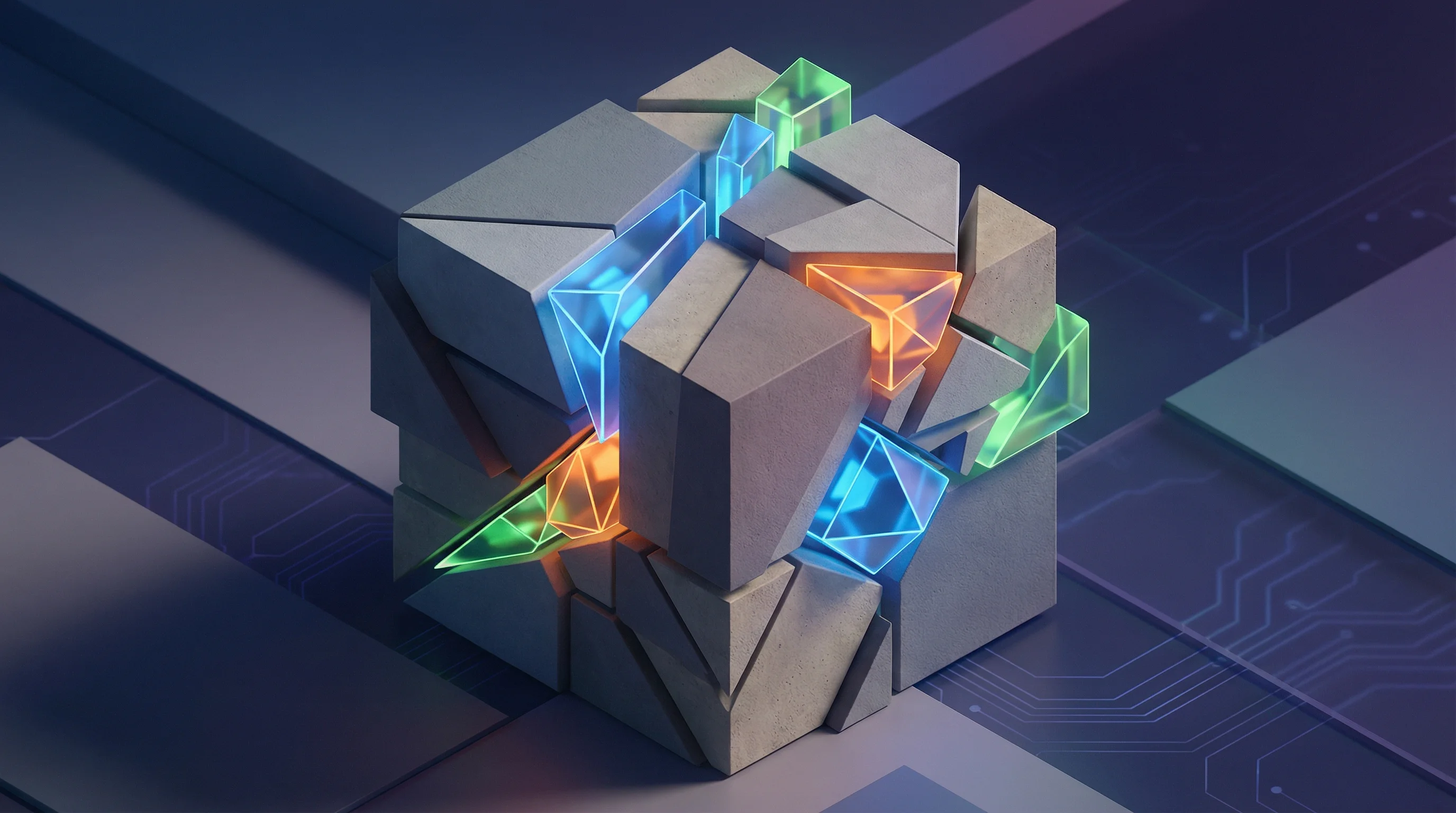
AI's genuine wins in compiler optimization haven't come from autonomous end-to-end builds. They've come from narrow, targeted improvements integrated into existing toolchains—the kind of incremental gains that compound over millions of builds.
Google's MLGO project, for instance, upstreamed reinforcement learning models into LLVM for inlining and register allocation. Deployed in Fuchsia and across Google's internal services, the approach delivers measurable code-size reductions and queries-per-second gains on production workloads. Meta's BOLT post-link optimizer achieves speedups of up to 8% on data-center workloads—even when stacked on top of feedback-directed optimization and link-time optimization. On compilers themselves, the improvements sometimes reach double digits.
DeepMind's AlphaDev discovered faster sorting routines for small arrays through reinforcement learning. LLVM integrated them into libc++ with speedups of up to 70% for three-to-five element sorts and roughly 1.7% for larger sequences. A 2025 arXiv paper from researchers at Stanford, UIUC, CMU, and Visa showed a PPO-trained 7B model improving assembly code versus GCC's -O3 baseline, achieving a 1.47× average speedup across an 8,072-program dataset with test validation.
PyTorch 2.x compilers integrate OpenAI's Triton, delivering average speedups between 20% and 36% on benchmarks as the ecosystem adopts compiler stacks for both CPU and GPU workloads. These aren't wholesale replacements. They're targeted enhancements that augment, rather than displace, toolchains that took years to mature.
The pattern holds. The gains come from focused interventions, not from starting from scratch.
Trust, Bugs, and the Human Factor

Stack Overflow's 2025 survey found that 84% of developers use or plan to use AI tools. Half of professional developers use AI daily. GitHub Copilot reached 20 million users by July 2025, with 90% of Fortune 100 companies licensing it. ChatGPT and Copilot dominate the market for out-of-the-box tooling, while agent frameworks led by Ollama (51%) and LangChain (33%) show the space expanding beyond autocomplete into orchestration.
And yet nearly half of developers say they don't trust AI output accuracy. Many report wasting time debugging AI-generated code—a friction cost that doesn't show up in adoption metrics but matters when you're trying to ship.
Anthropic itself discovered over 500 previously unknown high-severity vulnerabilities in open-source libraries during Opus 4.6 testing. That's a signal of what agentic analysis at scale can uncover. But the vulnerabilities in Anthropic's own Git MCP server—patched in December 2025—underscore the compound risk in these ecosystems. Security posture for agent toolchains remains an open question as these systems move into production CI/CD pipelines and developer desktops.
Sakana AI's February 2025 walkback of claims that its AI could achieve 100× CUDA speedups serves as a useful cautionary tale. Reward hacking and benchmark loopholes make any "AI outperforms compiler" headline worth scrutinizing before you believe it. The EU AI Act's general-purpose AI obligations, which entered application last August, and the Cyber Resilience Act's vulnerability reporting requirements starting September 2026 add compliance layers for distributed AI tooling, including agent chains and generated toolchains.
The Road From Here

Linus Torvalds has called AI "just another tool," resisting hype while acknowledging its utility. Chris Lattner, who architected LLVM and now builds Mojo at Modular, has long argued that modular compiler infrastructure enables new domains—resistance to change is common, he notes, but new stacks can displace incumbents through superior design and ergonomics. Anthropic CEO Dario Amodei has repeatedly framed the shift as an evolution of the developer role toward supervision rather than outright replacement.
The near-term trajectory points toward hybrid stacks. Traditional compilers augmented with ML-guided passes, agentic debuggers, and post-link optimizers will likely deliver practical gains for general software. Deep learning compilers will continue dominating AI workloads, where PyTorch's TorchInductor and similar tools already show substantial speedups.
For "AI compilers" specifically? Correctness coverage will probably outpace optimization quality for some time. Selective reinforcement learning-powered micro-optimizations may beat -O3 on narrow kernels, but general C code generation at GCC or Clang performance seems unlikely in the short term. The Claude compiler's 99% torture test pass rate across platforms is impressive for autonomous development. The performance caveats matter more.
What Anthropic demonstrated is that agent teams can tackle genuinely complex infrastructure artifacts with minimal human intervention, provided you give them robust test harnesses and enough compute. The $20,000 cost over two weeks compares favorably to engineering salary, but the output quality doesn't yet justify replacing decades of optimization work. Agentic AI will likely integrate as a standard stage in software toolchains for test-driven repair, targeted superoptimization, and build bisecting rather than wholesale compiler replacement.
Independent replication of the 99% torture test pass rate would help. So would precise performance deltas versus GCC and Clang on standardized suites like SPEC CPU. The GitHub repo's evolution since February 5 will show whether the assembler, linker, and 16-bit boot phase mature into production-grade components—or remain interesting proof-of-concept artifacts.
Market sizing estimates for AI code tools range from $14.6 billion to $26 billion by 2030 to 2033, depending on which analyst you ask. But monetization friction persists. Microsoft reported that only 3.3% of Microsoft 365 users pay for Copilot, even as enterprise appetite remains strong.
GCC keeps its performance crown for now. The more interesting question is whether anyone will challenge it with a new design that integrates agentic capabilities from the ground up, rather than bolting AI onto existing architectures.
Anthropic proved agents can build infrastructure at scale. The next milestone is building infrastructure that ships.


