

There's a certain anxiety that comes with handing your API keys to an AI agent. You're essentially giving a black box permission to act on your behalf—and hoping it doesn't get tricked into handing those credentials to someone else.
That worry has acquired a name in security circles: the "blast radius problem." An agent with broad access can do broad damage. One cleverly crafted prompt injection, and suddenly your keys to OpenAI, GitHub, or AWS are sitting in an attacker's hands. The agent meant to help you might have just opened the vault.
Matchlock, an open-source project that went live on GitHub last week, attempts to thread a particularly tricky needle. How do you give AI agents the access they need to be useful while preventing them from becoming a security catastrophe? The answer, according to its creator, involves throwaway virtual machines, aggressive network lockdowns, and a rather elegant trick: never letting the agent see your secrets in the first place.
Released on February 8 under an MIT license, the project quickly found an audience among developers wrestling with exactly this problem. Within 24 hours, the Show HN post had accumulated 141 points and 60 comments—respectable traction for what amounts to infrastructure plumbing. The Python SDK went through three patches in the first two days. Clearly, someone had struck a nerve.
Isolation as Insurance Policy
At first glance, Matchlock looks like yet another sandboxing tool. Spin up a micro-VM, run your workload, throw it away. The mechanics aren't novel—boot times under a second, support for Docker images, ephemeral storage. Linux users get KVM. Those on Apple Silicon get the Virtualization framework. Standard fare for 2026.
What's different is the obsessive focus on secrets. When you enable Matchlock's allowlisting or secret injection features, the VM switches to default-deny networking. Only domains you explicitly approve can receive traffic. Everything else gets blocked at the network layer.
Here's where it gets interesting. The guest VM never touches your real API keys. Instead, it sees placeholder environment variables—SANDBOX_SECRET_... and similar—that amount to empty promises. The host system runs a transparent proxy that intercepts outbound HTTPS requests. When the VM tries to connect to an approved domain like api.openai.com, the proxy performs TLS man-in-the-middle interception, injects the actual credential, and forwards the traffic. To the VM, nothing looks unusual. To the API endpoint, the request arrives with valid authentication. The secret itself exists only in flight, never at rest inside the sandbox.
The creator framed it plainly in the Hacker News thread: This tool exists to "run claude --dangerously-skip-permissions safely." That's a reference to Anthropic's Claude computer use features, which grant agents broad system access. Perhaps more pointedly, it's an acknowledgment that developers are already running dangerously powerful agents. They just want a thicker firewall when they do.
The Architecture, Such As It Is
Matchlock splits responsibilities between host and guest with the kind of clean division that suggests someone spent time thinking through failure modes. The host runs the CLI, policy engine, transparent proxy, and a VFS server. The guest gets a FUSE-mounted /workspace directory and a process runtime. Communication happens over vsock. Nothing revolutionary, but competently executed.
You can define policies through the command line or programmatically. The Python SDK—which hit version 0.1.8 on February 9, a pace that suggests active development or possibly some early instability—adds methods like .allow_host(), .block_private_ips(), and .add_secret(). The Go SDK mirrors this. Both use JSON-RPC underneath.
A typical CLI invocation looks something like:
matchlock run --image alpine:latest --allow-host api.openai.com --secret [email protected] -it shThat spins up an Alpine VM, locks down egress to only api.openai.com, and handles credential injection transparently. The VM itself remains blissfully ignorant of the real key's existence.
For longer-lived workloads, you can skip the --rm flag and get a persistent VM identifier. Commands like list, kill, rm, and prune handle lifecycle management. You can even build Docker images inside the sandbox using matchlock build -f Dockerfile, which isolates BuildKit entirely.
The developer experience seems deliberately unremarkable. Homebrew and Linuxbrew handle installation. The tool accepts any OCI image, plays nicely with existing container registries, and shares files naturally through /workspace. It's meant to feel like Docker with stricter rules, not a heavyweight virtualization layer that demands workflow changes.
On macOS, the system defaults to NAT networking until you enable tighter controls, at which point it switches to gVisor userspace TCP/IP interception. On Linux, Firecracker manages the micro-VM layer. The claimed sub-second boot time puts it in the same performance tier as E2B and Google's Agent Sandbox, both of which use warm pools and snapshot-based starts to shave latency.
A Growing Field, A Growing Problem
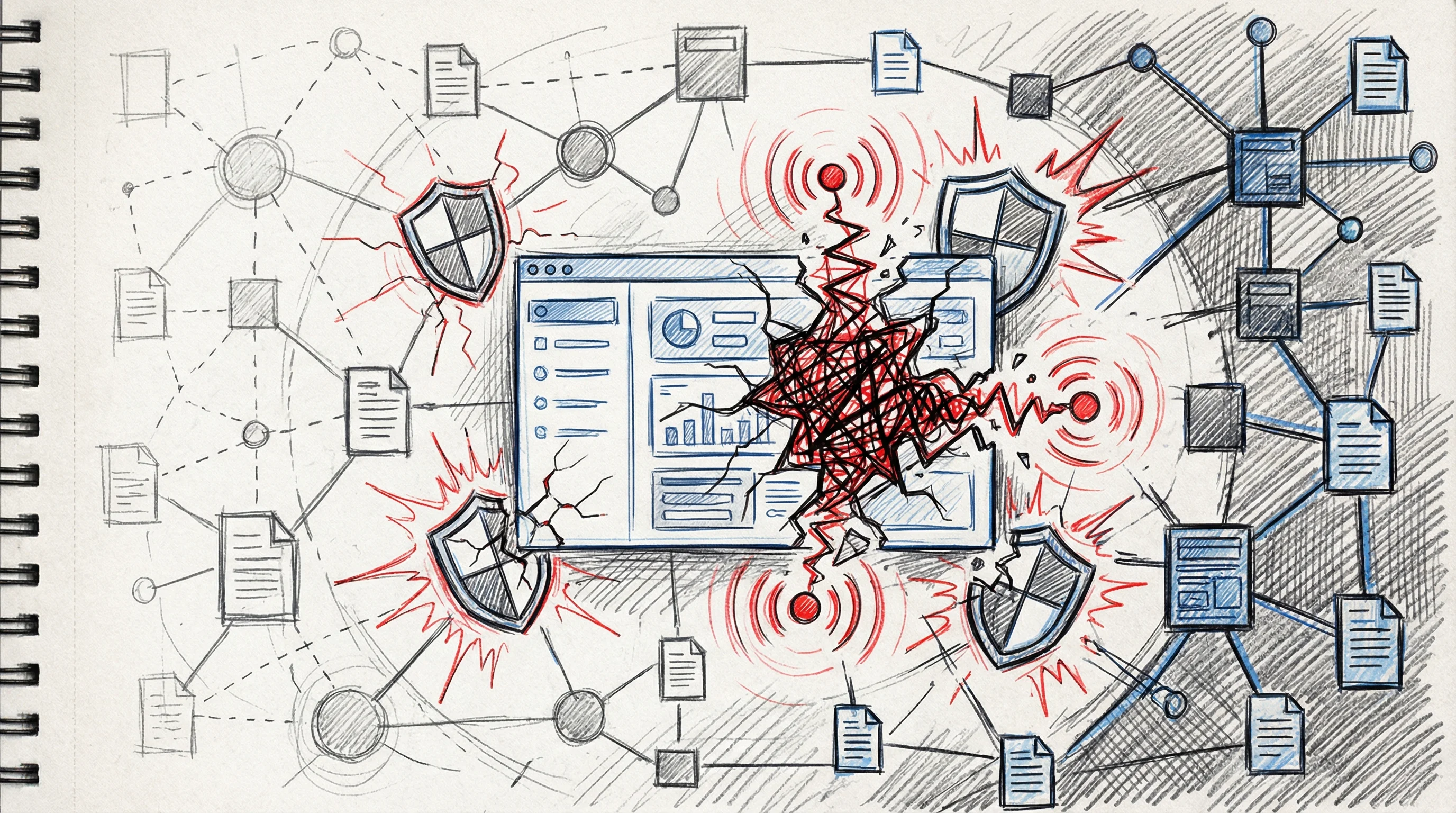
Matchlock arrives amid what feels like an industry-wide reckoning. AI agents are moving from demos to production, and the security community is sounding alarms.
In January, researchers at PromptArmor demonstrated how Anthropic's Claude Cowork feature could be manipulated through indirect prompt injection to exfiltrate files via the company's own Files API. No additional user approval required. The attack made waves in The Register and The Decoder—not because it was particularly sophisticated, but because it highlighted how easily agentic systems can be tricked into doing things they shouldn't.
Around the same time, both Google and the Kubernetes community began formalizing sandboxing standards. The Kubernetes SIG released an open-source Agent Sandbox project in December 2025, using gVisor or Kata for isolation and introducing custom resource definitions for sandbox management. Google followed with a managed version on GKE in January, touting pod snapshots for faster cold starts. OWASP guidance now explicitly recommends system-level isolation as a primary defense against what it calls "agent tool-interaction manipulation."
The market has responded. E2B offers enterprise-grade Firecracker sandboxes with sub-200ms starts and sessions up to 24 hours. Gondolin uses QEMU micro-VMs with programmable networking, written in TypeScript. Arrakis provides microVM isolation with REST APIs and backtracking features. Even lightweight tools like bubblewrap-based sandboxes have emerged, trading hardened isolation for faster setup.
What differentiates Matchlock—at least in theory—is the focus on secret protection and egress control. It's less about generic workload isolation and more about preventing the specific nightmare scenario: an agent handing your credentials to an attacker.
What It Doesn't Fix (And What Remains Unclear)
The creator was refreshingly candid in the Hacker News thread about limitations. "Sandboxing doesn't prevent prompt injection," one commenter noted. True enough. Nor does it stop an agent from abusing permissions it legitimately has. If you've given an agent the ability to send emails, and it gets prompt-injected into sending phishing messages, Matchlock won't help you. The tool locks down egress and isolates secrets, but it can't prevent misuse of authorized capabilities.
Some community feedback raised eyebrows about the TLS interception model. How exactly does the guest learn to trust the host's certificate authority? What happens when an API uses certificate pinning? The README and GitHub documentation don't fully address these questions yet. There were also murmurs about path-handling safety in the VFS layer, which relies on go-fuse. One commenter asked about path sanitization and directory traversal risks. No confirmed vulnerability emerged, but the questions linger.
These feel like the rough edges you'd expect from a tool that launched on February 8 and pushed three SDK patches by February 9. The creator seems responsive—dozens of comments in the HN thread demonstrate active engagement—but this remains early-stage software. The trust model needs clearer documentation. The security assumptions need spelling out.
And there's a broader question that sandboxing can't answer: At what point does isolating an agent become so restrictive that it loses its utility? If you've locked down networking, limited filesystem access, and hidden all credentials, what's left for the agent to do? The entire promise of these systems is autonomous action. Too much isolation might defeat the purpose.
The Blast Radius Era
For now, Matchlock sits on GitHub accumulating stars, with Go and Python SDKs already in place and documentation that includes architecture diagrams and usage examples. Whether it gains traction depends on factors the creator can't entirely control—how well the trust model holds up under scrutiny, whether the community values micro-VM isolation over lighter alternatives, and whether the rapid patch cycle stabilizes or continues.
But the broader trend seems undeniable. As AI agents gain autonomy, the security perimeter has to evolve. Traditional access controls weren't designed for non-human actors that can be tricked into acting against their owners' interests. The industry is waking up to what some are calling the "blast radius problem"—the recognition that a compromised agent with broad permissions can cause outsized damage.
Matchlock is one attempt at an answer. Not the only one, certainly not the final one. But perhaps a useful one for teams already running autonomous AI systems and losing sleep over what might go wrong. It's not a silver bullet. No sandbox is. It's more like insurance against a specific class of nightmare scenario—the moment an agent decides, or is tricked into deciding, to give away the keys to the kingdom.
That seems worth the overhead of a micro-VM, if you're the one holding those keys.


