

The potato peeling line at a processing plant in Belgium was doing what such lines always do: stripping tubers at a fixed pressure, sending them down the belt, discarding the ones that didn't make the cut. Except now, cameras were watching. And the cameras had opinions.
Within weeks of installing Polysense's AI-driven inspection system, the plant saw something unexpected—peeling times dropped by 45%. The software had been monitoring peel quality in real time, nudging machine parameters up or down to optimize on the fly. Less waste. Faster throughput. The sort of efficiency gain that, in food manufacturing, can quietly transform a margin.
On July 8, 2026, the Ghent-based startup announced it had raised $10.7 million in an oversubscribed seed round led by Felix Capital, with backing from Fortino Ventures, Syndicate One, 100IN, and a roster of angel investors. It's the second infusion in less than a year—Polysense pulled in €2 million in October 2025—and the company has more than doubled its headcount to nearly 40 employees as of July 2026.
For founders selling into industrial food production, the pitch is straightforward: cameras can spot defects faster than humans, and if you connect those cameras to the machines themselves, you can fix problems before they become waste.
Closing the Loop
Polysense's platform splits into two pieces. The first, called Qualify, uses computer vision to inspect every item moving through a production line—vegetables, baked goods, confections, whatever's being made. It flags defects, tracks spec drift, logs patterns. The second module, AutoControl, takes that data and adjusts the machinery in response: peeling pressure, cutting depth, oven temperature, the variables that dictate whether a product passes or fails.
The company describes it as "closed-loop" process control, a term borrowed from engineering that means feedback actually changes the input. In practice, it's a departure from traditional optical sorters, which identify bad products and remove them but don't tell the line what went wrong. Polysense wants to intervene earlier, cutting waste at its source rather than catching it downstream.
That approach has found traction across Europe. Named customers include Agristo, D'Arta, Poppies Bakeries, and Fourneo Flatbreads, with deployments spanning vegetable processing, potato operations, bakery lines, and packaging facilities. In November 2025, the company announced a partnership with JADCO to bring the technology to Saudi Arabia—a signal, perhaps, that industrial food production everywhere faces similar inefficiencies.
Results vary depending on the application. Beyond the potato peeling example, Polysense cites a bakery customer that improved yield by letting the AI make small, continuous adjustments to oven temperatures—tweaks a human operator might miss or hesitate to make mid-shift.
The Waste Problem, Quantified
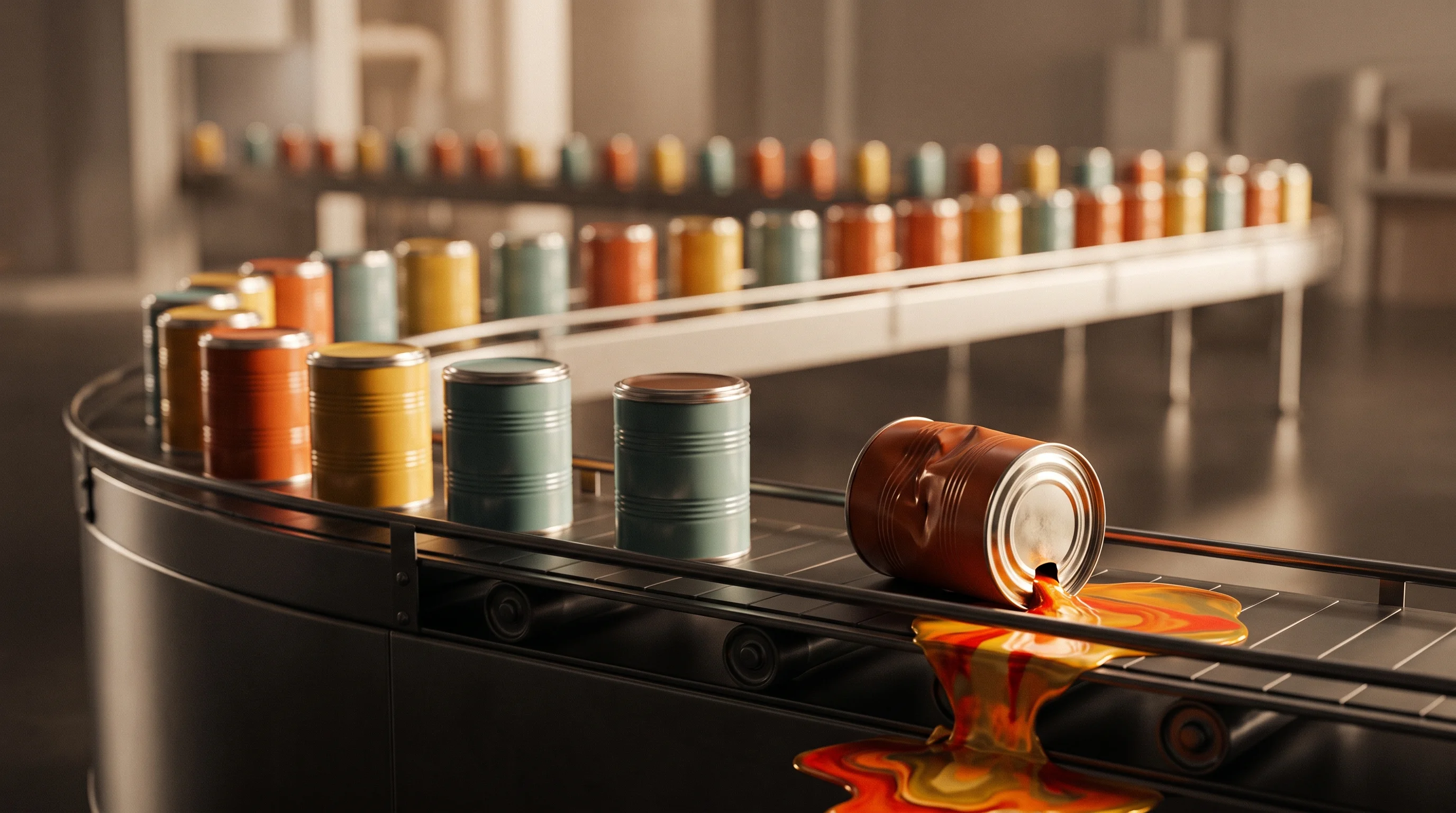
Food manufacturers have long wrestled with a stubborn problem: quality checks often happen too late. By the time an inspector spots an issue, dozens—or hundreds—of units may have already moved through the line. CTO and co-founder Lucas Van Dijck pointed to this timing gap in the funding announcement, framing real-time inspection paired with automated correction as a way to address what he called a "persistent inefficiency" in the industry.
The broader stakes are considerable. Food waste at the production level represents not just lost product but squandered energy, water, and labor. For a sector operating on thin margins, even modest reductions in scrap rates can have outsize financial impact.
Polysense's latest capital will fund expansion on multiple fronts: additional product development across more production stages, hiring in engineering, sales, and customer success, and faster deployment cycles. Over the past year, the company has graduated from pilot projects to full-scale production installations and entered the U.S. and Middle East markets, a geographic reach that would have seemed ambitious for a startup still in its infancy not long ago.
Whether the technology can scale across the dizzying variety of food manufacturing environments—each with its own processes, equipment, and tolerances—remains the open question. But for now, at least, Polysense has convinced investors that factories might benefit from cameras that don't just watch, but learn.


