

In a lab somewhere in San Francisco, roughly 200,000 human brain cells are doing something unsettling. They're playing Doom.
These aren't simulated neurons running in software. They're actual cultured human neurons, alive in a dish, wired to electrodes, learning through trial and error. The setup—developed by a one-person startup called Parasma and built on hardware from Cortical Labs—sounds like the premise of a speculative sci-fi novel. But it's real, and it represents something bigger than a neuroscience parlor trick. It's a wager that the future of artificial intelligence might bypass silicon entirely.
The timing matters. Data centers have become power-hungry beasts. Recent industry figures suggest they account for roughly 6% of US electricity consumption. Globally, data center electricity consumption is forecasted to rise 26% in 2026 to 565 terawatt-hours. AI-optimized servers are claiming an ever-larger share of that load. Microsoft's electricity consumption increased 24% from 2024 to 2025. The Uptime Institute notes that nearly 60% of planned data center capacity is now driven by AI workloads.
Power availability has become a critical concern for the industry. A significant majority of electricity executives believe data center demand will outpace what utilities can supply. The industry isn't hitting a wall of compute capability—it's hitting a wall of watts.
An Efficiency Gap, Six Orders of Magnitude Wide
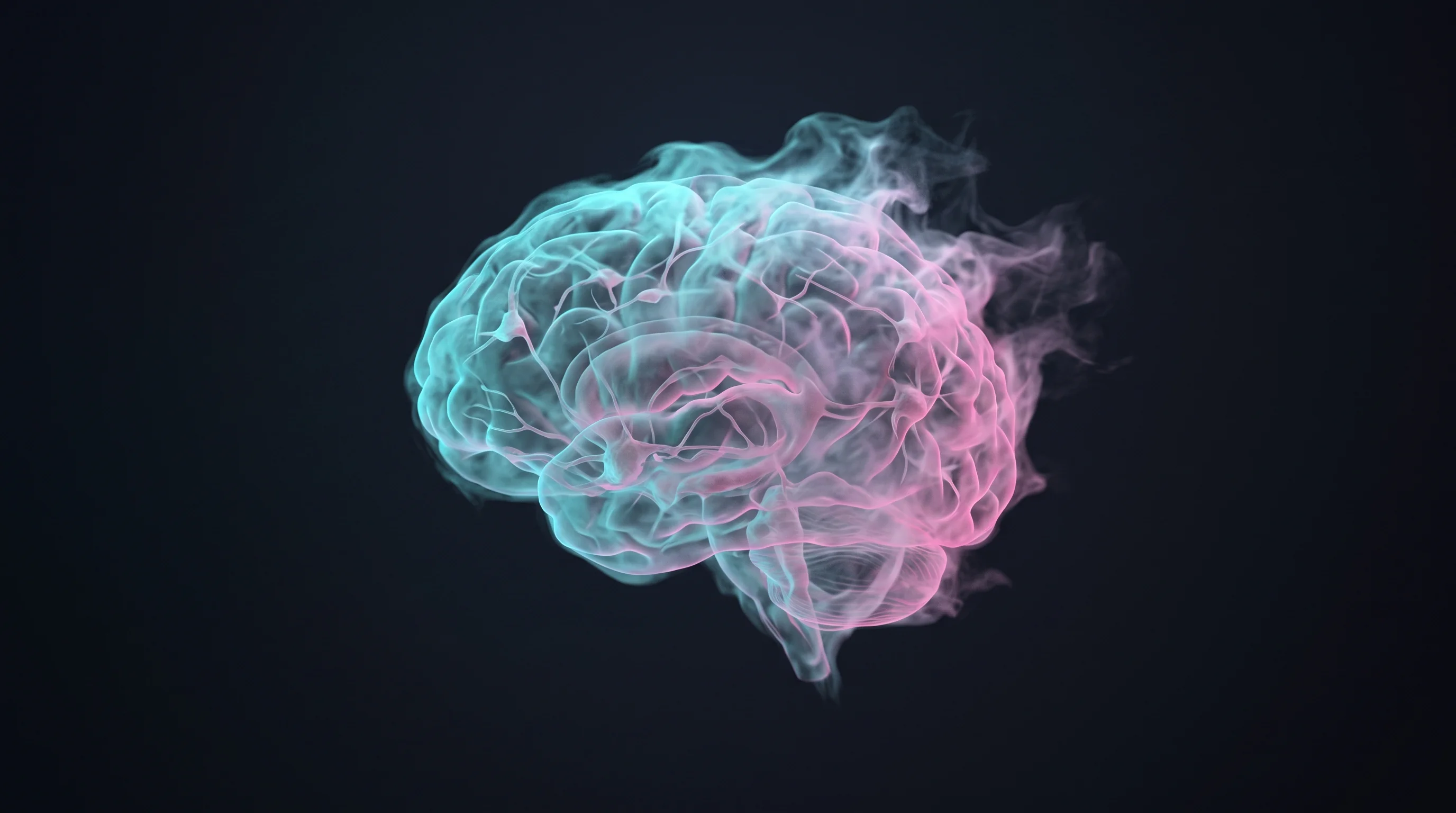
The human brain runs on about 20 watts. A high-end GPU cluster training a frontier model? Megawatts. That's an efficiency gap of roughly a million to one, and until recently it's been more theoretical curiosity than actionable insight.
But the numbers are starting to matter. Water consumption for cooling is becoming a flashpoint—some projections suggest data centers could consume 1.2 trillion liters by 2030 as cooling demands intensify. Several US states have begun imposing taxes or pauses on new data center projects. What was once a concern for climate researchers is now keeping CFOs and grid operators up at night.
Neuromorphic chips—silicon designed to mimic brain architecture—have been one response. They still require traditional fabrication and substantial energy, though. The more audacious idea? Skip the mimicry. Use actual neurons.
One Founder, 200,000 Neurons, and a Closed-Loop System
Parasma emerged from Y Combinator's Summer 2026 batch with a pitch that probably raised eyebrows even in that crowd: "Training human brain cells for AI compute." The company is essentially Sean Cole, who holds a master's in AI from the University of Sussex. Cole published an ethics note detailing his closed-loop training system, which maps game state to electrical stimulation patterns delivered to cultured neurons on microelectrode arrays. The neurons spike in response. A decoder translates those spikes into actions. A silicon "critic" computes a temporal-difference error—reinforcement learning jargon—and modulates subsequent stimulation, either rewarding or inhibiting the cells with biphasic pulses in the microampere range.
The neurons, in other words, are being trained. They don't "know" they're playing Doom any more than a deep Q-network does, but they adapt. Cole's system showed improvement over random baseline controls, though he's careful to note that disentangling the biological layer's contribution from the software scaffolding remains difficult. That's putting it mildly.
Cortical Labs, the Melbourne-based company that built the CL1 hardware Cole uses, made waves in early 2026 when it demonstrated neurons playing Doom and announced a developer kit with API access—priced at $35,000. The company offers remote access via Cortical Cloud and a Python SDK enabling sub-millisecond closed-loop interactions. One of their scientists described in an online Q&A how the system learned to navigate simple game tasks "in days," which sounds fast until you consider the apples-to-oranges nature of comparing wetware to traditional neural networks.
Meanwhile, peer-reviewed science has been catching up. A team led by researchers at UC Santa Cruz published results showing that mouse cortical organoids—basically brain tissue floating in a dish—could learn a goal-directed control task: balancing a virtual pole. The organoids' success rate jumped from 4.5% with random feedback to 46% with adaptive coaching. When the researchers blocked glutamatergic signaling, the primary excitatory neurotransmitter, learning vanished. The biological substrate was doing real computational work.
The Messy Reality of Training Living Tissue
The technical challenges are, to put it gently, formidable.
Living neurons are noisy. They're non-stationary. They "forget" after rest periods. The UCSC team noted performance decay when training paused—not surprising, given that organoids lack the structure of a full brain. No hippocampus for memory consolidation, no prefrontal cortex for executive control. Just cortical tissue connected to a grid of electrodes.
Yet they learn, at least in constrained environments. The CartPole results and the Doom demos share a common architecture: rate-coding schemes that encode sensory input into stimulation patterns, spiking activity recorded across dozens to thousands of channels, a decoding layer that maps spikes to discrete actions. A reinforcement learning algorithm in silicon computes reward signals and modulates subsequent stimulation. It's a hybrid system—part biological, part algorithmic. Parsing credit assignment between the two? Still an open question.
One detailed analysis re-examined the Doom neuron experiments across hundreds of trials and found the decoder—the software layer interpreting neural spikes—dominated performance in some runs. That raises uncomfortable questions about how much learning occurred in the biological layer versus the software. It's a valid critique. Early-stage reinforcement learning is volatile. Ablation controls, where researchers systematically remove components to test their contribution, are essential. The field is still working out best practices.
DARPA is betting the challenges are solvable. The agency launched O-CIRCUIT, a 42-month program aimed at developing self-contained "biological processing units" capable of AI training and inference. The vision: compositions of neural, glial, and immune cells structured to handle complex tasks at the edge—autonomous drones, remote sensors, places where power is scarce. It's speculative, but DARPA's interest signals federal appetite for biological compute beyond basic research.
The Money Starts Moving
Parasma isn't alone in this, not by a long shot.
The Biological Computing Co., founded by two physician-scientists—Alex Ksendzovsky and Jon Pomeraniec—closed a $25 million seed round led by Primary. TBC claims its neuron-integrated systems improve performance and stability in computer vision and generative video workloads, though details remain sparse. The company is opening a lab in San Francisco's Mission Bay and positioning itself as applied science rather than pure research.
FinalSpark, a Swiss startup, offers a remote "Neuroplatform" for researchers to run experiments on brain organoids via subscription. The company published a platform paper detailing hardware and software for large-scale electrophysiology and announced work on digital twins of brain organoids—computational models calibrated to match the behavior of living cultures, potentially enabling faster iteration in silico before testing on wetware.
Cortical Labs has raised multiple rounds, according to third-party databases, though exact amounts are hard to pin down. The company's infrastructure has attracted both academic users and commercial pilots. Press reports mentioned deployments in Melbourne and Singapore, though details are limited. (The company did not respond to requests for comment.)
Koniku, a US-based company, takes a different angle—using living cells for olfactory sensing in security applications rather than general-purpose compute. Adjacent market, distinct approach.
On the academic side, UC Santa Cruz announced it had been awarded leadership roles in NIH BRAIN Initiative organoid and AI platform efforts. The team envisions prototypes within two years that combine AI with living tissue for circuit decoding. The NIH also launched a Standardized Organoid Modeling Center, with commitments to open science and affordable access—a recognition that scaling biological compute will require shared infrastructure and reproducible protocols.
The Harder Questions Nobody Wants to Answer
The optimism has limits, and the limits are thorny.
Ethics looms large. Parasma's published note on consciousness and suffering acknowledges the stakes: at what neuron count, at what level of organization, does a cultured system cross a threshold where suffering becomes plausible? Cole argues that 200,000 neurons, lacking the reciprocal connectivity and sustained dynamics posited by consciousness theories like Integrated Information Theory or Global Workspace Theory, fall well below any reasonable threshold.
Fair enough. But the industry doesn't have a consensus metric, and the question will sharpen as systems scale. The Nuffield Council on Bioethics released a report calling for structured oversight. The NIH BRAIN Initiative's Neuroethics Working Group has been updating roadmaps. If biological compute moves toward human-derived organoids at industrial scale, donor consent protocols and regulatory frameworks will need to catch up. Fast.
Then there's reproducibility. Cross-lab variability in organoid cultures remains high. Cell lines, growth factors, media composition—all introduce noise. The NIH center aims to standardize protocols, but biological systems are messier than silicon fabs. A chip fabricated in Taiwan behaves identically to one made in Arizona. Organoids grown in different labs, even from the same protocol, may not. Probably won't.
Stability is another hurdle. The UCSC team noted that their organoids "forgot" tasks after rest intervals. Memory consolidation in the brain involves complex interactions between cortex and hippocampus, sleep-like oscillations, protein synthesis. A dish of cortical cells lacks that machinery. Scaling to more sophisticated architectures might help, but it adds complexity—and complexity in biological systems has a way of compounding.
And then there's the question of what tasks these systems can actually handle. Playing Doom or balancing a pole are impressive proofs of concept, but they're also carefully bounded. Training an organoid to classify images, generate text, or perform reasoning tasks of the kind frontier models handle today? Speculative. The information density, the training time, the interface bandwidth—all open questions.
What Comes Next (Probably)

The near-term trajectory looks like platformization. Cortical Labs and FinalSpark already offer API access and dev tools. Expect more cloud-based services, more simulators for prototyping before deploying to wetware, more standardization of electrode arrays and stimulation protocols. Academic groups will push on more complex learning paradigms—multi-task learning, transfer, perhaps rudimentary memory consolidation.
Funding will accelerate. TBC's $25 million seed is a marker. Larger rounds in 2027 wouldn't surprise anyone if the science continues to deliver. DARPA's O-CIRCUIT will fund a cohort of performers over the next several years, and that work will likely spin out into startups. It always does.
Regulatory and ethical frameworks will formalize. The Nuffield report and NIH BRAIN roadmaps point toward structured oversight—likely something akin to institutional review boards for human subjects research, adapted for organoid compute. Donor consent for tissue used in commercial systems will become a flashpoint, perhaps sooner than the industry expects.
The energy narrative will keep biological compute in the conversation. As long as data center electricity demand climbs steeply and power availability remains a critical concern, alternatives to silicon will attract attention and capital. Whether neurons deliver on the million-fold efficiency improvement Cole and others claim remains to be seen. The brain's 20-watt budget includes overhead—circulation, homeostasis, functions irrelevant to compute. A cultured organoid in a controlled environment might hit a better ratio. But nobody's benchmarked a neuron against a GPU on a standardized task set yet.
The science is early. The demos are intriguing, perhaps more than the founders expected. The challenges are real—and so is the power wall. That makes biological compute more than a curiosity. It's a path forward that looked like science fiction until very recently. Now it looks like something a one-person YC startup, armed with a few hundred thousand neurons and an electrode array, can actually attempt.
Which is either inspiring or deeply unsettling, depending on where you stand.


