

The battery pack from a retired electric vehicle weighs as much as a grand piano. It arrives at the recycling facility with residual charge still coursing through its cells—enough to seriously injure anyone who approaches the wrong bolt with the wrong tool. And because every automaker designs their packs differently, there's no universal playbook for taking them apart.
This is the unglamorous reality that R3 Robotics, a Luxembourg startup, is betting €20 million it can solve.
The company—which just rebranded from the admittedly clunky Circu Li-ion—closed that funding on February 5, 2026, in a split structure: €14 million in Series A equity and €6 million in European public grants. It's the kind of financing mix that tells a story. Venture investors see commercial potential. Brussels sees strategic necessity. And with Europe staring down a wave of end-of-life EV batteries in the coming decade, perhaps both are right.
The Syndicate
HG Ventures, the corporate venture arm of The Heritage Group, and Suma Capital's climate-focused SC Net Zero Ventures led the equity round. They were joined by Oetker Collection KG—yes, the frozen pizza family office has a climate thesis now—alongside the European Innovation Council Fund and existing backers BONVENTURE, FlixFounders, and EIT Urban Mobility. The €6 million in grants arrived through various European programs, adding to the €4 million EIC Accelerator funding R3 secured at seed stage back in October 2023.
But the most interesting addition to the cap table wasn't financial. Peter Mohnen, the former CEO of industrial robotics heavyweight KUKA, joined R3's advisory board in connection with the round. When a company building automation hardware recruits someone who's navigated the messy realities of factory floors at scale, it's usually a sign they're done playing in pilot programs.
What They're Actually Building
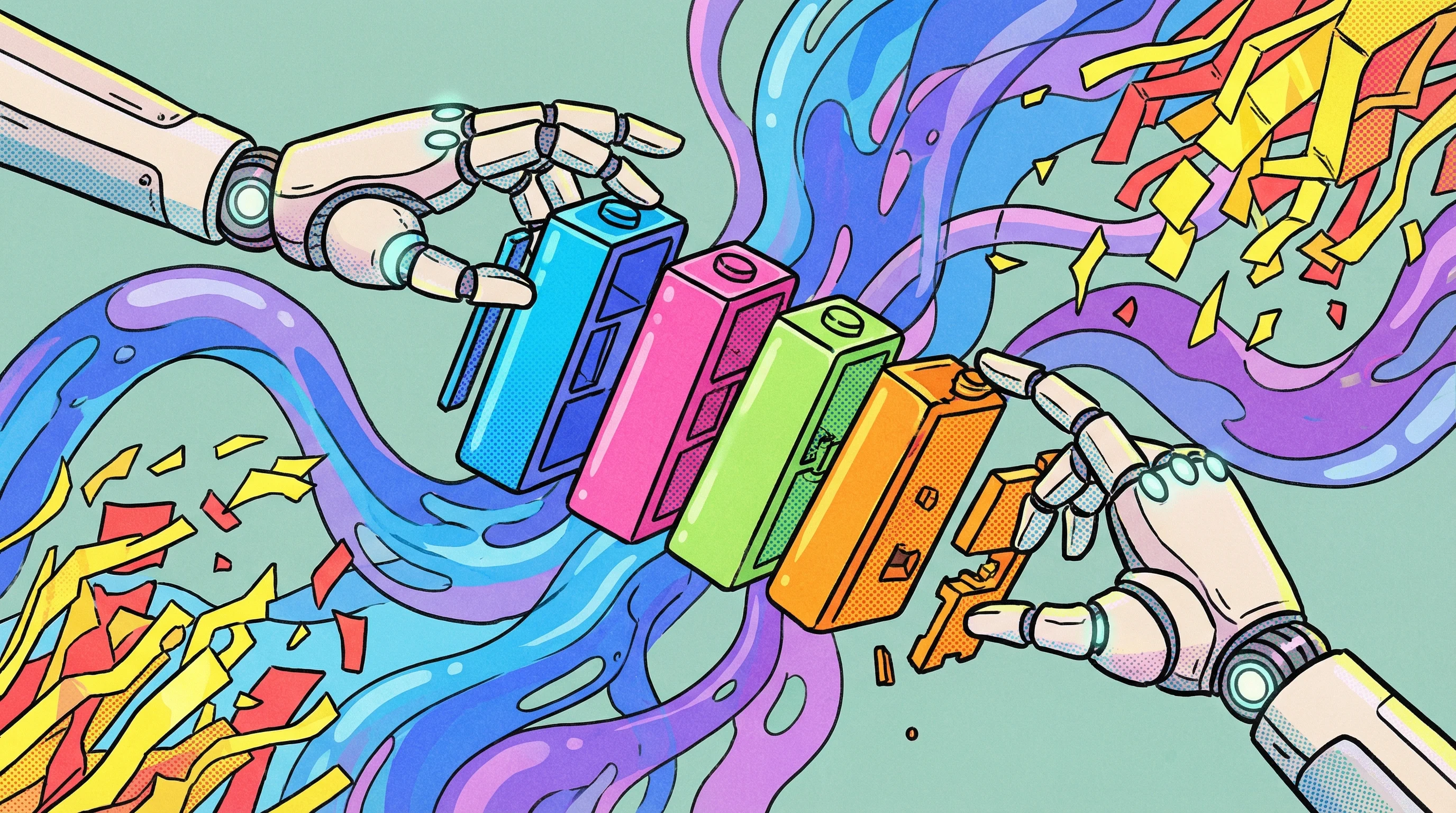
R3's pitch is straightforward, if not particularly sexy: use AI-powered computer vision and purpose-built robotic tooling to dismantle battery packs, e-drives, and power electronics faster and cheaper than humans can manage. The company claims to cut processing costs by up to 32% versus manual methods while boosting throughput by 75%, with greater than 98% repeatability—a metric that matters when you're handling thousands of tonnes of hazardous materials.
The technology identifies pack configurations using 3D vision, then deploys adaptive motion planning to remove fasteners, disconnect cables, and separate modules. What comes out the other end is cleaner feedstock for downstream recyclers like Fortum or Hydrovolt, or modules that can be repurposed for second-life applications. It's tedious work for humans. Tricky for general-purpose robots. Exactly the kind of niche where specialized automation can carve out defensible margins.
Whether it actually works at industrial scale is the open question.
Timing Is Everything

R3's funding arrives just as European battery recycling regulations shift from aspirational to enforceable. The EU Batteries Regulation now mandates 70% recycling efficiency for lithium-based batteries by 2030, climbing to 80% for lithium and 95% for cobalt, copper, nickel, and lead by 2031. The delegated methodology for calculating those targets entered force in July 2025, turning vague commitments into compliance headaches.
Global EV sales hit 17 million units in 2024—over 20% of the market, depending on whose numbers you trust. Most of those vehicles won't hit end-of-life for another decade. But the first wave is already arriving at recycling facilities, and manual disassembly doesn't scale. Not at the speeds regulators are demanding, anyway.
R3 plans to use the capital to expand its engineering, AI, and software teams, scale partnerships with European recyclers and automotive OEMs, and increase capacity at facilities in Karlsruhe, Germany, and Luxembourg. The Karlsruhe site—described as a "lighthouse" facility, which is startup-speak for flagship—reportedly processes 1,500 tonnes of batteries annually under German environmental certifications.
There's also a U.S. expansion planned for 2026, though details remain scarce. The company is currently working with Fortum Battery Recycling on industrial-scale deployments and has partnerships with automotive players. Specific OEM names haven't been disclosed beyond previous collaborations with Amazon, Hyundai, and JLR. Make of that what you will.
The Founders
CEO Antoine Welter and CTO Dr. Xavier Kohll founded R3 in 2021, raising an €8.5 million seed round two years later (€4.5 million equity, €4 million grants). The company employs somewhere between 11 and 50 people, according to LinkedIn—which is a wide range but typical for hardware startups operating across multiple facilities. R3 runs sites in Foetz, Luxembourg, and Kuppenheim, Germany, and participates in the ReDriveS consortium, a 36-month German government-funded project led by Schaeffler. Partners include Bosch, AVL, and Volkswagen, all working on circular economy solutions for electric axle drives.
The rebranding to R3 Robotics—Repair, Reuse, Recycle, naturally—happened at the funding announcement. Whether the new name sticks better than Circu Li-ion remains to be seen.
The Competitive Landscape
R3 isn't alone in chasing the battery recycling opportunity. Competitors like cylib and tozero have raised significant capital for hydrometallurgical processes—chemical methods that extract raw materials directly from shredded batteries. R3's bet is different: that automated mechanical disassembly creates more value by sorting and separating components before they're melted down or dissolved. It's a logistics argument as much as a technical one.
The jury's still out on which approach wins. Probably both, depending on the feedstock and local economics. Battery recycling isn't a winner-take-all market. It's regional, fragmented, and shaped as much by regulation as by technology.
What Happens Next
With European EV adoption accelerating and recycling mandates tightening, R3 is betting that automated disassembly becomes table stakes rather than a competitive edge. The €20 million gives it runway to prove the model works not just in controlled environments but at the scale required to handle millions of retiring batteries over the next decade.
Whether that's enough to navigate the competitive landscape—and the operational headaches of scaling industrial automation—is the story the next few years will tell. For now, R3 is focused on what it does best: teaching robots to take things apart. One battery pack at a time.


