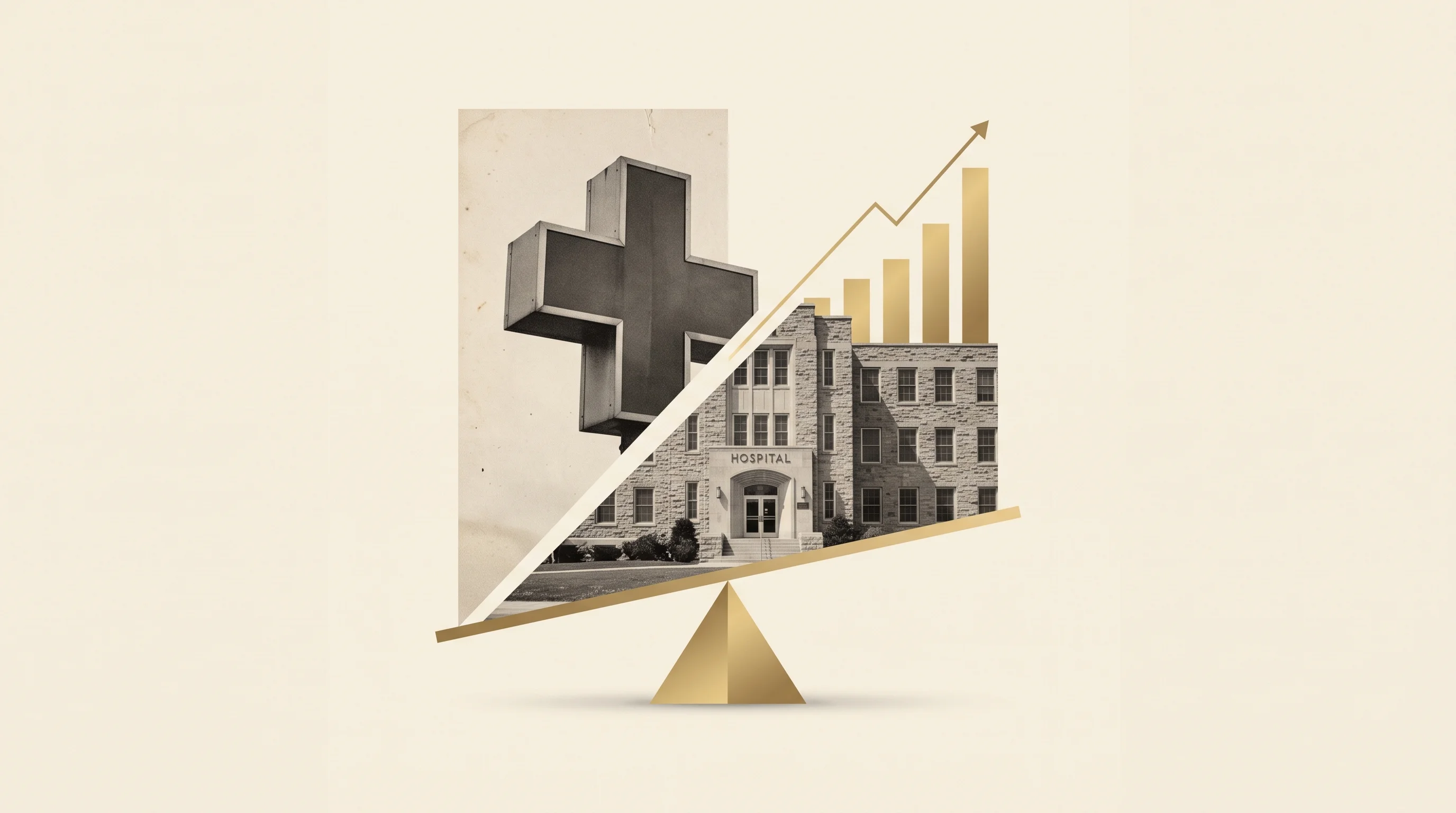
Most startups pitch software. Radley bought a radiology practice instead.
In August, the San Francisco company acquired an existing practice and gutted its workflow, replacing manual processes with AI agents that draft reports, coordinate follow-ups, and submit insurance claims. Only the final physician read remains untouched by automation. The result, according to the founders: $4.3 million in annualized revenue and a test case for whether artificial intelligence can solve healthcare's labor shortages by redesigning operations from the inside out, rather than selling tools to legacy providers.
Maryam Jahed and Meng Lay, who met while scaling Carbon Health from a startup to a 100-clinic primary care chain, don't frame Radley as a software company. "We're not software you install," the company's website states bluntly. "We're the radiology group that reads for you." Board-certified radiologists still sign every report, but AI now handles nearly everything leading up to that signature.
The model is audacious, maybe reckless. Jahed wrote on LinkedIn in late August that the pair decided to "fix the whole stack" after concluding that point solutions wouldn't address the radiologist shortage. Y Combinator, which backed the company in a recent batch, appears to agree. Partner Tyler Bosmeny captured the bet in a LinkedIn post: "Some founders build nice tools for radiology clinics… Other founders buy the clinic and make it fully AI-native."
How it works, in theory
Radley's pitch to hospitals and imaging centers sidesteps the integration headaches that typically accompany health tech deployments. The company connects to existing picture archiving and communication systems—essentially the servers where medical images live—without what it describes as "an integration project." When a scan arrives, an AI agent generates a draft report before any human sees the case. A radiologist then reviews, corrects if necessary, and signs. More agents take over from there, delivering results to referring physicians, scheduling follow-ups, and filing claims.
The timeline matters: Radley promises turnaround measured in minutes, not hours or days, with capacity that theoretically scales without hiring. According to the company's Y Combinator profile, last updated in August, it has $2.2 million in signed contracts. The founders declined to name the practice they acquired or disclose the purchase price, and the company's website lists no customer logos or case studies as of mid-September.
That opacity is notable in an industry where credibility often hinges on named partnerships. But the founders' backgrounds lend some weight. Jahed built mental health AI products at Airo Health, a 2016 Y Combinator company, and worked on Woebot's cognitive behavioral therapy chatbot, which earned FDA breakthrough designation. She later led product at Midday—a startup that Y Combinator's directory says was acquired by a Fortune 100 insurer—before joining Carbon Health as a product director. Lay came to Carbon from Twitter, where he'd been an engineer, and eventually became the company's VP of engineering after scaling its software team from the ground up.
Both hold degrees from well-regarded programs: Jahed studied electrical engineering and sociology at the University of Waterloo, while Lay focused on computer science at MIT. They founded Radley with just two people, a deliberately lean structure that reflects their conviction that AI can substitute for headcount. Y Combinator's investment structure—reportedly $500,000 split between a $125,000 equity stake and an uncapped SAFE note—provided the initial runway.
The market they're entering
Radley is hardly alone in chasing radiology automation, and the incumbents aren't standing still. Radiology Partners, one of the country's largest physician-led practices, announced in August that it would acquire Everlight Radiology and fold it into vRad, its teleradiology arm, creating what the companies described as a leader in global teleradiology. That same group launched Mosaic Reporting, billed as an AI-native product, in June.
RadNet, the publicly traded imaging center operator, has been assembling an AI portfolio through its DeepHealth division. The company acquired Gleamer, a French AI startup, in March and has reported growing digital health revenue in recent quarterly earnings.

Software vendors, meanwhile, are angling for partnerships rather than acquisitions. Rad AI announced a collaboration with Yale New Haven Health in June. RADPAIR, which builds generative AI for radiology reporting, signed deals with Radiology Partners in late 2024 and Intelerad months later. The space is crowded, competitive, and moving fast.
The American College of Radiology has been watching this shift with a mix of enthusiasm and caution. Its 2026 Bulletin noted persistent workforce constraints and uneven AI adoption across practices. The organization launched ARCH-AI, a quality assurance framework for medical AI, in 2024—a tacit acknowledgment that automation is coming whether radiologists feel ready or not.
What Radley is really selling
Strip away the AI jargon and Radley's value proposition is operational, not technological. Hospitals and imaging centers send studies; they get signed reports back in minutes. The company promises dependable coverage and consistent quality, addressing capacity problems through automation rather than the slow, expensive work of recruiting more radiologists.
Jahed has compared Radley to Corgi, the AI-native insurance carrier that replaced legacy infrastructure outright instead of trying to integrate with it. The analogy is telling. Corgi didn't ask incumbents to adopt its tools; it became the incumbent. Radley is attempting the same maneuver in radiology, betting that owning the entire workflow—and the revenue that comes with it—beats selling software by the seat.
Whether that bet pays off depends on variables the company hasn't fully disclosed: the quality of its AI drafts, how often radiologists reject or heavily edit them, what happens when edge cases arise, and whether hospitals trust a startup with patient care. Radley lists board-certified radiologists reading live cases on its platform but doesn't name them, a decision that may reflect competitive strategy or the difficulty of recruiting physicians willing to attach their credentials to an unproven model.
With $4.3 million in annualized revenue and a team of two—an almost absurdly lean operation even by startup standards—Radley is testing a thesis that healthcare's deepest problems can't be fixed from the outside. The founders aren't selling change. They're trying to be it, one acquired practice at a time. Whether the model scales, or collapses under the weight of regulatory scrutiny and clinical complexity, will say as much about the limits of AI as it does about the durability of legacy healthcare.