

The funding closed on April 29, a routine affair by venture standards—Decasonic leading another round into Distinct Possibility Studios, the San Diego outfit run by EverQuest architect John Smedley. Two notable names joined the board: Bing Gordon, the former EA executive who's become something of a fixture in gaming investment circles, and Paul Hsu, Decasonic's founder. The studio kept the dollar figure close to the vest.
What wasn't routine was the timing. Less than a month later, on May 29, Smedley's team launched Reaper Actual into Steam Early Access. The reception? Brutal, even by the unforgiving standards of online gaming communities.
As of June 21, the open-world persistent shooter sits at a "Mostly Negative" rating—just 20% positive across 59 reviews. For a studio trading heavily on the reputation of its founder and a roster of industry veterans, it's the kind of debut that raises uncomfortable questions about whether name recognition translates into product-market fit.
The Believers and Their Bets
Gordon's board seat isn't simply decorative. The man spent years as EA's chief creative officer before pivoting to the investment side, and his involvement typically signals conviction, not courtesy. His presence alongside Hsu—whose firm describes its approach as "enhancement capital" focused on Web3 and AI—suggests the backers see something beyond the current player sentiment.
This marks Decasonic's second bite at Distinct Possibility Studios. The firm participated in a $30.5 million round in July 2025, co-led by Bitkraft Ventures and Brevan Howard Digital. That earlier raise drew a who's who of crypto-adjacent investors: Tezos Foundation, Hashed, Delphi Ventures, Shima Capital, North Island Ventures. The involvement of Tezos-linked backers makes sense given the game's Web3 layer, powered by Etherlink, a Tezos layer-2 blockchain running parallel to the traditional Steam version.
Still, all the capital and credibility in the world can't manufacture enthusiasm where players aren't finding it.
A Rocky Road to Release
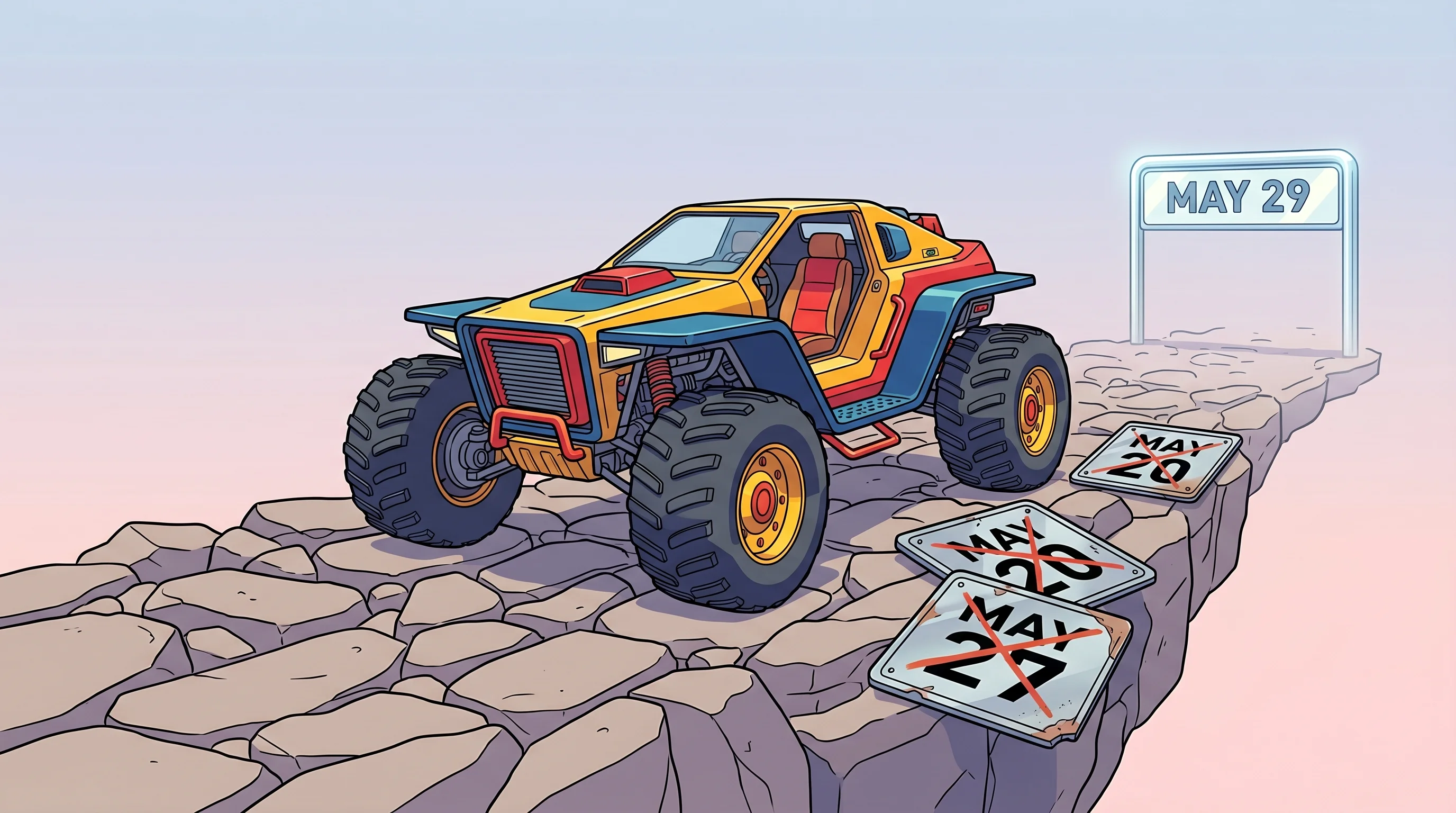
Perhaps the warning signs were already visible. Reaper Actual missed its initial May 20 target, then slipped again to May 27, before finally stumbling across the finish line on May 29. The studio cited the usual suspects—vehicles needed polish, squad systems required tuning, servers demanded stability work.
Fair enough. Game development rarely adheres to spreadsheet timelines, and the scope here is ambitious: hundreds of simultaneous players, persistent bases you can own and raid, PvP combat, five distinct NPC factions. It's an MMO-scale vision squeezed into shooter mechanics, priced at $19.99 for the base version and climbing to $55 for the deluxe treatment.
The question is whether ambition alone justifies the roughness players encountered at launch. Early Access exists as a buffer, certainly, but it's also become shorthand in some corners of the gaming world for "not quite ready."
What the Studio Says It Is
Smedley's team—which includes Matt Higby and Tramell Isaac, both with their own industry credentials—now finds itself in the uncomfortable position of needing to win over a skeptical audience during what's essentially a public beta period. According to LinkedIn, the studio employs between 51 and 200 people, a wide enough range to suggest either rapid growth or deliberate opacity about headcount. They're also working with Big Moxi Games, a Brazilian co-development partner whose involvement hints at a distributed production model.
The Web3 angle complicates the narrative. For some players, blockchain integration remains a red flag; for others, particularly those in Decasonic's orbit, it's the entire point. Running two parallel versions—one traditional, one crypto-enabled—suggests the studio is hedging its bets on which audience ultimately shows up.
The Climb Ahead

Negative reviews at launch don't necessarily doom a project, especially in Early Access. No Man's Sky clawed its way back from catastrophic early reception. Cyberpunk 2077 eventually recovered some goodwill. But those redemption arcs required years of work, and not every studio has the runway—financial or emotional—to execute them.
For Smedley, the calculus is different than it was during his EverQuest days. That game launched into a less crowded market, with lower expectations and a more forgiving feedback loop. Today's players have options measured in the thousands, and their tolerance for rough edges has thinned accordingly.
The investors backing Distinct Possibility Studios are betting that pedigree and capital can bridge the gap between what Reaper Actual is now and what it might become. Gordon and Hsu joining the board suggests they're prepared for a longer game, not a quick flip.
Whether players stick around long enough to see that transformation is another matter entirely. The scoreboard, at least for now, doesn't make particularly pleasant reading.


