

A mini-fridge-sized capsule screaming through the Australian sky at hypersonic speeds isn't what most people picture when they think about the future of manufacturing. But that's exactly what landed in the Koonibba desert this past January—payload intact, recovered six hours later, and representing something pharmaceutical executives and semiconductor engineers have been waiting years to see: proof that you can actually get things back from orbit on your own schedule.
The landing was Varda Space Industries' doing, part of a string of increasingly routine reentries the California startup has been executing in partnership with Southern Launch. For an industry that's long been stuck in the demonstration phase, routine is the operative word.
Here's the thing about space manufacturing: making stuff up there isn't really the problem anymore. Space Forge got a commercial semiconductor furnace running in orbit last December. BioOrbit is pushing protein crystals grown in microgravity into pre-clinical trials this year. NASA's research on the International Space Station helped inform an FDA-approved formulation of Merck's blockbuster cancer drug Keytruda. The science, at this point, largely works.
What doesn't work—at least not well enough—is the return trip.
If you're a company trying to build a business around orbital manufacturing, you're mostly hostage to NASA's ISS resupply calendar and SpaceX's Dragon capsule, currently the only commercial vehicle routinely bringing cargo back via splashdown. For a pharmaceutical batch requiring temperature control and rapid lab handoff, or a semiconductor wafer headed straight to characterization, that's not a supply chain. That's a vulnerability.
Three Companies, Three Bets on Reusability
Three startups are now racing to solve reusable orbital return, each with a distinct technological approach but chasing the same outcome: a refurbishable vehicle that can host payloads in space and bring them back on demand. The approaches couldn't be more different.
Varda has moved with the most urgency. The company landed its W-5 capsule at Koonibba on January 29, then recovered W-6 on May 19—both missions part of an ambitious partnership with Southern Launch targeting up to 20 reentries through 2028 under Australia's Space (Launches and Returns) Act. Mission durations ranged from five days to several months before autonomous reentry. Varda's heat shields use ablative C-PICA tiles licensed from NASA—proven technology, but tiles that burn away during descent and require refurbishment between flights. It's a tradeoff: reliability now versus perfect reusability later. The Air Force Research Laboratory is helping fund some of that work, particularly hypersonic thermal protection system testing that doubles as defense research.
Space Forge, a UK outfit, is pursuing what might be the more elegant solution. Their Pridwen heat shield folds out and relies on radiative cooling instead of ablation. No burn-away tiles, no between-flight refurbishment—just refold and fly again. ForgeStar-1, launched last June, achieved first plasma ignition in orbit in December. CEO Joshua Western characterized it as proof that "the essential environment for advanced crystal growth can be achieved on a dedicated, commercial satellite," though the real test will be whether Pridwen survives reentry as advertised. In June, Space Forge secured £10 million from ESA and UKSA to push Pridwen toward commercial readiness. The funding suggests European space agencies believe the concept has legs.
Then there's Dispatch, the newest player, fresh out of Y Combinator's Spring batch. Founders Payton Case and Andrew Mello—both Astranis alumni—are making bold claims about "refurbishable reentry vehicles" with heat shields built in-house that they say run "100x cheaper" than competitors, though this claim originates from the company itself and hasn't been independently validated. They've outlined specs for a Free Flyer 1 mission with on-orbit operations lasting anywhere from 5 to 180 days, deorbit-to-landing in under 30 minutes, and payload recovery within six hours. Maximum payload mass: 30 kg. Interface temperatures during the roughly 15-minute peak heating phase: below 40°C.
The company says it validated full-scale satellite heat shields in the Mojave Desert using rocket exhaust to simulate reentry conditions. Those tests haven't been independently verified. First flight is targeted for mid-2027, which in startup timelines means it could easily slip. The "100x cheaper" claim is marketing until proven at scale—and scale is exactly what none of these companies have yet achieved.
What's Actually Worth the Trip
The economics hinge on a brutally simple question: what's valuable enough to justify the cost of going up and coming back down?
Pharmaceuticals are looking increasingly viable. Merck's Keytruda crystallization work on the ISS—originally detailed in a 2019 paper in npj Microgravity and revisited by NASA this past January—demonstrated that microgravity-grown crystals can inform better drug formulations on Earth. A 2025 paper in MDPI Crystals showed that space-grown crystals can serve as seeds to control polymorphs in terrestrial production, potentially solving manufacturing headaches that have stumped pharma companies for years. BioOrbit is now shipping hardware for pre-clinical trials of space-manufactured protein crystals scheduled for this year.
Semiconductors represent another high-value target, at least in theory. Space Forge's ForgeStar-1 plasma furnace aims to grow ultra-pure wafers in orbit's contamination-free environment. Whether the quality improvements justify the cost is still an open question. Optical fibers also benefit from microgravity: NASA's various fiber-optic investigations—FOP, FOP-2, Space Fibers, Flawless Space Fibers—have repeatedly shown that ZBLAN fibers made in space exhibit lower signal attenuation than Earth-manufactured equivalents. For high-performance telecommunications, that performance gap might be worth paying for.
Bioprinting adds a third dimension. In February of last year, Auxilium Biotechnologies printed eight implantable nerve-repair devices on the ISS in two hours; by this year, the company announced plans to provide biofabrication services aboard Starlab. For products where microgravity fundamentally alters structure or purity—and where unit economics can absorb orbital costs—the business case is starting to make sense. Starting to.
Market Projections, With the Usual Caveats

Market research firms are converging on similar numbers, though definitions of "in-space manufacturing" vary enough to make direct comparisons tricky. Fortune Business Insights pegged U.S. in-space manufacturing revenue at approximately $807 million this year. 360iResearch, in a report from two weeks ago, estimated the global market at around $1.80 billion in 2026, projecting a compound annual growth rate of 22.9 percent to reach $6.26 billion by 2032. Precedence Research's April databook forecast in-space manufacturing services growing to roughly $11.7 billion by 2035, driven by commercialization of low Earth orbit and demand for high-purity materials.
A Tracxn report from early April counted approximately 15 startups globally working on in-space manufacturing, with around $397 million raised across 22 funding rounds. The sector remains decidedly pre-scale—characterized by long development cycles, high capital intensity, and dependence on infrastructure that's still being built. NASA's In-Space Production Applications (InSPA) program has invested over $60 million to demonstrate space-for-Earth products, which signals institutional confidence that microgravity manufacturing could transition from science experiment to commercial operation. Whether that confidence is warranted is another question.
Launch costs continue to fall, which helps the overall equation. BryceTech's review noted that SpaceX accounted for roughly half of global launches last year, and the FAA's aerospace forecast highlights new reusable heavy-lift vehicles—Terran R, New Glenn—improving mass-to-orbit economics. But getting to orbit has never been the hard part for space manufacturing.
It's the return leg that's been missing.
The Defense Department's Interest
One perhaps unexpected accelerant: the defense sector's appetite for hypersonic reentry data.
Varda's W-6 mission in March and May carried Air Force Research Laboratory-funded experiments testing GPS-denied navigation, thermal protection materials, and autonomous guidance during hypersonic flight. The mission included NASA shoulder tiles designed to collect in-flight TPS data at speeds where aerodynamic heating turns air into plasma. For AFRL, these missions represent low-cost, high-cadence testbeds for technologies that would otherwise require expensive sounding rockets or classified programs.
For the reentry vehicle startups, defense contracts provide a revenue stream that doesn't depend on manufacturing customers materializing immediately. The convergence is convenient: build a vehicle capable of surviving hypersonic reentry with precision landing, and you've created infrastructure useful for both pharma payloads and hypersonic weapons testing. That dual-use appeal may be what keeps these companies capitalized through the long march to commercial scale—assuming they can deliver.
Regulatory Frameworks Begin to Catch Up
Reentry licensing has historically been bespoke and glacial. That's starting to change, though slowly.
This past March, the FAA retired its legacy launch and reentry regulations, fully transitioning to Part 450—a single, streamlined Vehicle Operator License covering both launch and reentry across multiple missions, configurations, and sites. Portfolio licensing reduces friction for companies planning frequent reentries, though each vehicle still faces rigorous safety and environmental review. The devil, as always, will be in the implementation details.
Australia has emerged as the reentry testing ground of choice, which is somewhat ironic given its relatively late entry into the commercial space sector. Under the Space (Launches and Returns) Act 2018, the Australian Space Agency granted the first authorizations for domestically returning spacecraft to Southern Launch and Varda last year. Koonibba Test Range—remote, with controlled airspace and ground logistics—has now hosted multiple successful capsule recoveries. The regulatory framework there appears more accommodating than U.S. equivalents for experimental return missions, and Southern Launch's agreement with Varda for up to 20 reentries through 2028 suggests Australia intends to build a competitive advantage in this particular niche.
The ISS Endgame and What Replaces It
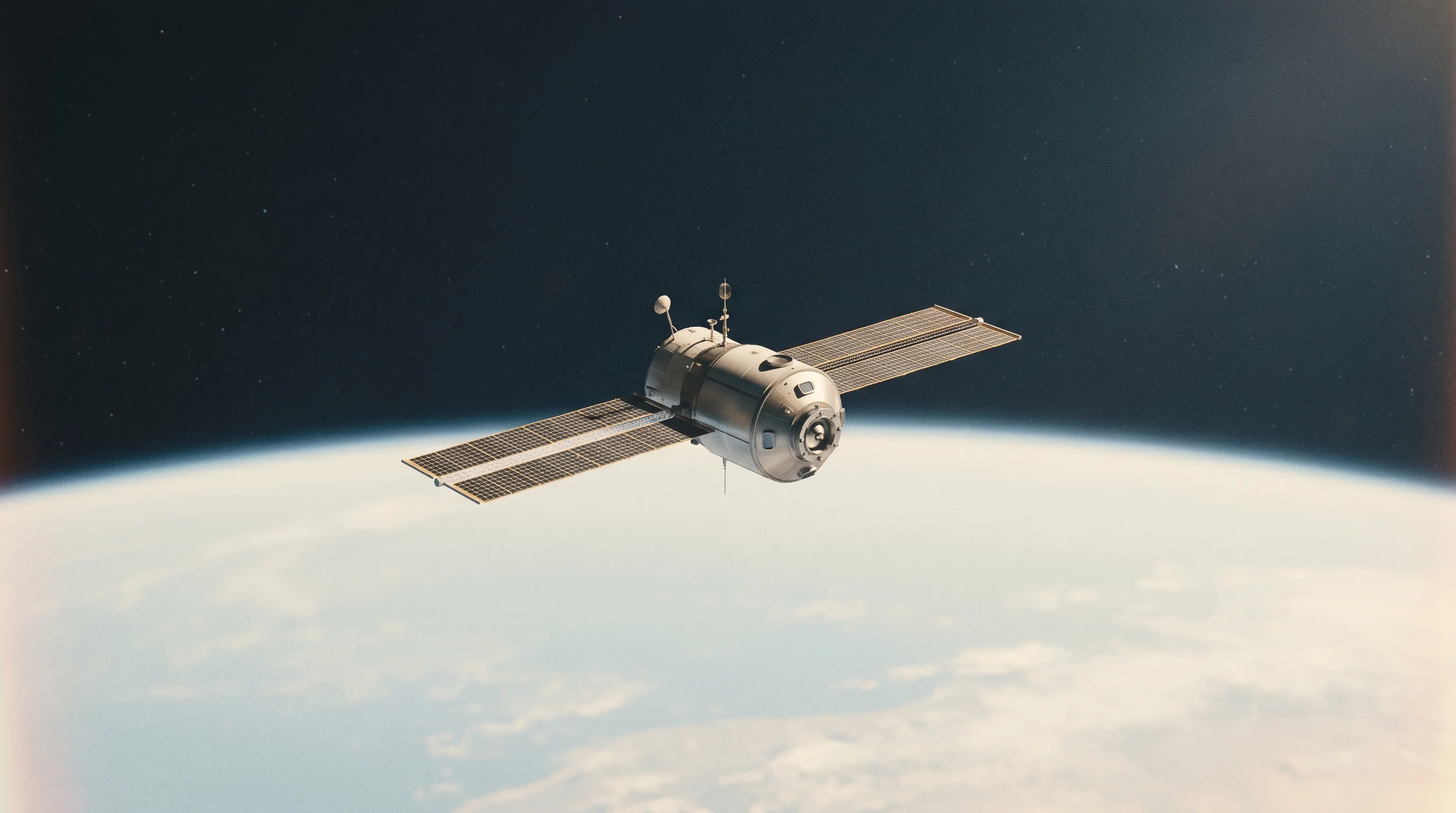
The International Space Station's planned deorbit around 2030—though there's legislative pressure to slip that to 2032—adds a certain urgency to the whole enterprise. While ISS has served as the primary testbed for space manufacturing, its human-rated constraints, crew schedules, and limited downmass capacity make it a poor long-term platform for industrial-scale production. NASA's March "Ignition" strategy, analyzed by CSIS, pivots toward a NASA-owned core module initially attached to ISS, then transitioning to commercial LEO destinations. But those stations—Axiom, Starlab, Orbital Reef—remain years away from operation, and several face funding challenges.
Free-flying manufacturing satellites with integrated return capability bypass ISS entirely, which is the point. Varda's W-series, Space Forge's ForgeStar, and Dispatch's Free Flyer 1 all represent a shift toward dedicated, autonomous vehicles that operate on their own schedules, avoid human-spaceflight logistics, and return when the payload is ready rather than when NASA's calendar permits. That independence may be the most important innovation here—more important, perhaps, than any individual technological breakthrough. A pharmaceutical company doesn't want to wait for a Dragon cargo mission six months hence. They want a predictable manufacturing cadence and rapid sample return. Free-flyers promise to deliver that.
Whether they can actually deliver it at scale remains to be seen.
The Gap Between Technology and Business Model
The technology is advancing faster than the business case, which isn't unusual for space ventures but does raise questions about sustainability.
Product qualification remains a major unknown. How do you integrate a space-origin manufacturing step into a pharmaceutical CMC filing? What chain-of-custody and CGMP protocols apply when your manufacturing site is moving at 17,500 mph and reenters the atmosphere at temperatures exceeding 1,500°C? NASA's Keytruda work proved it's feasible, but each product category will face unique regulatory hurdles. For semiconductors, quality assurance and batch-to-batch consistency at orbital scale are still theoretical constructs.
Launch cadence helps. But payload recovery logistics matter just as much, maybe more. Dispatch's target of recovery within six hours of landing sounds straightforward until you consider temperature-sensitive biologics crossing international borders, potentially multiple customs regimes, and the logistical complexity of getting scientific equipment from the Australian outback to a lab in Massachusetts or Zurich on that kind of timeline.
Cost remains the elephant in the room. Even if reentry hardware costs drop dramatically—and Dispatch's "100x cheaper" heat shields claim is unproven—the fully loaded cost per kilogram of space-manufactured product must compete with terrestrial alternatives. Launch, on-orbit operations, reentry, recovery, cold chain logistics—it all adds up. For ultra-high-value materials where purity or structural properties matter enormously, that threshold is reachable. For commodity products, probably not for decades, if ever.
What Happens Next
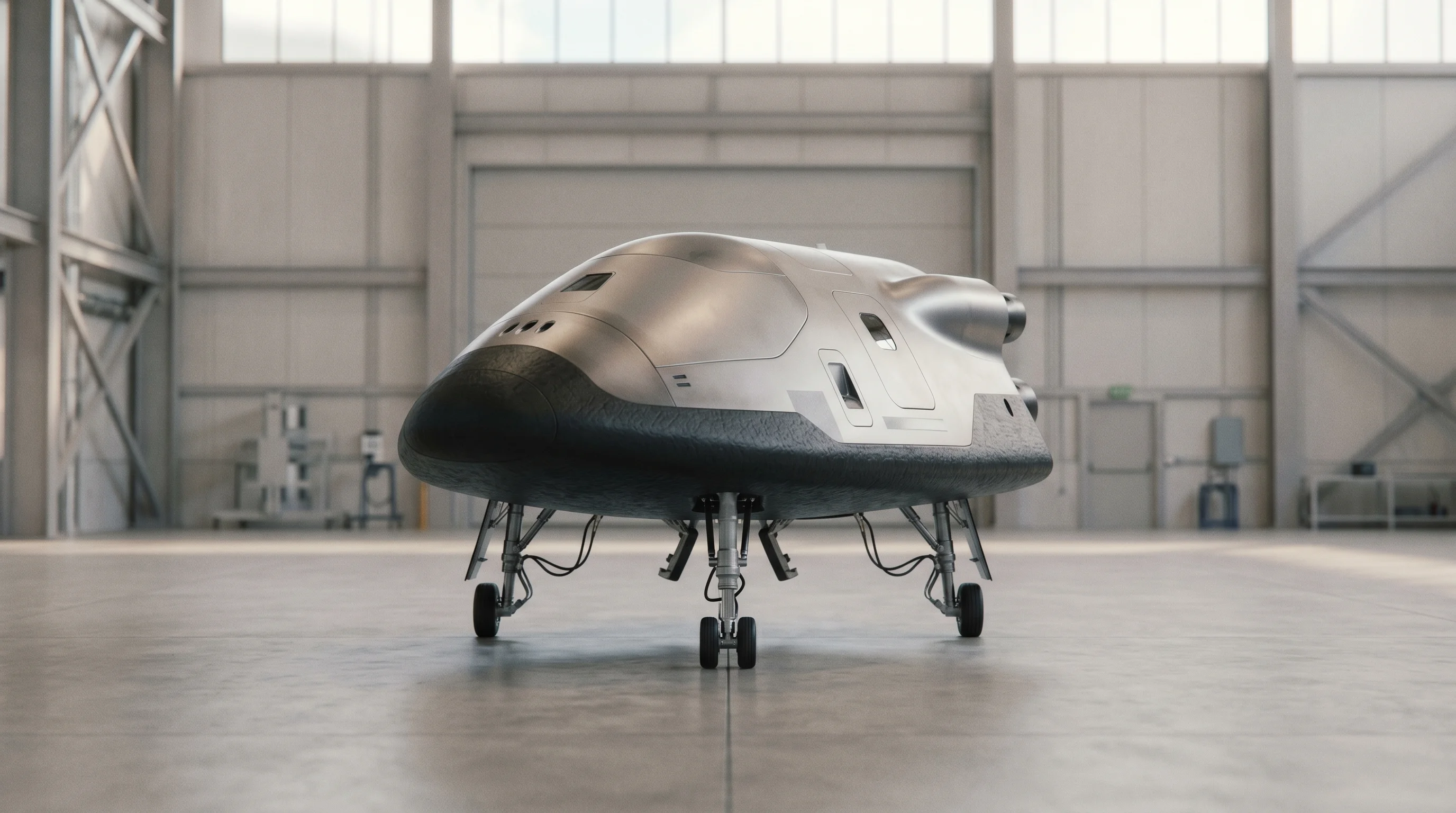
ESA's Space Rider is approaching its first flight after clearing heat-shield and landing-gear tests this past May. Inversion Space's Arc vehicle—targeting rapid orbital delivery and hypersonic testing—continues development. Catalyx Space and Atmos Space Cargo are pursuing niche approaches with inflatable and origami-inspired thermal protection systems. Even Stoke Space's fully reusable upper stage, still in development, hints at a future where orbital return becomes as routine as launching.
But for now, the race has three clear leaders: Varda is operational with multiple successful recoveries, Space Forge is funded and testing its reusable heat shield concept, and Dispatch is sprinting toward a mid-2027 debut with ambitious cost claims and unproven hardware. The question isn't whether reusable reentry vehicles will work—Varda's repeated landings have settled that. The question is which technical approach will dominate, how quickly customers will materialize, and whether the unit economics can ever truly compete with terrestrial manufacturing for all but the highest-value products.
Refurbishable reentry is no longer an engineering curiosity. It's infrastructure, or at least the beginning of infrastructure. And the companies building it are betting that pharmaceutical executives and semiconductor engineers will soon stop thinking of space as a laboratory and start treating it as a factory floor with an extremely fast, extremely hot shipping department.
Whether that bet pays off may determine whether in-space manufacturing becomes a genuine industry or remains an expensive science project with commercial ambitions.


