

Usually, the funding announcement comes first. Then the database entries follow, tidying up cap tables and stake percentages for posterity.
With SUIND, things have played out backward. CB Insights now shows Transition VC and IIMA Ventures on the Bengaluru-based agri-drone startup's investor roster, with a notation that Transition Venture Capital Fund holds a 25% stake following an equity allotment. The update appeared on July 20, 2026. What's missing? Any press release, company blog post, or media coverage explaining the round's size, valuation, or even when exactly it closed.
The silence is telling—though perhaps not in the way one might assume. SUIND, an early-stage company with academic roots and a recently certified drone in the field, may simply be too busy flying missions to bother with announcements. Or maybe the fundraise itself was small enough, or structured oddly enough, that no one felt compelled to trumpet it. Either way, the gap says more about India's agricultural drone sector than it does about any single startup: capital is moving into this space, often without fanfare, propelled by government subsidies, regulatory tailwinds, and a quiet but growing willingness among farmers to let machines do the spraying.
Following the Breadcrumbs
CB Insights updated SUIND's profile on July 20, adding Transition VC and IIMA Ventures alongside earlier backers Sunicon Ventures and Zetta Farms. The 25% stake for Transition VC suggests this wasn't a token investment. Yet the platform listed no dollar figure. No valuation. No date beyond the allotment notation.
Meanwhile, SUIND's own media page still spotlights its November 2023 seed round—Rs 5 crore, led by Sunicon Ventures with Zetta Farms. Nothing about a follow-on. Reached for comment, neither SUIND nor Transition VC responded before deadline.
According to Transition VC's public statements, the early-stage fund targets energy transition and deeptech, writing checks between $1 million and $8 million. It closed a Rs 700 crore debut fund in January and is reportedly raising a Rs 1,500 crore second vehicle, according to Economic Times and VCCircle. IIMA Ventures, tied to the Indian Institute of Management Ahmedabad, has become a familiar name in seed-stage circles.
A 25% stake points to something substantial—a seed extension, possibly, or an early Series A tranche. Until someone confirms it, though, we're left triangulating from regulatory filings and database updates. Not the most elegant way to learn about a funding round, but increasingly common.
The Drone Itself
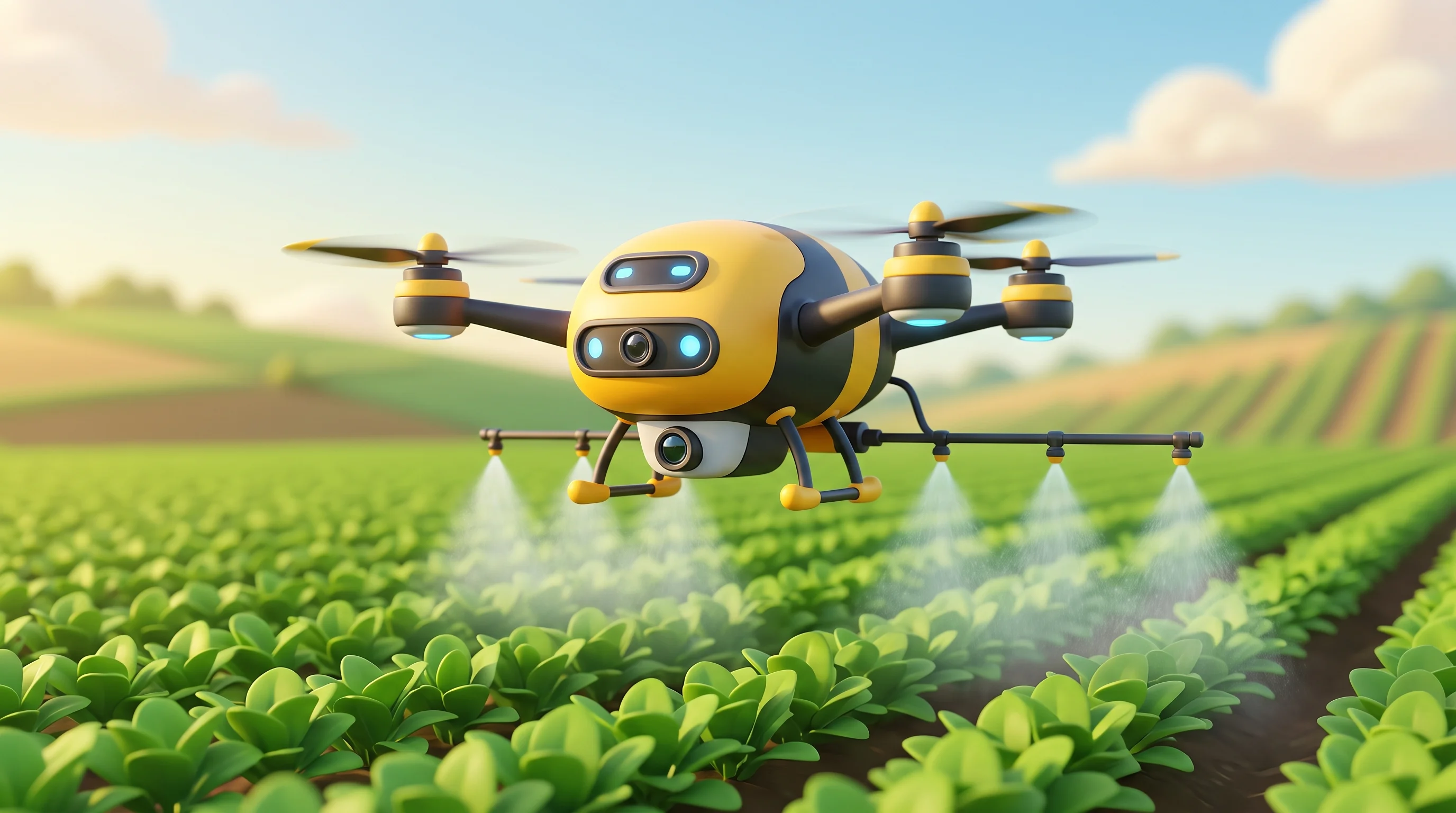
What SUIND has made public: its Bumblebee autonomous spraying drone launched in January, billed as "Type Certified" and field-ready after years of validation. The machine covers an acre in approximately six minutes, using onboard vision to detect obstacles up to 15 meters out and terrain sensors reaching 12 meters. Return-to-home battery logic, modular payloads, visual-marker landing—all born from the startup's ties to robotics labs at ETH Zurich and the University of Zurich.
The Marathi daily Pudhari documented live demos in Maharashtra in June, reporting that the Bumblebee finished an acre in roughly seven minutes while using 30% less chemical than conventional spray rigs. Other coverage from the prior year highlighted deployments across sugarcane, rubber, and banana plantations—crops that typically require intensive, labor-heavy pest management.
SUIND was founded in 2022, formally registered that October. Co-founders Kunal Shrivastava (CEO) and Kevin Kleber (CTO) have kept a steady recruiting drumbeat on LinkedIn, and the company lists Prof. Davide Scaramuzza—director of the Robotics and Perception Group at UZH—as a technology advisor. The startup's pitch centers on "Near-Earth Autonomy" for unmanned aerial systems, though what that means in practice seems to be: drones that can spray crops without crashing into trees or each other.
Policy Tailwinds, Finally
India's ag-drone sector has become something of a policy darling. The Directorate General of Civil Aviation's 2021 Drone Rules cleared away much of the certification thicket, while a Rs 120 crore Production-Linked Incentive scheme launched that September to nudge domestic manufacturing. Then, in late 2024, came the "NaMo Drone Didi" initiative—an effort to equip 15,000 women's self-help group clusters with agri-drones, backed by subsidies of up to 80% and concessional financing.
As of July 9, 2026, the Ministry of Agriculture had logged 40,928 drone demonstrations across just over 40,000 hectares, supported by Rs 52.5 crore in mechanization funds. The numbers suggest a shift: drones are no longer just a curiosity at agricultural fairs. They're becoming working tools, at least in pockets where labor costs are climbing and chemical efficiency matters.
Crowded Skies
SUIND is hardly alone. Listed defense-drone maker ideaForge posted Rs 226 crore in revenue for its most recent fiscal year, up 40% year-over-year as of May. Garuda Aerospace—primarily an agri-commercial operator—filed confidentially for a Rs 1,000 crore IPO in April 2026, after raising $22 million in a Series A round in February 2023. The sector is maturing, or at least acting like it is.
That context makes SUIND's low-key approach to fundraising a bit less mysterious. With Type Certification in hand, field pilots underway, and a policy environment tilted decidedly toward adoption, maybe the startup saw little upside in issuing a press release that regulatory databases would eventually surface anyway. Whether Transition VC's 25% stake represents a bridge round, a formal extension, or the opening salvo of something larger will presumably become clear when—or if—the company decides to make it official.
For now, the database is doing the talking. And in a sector where execution matters more than hype, that might be exactly the right volume.


