

There's a sentence buried in the EPA's April 29, 2025 Endangered Species Act insecticide strategy that probably kept a few crop protection executives up at night. County-by-county mitigation menus. Species-specific buffer zones. Application timing restrictions keyed to the life cycles of 900-plus endangered species. Call it what you like—environmental stewardship, regulatory overreach—but the math for conventional pesticides just got a lot more complicated.
And expensive.
The UK delivered its own verdict in 2025, refusing emergency authorization for thiamethoxam seed treatments despite a virus threat to sugar beets. The reasoning? Harm to pollinators deemed unacceptable, full stop. Europe has been methodically dismantling the neonicotinoid toolkit since 2018, with emergency derogations ending in 2023; Britain's refusal simply closed another exit.
Which is why a four-person team fresh out of Y Combinator's Summer 2026 cohort thinks the moment belongs to them.
Molagri—co-founded by protein biochemists Zaky Hassan and Min Jin, both with University of Toronto pedigrees and publications in journals like Nature Communications—claims it can design biopesticides that hit "a precise molecular target unique to pest insects" while modeling how those pests will inevitably evolve resistance. It's an audacious pitch for a company barely past the incorporation paperwork stage. Then again, perhaps the audacity is the point. The biopesticide market, valued at estimates ranging from $9.6 billion to $11.48 billion in 2026 depending on which analyst you believe, is projected by Fortune Business Insights to reach $40.61 billion by 2034. Investors, it seems, are paying attention.
When Regulation Rewrites Economics
Biopesticides—the umbrella term covers microbials, biochemicals, and plant-incorporated protectants—aren't exactly new. What's new is the regulatory architecture that's making them economically viable, maybe even necessary.
Grand View Research puts the 2026 market at $9.6 billion, forecasting growth to $26.1 billion by 2033, a 15.3% compound annual clip. Reports and Data takes a more conservative line, estimating $11.43 billion in 2025 with a 9.3% growth rate through 2035. Even the low-end projection implies a sector that will double in less than a decade, which is remarkable for an industry segment that was considered niche not long ago.
The EPA's final herbicide strategy arrived in 2024; the insecticide strategy followed this April. Together, they imposed mitigation requirements on hundreds of active ingredients, all in the name of protecting endangered species. Growers face mitigation "menus"—pesticide-free buffers, application timing windows, alternative chemistries—but the operational friction is very real. You can't simply spray when the weather looks good anymore.
Across the Atlantic, the European Court of Justice delivered its own blow in 2023 with Case C-162/21, effectively shutting down emergency derogations for neonicotinoid seed treatments. The EU's broader Sustainable Use Regulation collapsed in 2024 under the weight of farmer protests, but national-level restrictions held. And the European Food Safety Authority's revised 2023 bee risk assessment guidance remains in force, demanding increasingly stringent pollinator safety data.
California, never one to wait for federal action, unveiled its Sustainable Pest Management Roadmap in January 2023. The goal: eliminate "prioritized high-risk pesticides" by 2050. The state's Department of Pesticide Regulation plans to update data requirements for new technologies by 2027, a timeline that clearly favors molecules with inherently low toxicity profiles.
The economic stakes? Consider that the USDA's Agricultural Research Service estimates pollination services contribute more than $18 billion annually to U.S. crop production. Globally, the Intergovernmental Science-Policy Platform on Biodiversity and Ecosystem Services valued animal pollination at $235 billion to $577 billion in its 2016 assessment. That figure is nearly a decade old now, but it remains the most cited benchmark, largely because no one has attempted a more recent comprehensive accounting. For beekeepers, pollination service income has exceeded honey revenue since 2022, according to USDA Economic Research Service data published last June.
The Molecular Alternatives

RNA interference was mostly confined to university labs five years ago. Today, it's a registered pesticide mode of action.
In January 2024, the EPA granted the first U.S. registration for a foliar RNAi bioinsecticide: Calantha (ledprona), developed by GreenLight Biosciences to target Colorado potato beetles. The active ingredient, according to company data, degrades within three days in the environment. Non-target testing showed no effects on honeybees even at 100 times the field application rate of 4 grams per acre—results that would be nearly impossible to achieve with a conventional insecticide.
The International Insecticide Resistance Action Committee added RNA interference to its Mode of Action classification as Group 35 in 2024, formalizing RNAi's place in resistance management rotations. Belgium granted emergency use authorization for Calantha on May 6, 2026, specifically for Colorado potato beetles, marking the first RNAi spray approved in the EU. GreenLight CEO Andrey Zarur described it as "a quantum leap for farmers" trying to balance pest management with biodiversity protection. (Whether farmers agree remains to be seen.)
But RNAi is only one avenue. Vestaron's SPEAR family of peptide insecticides, classified as IRAC Group 32, earned EPA Green Chemistry Challenge recognition back in 2020 for "minimal to no toxicity toward bees and fish." Extension guides and product labels updated through 2024 consistently confirm its bee-safe profile in specialty crops, which matters a great deal when pollinator protection is no longer optional.
Biotalys, a Belgian protein engineering firm, secured EPA approval in December 2025 for EVOCA, the first protein-based biofungicide cleared under federal pesticide law. The company hit a milestone with Syngenta this past April on a second-generation protein insecticide, BioIns-2, though commercialization timelines remain unclear.
Pheromone disruption, long confined to orchard pests, is scaling to row crops. Provivi raised additional funding in 2024 and reports performance data from large-acre trials in China and Indonesia. The technology is pollinator-friendly by design—pheromones confuse male moths without affecting anything else.
Even older biological tools are enjoying renewed attention. Baculoviruses—viruses that infect only specific insect larvae—have been around for decades, but AgBiTech's 2024 U.S. label updates for Helicoverpa and Spodoptera baculoviruses underscore their fit in pollinator-conscious integrated pest management programs. Extension materials describe them as "highly selective—safe for beneficials and pollinators," a profile that's suddenly very marketable.
First-Mover Realities
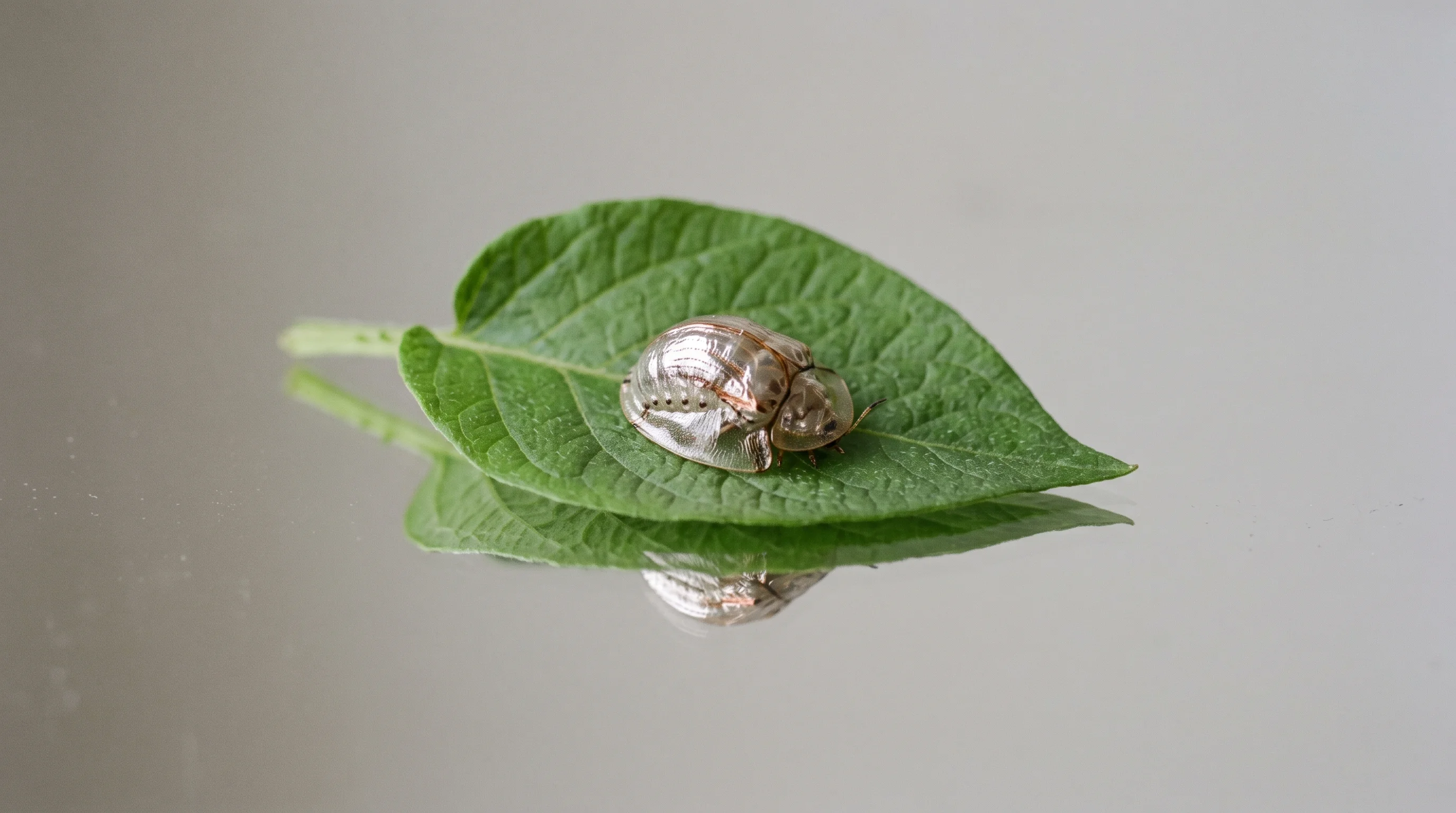
GreenLight Biosciences has the advantage of being first. Over 200 field trials spanning six years preceded Calantha's EPA registration. The product targets a gene essential to the Colorado potato beetle's molting process; without it, larvae can't mature. The company claims environmental degradation within 72 hours and species-specificity so tight that even close relatives of the target pest remain unharmed.
Reality, as usual, is more complicated. A peer-reviewed study published in 2025 found that Colorado potato beetles can develop resistance to double-stranded RNA through reduced clathrin-mediated uptake—the cellular pathway that brings RNA into pest cells. No tool, it turns out, is evolution-proof. GreenLight's next product, Norroa, targets Varroa mites in honeybee hives. The EPA submission was filed in early 2023; approval timing remains anyone's guess.
Vestaron built its platform around peptides isolated from spider venom, then re-engineered them for fermentation-based production. SPEAR LEP, its lead product, has been available since 2020 with multiple state registrations. Toxicity studies submitted to the IR-4 Project—a USDA program supporting specialty crop registrations—showed "no indication of bee toxicity up to highest doses tested" in both acute and chronic lab assays. The product's novel mode of action, Group 32, means it can be rotated with other chemistries to slow resistance development. University trials in vegetables and tree fruit confirm efficacy against lepidopteran larvae, the caterpillar pests that annually chew through billions of dollars in crops.
Biotalys took a different path: computational protein design. The company's AGROBODY platform engineers proteins that bind to fungal targets with antibody-like precision. EVOCA, the first commercial product, received EPA tolerance exemptions in October 2025 and full registration in December. State-by-state approvals are now underway; Florida clearance came through in 2026. The protein degrades rapidly, and early data suggest minimal non-target risk. Field performance and farmer adoption, however, remain works in progress.
Less glamorous but potentially more pragmatic: Bee Vectoring Technologies, which loads biocontrol agents onto commercial bumblebees that then distribute them during pollination. A trial with a Georgia blueberry grower in 2022 reported yield increases up to 33% and disease reductions of 70%. A peer-reviewed synthesis published in 2025 positioned the approach as a "nature-based solution" in integrated crop systems. Scalability and logistics, though, remain significant hurdles.
The Majors Hedge Their Bets

FMC Corporation announced an exclusive distribution deal with Novonesis (formerly Novozymes) in 2025 to expand biological crop protection across Canada. The company published a "Biologicals by FMC 2026 Product Guide" this past May, signaling that commercial momentum is building, or at least that FMC thinks it is.
Syngenta integrated Valagro's biologicals business in 2023 and deepened its partnership with Enko Chem—a computational chemistry startup using AI and DNA-encoded libraries—in January 2024. Corteva closed acquisitions of Symborg and Stoller in March 2023, both biologicals-focused. The pattern is hard to miss: the agrochemical majors view biologicals not as a side bet but as a necessary hedge against regulatory risk and shifting grower expectations.
McKinsey's 2024 Global Farmer Insights survey, covering 4,400 farmers in early 2024, found that 70% of Brazilian growers intended to maintain or increase spending on biological products. Yet adoption globally remains uneven, and the barrier is straightforward: return on investment clarity. Farmers need field-proven efficacy data, clear cost-per-acre economics, and confidence that biologicals won't fail mid-season when pest pressure spikes.
The risks are real. Bioceres Crop Solutions merged with Marrone Bio Innovations in 2022 to create what was supposed to be a biologicals powerhouse. By January 2026, Bioceres disclosed that its Pro Farm Group subsidiary—the renamed Marrone business—was subject to foreclosure auction and classified as discontinued operations in a May filing. AgBiome, another venture-backed biologicals developer, underwent layoffs and asset sales in 2023 and 2024. Capital intensity, long regulatory timelines, and execution risk haven't gone anywhere.
What Comes Next (Maybe)
The technology is advancing faster than the regulatory frameworks designed to assess it, which creates both opportunity and uncertainty.
The OECD's biologicals program has hosted seminars on emerging risk assessment approaches in 2024 and 2025, but international harmonization lags badly. The EPA updated its list of registered biopesticide active ingredients in July 2026; the docket now includes dsRNA and engineered proteins. EFSA's revised bee risk assessment guidance, finalized in 2023, requires more extensive testing than older protocols, but those guidelines were written for conventional chemistries, not RNA or precision proteins. The fit isn't perfect.
A June review in Trends in Ecology & Evolution offered a useful corrective: even biopesticides—particularly entomopathogenic fungi—can harm pollinators under certain exposure conditions. Species-specific, life-stage-specific testing is essential. The assumption that "biological" automatically equals "benign" doesn't hold universally, and pretending otherwise does no one any favors.
For startups like Molagri, the window is open but crowded. Demonstrating pollinator safety is table stakes; growers also need evidence of field efficacy, compatibility with existing integrated pest management programs, and cost structures that pencil out against generic pyrethroids or neonicotinoids where they're still legal. Resistance modeling—Molagri's stated specialty—will matter more as RNAi and peptide products scale. If pests adapt quickly, the competitive advantage evaporates.
The $40 billion market projection assumes steady regulatory tightening, continued innovation, and farmer willingness to adopt. The Bioceres foreclosure serves as a reminder that markets don't reward technology alone—they reward technology that works, at scale, profitably, in real dirt. The race to build bee-safe pesticides is less about displacing chemicals overnight than about proving, field by field, season by season, that precision biology can deliver both crop protection and regulatory compliance without asking farmers to accept unacceptable yield risk.
Molagri's molecular targeting and resistance modeling are compelling on paper. Whether they translate to commercial products that farmers trust enough to spray—and pay for—will determine if the company joins the roster of biologicals success stories or becomes a cautionary footnote in what may or may not be a boom.
The regulatory winds are blowing in one direction. Technology is moving fast. Farmer economics, as always, will have the final say.


