

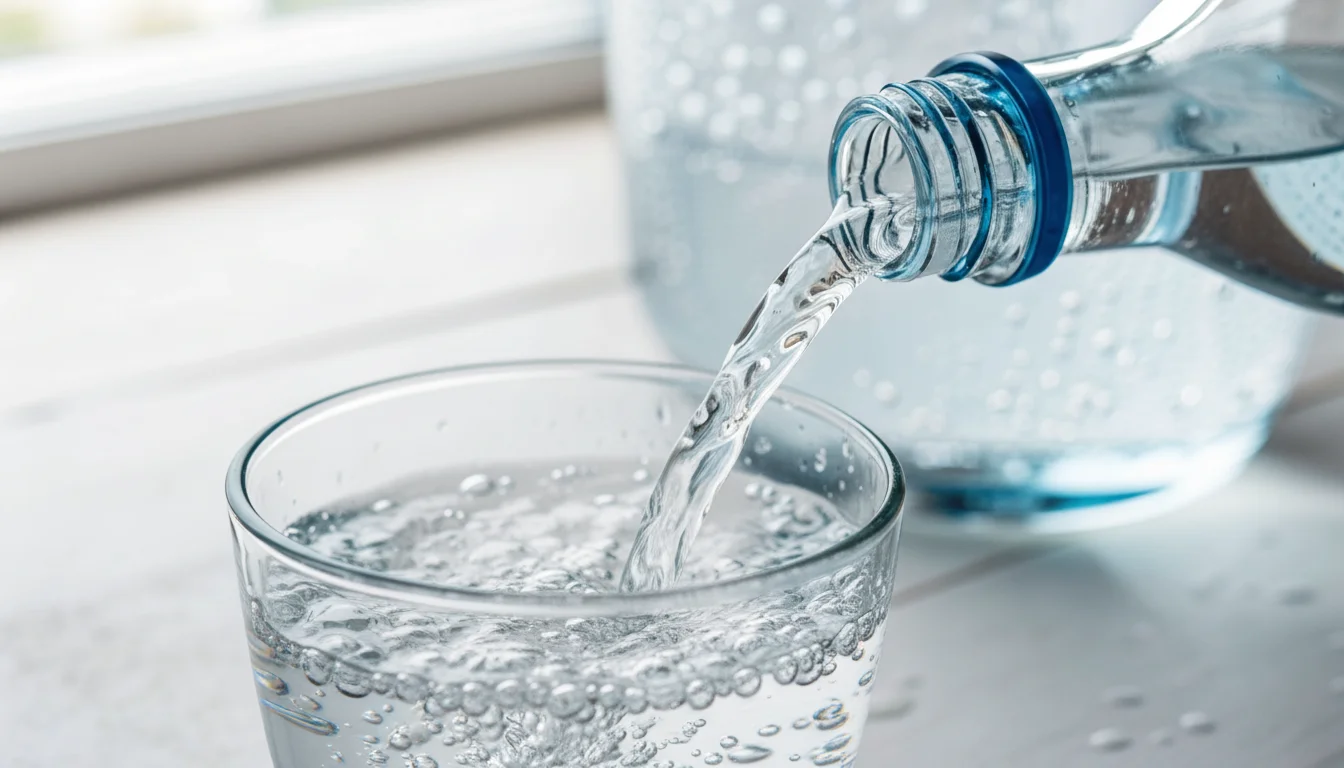
The bottles arrive at The Leela Palace in glass, not plastic. Inside: water that didn't come from a well, a reservoir, or a municipal tap. It came from Bengaluru's humid air, captured by a warehouse-scale system that runs on solar heat and liquid salt.
Uravu Labs, the six-year-old climate tech venture behind this atmospheric extraction, just landed fresh capital from Enrission India Capital, the Japanese investor disclosed in July. The funding amount? Undisclosed, as is customary for strategic rounds where the backer matters more than the number. What matters now is what comes next: scaling a 4,000-liter-per-day operation into something that could, perhaps, redefine how India's premium hospitality sector thinks about water sourcing.
Founded in 2019 by four engineers—Pardeep Garg, Swapnil Shrivastav, Venkatesh R, and Govinda Balaji—Uravu has spent the past half-decade perfecting a proprietary desiccant system that sidesteps the compressor-heavy machinery most atmospheric water generators rely on. Instead, it uses liquid salts (calcium chloride, lithium chloride) to absorb moisture, then releases that water vapor with low-grade heat—60 to 70 degrees Celsius, the kind you can harvest from solar collectors, biomass burners, or industrial exhaust. A low-power condenser finishes the job. No grid electricity required.
It's an elegant workaround for a country where power reliability remains uneven and renewable energy infrastructure is expanding faster than almost anywhere else.
Money, Momentum, and a Patent Pending
This isn't Uravu's first rodeo with investors. The Enrission check follows an October 2024 round led by AWE Funds, which earmarked support for the company's push into premium beverage distribution—think craft cocktails made with FromAir-branded water. Before that came a $2.3 million seed round in March 2023, a roster that included JITO Angel Network, Anicut Capital, Speciale Invest, and Rocketship.vc, plus a handful of smaller funds: Vesta, Spectrum Impact, ZNL Growth Fund, Echo River Capital.
The earliest money arrived in December 2021, a pre-seed led by Speciale Invest and joined by Peter Yolles of Echo River Capital, ex-shipping executive Soren Schroder, and Japan-based investors Shigeru Sumimoto and Tomoki Kaneko. That capital went toward the unsexy essentials—patents, pilots, iteration. By 2023, Uravu had filed for a patent covering a "24x7 solar thermal-based atmospheric water generator using desiccants." Whether that patent holds up against prior art remains to be seen, but the application signals ambition.
From Pilot Projects to Byg Brewski
Today, Uravu supplies over 55 hospitality clients across Bengaluru: The Leela, Royal Orchid, Hyatt Centric, and the sprawling Byg Brewski microbrewery among them. The company bottles its output under the FromAir label, using glass and a reverse-logistics model to serve 80 to 130 outlets. By 2024, it had delivered more than one million bottles—a milestone that sounds impressive until you consider that a single luxury hotel can move hundreds of bottles a week.
Early commercial pilots included beverage giants AB InBev and Radico Khaitan, though those collaborations appear to have cooled or narrowed in scope. Uravu's leadership has since sharpened its focus on hospitality, where sustainability storytelling carries premium pricing power. The startup is also building a 2,000-liter-per-day containerized unit for industrial clients and exploring franchise partnerships to expand the FromAir Club—a retail concept that would let third-party operators bottle and sell the water locally.
The water-as-a-service pitch resonates in an era when hotels compete on environmental credentials. But there's a tension here: can atmospheric water generation ever scale beyond niche luxury applications?
The Economics of Thin Air
Uravu's reported production cost sits at ₹4 to ₹5 per liter (roughly $0.05 to $0.06), with energy consumption around 300 watt-hours per liter. That's competitive—if you're comparing to bottled premium water trucked in from distant springs. Less so if you're up against municipal supply or even desalination in coastal regions.
The founders have spoken publicly about scaling to 10,000 liters per day and beyond. Earlier projections—100,000 liters per day within two years—have yet to surface in public updates. Perhaps the timeline shifted. Perhaps unit economics proved trickier than anticipated once the pilots ended and commercial contracts began. Startups recalibrate. It's part of the process.
What gives Uravu a potential edge is geography. India's tropical belt offers high humidity and abundant solar resources—precisely the conditions where desiccant-based systems outperform compressor models. Waste heat from industrial operations could provide another feedstock, though tapping that requires partnerships with factories willing to retrofit infrastructure.
A Crowded, Capital-Hungry Market
Atmospheric water generation isn't a lonely pursuit. SOURCE Global (formerly Zero Mass Water) has raised $180 million since 2020, backed by BlackRock and Breakthrough Energy Ventures. Israel's Watergen has deployed compressor-driven units worldwide, from military bases to disaster zones. Market analysts peg the sector somewhere between $3.3 billion and $3.8 billion in 2024 revenue, with forecasts ranging wildly—$4.4 billion to $12.7 billion by 2030, depending on whose model you trust.
Uravu's footprint remains modest by comparison. The company employs 51 to 100 people, according to estimates, and CB Insights data suggests 2024 revenue hovered around $125,000. That figure likely reflects conservative accounting or early-stage commercialization—either way, it underscores how far the company has to go before atmospheric water becomes a meaningful revenue line.
What Comes Next

With Enrission's capital in hand, Uravu is doubling down on commercial hospitality while testing adjacent markets—corporate campuses, real estate developments, maybe even beverage co-packing if the franchise model gains traction. The containerized units could unlock industrial clients, though selling a capital-intensive system to procurement departments used to paying pennies for municipal water won't be easy.
Uravu hasn't telegraphed plans for its next funding round or disclosed specific revenue targets for 2025. For now, the company is focused on proving the unit economics at scale—converting pilot curiosity into long-term contracts, expanding beyond Bengaluru, and demonstrating that pulling water from air can be more than a climate tech novelty.
Whether atmospheric water generation becomes viable infrastructure or remains a boutique solution for sustainability-conscious hotels will depend on costs, scale, and how quickly India's water stress forces broader rethinking. Uravu has the technology and the early traction. What it needs now is volume—and patience from investors willing to wait for a market that may still be years from maturity.


