

Abraham Heifets spent years watching his first company, Atomwise, build partnerships across the pharmaceutical industry. Now he's back with a bolder wager: that artificial intelligence can design oral drugs for the estimated $200 billion worth of medical targets that have only injectable options today.
His new venture, WonderTx, emerged from Y Combinator's summer cohort in 2026 with $125,000 in initial backing and a technology the San Francisco team calls "extrapolative AI." The approach, according to company materials, differs from conventional computational chemistry by identifying novel chemical structures without requiring prior training data on a given drug target. Whether that claim holds up in the lab remains to be seen, but the market opportunity Heifets is chasing has become impossible to ignore.
Injectable drugs now represent nearly half of global prescription medicine revenue. That share climbed from 44% in 2020 to 49% in 2025, according to data IQVIA published last September. The obesity and diabetes segment alone illustrates the trajectory. Before oral GLP-1 receptor agonists arrived, 98% of therapeutic value in that category came from shots patients administered weekly or more often.
Two regulatory approvals shifted the landscape faster than many industry watchers anticipated. Novo Nordisk won FDA clearance for its Wegovy pill on December 22, 2025. Eli Lilly followed with Foundayo, based on the molecule orforglipron, receiving approval on April 1, 2026, with commercial availability announced April 9, 2026. Novo reported in June that most Wegovy pill prescriptions went to patients who had never tried a GLP-1 therapy, effectively expanding the addressable population rather than simply converting existing injection users. Lilly's CFO, Lucas Montarce, told Axios in February that early Wegovy pill data suggested 90% of patients represented new adoption within the treatment class.
The financial stakes keep climbing. TD Cowen lifted its 2030 global GLP-1 sales forecast to $150 billion in June 2026, up from a prior $139 billion estimate. Morgan Stanley projected the market could reach $190 billion by 2035 in a May update, estimating that roughly 30% of Americans with obesity or diabetes might be using GLP-1 therapies by that year compared to 6% in 2025. JPMorgan projected at least 25 to 30 million U.S. users in the incretin market by 2030 in a February report. Goldman Sachs published a more cautious view, pegging 2030 sales around $95 billion and citing expected price erosion.
Heifets's Central Claim
"The important question in AI-for-drug-discovery is 'Can we make medicines that would otherwise not exist?'" Heifets wrote on LinkedIn last August. "That is why we built WonderTx."
The company's technical pitch centers on what it describes as zero-shot inference. In an August blog post, WonderTx stated that its platform can identify entirely new chemical matter for biological targets that lack conventional starting points in medicinal chemistry, even when the training dataset contains no direct examples of molecules that bind to those targets. The company's Y Combinator profile claims experimental validation on four structurally and biologically diverse targets where the founding team possessed no prior training data, with results ranging from initial screening hits to crystallographic structures confirming binding.
That's a significant assertion. Most AI-driven drug discovery platforms optimize chemical scaffolds that already show some activity against a target, refining properties like potency, selectivity, or drug-like characteristics. Extrapolating into entirely novel chemical space without precedent raises the bar considerably. The company has not disclosed which four targets it validated, nor has it named specific disease areas it intends to pursue beyond the general framing of converting injectable biologics into oral small molecules.
Heifets brings credibility from his Atomwise tenure. That computational chemistry company has raised $220 million and logged more than $5 billion in aggregate partnership deal value, with over 600 researchers participating in collaborative programs, according to its profile on the Y Combinator site. Co-founder Saulo H. P. de Oliveira contributed to computational structural biology tools including KVFinder, published in 2014, and work on qFit3 between 2021 and 2024, per PubMed records. The third co-founder, Cameron Ferroni, describes himself on LinkedIn as co-founder of Xbox and Xbox Live; GameSpot interviews from 2003 to 2006 confirm he held an executive role at Microsoft during the Xbox launch era.
A Crowded Field, With Distinct Approaches
WonderTx enters a segment that has attracted serious capital and varied technical strategies. Structure Therapeutics moved aleniglipron, an oral small-molecule GLP-1 receptor agonist, into a Phase 3 program called ACCOMPLISH during the third quarter of 2026. The company reported Phase 2 topline data in March showing weight loss up to 16.3% at 44 weeks, generating investor enthusiasm even as questions about gastrointestinal side effects linger across the oral GLP-1 class.
Pfizer abandoned its danuglipron programs in April 2025, a setback that underscored the formulation and tolerability challenges inherent in converting peptide-like activity into a small molecule that patients can swallow daily. The company reaffirmed that decision in subsequent pipeline updates.
Rani Therapeutics has taken a different technical path entirely, developing a microneedle capsule device called RaniPill that delivers biologics through the intestinal wall. The company initiated a Phase 1 study in December 2025 for RT-114, an oral GLP-1/GLP-2 dual agonist. CEO Talat Imran said in a March press release that 2026 represented "an important inflection point" for the platform. Rani disclosed a collaboration with Chugai valued at up to $1.085 billion and presented preclinical data on oral semaglutide in March. Whether repeated deployment of a microneedle device inside the gastrointestinal tract will prove safe and scalable at a commercial level remains an open clinical question.
i2O Therapeutics uses an ionic liquid formulation platform to enable oral delivery of biologics, backed by Sanofi Ventures and the JDRF T1D Fund. The company announced research collaborations with Sanofi in February 2021 for nanobody-based medicines and with Janssen in 2022, according to Johnson & Johnson Innovation disclosures.
The oral-versus-injectable dynamic extends well beyond metabolic disease. Eli Lilly acquired DICE Therapeutics for approximately $2.4 billion in August 2023 to advance oral IL-17 inhibitors, targeting autoimmune conditions traditionally treated with infusions. In the migraine market, oral CGRP receptor antagonists generated an estimated $4.43 billion in sales in 2025, capturing roughly 64.6% of the CGRP receptor antagonist market by value compared to injectable monoclonal antibodies, according to third-party market analysis published between June and July 2026.
The Formidable Science of Oral Biologics
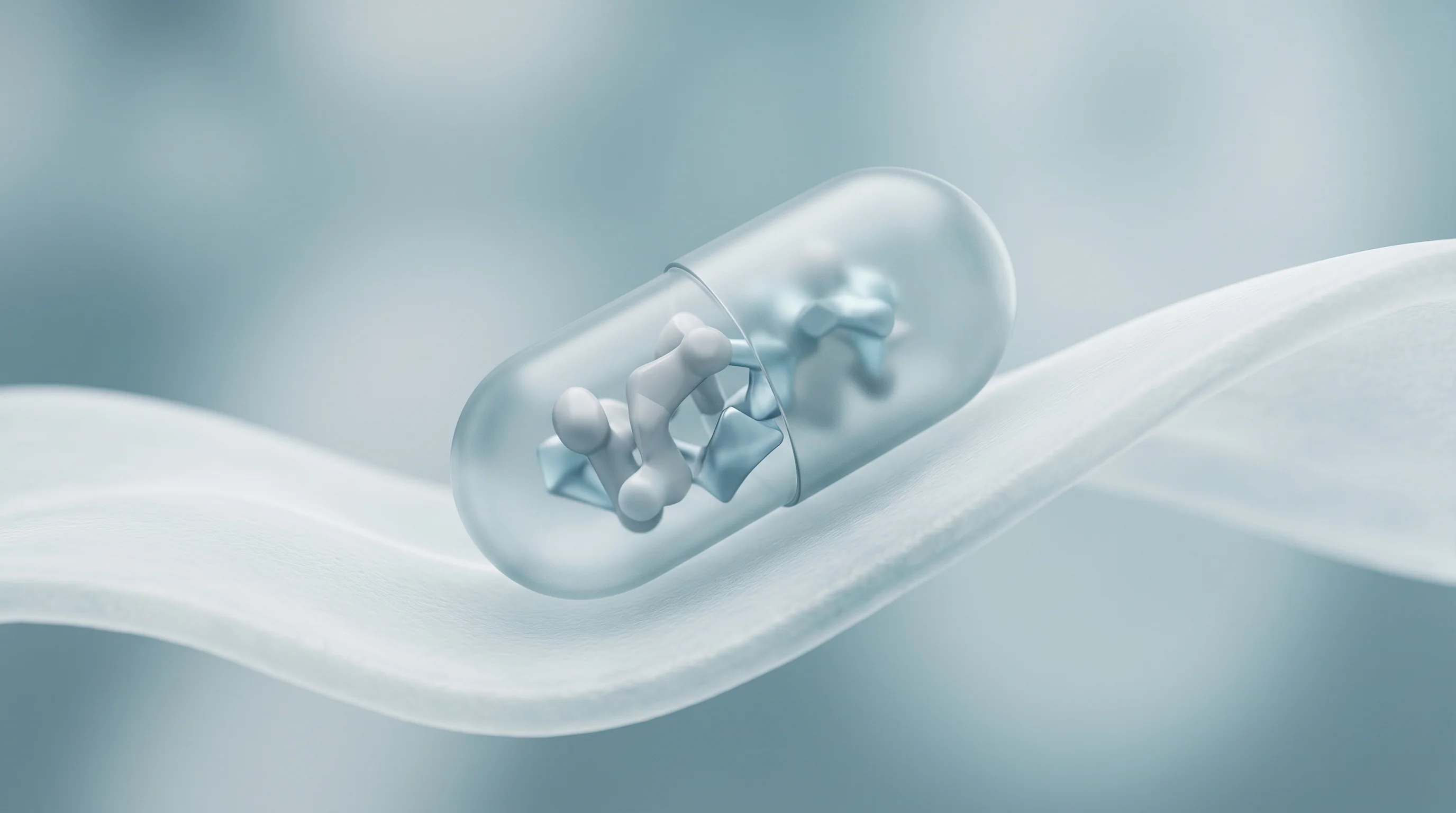
Getting large molecules through the stomach and into the bloodstream at meaningful concentrations has defied medicinal chemistry for decades. A May review in BMC noted that typical nanoparticle oral bioavailability ranges from 0.1% to 2%. Oral semaglutide, marketed as Rybelsus, achieves roughly 0.4% to 1% bioavailability using a technology called SNAC—sodium N-[8-(2-hydroxybenzoyl) amino] caprylate—that facilitates absorption across the gastric lining. Novo Nordisk valued that enabling technology highly enough to acquire Emisphere, the company that developed SNAC, for approximately $1.335 billion in 2021.
A September article in Nature Reviews Materials examined permeation enhancers like SNAC alongside alternatives such as C10 and the pathways toward clinical translation. The science continues to advance in fits and starts. Endo Axiom, a University of Sydney spinout, reported a "critical milestone" toward first-in-human oral insulin trials in a September 10 university update, having signed a manufacturing agreement in 2024. Oramed's oral insulin Phase 3 program failed in January 2023, leading to discontinuation in type 2 diabetes, though the company explored joint venture structures in subsequent filings through 2026.
Mycapssa, an oral octreotide capsule, received U.S. FDA approval on June 26, 2020 as the first oral somatostatin analog. It won European Union authorization on December 2, 2022, but was later withdrawn for commercial reasons the company did not elaborate on publicly.
Small-molecule discovery for targets validated by injectable biologics sits somewhere in between true formulation of large molecules and de novo target discovery. The biology is proven; the challenge is finding a small organic compound that can replicate the binding and functional effects of a much larger antibody or peptide. That's the specific problem WonderTx claims its extrapolative AI can solve.
AI-Native Pharma Scales Up
WonderTx's launch coincides with a broader maturation of computational drug discovery. Isomorphic Labs, the Alphabet subsidiary led by DeepMind co-founder Demis Hassabis, raised a $2.1 billion Series B on May 12 to scale programs toward clinical trials. The round built on partnerships Isomorphic announced with Eli Lilly and Novartis in 2024, followed by a Novartis expansion in 2025.
Recursion advanced its first neuroscience target with Genentech in July, continuing momentum from its 2023 NVIDIA partnership and milestones with Sanofi and Roche spanning 2024 through 2026. A July review synthesizing industry-disclosed estimates suggested AI agents could improve Phase I success rates by 25% to 30% and reduce preclinical costs by 30% to 40%, though the authors noted statistical limitations and context dependencies that make such projections inherently uncertain.
McKinsey wrote in 2025 that "scientific AI" was enabling multimodal models across materials, chemistry, and biopharmaceuticals, with capabilities transferring across domains more fluidly than earlier generations of narrowly trained algorithms. Whether that optimism translates into approved medicines at scale remains the central question for investors and patients alike.
Regulators are grappling with how to assess these tools. The FDA proposed a risk-based credibility framework for AI models in drug submissions in January 2025 draft guidance, noting more than 500 submissions with AI components since 2016. A webinar followed on February 18. The European Medicines Agency finalized its Reflection Paper on AI and machine learning in the medicine lifecycle on September 30, 2024, establishing evaluation criteria that continue to guide EU assessments.
How regulators will evaluate extrapolative models that claim to reason beyond their training data is particularly unclear. That represents a central premise of WonderTx's pitch, and the answer will shape not just this company's path but the broader category of zero-shot generative chemistry platforms.
The Medical Burden

The underlying patient need is beyond dispute. The 11th IDF Diabetes Atlas, published April 7, 2025, reported 589 million adults worldwide living with diabetes in 2024. Global diabetes-related health expenditure surpassed $1 trillion in 2024. The IDF projects 853 million adults with diabetes by 2050 based on demographic and epidemiological trends.
U.S. prescription drug spending rose 12.7% to $915 billion in 2025, with GLP-1s accounting for roughly 14% of total U.S. prescription expenditure, according to an American Society of Health-System Pharmacists report released April 30. Total U.S. prescription spending is projected to exceed $1 trillion in 2026.
Even as technology advances, the burden of injections persists. Insulet launched a pivotal fully closed-loop automated insulin delivery system for type 2 diabetes in April, but adoption of automated insulin delivery in type 2 diabetes remains below 5% of approximately 5.5 million U.S. insulin-requiring type 2 diabetes patients, according to company data from 2025 and 2026. Many patients still face daily or weekly injections, often for years or decades.
Patent timelines add complexity to the competitive picture. Novo Nordisk's 2025 Annual Report, published in February, indicates Wegovy and Rybelsus substance-patent expiry dates vary by jurisdiction: China 2026, the European Union 2031, the United States 2032. Additional formulation and regimen patents extend protection for oral formulations into the 2031 to 2034 window. Media coverage in April highlighted earlier loss of protection in India and China versus later expiry in Europe and the United States, though country-by-country intellectual property landscapes require case-by-case verification and often involve litigation that can extend or shorten effective exclusivity periods.
Open Questions

WonderTx has disclosed no specific targets or disease areas as of mid-September 2026. The company's Y Combinator and blog pages emphasize four zero-shot validated targets but name none publicly. Whether the company raised a follow-on funding round beyond the $125,000 YC seed remains unconfirmed; Demo Day announcements in August and September may have clarified the financing picture, though no subsequent round has appeared in public databases.
Real-world questions will accumulate as oral GLP-1 therapies scale beyond early adopters. Comparative effectiveness versus injectables across diverse patient populations, gastrointestinal tolerability at commercial scale, payer coverage criteria evolution, and long-term persistence data all remain works in progress. The European Union approved the Wegovy pill on July 15 per Novo Nordisk, expanding the geographic footprint.
Clinical endpoints for oral biologics delivered by devices also lack settled precedent. Demonstrating pharmacokinetic and pharmacodynamic bioequivalence versus injections, establishing safety of repeated device deployment, and scaling manufacturing to millions of doses annually represent challenges Rani Therapeutics' Phase 1 expansions in 2026 are beginning to test.
WonderTx's bet is that the biology is proven and the chemistry is solvable. The company aims to discover oral drugs at biologic-validated targets to reduce translational risk, avoiding the high failure rates that plague truly novel mechanisms. Whether its extrapolative AI approach can compress discovery timelines and produce differentiated molecules at GLP-1 targets or adjacent pathways will determine if the $200 billion addressable market the company cites translates into actual drug candidates advancing toward human trials.
Heifets has done this before, building Atomwise into a platform with substantial industry traction. WonderTx operates on a different technical thesis, one that will face scrutiny as experimental validation moves from undisclosed targets in company presentations to named programs with public data. For now, it's a promise backed by pedigree and a market opportunity large enough to attract serious capital if the science delivers.


