

The call usually comes too late. A property manager notices water stains spreading across a ceiling, or tenants complain about a musty smell in the hallway. By then, the leak has been quietly draining away—not just water, but hundreds of thousands of dollars. Equipment ruined. Drywall torn out. Mold remediation crews mobilized. For the operators juggling thousands of residential and commercial units, these invisible failures represent a maddeningly persistent drain on margins.
AquaShield, a startup born in the robotics labs at MIT and Harvard, thinks it may have cracked the code. Not just detecting leaks—plenty of systems do that—but pinpointing them down to the specific segment of pipe, turning what might become a six-figure catastrophe into a sub-$1,000 targeted repair. Or so the pitch goes.
The company, backed by Y Combinator's Spring 2026 batch and Switzerland's Venture Kick program, rolled out its commercial platform recently after months of pilots with property operators in the U.S. and Europe. Whether the technology lives up to its promise is still an open question, one that real estate directors managing sprawling portfolios will be watching closely.
Robotics Credentials Meet Real-World Plumbing
Co-founders Paul Beckers and Marguerite Benoist didn't set out to revolutionize building maintenance. Both came up through academic robotics—Beckers at MIT, Benoist at Harvard, with research stints at EPFL, RWTH Aachen, and Tsinghua. But their path into commercial leak detection began pragmatically: partnering with MIT's own facilities department to test their system on live campus buildings.
Early pilots expanded from there. According to EPFL, the duo secured a deployment with a large German real estate firm while refining their approach through the school's AI Launchpad program. By the time they joined Y Combinator's latest cohort, they were running tests across multiple sites and preparing to scale—though the gap between pilot programs and full-scale deployments remains significant.
The Technology: Clamp, Learn, Localize
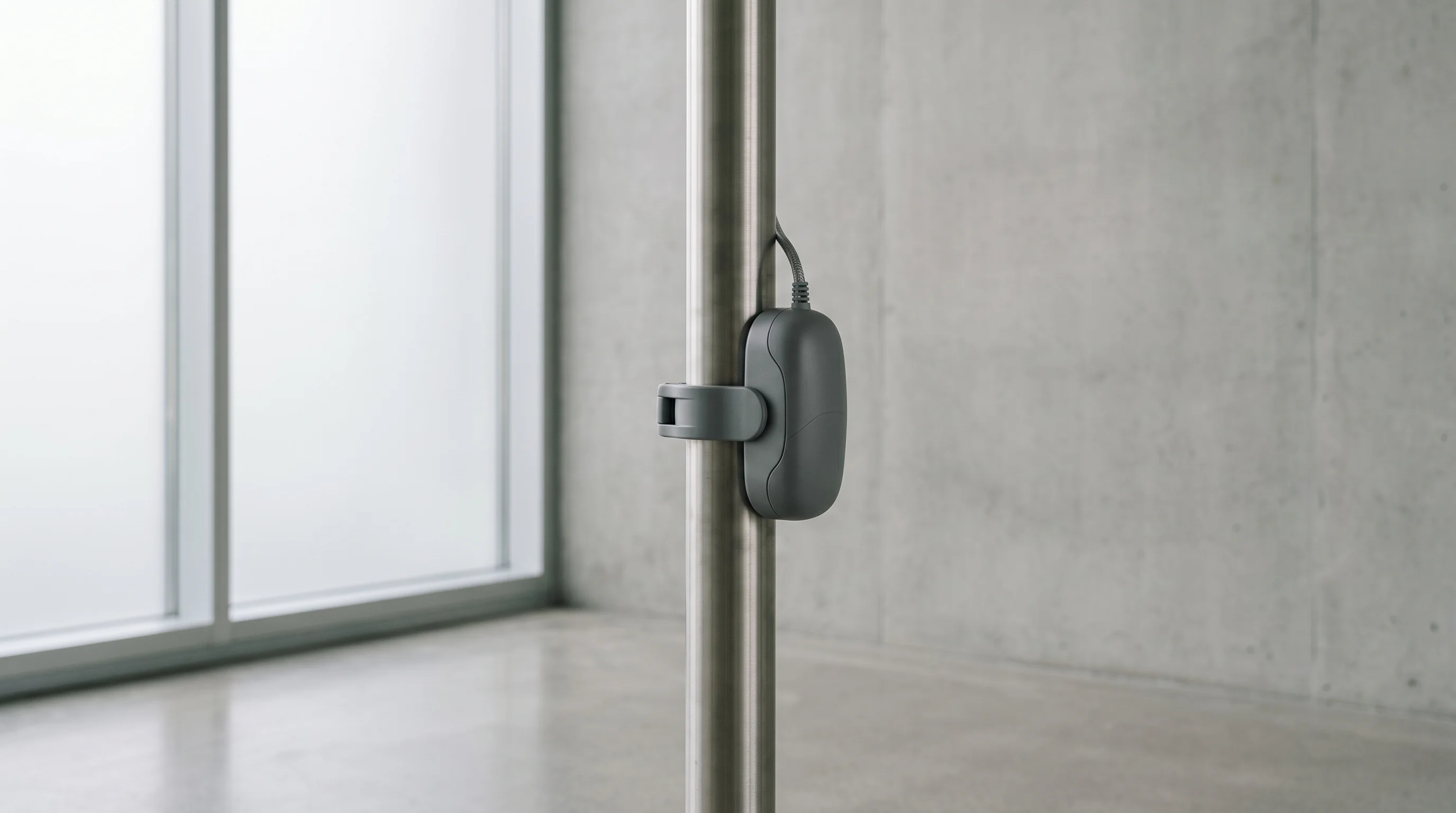
The hardware installation sounds almost too simple. AquaShield's sensors clamp directly onto existing pipes—no cutting, no retrofits, no disruption to operations. Once attached, the system maps what normal water flow looks like in that particular building, then raises flags when something changes.
Where it gets interesting—and where the company stakes its competitive claim—is in localization. Most leak detection systems can tell you that water is escaping somewhere in your property. AquaShield says it can tell you where, narrowing the problem down to a specific pipe segment. In theory, that precision transforms the economics entirely.
The underlying architecture draws heavily from the founders' research backgrounds. We're talking transformer-based time-series models, graph neural networks, digital twins generating synthetic hydraulic scenarios, genetic algorithms optimizing sensor placement. There's even a layer of large language models generating plain-English explanations of detected anomalies. It's an impressive technical stack—though the commercial messaging wisely skips most of these details in favor of emphasizing speed and simplicity.
Perhaps the real test is whether all that computational horsepower translates into actionable intelligence for a facilities manager at 2 a.m.
Going After the Big Portfolios
AquaShield isn't chasing individual landlords or small property groups. The strategy targets operators managing hundreds or thousands of buildings: prove the concept in a handful of sites, show the ROI, then roll out sensors across entire portfolios.
Y Combinator's announcement of the launch mentioned the company "already works with leading operators across the U.S. and Europe"—though which operators, exactly, remains undisclosed beyond the MIT partnership. That's not unusual for an early-stage startup, but it does leave some ambiguity about how far pilot programs have progressed toward real commitments.
The risk mitigation narrative is compelling. AquaShield positions water damage as among the biggest preventable losses in real estate. Insurance data generally backs up the scale of the problem—industry reports have pegged the average commercial water claim in the tens of thousands of dollars—though the exact ranking shifts depending on property type and geography. Still, even if water damage isn't always the single largest loss category, it's consistently near the top. And unlike fire, which tends to announce itself dramatically, water leaks are stealthy.
A Competitive Landscape Getting More Crowded

AquaShield is hardly alone in this space. WINT Water Intelligence has already landed high-profile deployments—the Empire State Building among them—and forged distribution partnerships with insurers like HSB and Munich Re. Their system includes automatic shutoff capabilities, a feature AquaShield hasn't emphasized. Alert Labs, now owned by HVAC distributor Watsco, reports handling more than 480,000 alerts across 14,000-plus buildings. HydroPoint's WaterCompass serves enterprise campuses with both indoor and outdoor monitoring.
Newer players keep emerging. McCord Development introduced MizuWatch around the same time as AquaShield's launch, targeting utility and municipal infrastructure rather than commercial buildings. The broader pattern is clear: leak detection is increasingly framed as an AI problem, not just a hardware problem.
What remains less clear is whether localization precision—AquaShield's central differentiator—matters enough to sway purchasing decisions. Does knowing the exact pipe segment justify the deployment cost and integration effort? Or do most operators just need an alarm that goes off before catastrophic damage occurs, regardless of pinpoint accuracy?
The Economics Still Need Proving

AquaShield hasn't disclosed pricing, which makes the ROI calculus difficult for outsiders to evaluate. The company's website directs interested parties to book a demo—standard practice for enterprise SaaS, but also a sign that the sales process remains consultative and deal structures flexible.
For facilities directors, the calculus hinges on whether the precision actually delivers. If targeted repairs genuinely stay under $1,000 across diverse building types and plumbing configurations, the value proposition becomes obvious. But buildings vary wildly: century-old apartments with galvanized steel pipes, modern glass towers with PEX systems, sprawling industrial campuses with buried mains. One sensor placement strategy doesn't necessarily work everywhere.
The next year or so will be telling. Will the operators running pilots convert to full portfolio deployments? Or will AquaShield find itself confined to a narrower niche—say, high-value properties where even modest leak risks justify premium monitoring?
There's another question lurking beneath the technical ones: in an industry historically slow to adopt new technology, how fast can a small team scale both the product and the sales operation? Academic pedigrees and Y Combinator backing help open doors. But closing deals with real estate operators often means navigating procurement processes, multi-year budget cycles, and a deeply ingrained preference for proven solutions.
Still—hidden leaks keep draining portfolios, and facilities teams keep scrambling to find them. If AquaShield's sensors can genuinely point to the problem before the damage cascades, someone's going to pay attention. Whether that someone becomes a reference customer or a cautionary tale will depend on execution in the months ahead.


