

The pitch sounds almost comically ambitious: compress a solar panel the size of a football field into something that fits inside a rocket, then unfold it in orbit. Yet Beyond Reach Labs, barely three years old, has convinced investors it's not just feasible—it's worth $10 million in seed funding and a 16,000-square-foot manufacturing facility in Brooklyn.
Interlagos Capital led the July 2026 round, joined by Y Combinator, TerraForge Capital, Off-Piste Capital, and Augur VC. The financing came with an eyebrow-raising detail: $342.6 million in customer letters of intent—signals of interest, not binding commitments, but still a remarkable figure for a pre-revenue company. For a company that went through YC's Winter 2026 batch and presented at Demo Day just four months earlier, that's the kind of number that prompts questions.
What exactly are they building, and who wants it badly enough to commit hundreds of millions before the hardware reaches orbit?
The Engineering Problem Hiding in Plain Sight
Solar power in space is hardly new. Satellites have used photovoltaic panels since the 1950s. But the panels themselves have always been the limiting factor—rigid, heavy, and constrained by the size of launch fairings. Beyond Reach Labs (BRL) thinks it has found a better way.
The company's deployable arrays fold and compress for launch, then extend to roughly 100 meters once in orbit. BRL describes the transformation as "dining-table to football-field" scale, a visual that undersells the complexity involved. The real challenge, according to CTO Pele Collins, is preventing the whole thing from shaking itself apart. Extended structures in microgravity face what engineers call first-mode vibration issues—essentially, they wobble. Collins told Payload Space that the company's patented deployer designs address this, though he didn't elaborate on specifics.
The technology targets orbital data centers, commercial space stations, and lunar outposts. These are applications where power-to-mass ratio isn't just important—it's the defining constraint. More power per kilogram launched means more computing, more life support, more everything.
Two Résumés That Raised Eyebrows

Mitchell "Mitch" Fogelson, the CEO, earned his PhD at Carnegie Mellon researching kilometer-scale deployable structures with NASA funding. His 2023 paper won an ASME Journal of Mechanical Design Editor's Choice award. Collins spent nearly seven years at SpaceX in engineering and production roles—one of the company's higher-stakes areas, given the critical nature of crew safety systems. He later moved to Commonwealth Fusion Systems as technical lead for plasma-facing components, another job where failure isn't an option.
They met through the University of Pennsylvania network, though whether that means undergrad or some other connection isn't clear from public bios. What matters is the combination: Fogelson brings deep-tech deployables expertise, Collins brings high-volume hardware production chops. For investors evaluating a hardware startup, that pairing checks boxes.
Before Y Combinator, BRL had already landed a $50,000 grant from the Keystone Space Innovation Challenge in May 2025. Not a fortune, but enough to suggest someone believed in the concept early.
The LOI Surge
At YC's March 24, 2026 Demo Day, BRL reported $325 million in letters of intent. TechCrunch, covering the event, highlighted the company among eight standouts and cited that LOI figure alongside a revenue run-rate above $1 million—achieved, supposedly, within eight weeks of launching.
By mid-July, that LOI figure had grown to $342.6 million.
Letters of intent, of course, aren't contracts. They signal interest, not commitment. But the trajectory is unusual, even in a sector accustomed to big numbers. BRL is pre-revenue, pre-demonstration, and still months from proving its hardware works in space. Yet someone—multiple someones, presumably—wants enough of what they're selling to put it in writing.
The company hasn't named any customers publicly, and Interlagos Capital hasn't disclosed valuation or specific terms. That's typical for early-stage space deals, where strategic relationships often carry confidentiality clauses.
Brooklyn as Mission Control
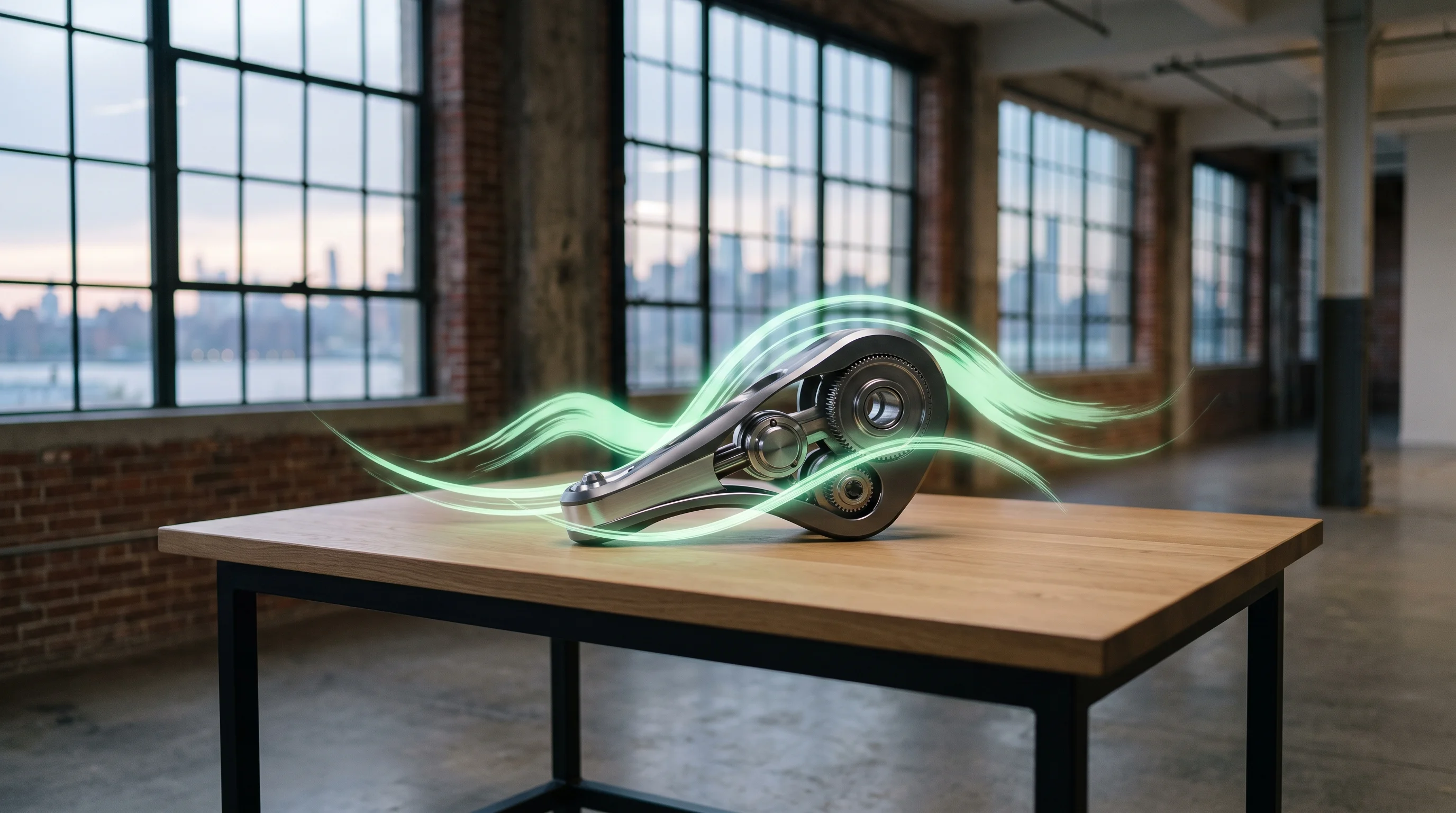
BRL's YC directory lists a team of five, though LinkedIn suggests the headcount has crept into double digits by summer 2026. (LinkedIn numbers are directional at best.) The company recently posted mechanical engineering internships, a signal it's staffing up.
The Brooklyn facility at Industry City is more than symbolic. BRL plans to scale production to more than 10 units per day by the end of 2027—a pace that implies genuine manufacturing, not one-off prototypes. That's an aggressive timeline for a seed-stage company. Then again, so is everything else about this bet.
If the arrays perform as designed, BRL could validate its technology faster than most YC space alumni have managed. Astranis, from the Winter 2016 batch, took years to get satellites on orbit but now has five flying and a commercial backlog exceeding $1 billion. Relativity Space, also W16, famously pivoted from its smaller 3D-printed rocket to the larger Terran R vehicle. Orbital power systems are a less-proven category than launch or communications satellites, which makes BRL's trajectory harder to benchmark.
The company is targeting a first in-space demonstration in the second quarter of 2027. If that holds, it would mark one of the quicker paths from YC Demo Day to orbital hardware validation in recent memory.
Power as a Bottleneck
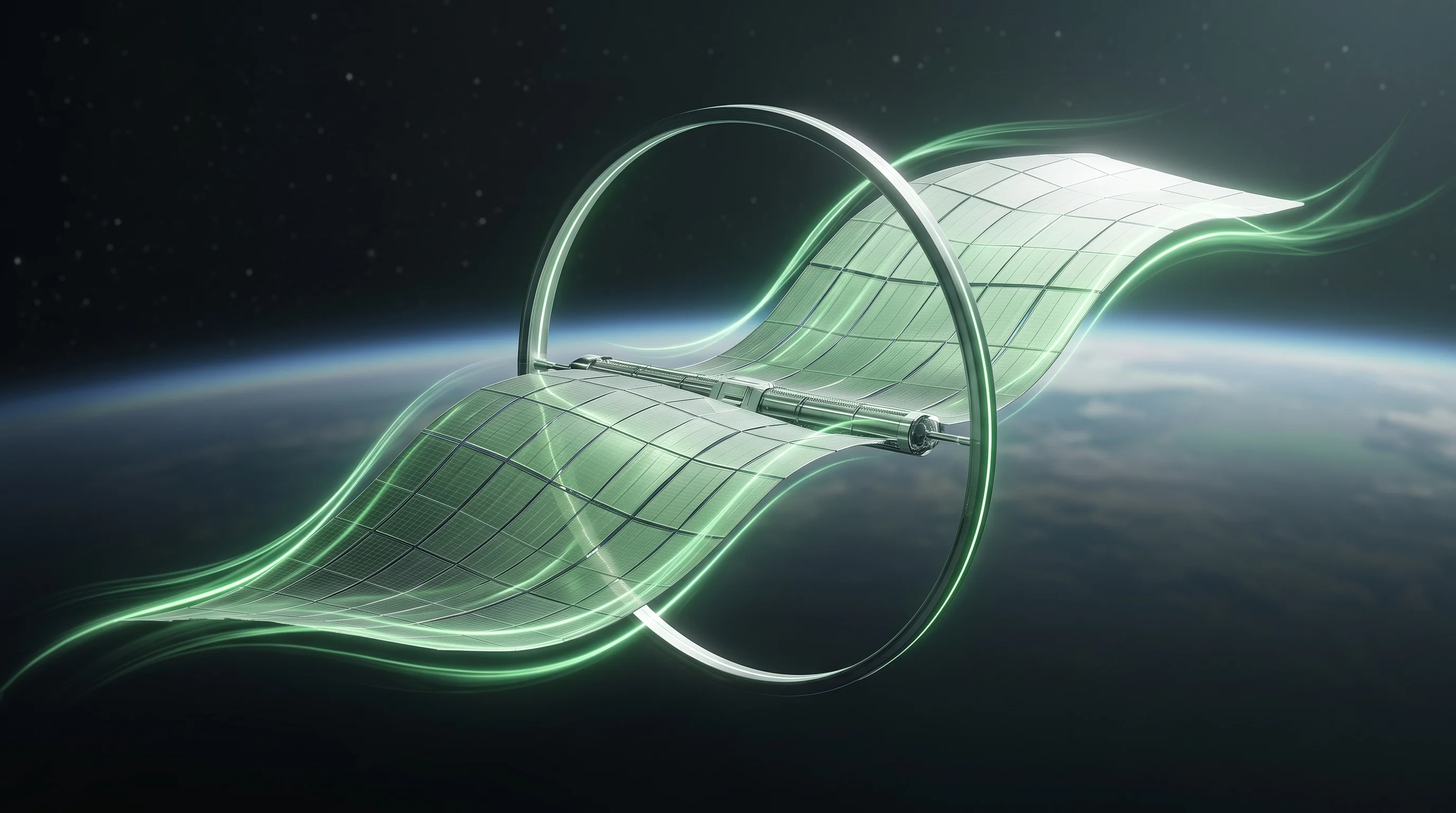
For decades, solar panels in space were a commodity component—necessary, but not exciting. BRL's thesis is that they've become a bottleneck. Orbital infrastructure is expanding faster than conventional rigid panels can support. Data centers in orbit need kilowatts, eventually megawatts. Commercial space stations need more power than the International Space Station. Lunar outposts will need power before anything else.
The question is whether BRL's deployable arrays can deliver orders-of-magnitude improvement, as the company claims, or whether they'll face the same compromises—cost, reliability, manufacturability—that have limited previous deployable designs.
Venture capital is flowing into the problem. Interlagos is betting $10 million that BRL has cracked it. The letters of intent suggest customers think so too, or at least think it's worth hedging on.
What happens in Q2 2027, when the hardware reaches orbit, will answer the rest.


