

The alarm sounds. Error code E-4012 flashes on the screen. Production stops. What happens next in most factories is a familiar ritual: operators thumb through manuals, technicians check PLCs, specialists get called in. The machine stays quiet. The line stays idle. Thirty minutes evaporates before anyone even knows what went wrong.
Dawn Industries—a startup that emerged from Brown and Columbia's accelerator programs before claiming a spot in Y Combinator's Summer 2026 cohort—thinks that half-hour diagnostic scramble is ripe for disruption. Their product, VIM, promises to read the fault, cross-reference live signals against manufacturer documentation, and hand over a recovery plan in under sixty seconds. Whether that holds up outside simulated scenarios remains the open question.
The Pitch: Read Everything, Fix One Thing
VIM bills itself as "AI recovery for industrial automation," though the real work is less flashy than that tagline suggests. The system doesn't replace hardware. It doesn't require retrofits. Instead, it pulls data from whatever's already running on the factory floor—PLCs, HMIs, robots, sensors, drives—and tries to make sense of the whole picture when something breaks.
The company's demo walks through a hypothetical incident, one they've labeled as simulated but technically detailed enough to show how they're thinking. A Keyence vision system throws E-4012: "no part found." The camera frames are oversaturated. Someone changed the lighting. VIM traces the problem back through PLC inputs, checks the camera's exposure settings, pulls up section 14.2 of the Keyence CV-X manual, and suggests dialing exposure down from 12 milliseconds to 8. The recovery checklist includes verification steps, robot re-homing, and alarm reset—with a note confirming the safety chain stayed intact the entire time.
It's a tidy story. Maybe a little too tidy.
What's more interesting is the constraint the team built in: nothing happens without a human. VIM recommends one action. The operator approves it. The system logs it. The safety system remains the final word, and every deployment starts in read-only mode. That design choice matters—factories have learned the hard way not to trust black-box automation, especially when production uptime is measured in thousands of dollars per minute.
The Founders: Fresh Out, Moving Fast
Joohyun Cha graduated from Brown not long ago, teaming up with Robin Lee from Columbia to launch Dawn Industries. The pair surfaced through university accelerators—Columbia's Almaworks and Brown's Venture Prize—before joining Y Combinator's cohort. For founders barely a year removed from campus, they've racked up a striking amount of momentum: two major trade show appearances, a defined product, and a go-to-market strategy built around low-friction pilots.
Early iterations of VIM leaned heavily on AR glasses and head-mounted cameras to capture what was happening on the factory floor. The current version emphasizes software integration with existing control systems, though how much hardware still factors in isn't entirely clear from public materials. At industry events, the messaging evolved—from "glasses and cameras deploying an AI troubleshooting agent" to "cell-level signal correlation and automated recovery planning." That's the kind of refinement that happens when you're learning in real time what the market actually wants.
Cha's LinkedIn activity and the company's sparse public presence suggest a team still figuring out how to tell its story. There are no customer logos yet. No case studies. The simulated Keyence incident is the proof point, and simulations only get you so far.
A Market Already Crowded—But Fragmented
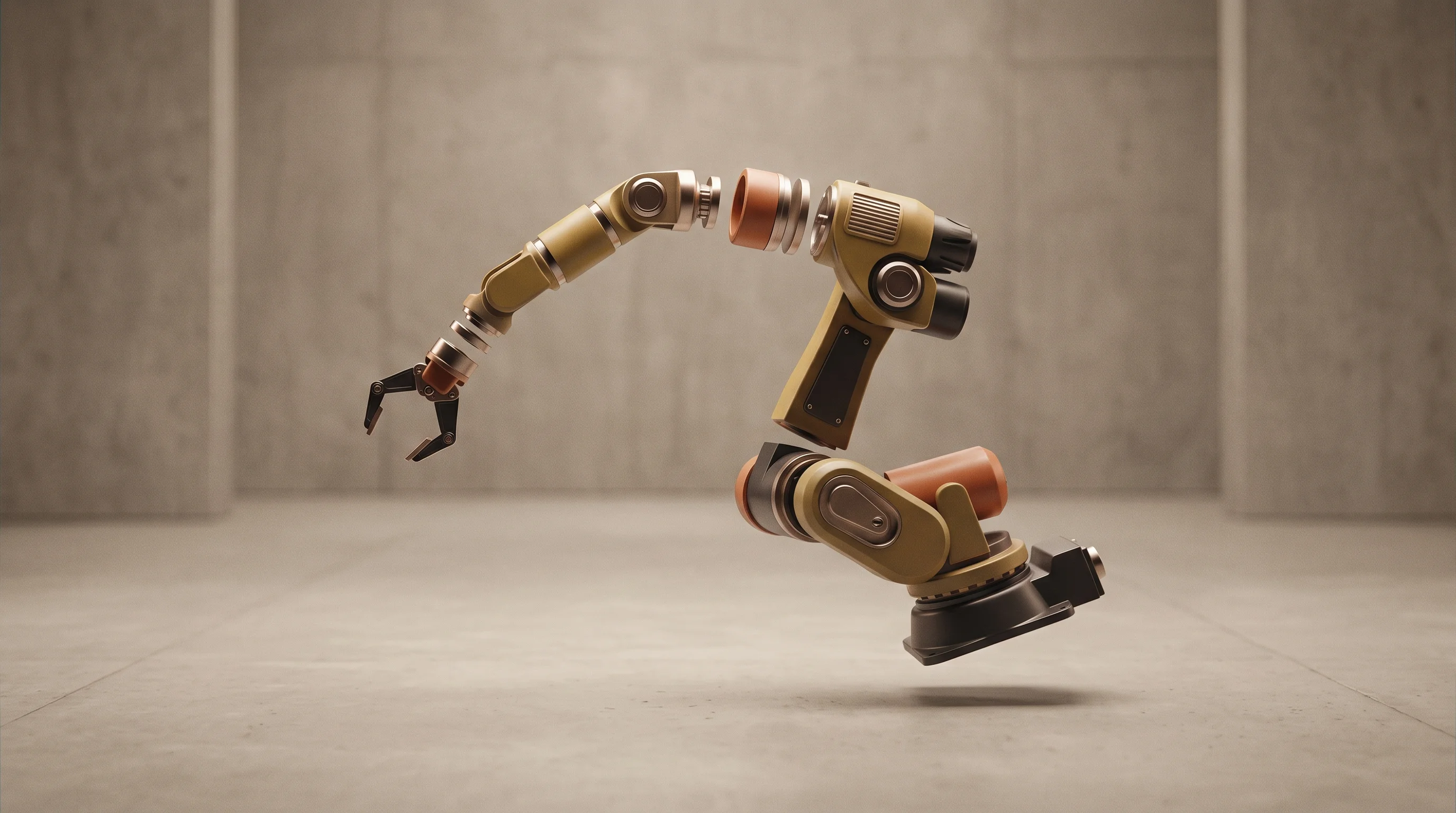
Dawn isn't inventing the category of factory uptime optimization. FANUC's Zero Down Time service has been running since 2015, focused on predictive maintenance across installed fleets. ABB offers condition-based monitoring through its IRC5 controller platform. Flexxbotics introduced "Intelligent Recovery" for cobots in mid-2024, enabling auto-restart from work-stop events without requiring human intervention. Dynalog's roPOD tackles TCP and zero-mastering recovery after crashes. Renishaw handles calibration drift with automation probing tools.
But here's where Dawn is making a bet: most of those solutions either predict failures before they occur, or they handle narrow recovery tasks within a single vendor's ecosystem. VIM's pitch is cross-vendor diagnosis. A FANUC robot paired with a Keyence camera and a Siemens PLC? VIM reads the entire cell's state, regardless of who made what, then proposes one actionable fix. The system cites OEM manuals directly—positioning itself as a layer above existing control architectures, not in competition with them.
Whether that's a genuine gap in the market or an integration nightmare waiting to happen depends on execution. Mixed-vendor cells are messy. Legacy PLCs don't always play nice. And operators who've been burned by automation promises before aren't inclined to trust another system claiming it knows best.
The economics, though, explain why anyone's bothering. Downtime costs vary wildly depending on the operation, but industry sources have cited figures between $72,000 and $200,000 per hour for Tier 1 automotive stamped-assembly lines. Dawn's site acknowledges those numbers are illustrative—and they are—but even the low end of that range makes a compelling case for shaving minutes off diagnostic cycles.
The Deployment Bet: Zero Upfront, Prove It First
Dawn's go-to-market strategy sidesteps the capital approval slog. Pilots start with a single cell in read-only mode. No upfront cost. No retrofits. No downtime to install. The system measures its own diagnosis quality and response time before asking for expanded scope.
Once the pilot proves out—if it proves out—the team can grant write access, cell by cell. Operators still approve every automated action. The safety chain still has the final say. The goal is to get production teams comfortable with AI-recommended recovery before automating the execution.
It's a smart wedge. But it also means Dawn needs to deliver fast enough wins in read-only mode to justify moving to the next stage. And that's where the rubber meets the factory floor: Can the system actually diagnose a fault faster and more accurately than an experienced technician? Not in a simulation. Not in a controlled demo. In a real cell, under pressure, when the line's been down for twenty minutes and the shift supervisor is breathing down your neck.
What Comes Next

For a team barely a year out of university, Dawn Industries is moving with the kind of velocity that either breaks through or breaks apart. The company lists a contact email and a Rhode Island phone number for pilot inquiries—no flashy marketing site, no sales deck plastered across LinkedIn. Just an invitation to test the system.
The challenge ahead isn't technical elegance. It's trust. Factories are conservative environments for good reason. When a bad decision costs tens of thousands of dollars an hour, you don't hand over control to a system that can't explain itself in terms your operators understand.
If VIM can compress thirty minutes of diagnostic fumbling into one—and do it safely, repeatedly, across the chaotic reality of mixed-vendor automation—it might carve out a position as the diagnostic layer factories didn't realize they were missing. If it can't, it'll join the long list of promising industrial AI projects that looked great in demos and never made it past the pilot stage.
The team is taking requests at [email protected]. Whether enough plant managers take them up on it will determine if this is a story about a breakthrough or just another startup learning how hard manufacturing really is.


